



Painted Landscape Tray
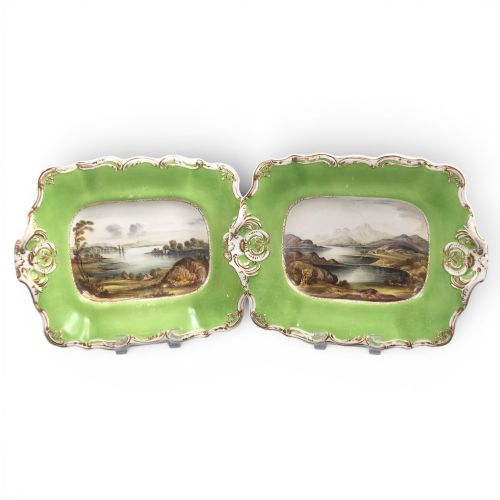
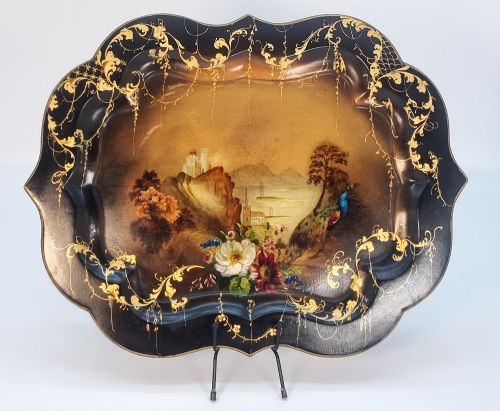
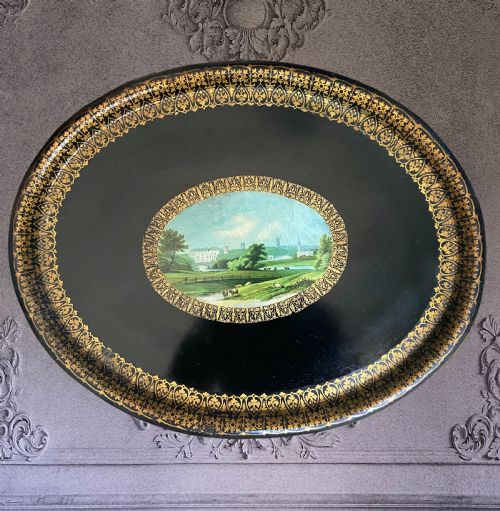
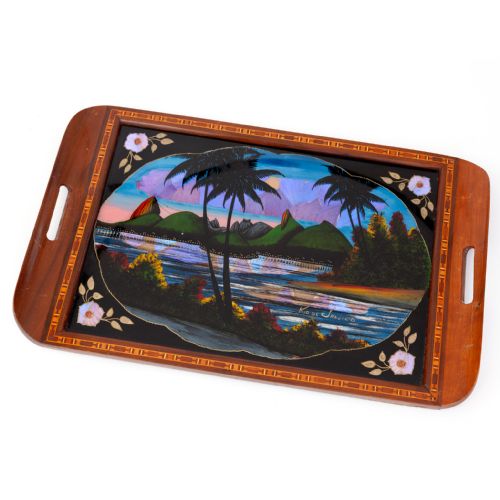
These painted landscape tray examples are decorative service pieces bearing hand-rendered scenery, offering historical charm and practical utility.
Painted Landscape Tray
A painted landscape tray brings miniature scenery into domestic spaces through serving dishes, decorative trays and sandwich sets. When you search for a painted landscape tray, you encounter works spanning the eighteenth, nineteenth and twentieth centuries.
The pieces listed here appear in diverse materials, including papier-mâché, porcelain, sheet iron and lacquer. Styles range from Regency and Georgian to Victorian, Rococo Revival and Art Deco.
Forms include large oval serving pieces, dessert sets and specific topographical views such as Scottish scenes or Rio de Janeiro. Makers range from prominent English manufacturers to French porcelain works and naive artisans.
Materials and construction
Makers utilised papier-mâché, porcelain and sheet iron as the primary foundations for these scenic surfaces. Papier-mâché pieces required layers of paper pulp compressed and dried to form rigid, durable bases.
Surfaces received applications of paint, gold leaf, lacquer and gilding to create the detailed landscape scenes. Artisans painted hunting vignettes, fishing subjects and topographical views directly onto the prepared grounds.
One massive eighteenth-century papier-mâché tray specifically caters to fishing enthusiasts with its dedicated angling artwork.
Assessing quality
Quality depends upon the precision of the hand-painted brushwork and the complexity of the landscape composition. Superior examples display refined detail in architectural elements, figures and natural scenery.
The integrity of the underlying material and the preservation of original gilding and paint determine the standing of each piece. Maker attribution, such as work associated with Jennens and Bettridge, distinguishes notable items from lesser or naive productions.
Jennens & Bettridge·Copeland & Garrett·Barr, Flight & Barr·Royal Doulton
The Painted Landscape Tray Glossary
- Papier-mâché
- A composite material made from paper pulp mixed with glue and resin, pressed and dried into sturdy shapes. It provides a smooth base for lacquer and paint.
- Tole ware
- Enamelled or painted sheet metal items produced for domestic utility and decoration. This material supports detailed surface artwork.
- Gilding
- The application of gold leaf or gold powder to a surface for decoration. It frames and highlights the painted landscape scenes.
- Sandwich set
- A collection of matching plates designed for serving light refreshments. These sets often share a cohesive decorative theme.
Painted Landscape Tray: Frequently Asked Questions
What are painted landscape trays?
These items are serving dishes, plates and trays decorated with hand-painted outdoor scenery, views and narrative subjects. They combine domestic utility with miniature artwork.
Craftsmen produced them across several centuries using materials like papier-mâché, porcelain and tole ware.
How were painted landscape trays used?
Owners used them for serving food, desserts and drinks during formal dining and social gatherings. Larger examples functioned as centrepieces on furniture when not in active service.
Smaller plates formed part of coordinated dessert sets and sandwich services for guests.
How do I care for these trays?
Keep them away from direct sunlight, excess moisture and heat to protect the delicate painted surfaces and gold leaf. Clean them gently with a dry or barely damp cloth.
Avoid soaking papier-mâché or metal items in water to prevent structural damage.
How do I date a painted tray?
Examine the material construction, base marks and stylistic indicators such as Regency, Georgian or Art Deco design traits. Papier-mâché construction and specific porcelain factory stamps offer clear chronological clues.
Comparing the painted subject matter and framing details with documented examples helps narrow the production era.