






Nineteenth Century Serving Tray
A nineteenth century serving tray brings tactile weight and layered artistry to a table, offering both utilitarian heft and decorative polish.
Nineteenth Century Serving Tray
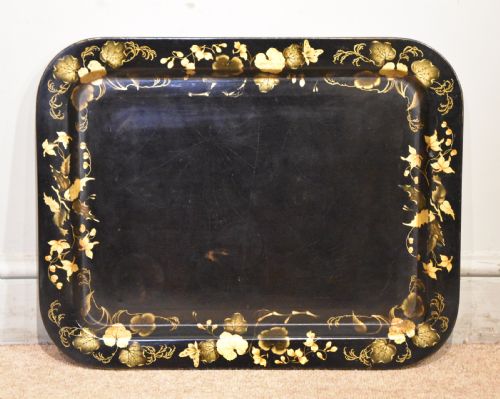
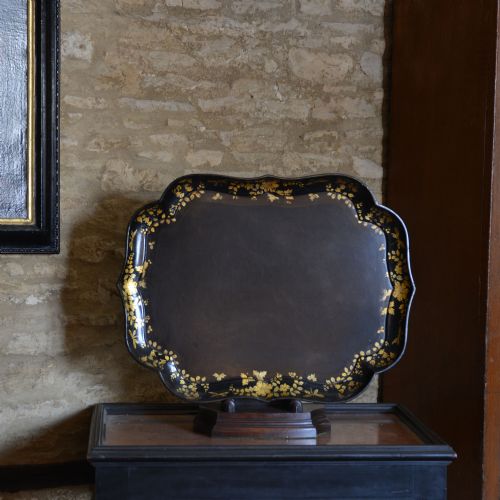
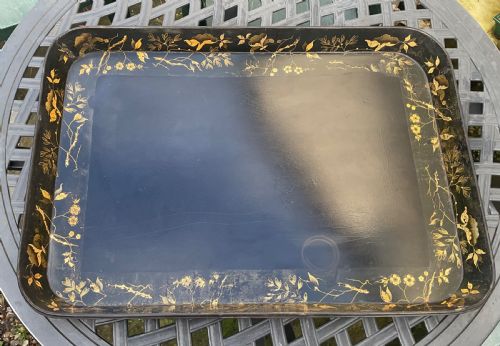
A nineteenth century serving tray encompasses functional platters and display pieces drawn from Regency, Victorian, and Edwardian periods. The selection on this page leans toward substantial papier-mâché, painted toleware, mahogany, and silver-plated metalwork designed for dining and display.
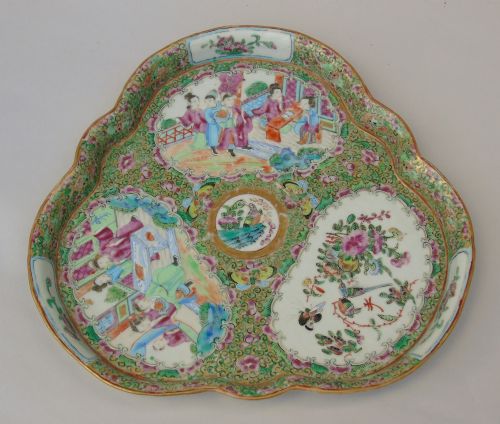
Makers utilised diverse global aesthetics, yielding pieces decorated in Chinese Export, Chinoiserie, Japonisme, and classical English blue and white patterns. Alongside standard serving trays, the grouping includes occasional tables, lazy susans, and porcelain dessert dishes.
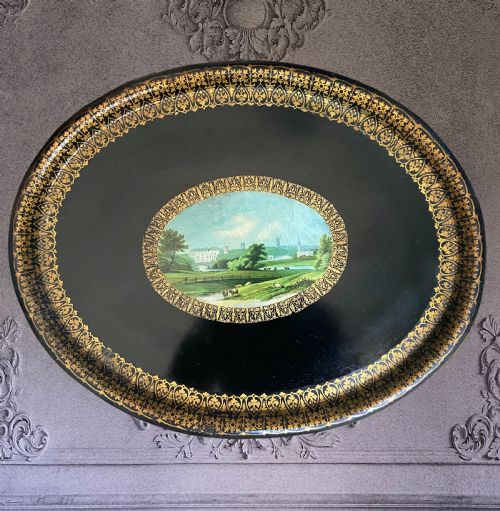
These items originate from British, French, and Asian workshops, reflecting the shifting domestic fashions of the nineteenth century. Buyers encounter forms ranging from large oval papier-mâché boards to intricate porcelain and pottery dishes.
How they were made
Makers constructed papier-mâché trays by pressing layered paper pulp and glue over moulds, then finishing the hardened surface with heavy layers of lacquer, paint, and gold leaf. This technique produced a robust yet lightweight body capable of holding elaborate hand-painted scenes.
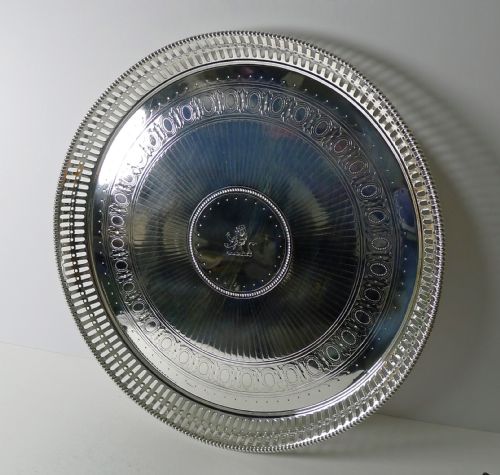
Metal items relied on toleware processing, where iron sheet metal received black japan finishes or hand-painted decoration. Silversmiths and electroplaters shaped brass and silver-plated copper into twin-handled circular serving trays with chased borders.
Wooden examples combined mahogany foundations with satinwood inlay or brass fittings, while ceramic dishes utilised porcelain and pottery bodies painted with cobalt blues or polychrome enamels.
What varies in quality
Quality rests upon the execution of the surface decoration, distinguishing master hand-painted motifs from basic stencilled patterns. Fine gilding, intricate lacquer work, and delicate brushwork elevate a piece above standard utility items.
The choice of base materials dictates structural integrity, separating dense, stable papier-mâché and solid mahogany from lighter, reactive substitutes. Superior metalwork displays crisp chasing and substantial plating thickness on brass or silver-plated copper.
Design sophistication also separates ordinary objects from exceptional works, seen in balanced proportions, harmonious inlay, and well-integrated handles that function practically while enhancing the overall silhouette.
Tiffany and Co·Spode·Thomas Lakin·Barr Flight and Barr·Elkington·Walker and Hall·Louis Pierre Malpass
The Nineteenth Century Serving Tray Glossary
- Papier-mâché
- A composite material made from paper pulp mixed with glue and resin, pressed and dried into sturdy forms. It provided a smooth base for lacquer and gilt decoration on nineteenth century trays.
- Toleware
- Painted or lacquered tinplate and sheet iron objects produced in Britain and France. Pontypool stands as a notable centre for this durable domestic ware.
- Japonisme
- The nineteenth-century European fascination with Japanese art and aesthetics. It influenced the asymmetrical compositions and motifs seen on certain porcelain dishes and trays.
- Famille rose
- A palette of Chinese porcelain enamels dominated by opaque pink or purple colours. This style appeared on export trays traded to Western markets.
- Lazy susan
- A revolving tray placed on a table to assist in passing food. Nineteenth-century examples offered practical convenience during large formal meals.
Nineteenth Century Serving Tray: Frequently Asked Questions
How were nineteenth century serving trays used?
These trays served primarily to transport tea sets, glassware, and courses between rooms during formal domestic gatherings. Their sturdy construction in papier-mâché or metal supported heavy silver teapots and porcelain cups.
Beyond dining duties, larger trays doubled as decorative display surfaces on sideboards and occasional tables. Their painted or gilded faces added colour and reflection to Victorian and Regency interiors.
How do I clean a papier-mâché tray?
Papier-mâché requires gentle maintenance using only a soft, dry cloth to lift dust from the lacquered surface. Moisture damages the compressed paper core and lifts delicate gold leaf.
Keep these trays away from direct sunlight and damp environments to prevent warping and cracking of the painted finish. Wax polishes should be avoided unless specifically formulated for antique lacquer.
What is the difference between toleware and papier-mâché?
Toleware utilises sheet metal as its foundation, offering a rigid structure finished with enamel or black japan paint. Pontypool workshops excelled in producing these durable metal platters.
Papier-mâché relies on compacted paper pulp, providing a lighter base that builders layered with thick lacquer and mother-of-pearl inlay. Both materials accommodated elaborate hand-painted decoration but behaved differently under weight and temperature.
How can I tell a Regency tray from a Victorian one?
Regency trays often feature neoclassical motifs, simpler geometric shapes, and restrained use of gold leaf on black papier-mâché grounds. Their proportions favour clean oval or rectangular outlines influenced by Sheraton and Georgian designs.
Victorian pieces frequently embrace busier decoration, including heavier gilding, Japonisme motifs, mother-of-pearl accents, and more elaborate scalloped edges. Silver-plated metal trays from this later era also display dense embossing and registered maker marks.