




Japanned Tea Tray
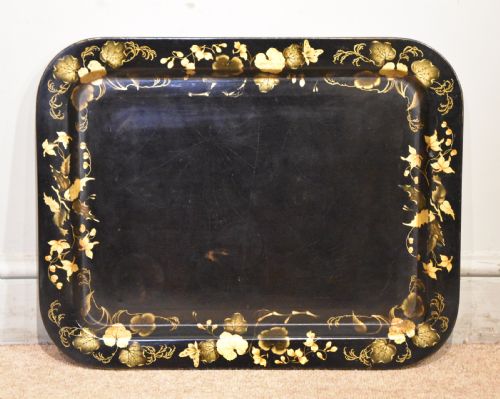
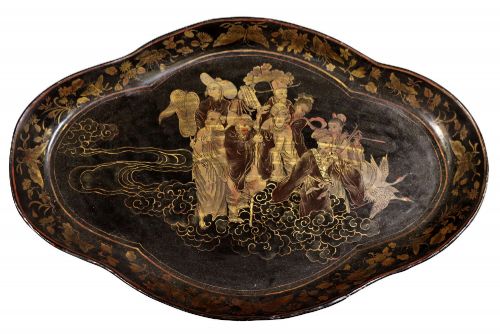
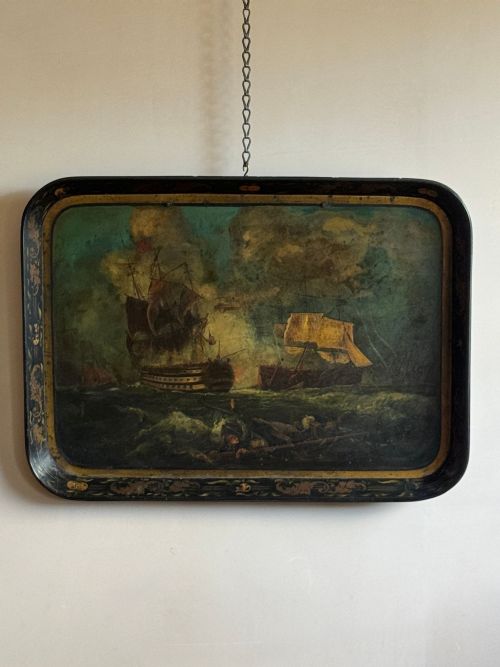
A japanned tea tray brings together deep lacquer and gilded Chinoiserie scenes, serving as both a functional surface and a striking focal point.
Japanned Tea Tray
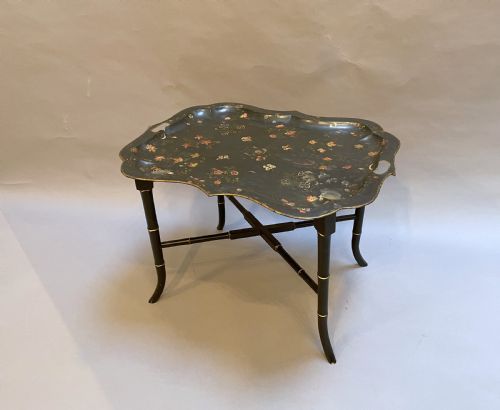
A japanned tea tray represents a refined tradition of surface decoration, spanning the eighteenth and nineteenth centuries. These pieces appear most frequently in papier-mâché and painted sheet iron, often adapted later onto occasional tables.
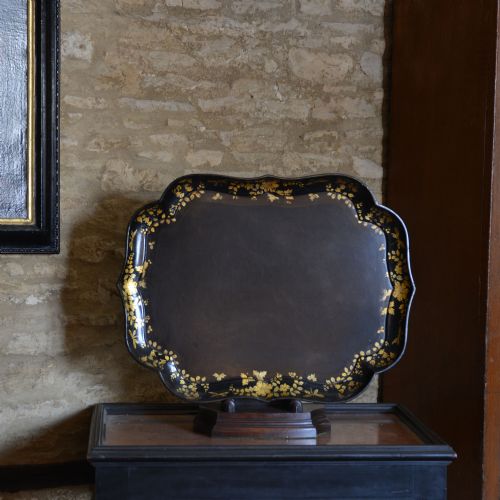
Makers shaped these utilitarian objects into large oval, rectangular, and kidney forms for serving beverages. Many survive mounted on later stands, transforming them into functional coffee or side tables within domestic spaces.
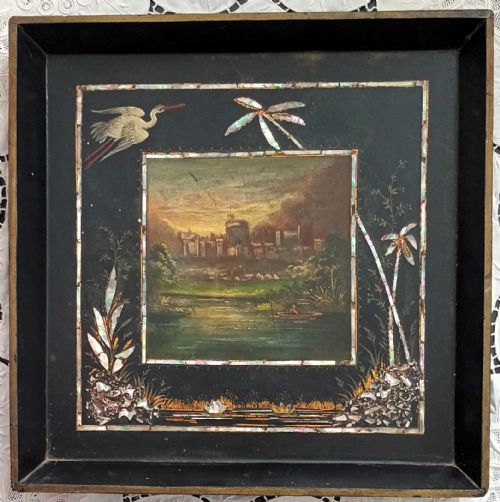
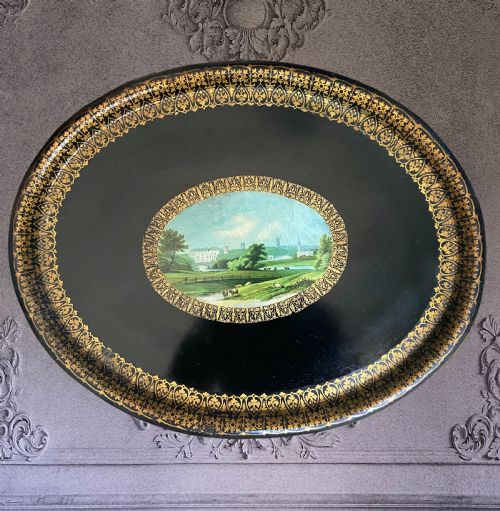
Originating in Georgian and Regency periods, the form continued through the Victorian era with elaborate hand-painted motifs. Examples range from simple black lacquer grounds to detailed scenes involving mother-of-pearl inlay and gold leaf.
Materials and construction methods
Workers built papier-mâché bodies by pressing layers of paper pulp with glue and resin, creating a surprisingly rigid and lightweight base. Toleware alternatives utilised sheet iron, shaped and finished with durable dark enamels.
Artisans applied multiple coats of lacquer, rubbing the surface smooth before adding intricate Chinoiserie designs in gold leaf, paint, and mother-of-pearl. This meticulous process produced a resilient finish that withstood regular service.
Trays occasionally depict dramatic historical scenes, such as Queen Esther accusing Haman, transforming tea service into high theatrical drama.
Assessing craftsmanship and execution
Quality rests upon the crispness of the hand-painted detailing and the depth of the lacquer finish. Superior works display finely rendered figures, landscapes, or hunting scenes executed by skilled hands rather than hasty stenciling.
The integrity of the underlying papier-mâché or metal core dictates structural longevity. Stronger examples maintain flat surfaces without excessive warping, preserving the delicate gilded borders and inset pearl details intact.
Henry Clay·Jennens and Bettridge·H. Meeson
The Japanned Tea Tray Glossary
- Japanning
- European imitation of East Asian lacquerwork using varnishes and heat-cured finishes. This technique produced glossy dark surfaces popular on furniture and serving wares.
- Papier-mâché
- A composite material made from paper pulp, reinforced with binders and pressed into moulds. It provided a stable, lightweight foundation for decorative painting.
- Toleware
- Enamelled and painted sheet metal items produced extensively in workshops. Pontypool became a notable centre for this durable tinplate ware.
- Chinoiserie
- European artistic interpretations of Chinese and East Asian motifs. Designs typically feature pagodas, exotic figures, and stylized landscapes in gold.
- Mother-of-pearl
- The iridescent inner layer of certain mollusk shells used for inlay. Craftsmen cut thin pieces to highlight highlights in architectural and floral elements.
Japanned Tea Tray: Frequently Asked Questions
How are japanned tea trays cleaned?
Dust surfaces gently with a soft, dry cloth to protect the delicate lacquer and gold leaf. Avoid moisture and chemical cleaners, which lift the fragile paint layers.
Maintain stable indoor humidity to prevent the papier-mâché core or wooden stands from expanding and cracking the aged varnish.
Can these trays still be used for serving?
Most antique examples serve better as display items or decorative tabletops rather than active service pieces. Weight and moisture can compromise the historic lacquer finish.
Placing them on dedicated stands keeps them safe from accidental spills while utilising their large decorative surfaces in a room.
How do I identify a papier-mâché tray?
Papier-mâché feels surprisingly light yet rigid compared to wood or heavy iron. Tapping the underside often produces a dull, solid thud rather than a metallic ring.
Examining the edges reveals the compressed paper layers beneath the black lacquer surface, particularly where wear exposes the material.
What is the difference between toleware and papier-mâché?
Toleware uses sheet iron as a base material, offering a magnetic surface and heavier weight. Artisans painted and fired enamel onto the metal to create durable trays.
Papier-mâché relies on pressed paper pulp, which allowed makers to form curved edges and kidney shapes more easily before applying lacquer.