
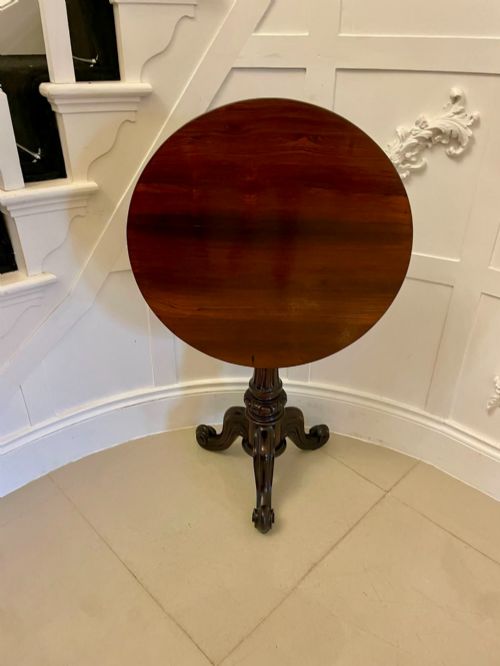
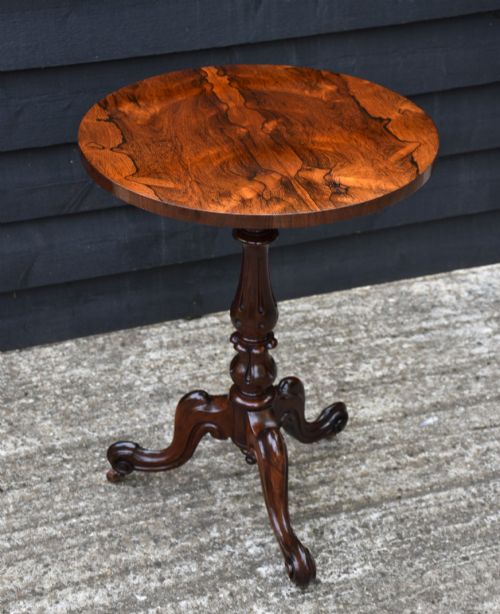
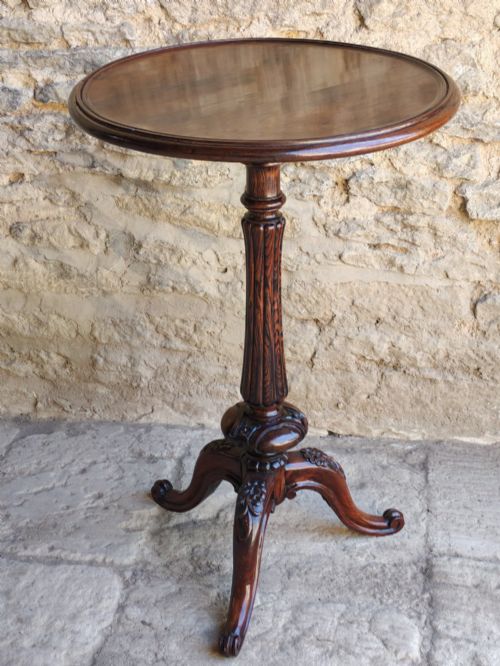

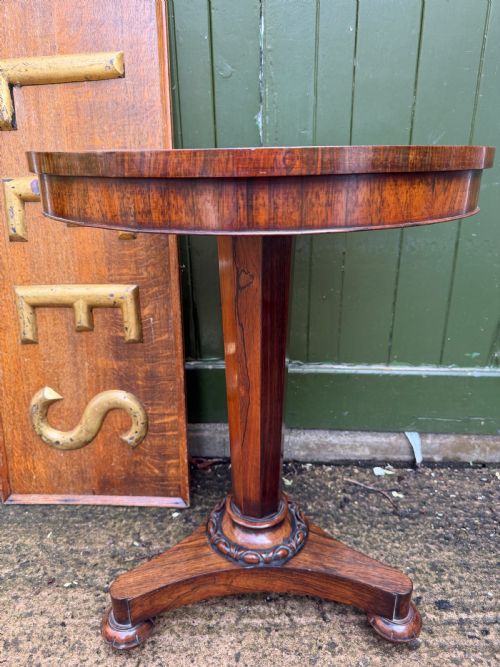


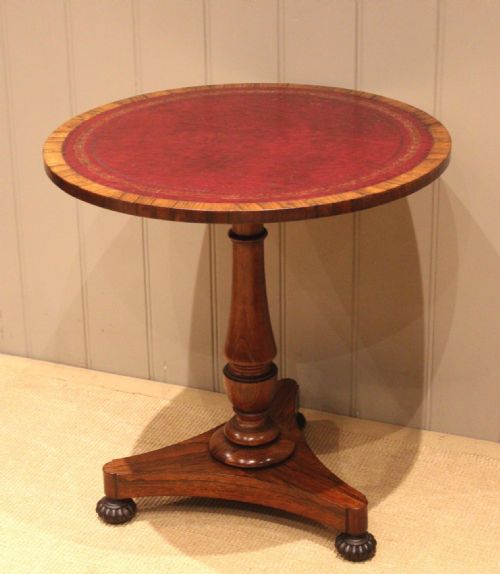


Circular Rosewood Wine Table
A circular rosewood wine table brings rich timber figure and compact proportion to a corner, and these pieces offer genuine period character.
Circular Rosewood Wine Table
A circular rosewood wine table combines a round top with a central pedestal base, serving variously as a lamp, occasional, or decanter table within the room. Buyers searching this phrase encounter forms spanning the Regency, William IV, and Victorian eras, often noted as occasional or side tables.
The examples seen on this page largely date from the nineteenth century, including specific years such as eighteen-fifty and eighteen-sixty, alongside broader Regency and Victorian stylistic periods. Alongside standard tripod and pedestal designs, variations include two-tier spindle-galleried pieces and specialised specimen wood tops.
Makers and regional workshops produced diverse formats, from solid rosewood constructions to Anglo-Indian padauk wood interpretations with carved bases. Papier-mâché and lacquer elements also appear, linking these small tables to broader nineteenth-century decorative trends.
How they were made
Construction relies heavily on dense tropical hardwoods, primarily rosewood, frequently supported by solid mahogany, walnut, or padauk wood beneath the surface veneers. Craftsmen utilised central pedestals, often terminating in tripod legs, to balance the weight of the solid timber tops.
Decorative techniques recorded in the evidence include parquetry inlay, tilt-top mechanisms, and barley twist turnings on the stem. Subsidiary materials such as brass, leather, and papier-mâché introduce contrast and texture to specific nineteenth-century examples.
Materials span rosewood, padauk wood, mahogany, walnut, brass, leather, and papier-mâché.
What varies in quality
Quality rests in the selection of the timber grain and the crispness of the carving on the pedestal base and legs. Tables featuring parquetry tops, specimen woods, or well-executed spindle galleries demonstrate a higher tier of workshop execution.
The integrity of the pedestal structure and the smooth operation of tilt-top mechanisms distinguish finer nineteenth-century examples from simpler utility pieces. Secondary timbers and the refinement of the turned stem further indicate the original maker's investment in labour and materials.
Gillows
The Circular Rosewood Wine Table Glossary
- Rosewood
- A dense, heavily figured timber prized for its dark grain and polished finish. It forms the primary surface material across the majority of these nineteenth-century tables.
- Pedestal
- A central vertical support that carries the weight of the circular top down to a grounded base. It commonly terminates in three scrolled or cabriole feet.
- Tilt-top
- A hinged mechanism allowing the circular tabletop to pivot into a vertical position when not in use. This clever design saved valuable floor space in period drawing rooms.
- Parquetry
- A geometric mosaic of wood pieces applied to a surface to create a decorative pattern. It appears on select tabletop surfaces to add visual complexity.
- Spindle gallery
- A decorative open railing of small turned pillars fitted around the edge of a tier. It prevented glassware or decanters from sliding off.
Circular Rosewood Wine Table: Frequently Asked Questions
What is a wine table used for today?
These small tables serve well beside a reading chair to hold a cup, a glass, or a small lamp. Their compact circular tops fit easily into awkward corners where larger furniture cannot go.
They also function effectively as plant stands or bedside surfaces. The sturdy pedestal design ensures they remain stable despite their small footprint.
How do I identify a Regency period table?
Regency pieces typically date from the early nineteenth century and display classical restraint in their proportions. Look for clean lines on the pedestal and understated veneering.
Later Victorian examples often introduce heavier turnings, such as barley twists, or more ornate carving. Comparing the base details helps separate the earlier Regency items from mid-nineteenth-century work.
What is a tilt-top mechanism?
A tilt-top allows the circular surface to pivot ninety degrees so the table can stand flat against a wall. This ingenious nineteenth-century feature made rooms easier to clear when entertaining.
Many surviving tables retain the original brass catch or wooden wedge that locks the top in place. Testing the pivot reveals the precision of the original cabinetmaking.
Are these tables made of solid rosewood?
Construction methods varied according to the workshop and the specific date of manufacture. Some examples use solid rosewood throughout, while others employ fine rosewood veneers over secondary timbers like mahogany.
Both methods were standard practice in nineteenth-century workshops to ensure stability and prevent warping. The grain pattern and edge construction generally clarify the underlying method.