
Carved Wooden Base Table
A carved wooden base table brings weight and texture to a room, uniting functional surfaces with sculptural carpentry.
Carved Wooden Base Table
A carved wooden base table covers a broad territory, ranging from substantial dining furniture and refectory pieces to smaller breakfast tables, occasional tables and lamp bases. Buyers encountering this selection will find examples stretching from the 18th century through the Victorian and Edwardian eras into the early 20th century.
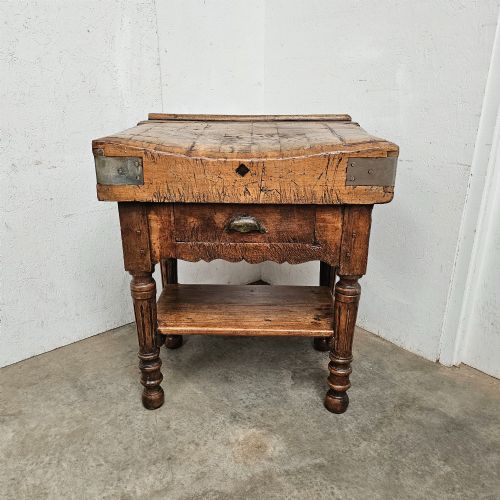
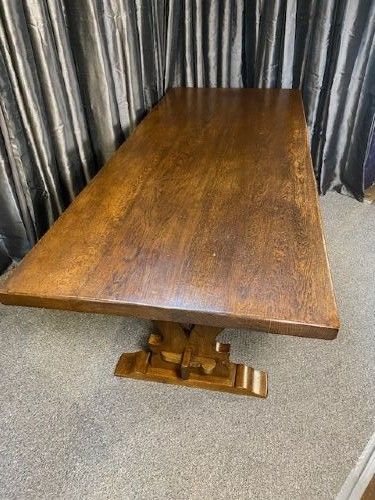
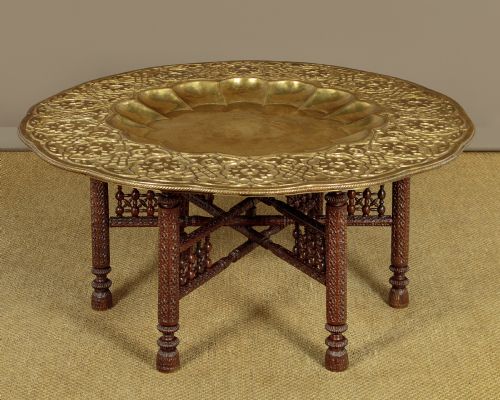
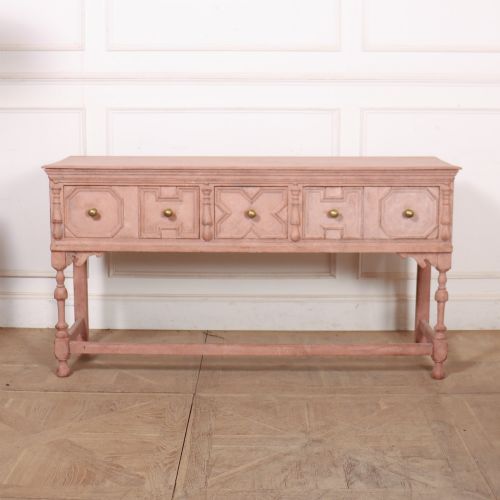
The domestic forms recorded in the evidence include oak refectory and draw leaf dining tables, walnut breakfast tables, work tables and serving dressers. Alongside these sit smaller decorative items, including carved stands, occasional pieces and sculptural lamp bases originating from English, continental and colonial traditions.
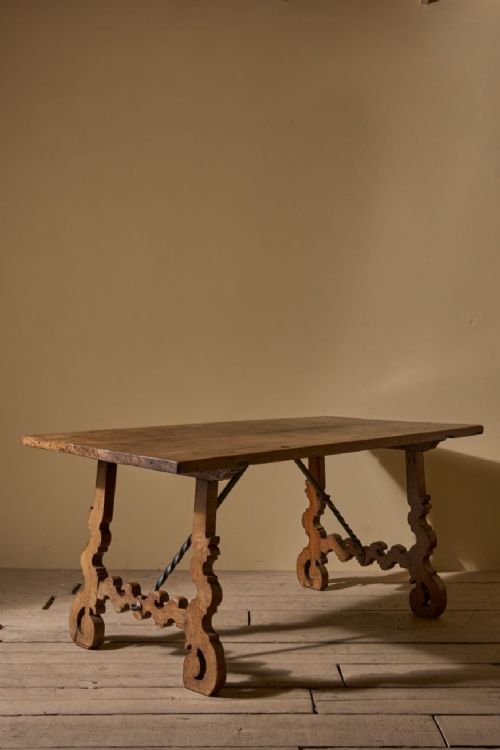
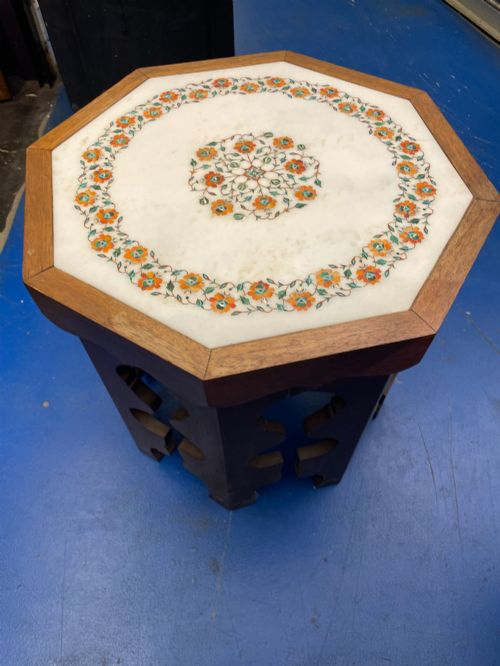
Stylistic influences across the selection span Georgian, William IV, Victorian, Edwardian, Spanish Baroque, Jacobean Revival and Anglo-Indian designs. Oak and walnut dominate the structural forms, supported by periods where craftsmanship focused heavily on substantial timber frames and decorative supports.
Materials and construction
Makers utilised solid domestic and exotic hardwoods such as oak, walnut, mahogany, rosewood and pollard oak to build enduring frames and heavy supports. Secondary materials like brass, marble, wrought iron and painted finishes appear alongside carved wood to create contrasting surfaces and decorative bases.
Carpentry techniques relied on traditional jointing methods to anchor heavy timber tops to elaborate pedestals, tripod frames, quadrapod bases and refectory stretchers. Hand carving shaped the pillars, legs and aprons, producing detailed floral, geometric and figural motifs characteristic of each period.
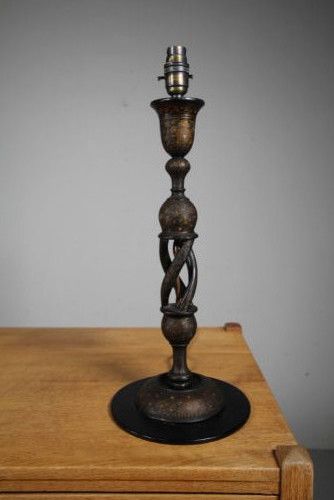
Even a towering Kashmiri twist lamp base needs a quiet corner to show off its hand-carved spirals without competing with the dining furniture.
Design and execution
The standard of a carved wooden base table rests upon the crispness of the hand carving and the selection of figured timber for the top and structural supports. Superior examples display deep, confident chisel work on the base, where motifs such as foliage or figural elements remain sharp and well-defined.
Proportion and structural integrity dictate the standing of a piece within its period. Refined items balance a heavy, ornate pedestal or substantial legs with a well-proportioned top, whereas simpler utilitarian versions prioritise sturdy daily function over decorative flourishes.
The Carved Wooden Base Table Glossary
- Refectory table
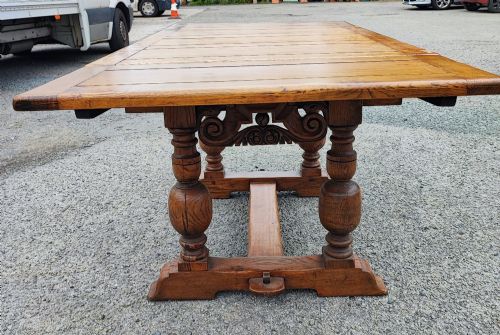
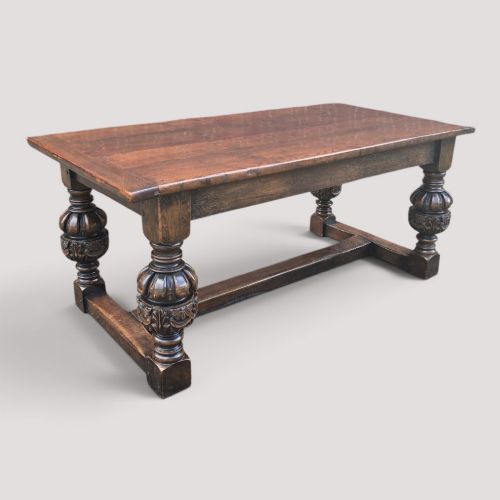
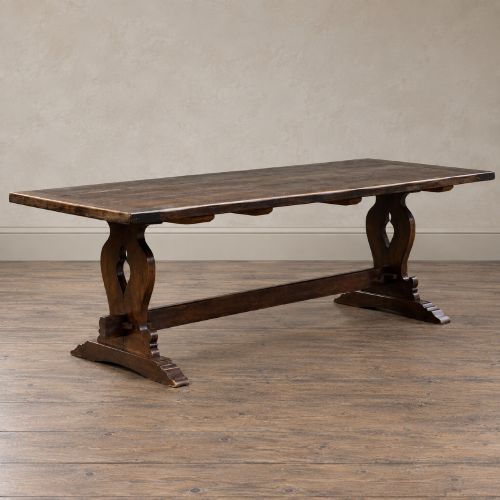
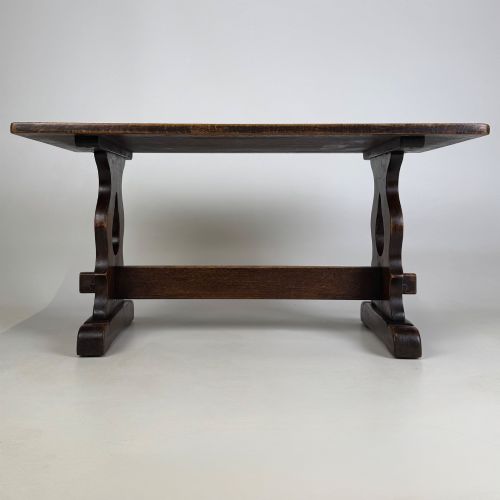
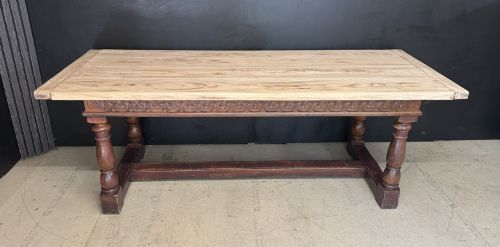
- A long dining table traditionally used in monastic refectories, characterised by substantial wooden legs connected by a central floor stretcher. These sturdy tables became staples in English farmhouse and country interiors.
- Draw leaf table
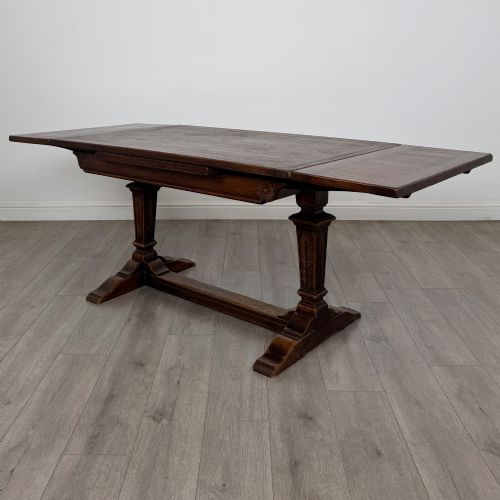
- A dining table equipped with two hidden leaves tucked beneath the main top that pull out to extend the surface length. This clever mechanism allows the table to expand for guests without losing its compact profile.
- Dresser base
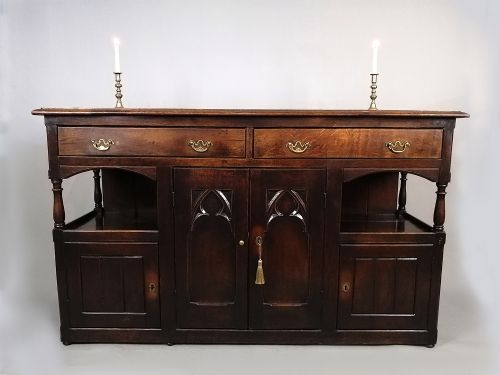
- The lower portion of a traditional kitchen or dining dresser, featuring functional drawers and cupboards beneath a sturdy surface. In many listings, these serve effectively as sideboards or serving tables.
- Breakfast table
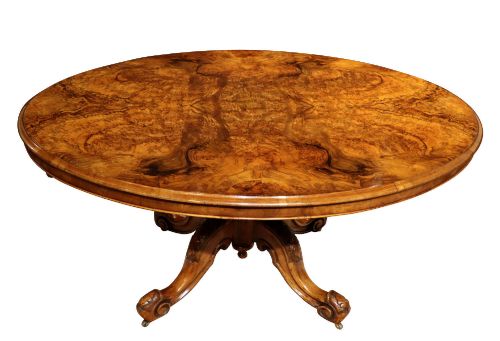
- A circular or oval dining table popular in the 19th century, designed for morning meals and supported by a single central pedestal or pillar. They frequently showcase highly figured timbers like pollard oak or burr walnut.
- Quadrapod base
- A heavy four-legged pedestal support system commonly found beneath large Victorian dining and breakfast tables. This configuration provides stability for heavy circular or oval timber tops.
Carved Wooden Base Table: Frequently Asked Questions
What is a refectory table?
A refectory table is a long, heavy dining table traditionally anchored by sturdy wooden legs and a low floor stretcher for stability. They emerged from communal dining halls and became enduring fixtures in country houses.
In modern homes, these tables function as durable dining surfaces that anchor a room with architectural timber framing and historical character.
How do I identify an Edwardian table?
Edwardian tables, produced in the early 20th century, often draw inspiration from earlier Georgian or Sheraton styles while incorporating lighter proportions. They frequently utilise golden oak or mahogany.
Look for refined turned legs, sensible proportions and functional additions like extending draw leaves or multiple drawers suited to Edwardian domestic life.
Where were carved pillar bases used?
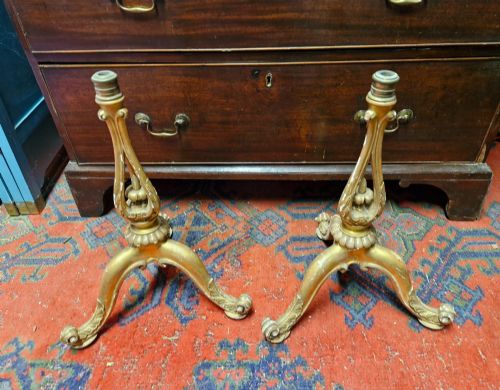
Carved pillar bases served as the structural and decorative support for heavy table tops, torchères, or large decorative lamp bases. They were designed to catch the eye in grand hallways and principal rooms.
These architectural supports often feature deep hand-carved details, twist designs, or figural motifs reflective of continental Baroque or colonial traditions.
What is a breakfast table?
A breakfast table is a smaller freestanding table designed for morning meals, typically featuring a circular or oval top mounted on a central pedestal. They became particularly popular during the Victorian period.
The single central pillar allows chairs to tuck neatly underneath, making these versatile pieces for smaller dining spaces or drawing rooms.