
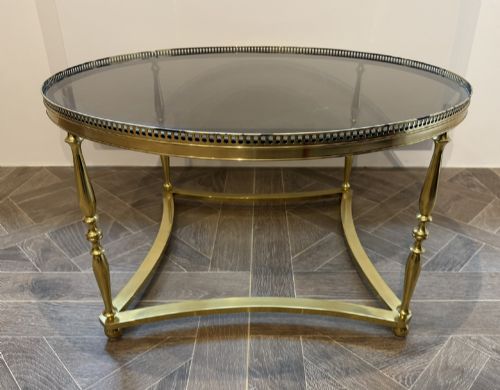


Circular Brass Coffee Table
These circular brass coffee table pieces combine metalwork and timber to anchor a room, offering both surface utility and distinct regional character.
Circular Brass Coffee Table
A circular brass coffee table brings together metal top surfaces and timber frames, drawing on periods from the nineteenth century through the mid-twentieth century. The selection spans forms such as occasional tables, centre tables, and nesting sets.
Makers and workshops from various regions produced these items, utilising influences including Art Deco, French Neoclassical, and Regency Revival alongside Moorish, Persian, and Anglo-Indian traditions. Buyers encounter everything from Moroccan tray tables to inlaid teak constructions.
Originating from diverse international workshops, these low tables function as central room fixtures or side pieces. Their circular formats and reflective brass elements suit eclectic and period interiors alike.
How they were made
Construction relies heavily on combining brass with hardwoods such as mahogany, teak, and general hardwood frames. Metal elements frequently feature etched or inlaid detailing, particularly on tray tops and Zodiac designs.
Secondary materials such as smoked glass, standard glass, and leather appear inset into wooden frames or beneath metalwork. Techniques range from traditional joinery in nineteenth-century workshops to the geometric veneering seen in later Art Deco nests.
The inventory records pieces incorporating brass, mahogany, teak, leather, and smoked glass across several decades.
What varies in quality
The sophistication of the metal engraving and inlay work sets apart the finer examples from standard production. Intricate patterns found on Mamluk Revival and Anglo-Indian brass tops require skilled hand-chasing rather than basic stamping.
Timber selection and structural joinery also dictate overall grade, distinguishing solid hardwoods and neatly fitted nesting sets from simpler constructions. The integration between the brass top and the underlying frame determines the long-term stability of each piece.
The Circular Brass Coffee Table Glossary
- Mamluk Revival
- A nineteenth-century design movement inspired by medieval Islamic art of Egypt and Syria, notable for dense geometric and calligraphic brass ornamentation. Pieces from this style often feature elaborate hand-engraved metal tops.
- Anglo-Indian
- A term describing furniture produced during the British colonial period in India, frequently combining local timber traditions with European furniture forms. These items often incorporate brass inlay and carved teak.
- Centre Table
- A freestanding table designed to be viewed from all sides rather than pushed against a wall. They frequently feature circular tops and robust pedestal or multi-legged supports.
- Nest of Tables
- A set of graduated tables designed to fit neatly beneath one another when not in use. Art Deco examples in this format combine space-saving utility with decorative wood veneers.
- Occasional Table
- A light, movable small table intended for specific, intermittent use within a room. They appear in various stylistic revivals and metal-topped variations.
Circular Brass Coffee Table: Frequently Asked Questions
What periods do these tables represent?
The selection spans from the late nineteenth century through the 1920s, 1930s, and 1940s. Styles range from Georgian and Regency revivals to Art Deco and Middle Eastern influences.
Items reflect the craftsmanship of their respective decades, utilising period timbers and traditional metalworking techniques appropriate to each origin.
How do I identify an Anglo-Indian table?
Anglo-Indian pieces typically combine dense hardwood construction, such as teak, with intricate brass wire inlay or applied brass sheeting. Their ornamentation draws on South Asian decorative motifs.
These tables date largely from the late nineteenth and early twentieth centuries, blending local carving skills with British domestic furniture formats.
Are these tables suitable for modern living rooms?
Their compact circular footprints and varied heights allow them to function effectively as central coffee tables or side surfaces. The mix of brass and wood complements both traditional and contemporary interiors.
Different formats, including nesting sets and tray tables, offer flexibility depending on available space and functional requirements.
What is a Mamluk Revival piece?
Mamluk Revival items draw direct inspiration from historical Islamic metalwork, featuring dense, chased brass patterns across the surface. These heavy tops are usually mounted on supportive wooden frames.
Such tables represent the nineteenth-century European appetite for exoticism and revivalist decorative arts.