
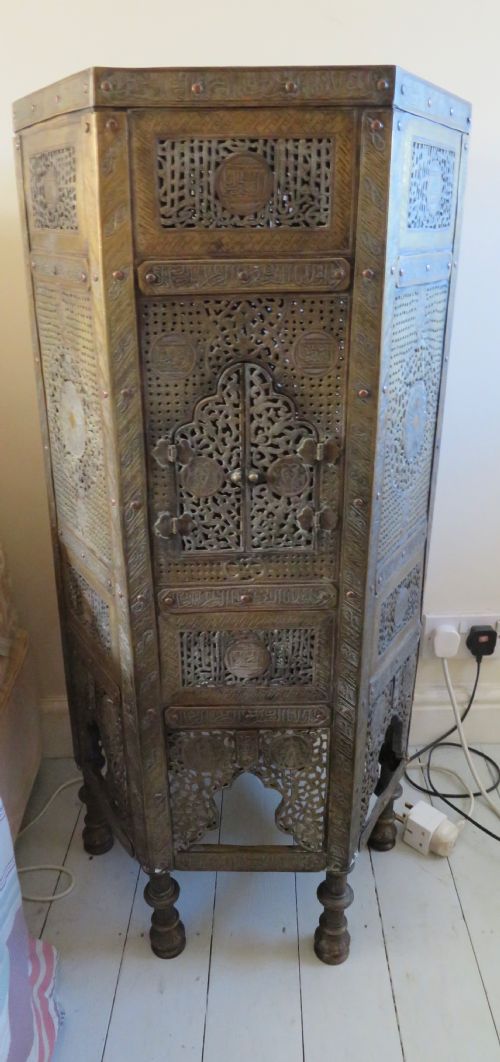


Islamic Brass Table
These Islamic brass table pieces bring heavy metalwork and intricate engraving into a room, offering functional surfaces shaped by revivalist and regional traditions.
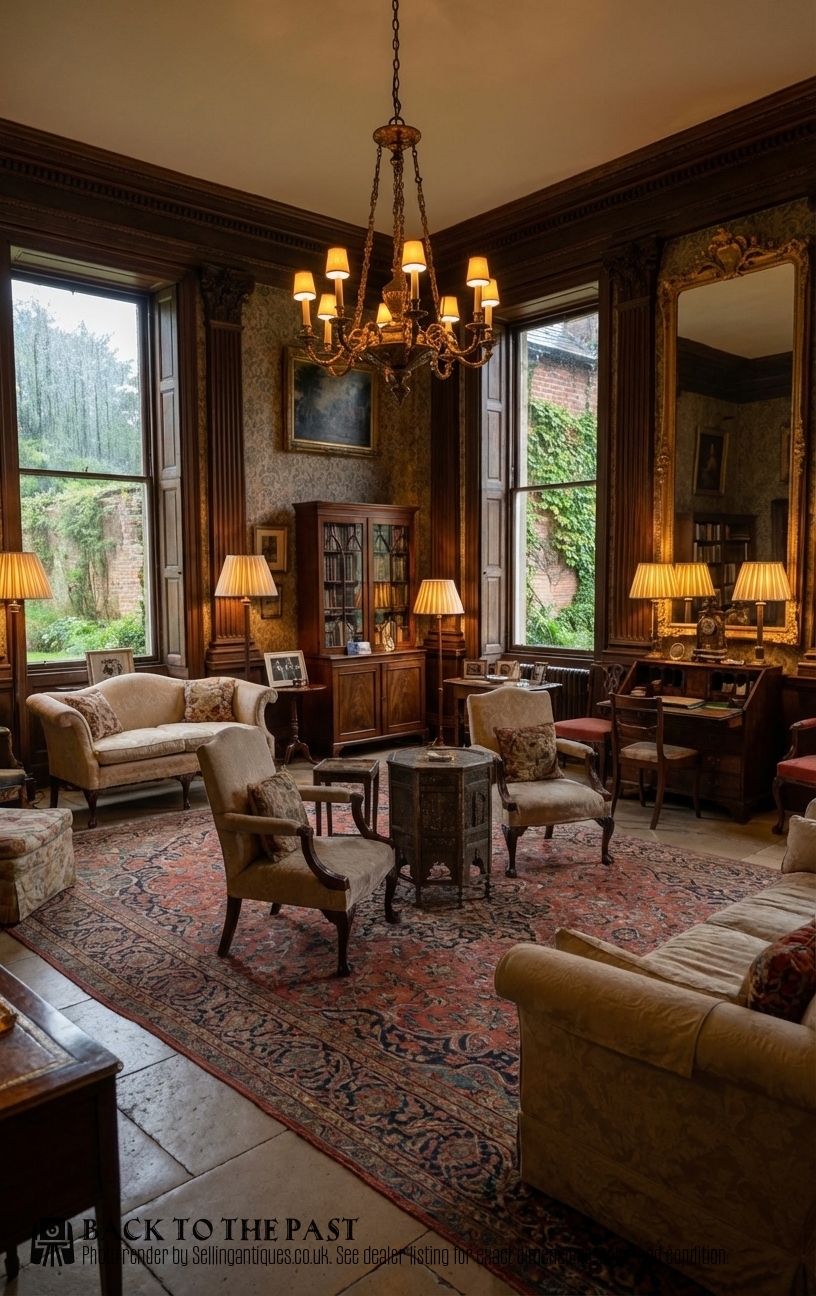
Islamic Brass Table
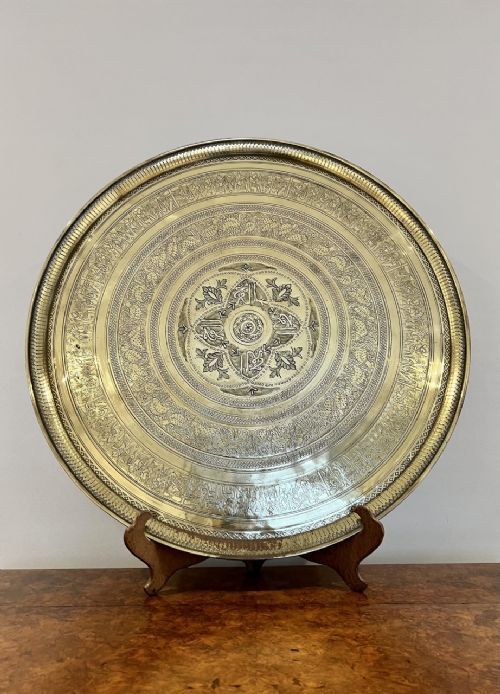
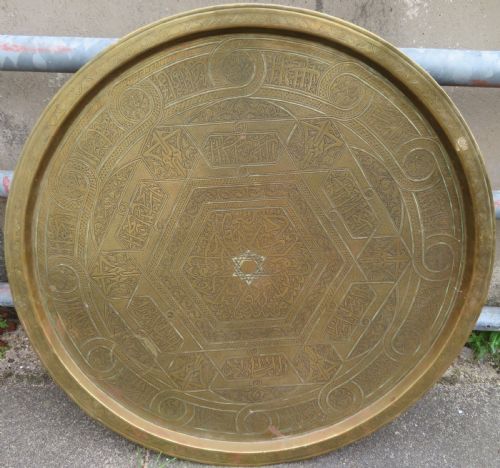
An islamic brass table encompasses occasional forms, centre tables, coffee tables, and folding kursi stands primarily dated from the late nineteenth century through the nineteen-thirties. You will most frequently encounter hexagonal occasional tables and circular trays supported by folding bases, often associated with Cairoware production.
The objects draw on distinct stylistic vocabularies including Mamluk Revival, Moorish Revival, Anglo-Indian, and Persian design. These pieces function as low coffee tables or accent surfaces, frequently serving as portable trays lifted off their wooden stands.
How they were made
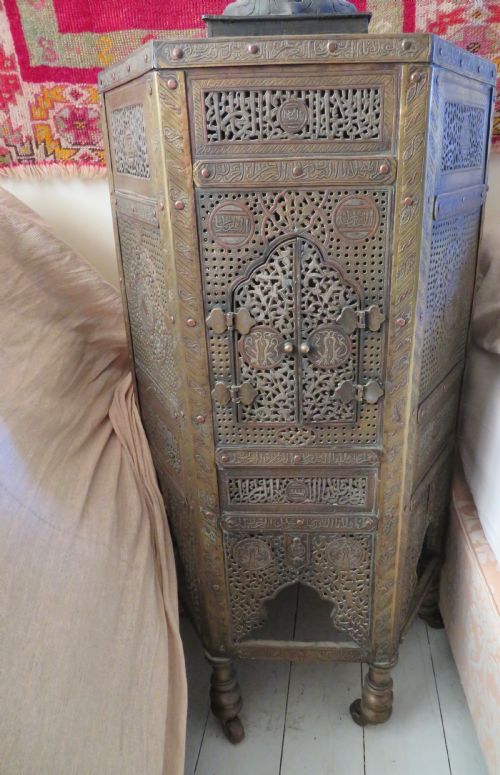
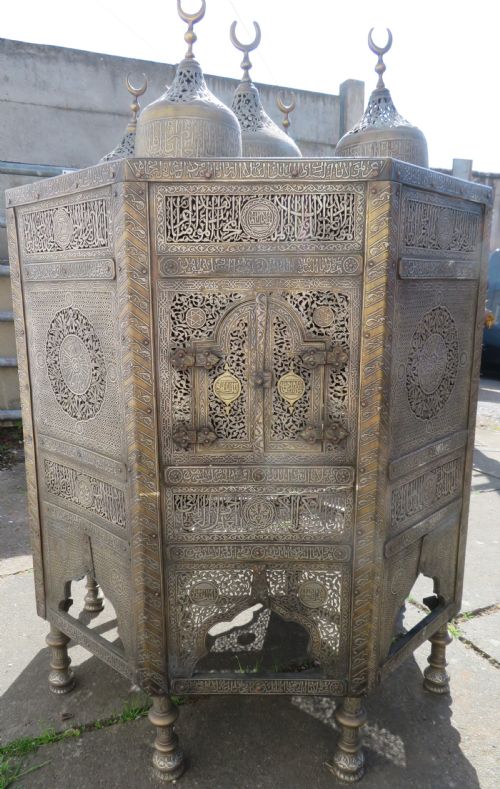
Makers constructed these tables using heavy brass, often combining copper, white metal, and silver inlay to create high-contrast geometric and calligraphic patterns. Surfaces received dense hand-engraving, piercing, and openwork execution across tops and folding wooden frames.
Inlaid metals create complex friezes of decoration across brass sheets, while secondary materials like carved hardwood provide structural support for folding hexagonal kursi bases.
Many folding bases were built to collapse completely flat, proving that nineteenth-century artisans understood the convenience of flat-pack furniture long before it was trendy.
What varies in quality
The distinction between standard production and superior execution lies in the depth of the hand-engraving and the precision of the mixed metal inlay. Pieces displaying crisp silver and copper wire work across the entire brass surface indicate a higher level of artisan labour.
Structural integrity in the accompanying carved hardwood or openwork metal bases separates robust examples from lighter, purely decorative items. The weight of the brass and the complexity of the openwork piercing determine the overall calibre of the piece.
The Islamic Brass Table Glossary
- Cairoware
- A term used for metalwork produced in Cairo from the late nineteenth century onwards, typically featuring heavy brass inlaid with silver, copper, and black composition. These items were widely collected by European travellers.
- Kursi
- A low stand or stool, often hexagonal, used to support heavy trays, Quran copies, or serving vessels. They usually feature folding openwork wooden or metal construction.
- Mamluk Revival
- A nineteenth-century decorative style inspired by the metalwork and architecture of the Mamluk Sultanate. It is characterised by dense script panels, geometric medallions, and heraldic motifs.
- Occasional table
- A small, movable table designed for specific, intermittent use within a principal room. In this context, they frequently double as tray tables with removable tops.
Islamic Brass Table: Frequently Asked Questions
What is a kursi table?
A kursi is a low, often hexagonal stand designed to hold a heavy tray or a sacred text like a Quran. They traditionally feature collapsible wooden or metal frames.
These stands support removable brass trays, allowing the entire structure to be easily folded and stored when not in use.
How do I clean an antique brass table?
Cleaning should be minimal to preserve the dark patination and the delicate silver and copper inlay work. A soft, dry cloth removes dust without disturbing the recessed details.
Avoid aggressive metal polishes that strip away the dark contrasting fills embedded within the hand-engraved lines.
Are the tray tops removable?
Most circular and polygonal tops lift off their folding wooden or metal bases entirely. This construction allowed for easy transport and storage in traditional domestic settings.
When placing these pieces, ensure the tray sits securely within the frame to prevent shifting during daily use.
How do I date these metal tables?
Dating relies on stylistic markers, construction methods, and the specific mix of revival aesthetics popular from the late nineteenth century through the nineteen-thirties. Pieces often correspond to the height of European interest in Orientalist interior design.
Examining the regularity of the hand-engraving and the composition of the base materials helps place the object within this broad period.