



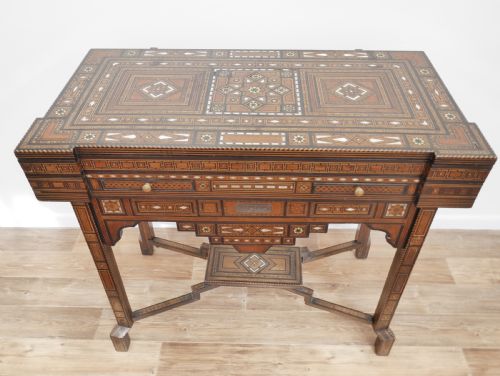
Antique Middle Eastern Furniture
Antique Middle Eastern furniture brings intricate geometric marquetry, mother-of-pearl inlay and striking metalwork into domestic interiors.
Antique Middle Eastern Furniture
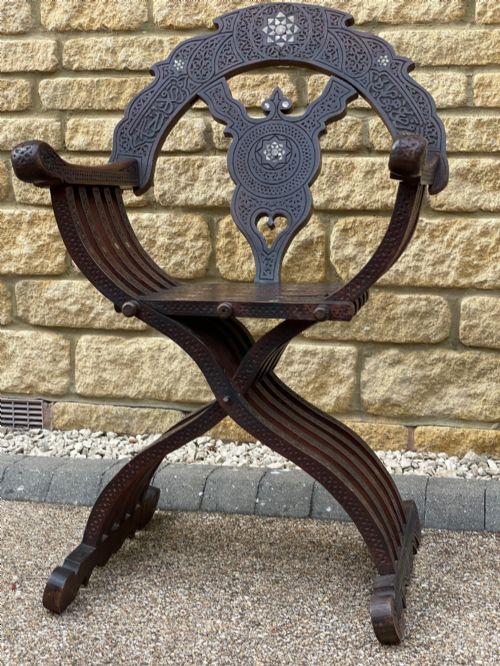
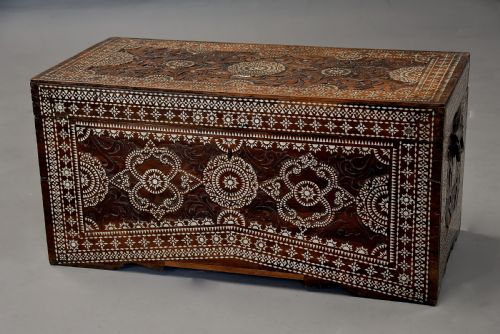
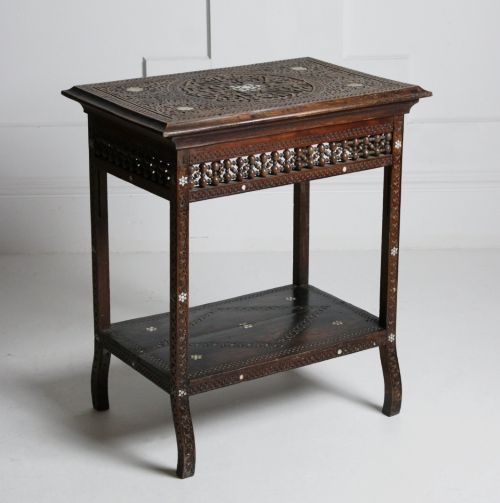
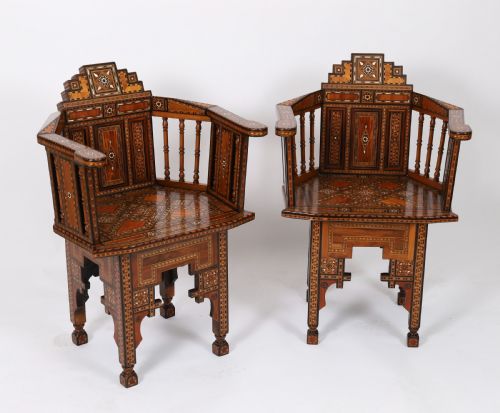
Antique Middle Eastern furniture encompasses a range of seating, tables, chests and storage pieces produced during the nineteenth and early twentieth centuries. These items include Mamluk Revival, Ottoman, Moorish Revival, Levantine and Islamic Revival styles, reflecting rich regional design traditions. Buyers searching for antique Middle Eastern furniture frequently encounter occasional tables, armchairs, side tables and storage trunks.
Dating primarily from the nineteenth century up through the nineteen-thirties, these works demonstrate diverse craftsmanship from Syrian, Egyptian and broader Levantine workshops. Trunks, chests and seating often display dense surface decoration alongside structural timber frames. Each category serves both decorative and functional purposes within a room.
Materials and construction methods
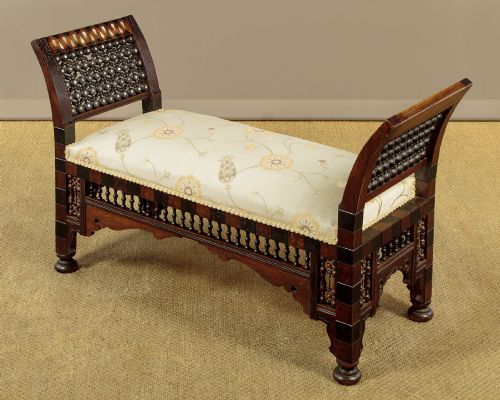
Construction relies heavily on sturdy hardwoods and walnut as the primary structural timber for chairs, tables, settees and cabinets. Artisans shape these timbers into complex multi-tiered tables, hexagonal forms and robust storage chests. The underlying woodwork provides a stable base for extensive surface ornamentation.
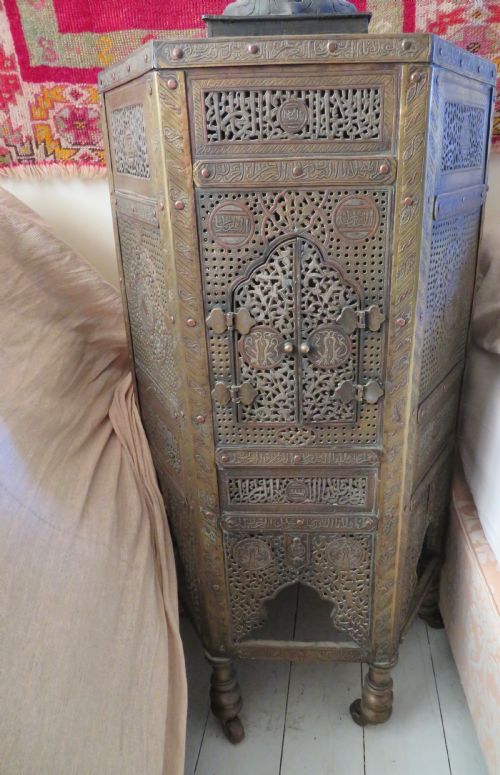
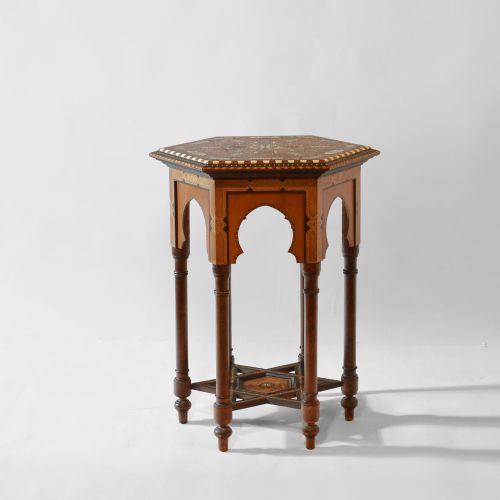
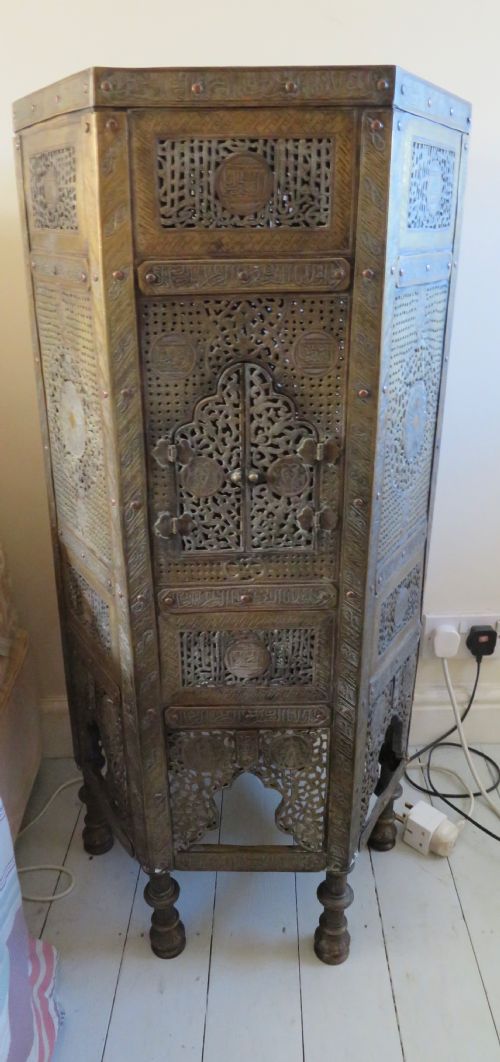
Decoration is achieved through meticulous inlay techniques utilising bone and mother-of-pearl arranged in geometric parquetry patterns. Metalwork elements feature white-metal and copper-inlaid brass, particularly visible on Cairo ware kursi tables and Quran stands. Openwork detailing further enhances the brass and copper surfaces.
Joinery methods support the intricate surface patterns without relying on modern fixings, keeping the wooden frames and panels secure. The combination of carved hardwood, shimmering shell inlay and contrasting metals defines the physical execution of these pieces. Workshops balanced structural integrity with dense visual ornamentation across every surface.
Some hexagonal Damascus tables arrive with ingenious folding frames that let the entire top collapse flat like a wooden puzzle.
Assessing quality in Middle Eastern pieces
Quality depends upon the precision and complexity of the inlay work, particularly the snugness of fit in mother-of-pearl and bone parquetry. Superior examples exhibit tightly fitted geometric patterns across the entire surface without gaps or crude adhesive fillers. Lesser pieces show irregular spacing and simplified, repetitive motifs.
The density and depth of metalwork define another key tier in execution, especially on brass occasional tables and Cairo ware. Finer specimens display crisp openwork cutting and secure copper and white-metal inlays that sit flush with the base metal. Thinner metal sheets and shallow engraving indicate standard commercial production.
Structural stability and timber selection also differentiate the range, with solid walnut and dense hardwoods outlasting lighter secondary woods. Well-preserved pieces retain their original joinery and complete inlay elements without widespread losses to the shell or metal components. The overall coherence of design sets exceptional revival pieces apart from routine workshop output.
The Antique Middle Eastern Furniture Glossary
- Kursi
- A low hexagonal table or stool, often constructed with openwork brass and copper inlay in the Cairo ware tradition. These pieces frequently function as occasional tables or stands.
- Parquetry
- A geometric mosaic of wood, bone or mother-of-pearl pieces applied to a wooden structure to create decorative surface patterns. This technique forms the primary visual element on many Levantine tables and chairs.
- Cairo ware
- Metalwork vessels and tables inlaid with silver, copper or white-metal, originating from Egyptian workshops in the late nineteenth and early twentieth centuries. The style is noted for dense Islamic motifs and openwork brass construction.
- Mamluk Revival
- A design style drawing inspiration from the art and architecture of the Mamluk Sultanate, characterised by geometric complexity and rich surface ornamentation. It experienced a strong revival during the nineteenth and early twentieth centuries.
- Damascus table
- A hexagonal or multi-sided occasional table originating from Syrian workshops, typically featuring intricate mother-of-pearl and bone inlay on hardwood. These tables often fold or dissemble into separate components.
Antique Middle Eastern Furniture: Frequently Asked Questions
How do I clean mother-of-pearl inlay?
Dust the surface regularly with a soft, dry cloth to prevent dirt from settling into the fine crevices of the parquetry.
Avoid using liquid cleaners, polishes or harsh chemicals, as moisture can damage the wood and loosen the delicate shell or bone elements.
What is Cairo ware?
Cairo ware refers to brass and copper metalwork, such as hexagonal kursi tables, inlaid with contrasting metals like copper and white-metal.
These pieces were produced primarily in Egypt during the late nineteenth and early twentieth centuries for both local use and export.
Are these tables sturdy enough for daily use?
Most occasional tables and side tables are structurally sound for holding small objects, lamps or drinks, provided they are placed on an even floor.
Heavier storage trunks and armchairs are built from solid hardwoods like walnut, making them durable for everyday domestic seating and storage.
How do I identify Mamluk Revival furniture?
Mamluk Revival pieces feature distinct geometric ornamentation, intricate metalwork and traditional Islamic design motifs adapted during the nineteenth century.
Look for dense surface patterns, openwork brass and precise parquetry that echo historical architectural elements from the Middle East.