


Ottoman Style Low Table
These low stools and tables, often sought as an ottoman style low table, offer versatile seating and surface utility across several centuries.
Ottoman Style Low Table
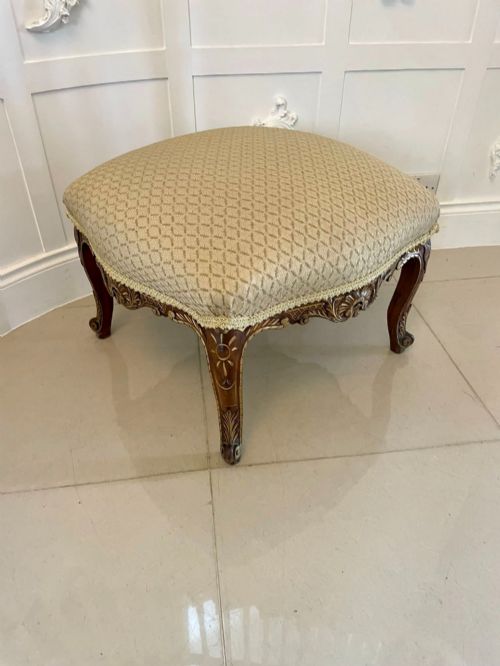
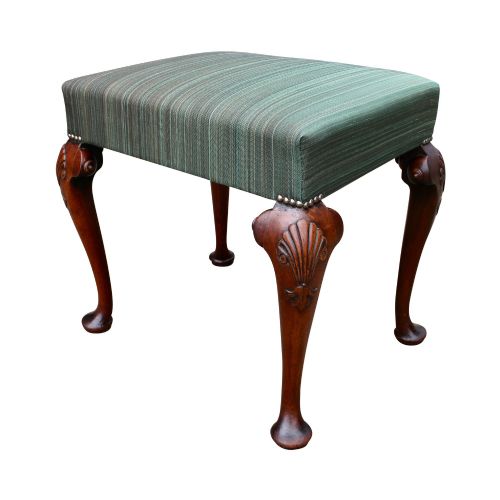
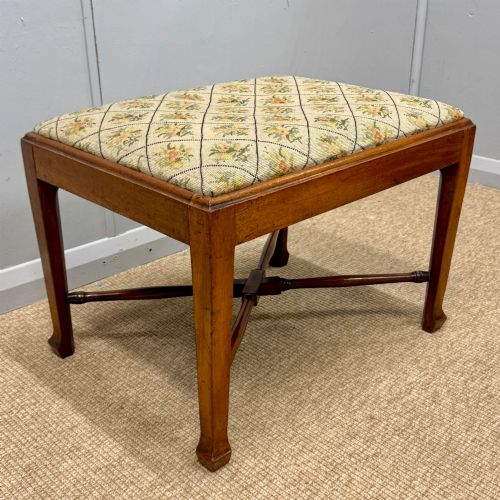
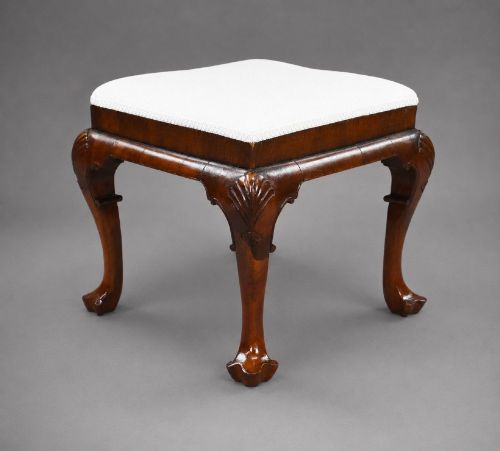
An ottoman style low table search typically reveals a selection of antique stools, footstools, and occasional tables dating from the mid-nineteenth century through the early twentieth century. The forms range from simple square footstools to large dressing table stools and low centre pieces.
Most examples found within this grouping adhere to traditional British and European revival aesthetics, notably the Queen Anne style and Victorian designs. They frequently feature low profiles suited for use as impromptu tables or deep-buttoned seating.
How they were made
Cabinetmakers utilised solid hardwoods such as walnut and mahogany for the frames, often employing carved cabriole legs and cross stretchers for structural stability. Giltwood and painted finishes also appear on select decorative frames.
Upholstered elements rely on traditional textiles including wool, leather, and various woven fabrics. Deep buttoning and caned top panels demonstrate the period techniques used to finish the surfaces.
Victorian makers occasionally fitted castors to low stools, ensuring heavy walnut frames could chase dusty rugs across the parlour.
What varies in quality
The standard of carving and the selection of timber dictate the primary tier of quality among these low tables and stools. Dense, figured walnut and finely executed cabriole legs distinguish superior workshop output from simpler utilitarian pieces.
Integrity of the original frame construction and the preservation of period upholstery materials or cane work also separate finer examples from standard domestic furnishings.
The Ottoman Style Low Table Glossary
- Cabriole leg
- A furniture leg that curves out and then in, commonly found on Queen Anne and Georgian revival seating. This shape mimics the leaping posture of an animal.
- Cross stretcher
- An intersecting wooden brace between the legs of a table or stool for added stability. These often feature central finials or decorative turning.
- Deep buttoning
- An upholstery technique where twine is pulled through padding and secured with buttons to create a diamond pattern. It provides both structural firmness and decorative depth.
- Giltwood
- Timber coated with a thin layer of gold leaf or gilt powder. This finish was applied to decorative frames to emulate solid gold objects.
Ottoman Style Low Table: Frequently Asked Questions
What is an ottoman style low table?
It is a low-set piece of furniture, historically functioning as a stool, footstool, or dressing table seat, which adapts well for use as a low coffee table.
These pieces typically date from the Victorian era up to the 1930s and are constructed from woods like mahogany and walnut.
How do I date a low wooden stool?
Dating relies on examining the timber species, joinery methods, and stylistic revival influences present in the frame design.
Victorian pieces frequently display deep buttoning or castors, whilst Queen Anne revival examples showcase characteristic cabriole legs from the late nineteenth and early twentieth centuries.
Can these stools be used as coffee tables?
Many low stools with flat or caned tops function effectively as coffee tables within modern interiors.
Upholstered versions can also hold trays to create a stable surface while retaining a soft profile.
What materials were used for the upholstery?
Period listings show a variety of coverings including leather, wool, and general textile upholstery.
Deep buttoning and traditional padding methods were standard for Victorian and Edwardian seating forms.