



Low Wooden Footstool Table
These low wooden footstool table pieces offer versatile utility and historic charm, spanning centuries of craftsmanship from country rustic to revival styles.
Low Wooden Footstool Table
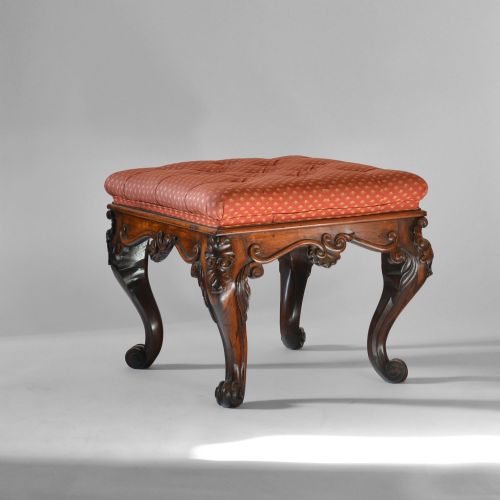
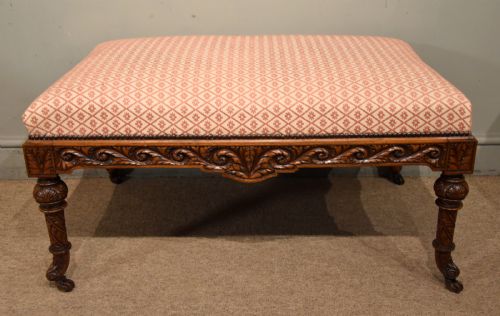
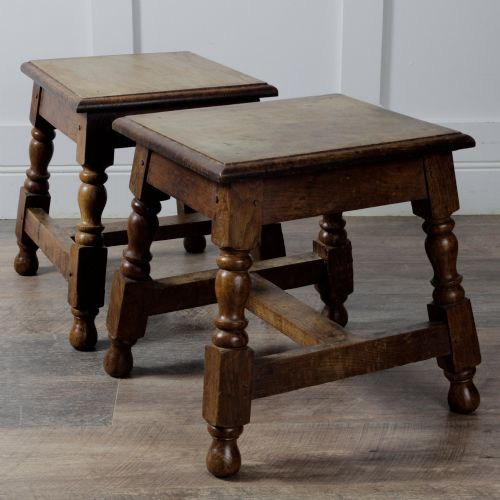
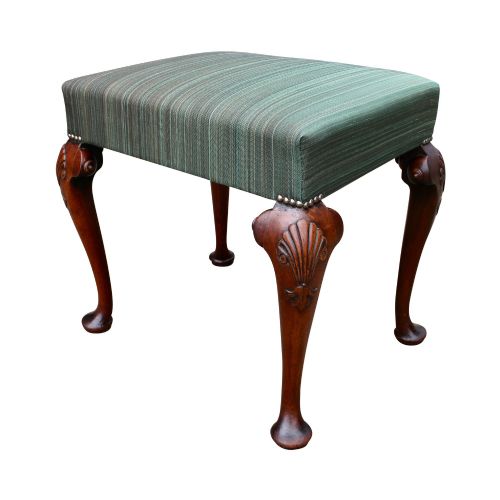
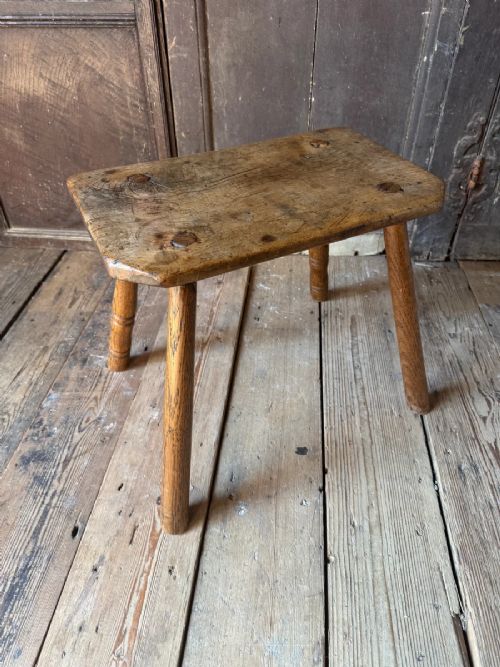
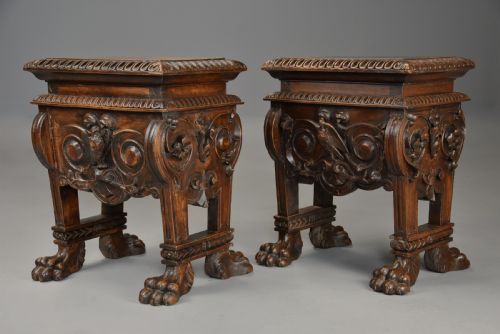
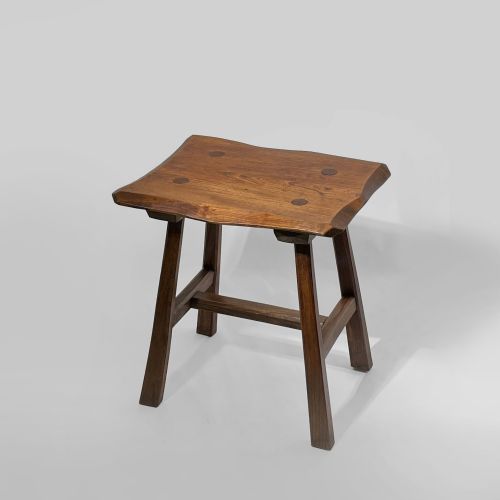
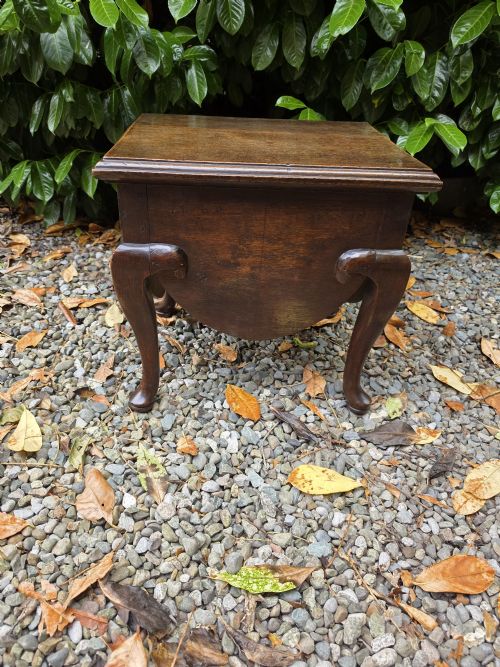
A low wooden footstool table bridges the gap between seating and surface, functioning equally well as a footrest or a low coffee table. Buyers seeking a low wooden footstool table will encounter forms ranging from rustic elm and pine primitives to formal Queen Anne walnut and carved rosewood examples.
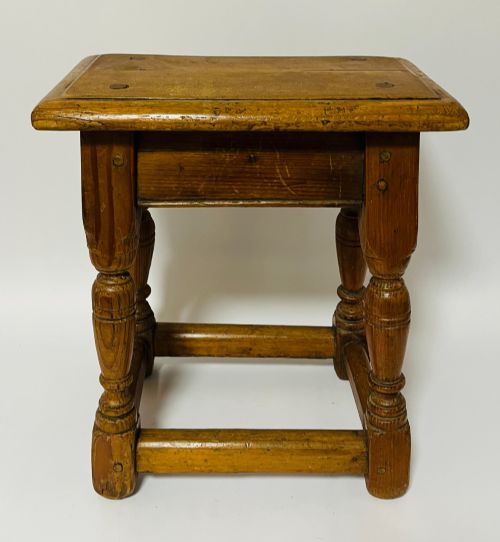
The selection includes joint stools, dressing stools, and low ottomans originating from various periods including the eighteenth and nineteenth centuries. Regional interpretations such as Anglo-Indian rosewood pieces and Middle Eastern designs also appear alongside traditional English oak and mahogany items.
Materials and construction
Construction relies heavily on timbers such as oak, walnut, mahogany, elm, and sycamore, often shaped into jointed frames or carved cabriole legs. Joinery methods reflect the period of origin, utilising pegged joints in earlier vernacular examples and refined framing in later revival pieces.
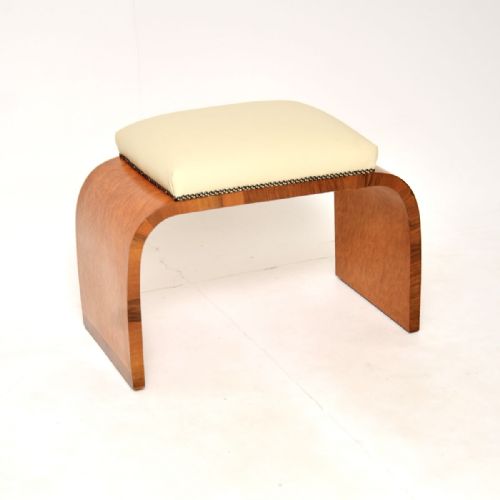
Upholstered variants incorporate traditional textiles including wool, needlepoint, leather, fabric, and cane seating inserted into the wooden framework. Brass accents occasionally supplement the timber structures, particularly in exotic or revival commissions.
Periods represented span from the eighteenth century through the Victorian era and into the Arts and Crafts and Art Deco movements.
Judging quality in low wooden footstool table pieces
Quality rests on the integrity of the timber, the crispness of any carved detail, and the original stability of the frame. Pieces exhibiting hand-carved elements, such as those in the Queen Anne or Arts and Crafts styles, demonstrate superior workmanship compared to plain utility items.
The choice of dense hardwoods like walnut and rosewood elevates a piece above standard pine or mixed vernacular timber. Retaining original surfaces, upholstery webbing, or period cane work further distinguishes a fine example from later alterations.
The Low Wooden Footstool Table Glossary
- Joint stool
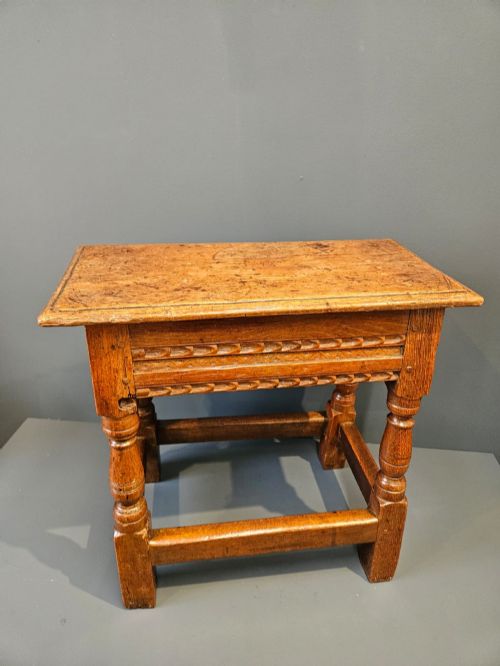
- A traditional wooden stool constructed with mortise and tenon joints, often pegged for stability. These sturdy pieces served multiple household purposes in early centuries.
- Cabriole leg
- A furniture leg that curves out and then in, mimicking an animal's limb. This form appears frequently on walnut and mahogany Queen Anne style pieces.
- Needlepoint
- A type of counted thread embroidery stitched on canvas, commonly used for historical stool upholstery. It provides a textured and decorative top surface.
- Vernacular
- Everyday furniture made by local craftsmen using regional materials rather than following high-style metropolitan designs. Sycamore and ash country stools often fall into this category.
- Anglo-Indian
- Furniture made in India by local artisans using native timbers like rosewood, often combining British furniture forms with traditional eastern carving.
Low Wooden Footstool Table: Frequently Asked Questions
Can I use a low wooden footstool table as a coffee table?
Many larger low stools and ottomans function well as coffee tables, particularly wide Anglo-Indian or square oak pieces.
Their reduced height places drinks and books at a convenient level when paired with low seating.
How do I identify a Queen Anne style stool?
Queen Anne style stools typically feature signature cabriole legs, pad or hoof feet, and shaped walnut or mahogany frames.
Revival versions from later centuries often emulate these eighteenth-century design characteristics.
What is a joint stool?
A joint stool is an early wooden seating form built with tight mortise and tenon joinery rather than turned parts.
These pieces were traditionally constructed by carpenters and served as sturdy household seats or stands.
How should I care for antique wooden stools?
Maintain antique timber by keeping it away from direct heat sources and sudden humidity changes to prevent splitting.
Apply suitable wax polish occasionally to nourish the wood and preserve the surface patina.