





Moorish Coffee Table
These moorish coffee table designs bring rich geometric inlay and carved hardwood into modern rooms, offering practical low surfaces with centuries of Near Eastern and British aesthetic history.
Moorish Coffee Table
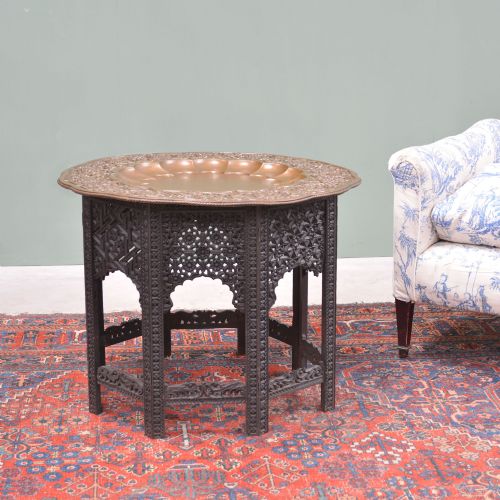
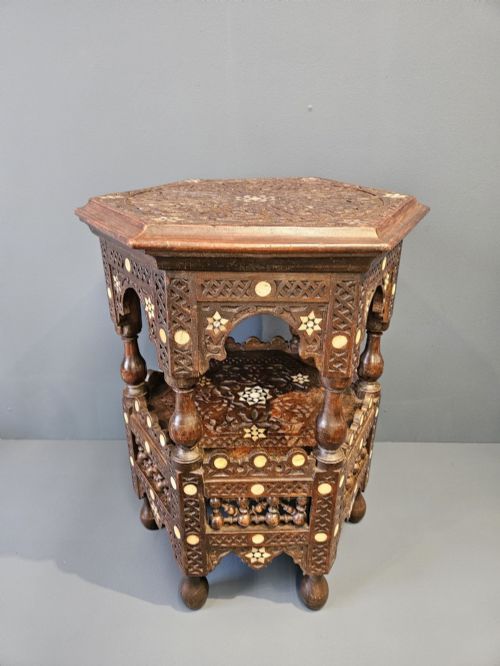
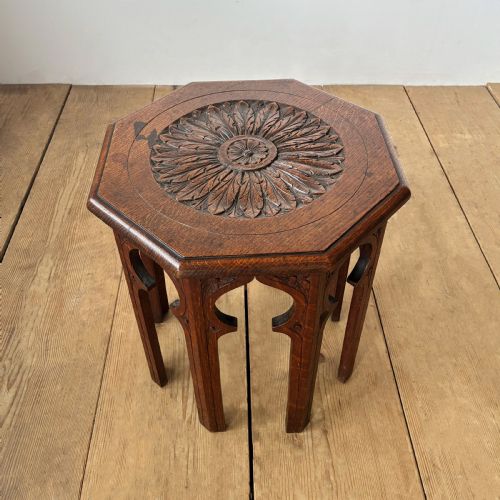
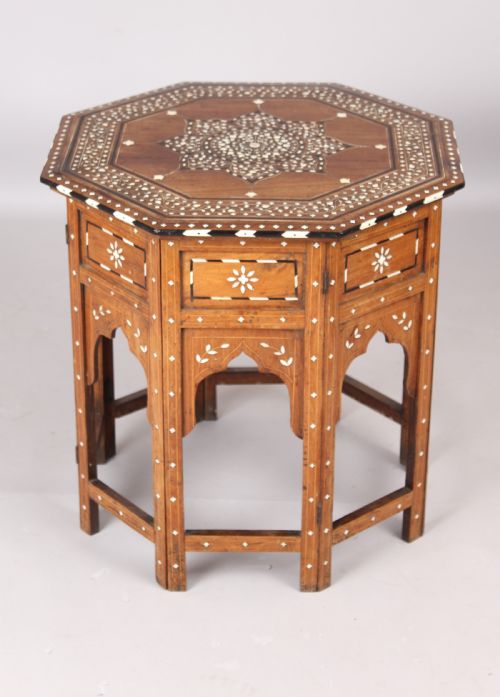
A moorish coffee table encompasses low occasional, side, and tray tables drawn from nineteenth and early twentieth century revival styles, alongside related Anglo-Indian, Syrian, and Ottoman forms. Buyers searching for a moorish coffee table will encounter distinctive octagonal and hexagonal shapes, often designed with folding bases or removable trays for versatile placement.
The selection ranges from Victorian and Edwardian interpretations linked to firms like Liberty & Co to authentic North African and Middle Eastern imports spanning the 1880s to the 1930s. These pieces function naturally as low central surfaces in contemporary settings while retaining the intricate craftsmanship of their original periods.
What varies in quality
The distinction between standard and superior examples rests on the density and precision of the inlay work, particularly the careful fit of mother-of-pearl and bone segments within the timber. Higher quality pieces display deeply carved relief work across the entire wooden structure rather than surface stamping alone.
Material selection also dictates the standing of a piece, with heavier hardwoods and complete, undisturbed metal or shell configurations representing the finest tier of production. The integrity of folding mechanisms and the crispness of geometric motifs further separate everyday workshop output from finer retail commissions.
Object forms on this page include side tables, occasional tables, coffee tables, and tray tables.
Liberty & Co
The Moorish Coffee Table Glossary
- Octagonal top
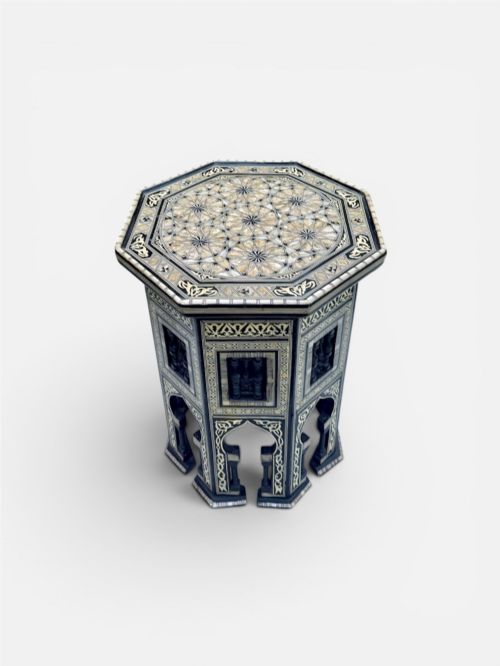
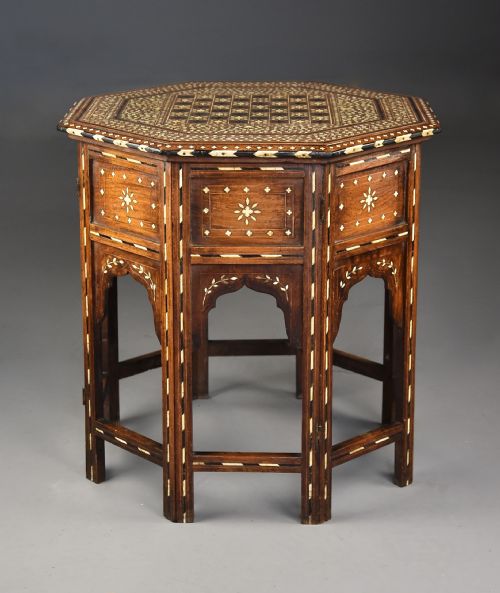
- A flat surface featuring eight distinct sides, which is the most common geometric configuration for these tables. This shape allows intricate border patterns to frame the central inlay.
- Inlay
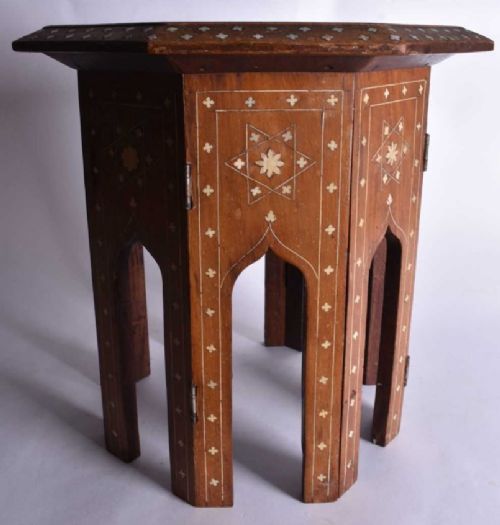
- A technique where small pieces of contrasting materials like mother-of-pearl, brass, bone, or pale wood are embedded flush into the timber surface to create decorative motifs. It forms the primary visual element of these designs.
- Folding base
- A collapsible wooden support structure composed of interlocking slats that allow the table top to be removed and stored flat. This portable construction was standard for many Middle Eastern and North African occasional tables.
- Moorish Revival
- An architectural and decorative style popular during the nineteenth century that reinterpreted traditional Islamic art and design for Western interiors. British firms frequently adapted these aesthetics for the domestic market.
Moorish Coffee Table: Frequently Asked Questions
Are these tables sturdy enough for daily use?
Most pieces are built from dense hardwoods and traditional joinery designed to support everyday items like books and cups.
Folding versions require careful handling when moving to ensure the interlocking wooden slats remain secure and stable.
How do I clean an inlaid wooden surface?
Dust the intricate carvings gently with a soft dry brush to prevent debris from settling into the grooves of the inlay.
Avoid using liquid polishes or harsh chemical cleaners, as moisture can loosen delicate mother-of-pearl or bone sections.
What is the difference between Syrian and Anglo-Indian tables?
Syrian and Middle Eastern examples frequently emphasise dense mother-of-pearl geometric inlay across hexagonal or octagonal frames.
Anglo-Indian pieces from regions like Hoshiarpur tend to feature extensive all-over wood carving combined with fine bone or metal wire elements.
Can I fold the table flat for storage?
Many occasional and tray tables on this page utilise collapsible wooden bases designed to lift away from the top.
Check the specific construction of the piece, as some heavier carved lamp tables feature fixed, rigid legs.