



Engraved Brass Top Table
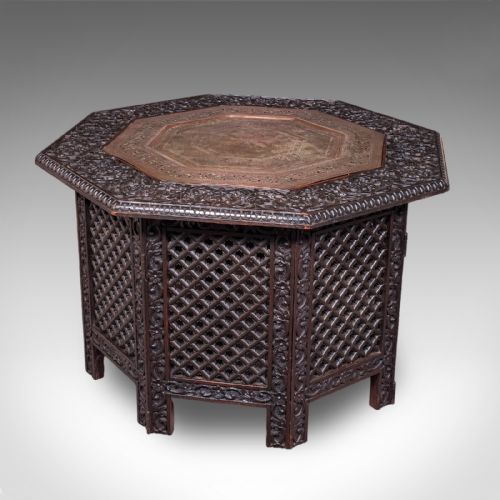
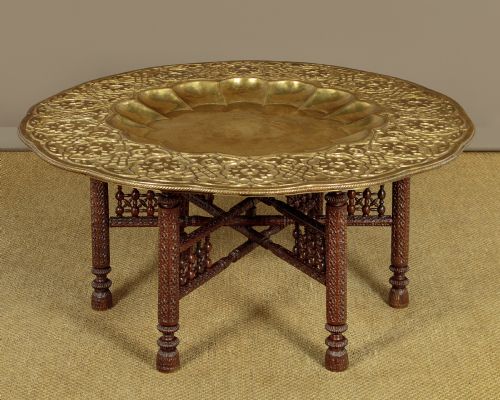
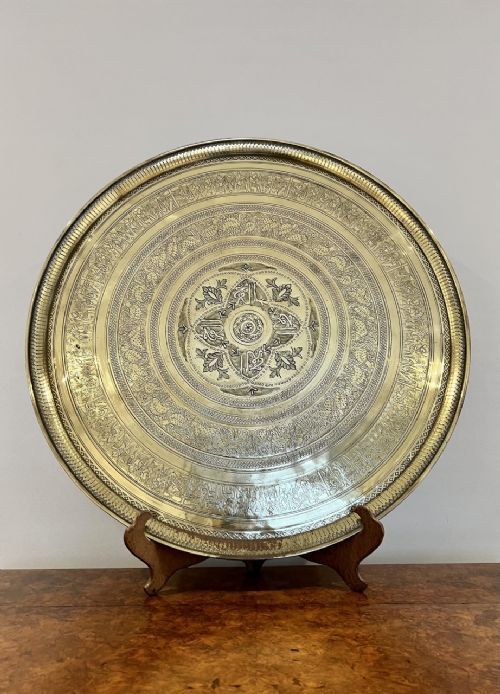
An engraved brass top table brings intricate handwork and warmth into a room, offering a portable surface with a patterned metal tray.
Engraved Brass Top Table
When you search for an engraved brass top table, you encounter pieces that combine a metal tray with a support structure. These items bridge decorative metalwork and functional furniture.
The versions most commonly met on this page originate from nineteenth century Indian workshops, often featuring folding or collapsible bases. Other examples draw on Moorish Revival, Mamluk Revival, and Persian design traditions.
Beyond standard side and coffee tables, the form extends to occasional tables and centre tables. Some pieces pair a brass tray with a hardwood, teak, or carved wood stand.
How they were made
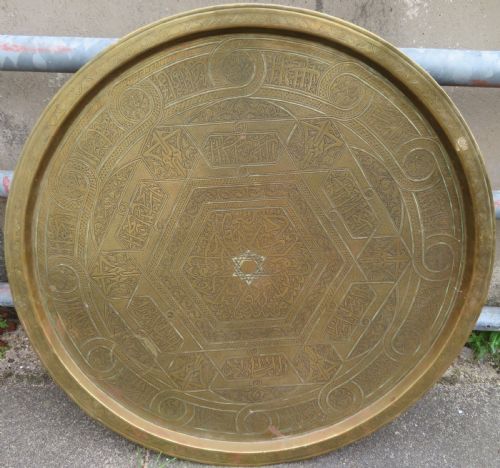
Maker's methods relied on sheet brass and copper, worked by hand to create recessed patterns and figurative motifs. Artisans used chasing and engraving techniques to build dense surface decoration.
Support frames utilised hardwoods, walnut, teak, and carved wood, built either as rigid structures or folding mechanisms. Mixed metal elements sometimes appeared alongside the primary brass surface.
Listings on this site span the nineteenth century up through the nineteen-twenties, incorporating brass, copper, teak, walnut, and mixed metal elements.
What varies in quality
Quality rests on the depth and crispness of the hand engraving across the tray. Finer examples display precise control in the repeating patterns and minimal wear to the recessed lines.
The construction of the base determines the overall stability and integrity of the piece. Well-joined folding frames and solid hardwood stands distinguish superior examples from simpler utilitarian items.
Mappin & Webb
The Engraved Brass Top Table Glossary
- Engraving
- The process of cutting designs into metal using a sharp tool called a burin. This technique produces the fine lines seen across the tray surfaces.
- Mamluk Revival
- A nineteenth century design movement inspired by medieval Islamic metalwork from Egypt and Syria. Pieces in this style often feature dense geometric and Arabic script motifs.
- Collapsible
- Built with a folding mechanism that allows the support stand to be stored flat beneath the tray. This feature enabled easy transport and flexible use in period interiors.
- Mixed metal
- The combination of different metallic elements, such as brass and copper, within a single piece. This practice added tonal contrast to trays and decorative chargers.
Engraved Brass Top Table: Frequently Asked Questions
Are the trays fixed to the tables?
Many trays are removable and rest directly on top of folding or fixed wooden stands. This design allowed the surface to be lifted off for serving or cleaning.
Other variations secure the tray more permanently to the base, though the loose-tray format remains common among folding occasional tables.
How do I clean an engraved brass top?
Dust the surface regularly with a soft, dry cloth to prevent dirt from settling into the engraved grooves. Avoid harsh chemical polishes that strip away the aged patina.
If cleaning is necessary, use a mild, non-abrasive cleaner suited for brass, ensuring you dry the metal thoroughly afterwards to prevent spotting.
Can these tables support heavy items?
These tables suit daily use for lamps, books, and smaller decorative objects. The folding stands are designed for portability rather than bearing heavy loads.
Care should be taken with larger pieces to ensure the wooden joints and tray rims remain stable under significant weight.
What styles influence these tables?
The designs draw heavily from Anglo-Indian, Moorish Revival, Mamluk Revival, and Persian traditions. Each style brings distinct geometric patterns, floral motifs, or calligraphic elements to the metalwork.
European interpretations from the early twentieth century also emerged, blending traditional Eastern metal trays with Art Nouveau frames.