

Carved Wooden Tray Table
A carved wooden tray table combines a portable serving surface with a sturdy support stand, offering both utility and craftsmanship.
Carved Wooden Tray Table
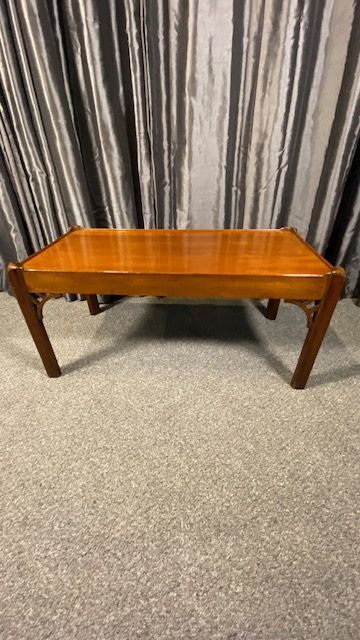
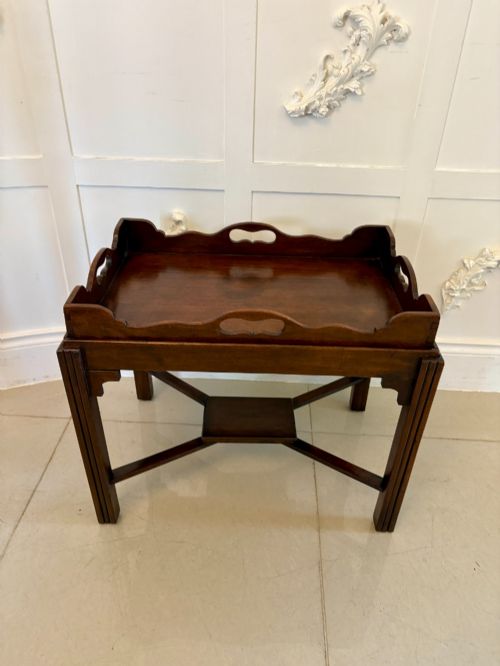
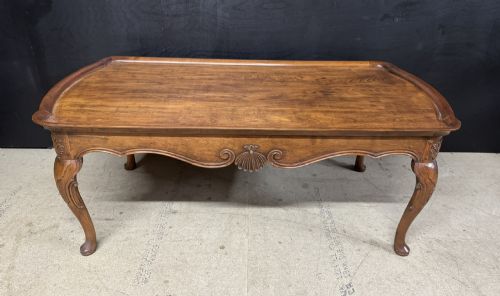
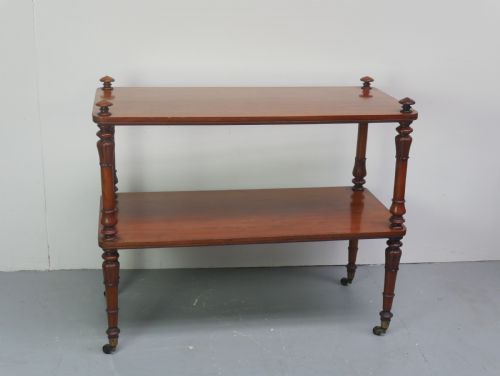
A carved wooden tray table provides a practical surface for serving or display, constructed with a removable or folding tray top resting on a separate base. These pieces appear in various forms, including folding coffee tables, occasional tables, and traditional butler trays.
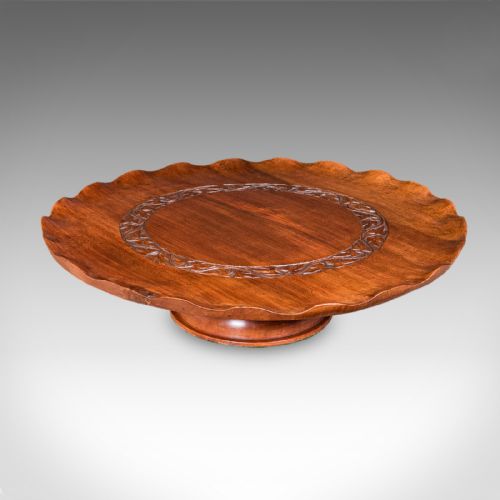
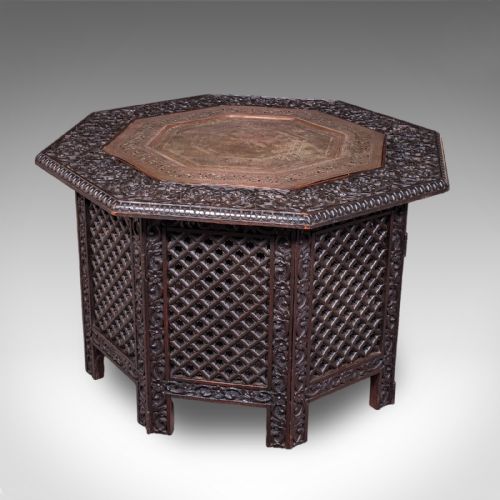
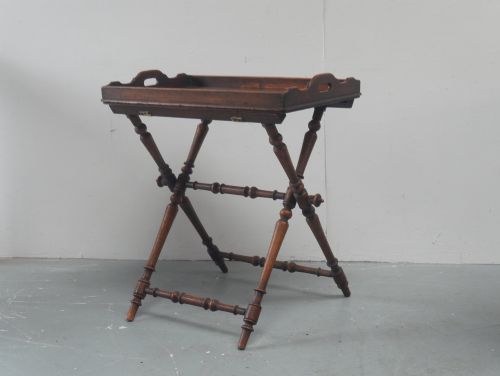
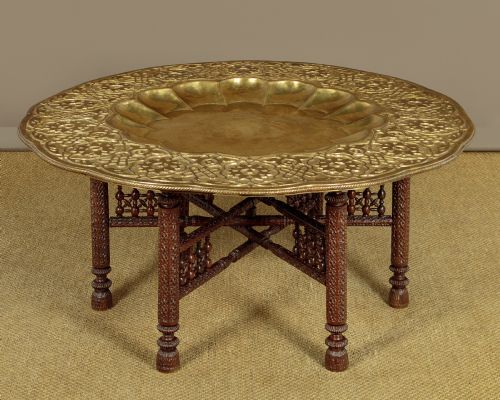
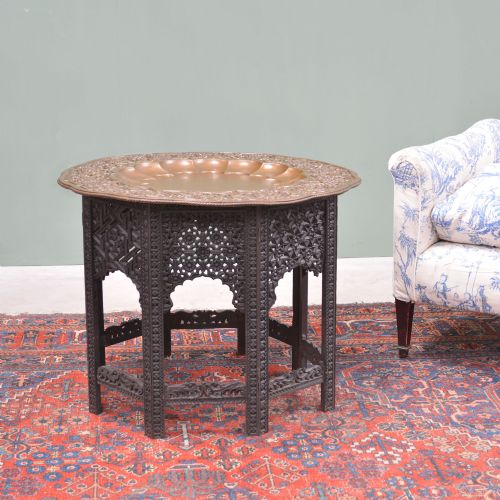
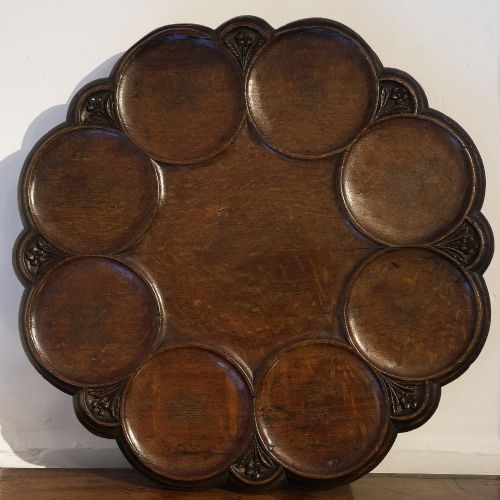
The selection ranges from nineteenth-century oak butler trays on folding stands to intricately carved Anglo-Indian and Kashmiri examples in hardwood and walnut. Buyers frequently encounter pieces dating from the Victorian era up through the early twentieth century.
Styles span from English country and Gothic Revival interpretations to regional designs featuring detailed carving, marquetry, and folding mechanisms designed for ease of storage.
Materials and construction
Cabinet makers utilised solid timbers such as oak, mahogany, walnut, and exotic hardwoods, selected for their grain pattern and durability. Surfaces often exhibit hand-carved detailing, marquetry inlay, or contrasting metal inlays in brass and copper.
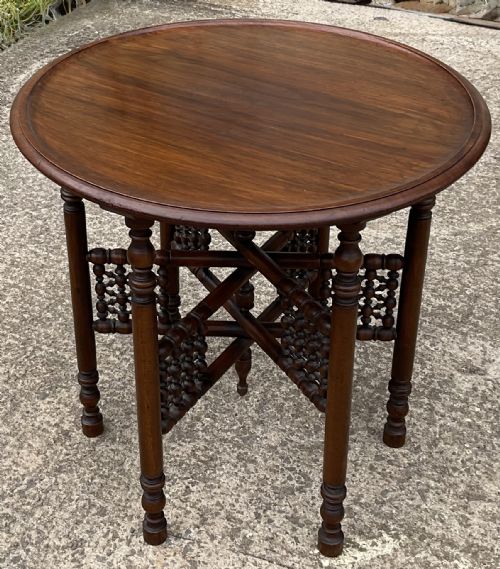
Stands were engineered with folding X-frames or rigid legs to support the weight of the tray top securely. Joinery techniques varied from traditional mortise and tenon joints in nineteenth-century oak frames to specialised hinges on collapsable models.
Carved Wooden Tray Table Retail Price Guide 2026
Typical asking prices for carved wooden tray table among the pieces listed under this phrase on Sellingantiques today, from the lower quarter to the upper quarter. They describe what is for sale here now, not the wider market.
Materials recorded across current items include brass, mahogany, oak, hardwood, walnut, copper, and teak.
Assessing craftsmanship and execution
The depth, crispness, and complexity of the hand carving distinguish standard production items from finer regional workshops. Superior pieces display harmonious proportions between the removable tray and its supporting stand, with tight, stable joinery.
The selection of timber grain, such as figured walnut or dense mahogany, dictates the visual impact of the surface. Original hardware, intact folding mechanisms, and uncompromised structural integrity elevate the standing of an individual table.
The Carved Wooden Tray Table Glossary
- Butler tray
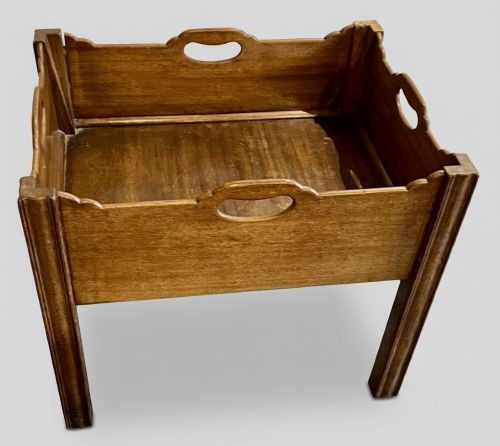
- A portable wooden tray with raised sides, often fitted with cut-out handles, designed to sit upon a folding stand.
- Anglo-Indian
- Describing items manufactured in India during the British period, frequently combining local carving traditions with European furniture forms.
- Marquetry
- The art of applying pieces of veneer to a structure to form decorative patterns and pictures.
- Gothic Revival
- An architectural and decorative style drawing inspiration from medieval forms, appearing frequently in nineteenth-century oak furniture.
- Occasional table
- A small table intended for light, intermittent use in a principal room.
Carved Wooden Tray Table: Frequently Asked Questions
How do I use a tray table today?
These tables function well as flexible coffee tables, bedside stands, or serving surfaces in living areas.
The removable tray top allows for practical transport of items while the stand remains stationary.
Are tray tables stable when folded?
Folding stands rely on interlocking X-frames or hinged supports designed to lock securely under the weight of the tray.
Properly maintained hinges and tight joints ensure the table remains firm during everyday use.
What woods were commonly used?
Cabinet makers predominantly utilised oak, mahogany, walnut, and various denser tropical hardwoods.
Each timber offers distinct weight, colouration, and capacity for detailed hand carving.
How do I distinguish regional styles?
Regional variations reveal themselves through specific carving motifs, timber choices, and assembly methods.
English country examples favour plain oak and straightforward folding stands, whereas Anglo-Indian pieces display dense floral carving and alternative metals.