

Antique Moorish Table
An antique moorish table brings geometric splendour and intricate inlay to any room, offering a tactile piece of global craftsmanship from the Victorian era onwards.
Antique Moorish Table
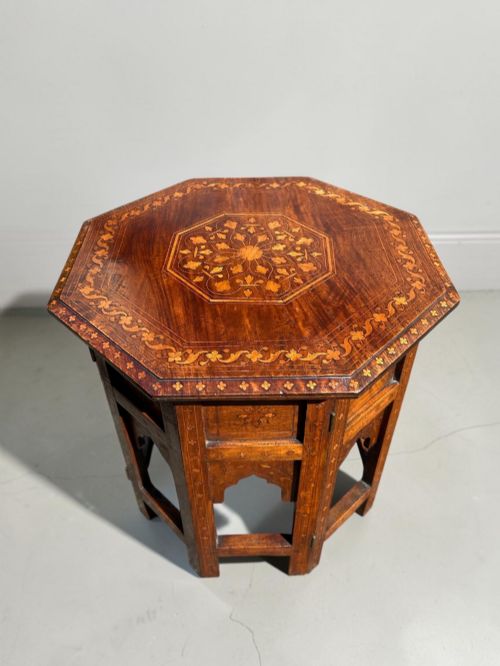
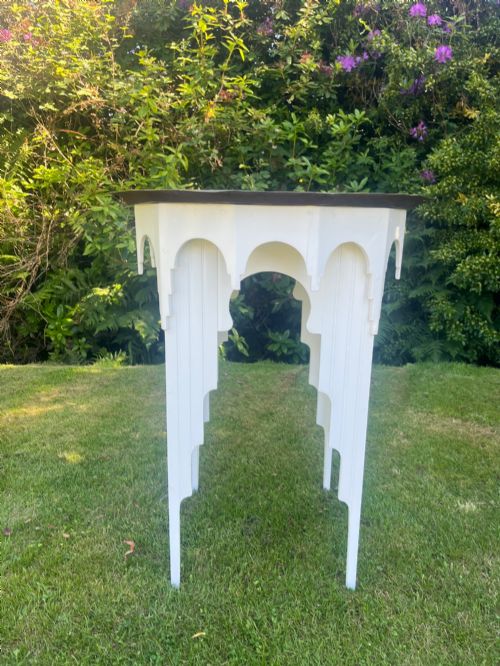
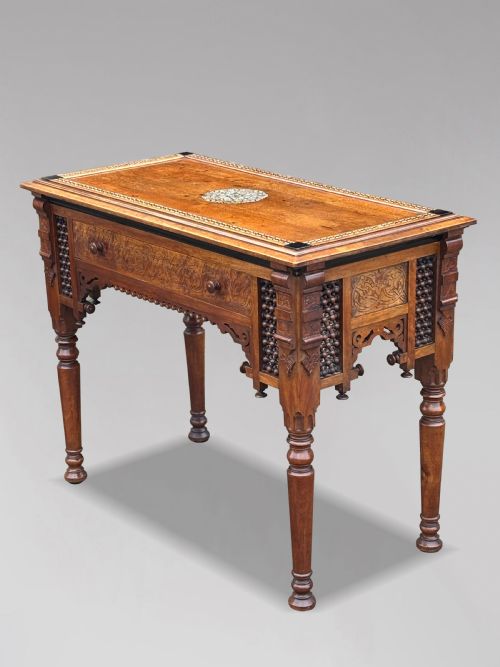
When you search for an antique moorish table, you encounter an array of occasional, side, and coffee tables produced primarily during the nineteenth and early twentieth centuries. These pieces reflect a widespread European fascination with Islamic, North African, and Middle Eastern design, often merging traditional eastern forms with western utility.
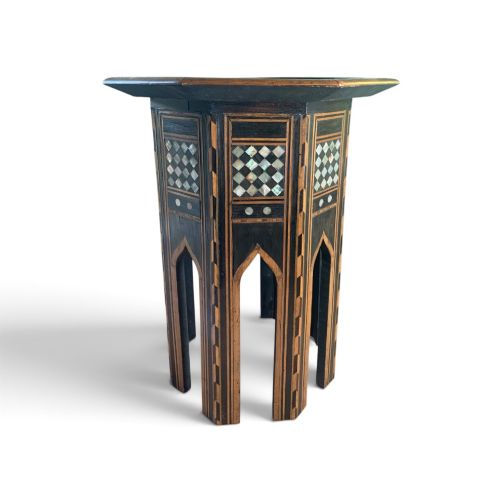
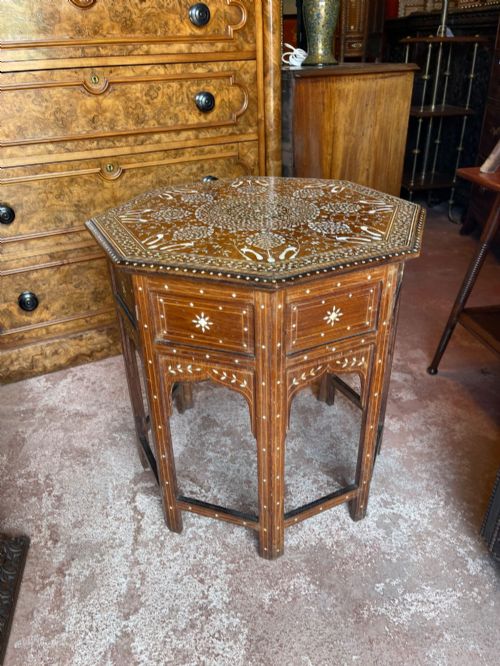
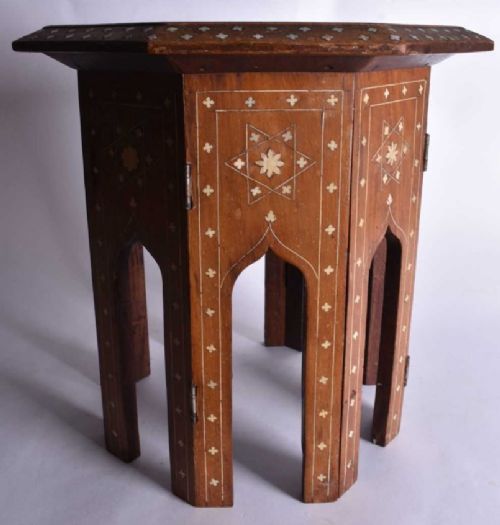
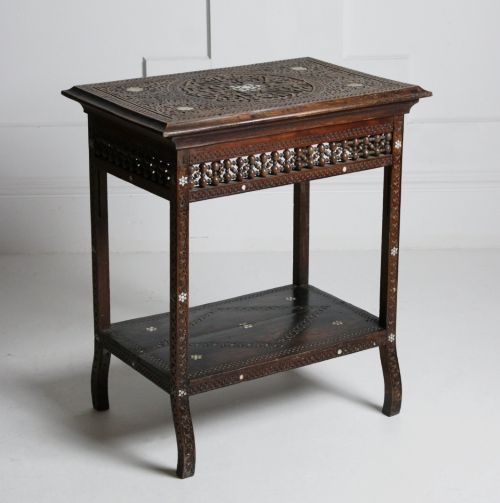
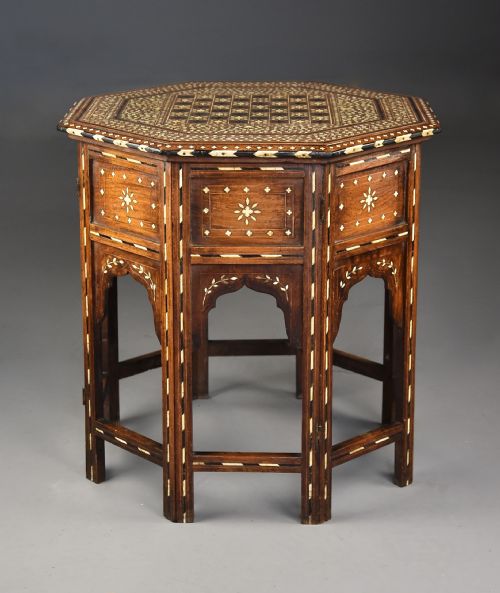
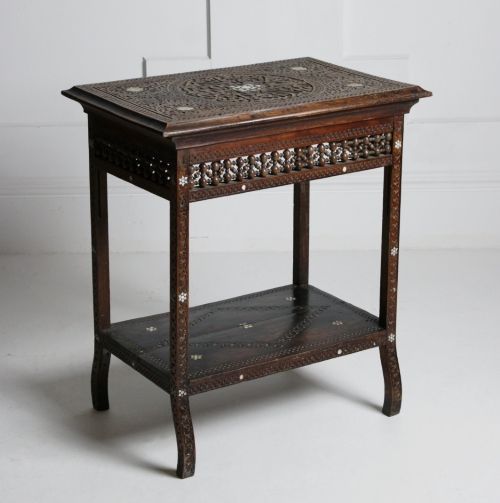
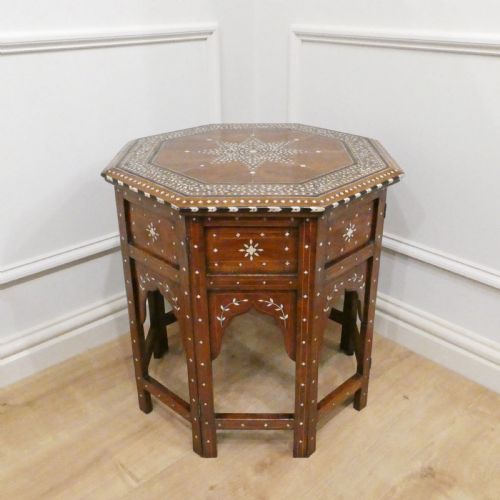
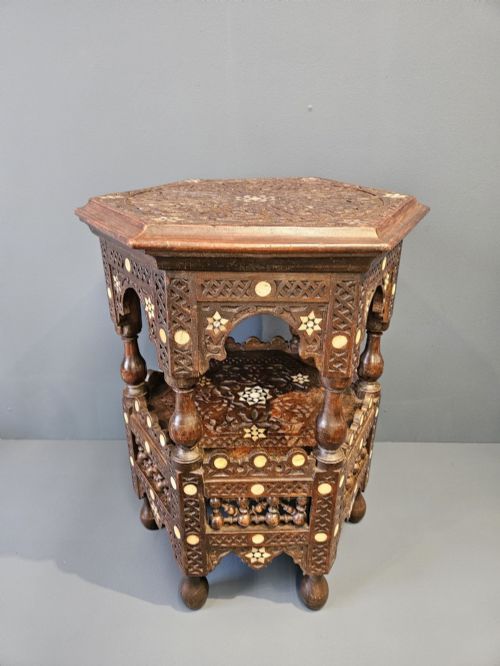
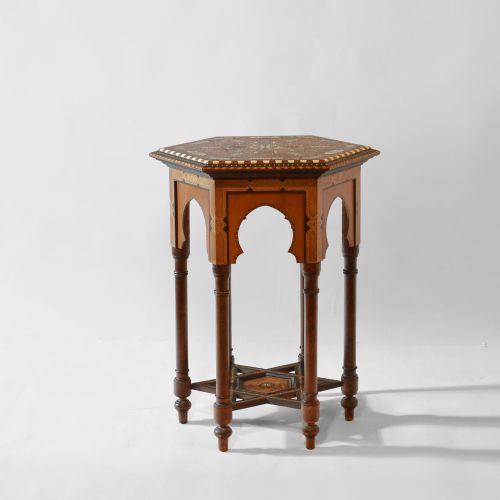
The octagonal or hexagonal folding table is the version you are most likely to meet on this page, alongside two-tier side tables and larger centre tables. Many examples originate from workshops in Damascus, Cairo, or Hoshiarpur, while others represent British interpretations through retailers like Liberty & Co. during the Aesthetic and Arts and Crafts movements.
How They Were Made
Maker's workshops relied on dense hardwoods such as walnut, mahogany, sandalwood, and ebonised wood to provide a stable dark ground for decoration. Frames were frequently constructed to fold flat, utilising intricate interlocking wooden hinges that required precise carpentry.
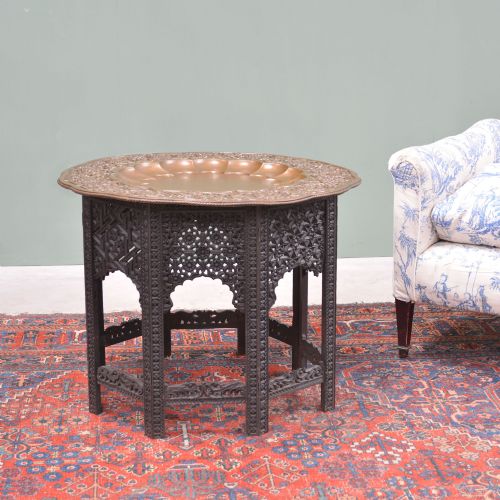
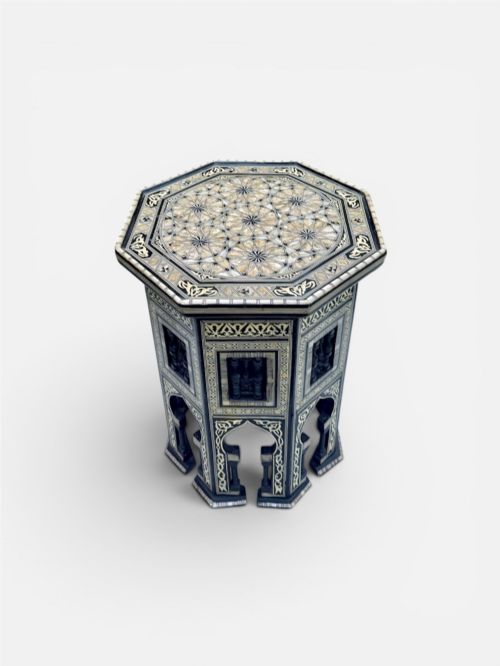
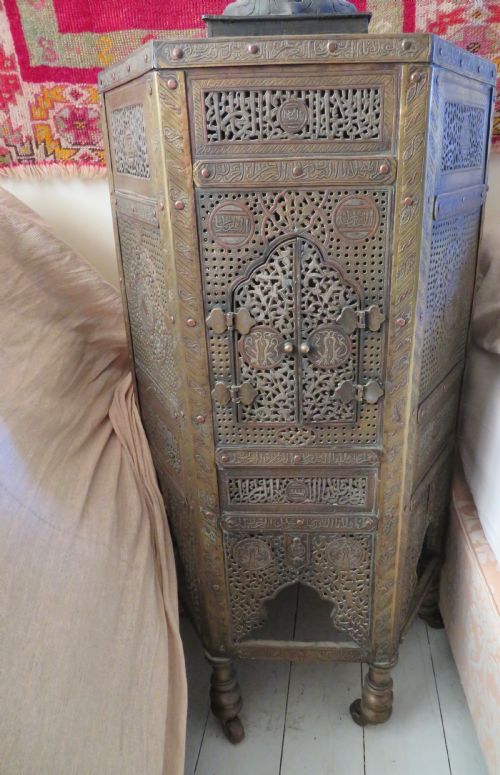
Surface ornament depended on meticulous inlay work, combining pieces of mother-of-pearl, bone, and white-metal wire into dense geometric lattices. Metal elements such as brass and copper appeared either as chased table tops or as delicate wire inlay set directly into the timber.
Antique Moorish Table Retail Price Guide 2026
Typical asking prices for moorish table among the pieces listed under this phrase on Sellingantiques today, from the lower quarter to the upper quarter. They describe what is for sale here now, not the wider market.
The listings demonstrate a strong presence of 19th-century and Edwardian pieces, dominated by octagonal side tables utilising mother-of-pearl and bone inlay.
What Varies in Quality
The distinction between ordinary production and exceptional execution rests in the density and precision of the surface mosaic. Superior pieces display tightly fitted mother-of-pearl and bone tesserae with minimal filler, whereas lesser examples rely on painted details or sparse inlay.
Structural integrity also divides the range, particularly in the complexity of the fretwork and the stability of folding bases. Tables exhibiting deep, crisp hand-carving and substantial hardwood frames demonstrate the artisan's complete mastery over mass-produced alternatives.
Liberty & Co·Carlo Bugatti
The Antique Moorish Table Glossary
- Octagonal
- A geometric shape possessing eight sides, which forms the predominant plan for folding occasional tables in this tradition. This format allowed complex star patterns to radiate outwards from the centre.
- Hoshiarpur
- A North Indian city renowned for intricate woodwork, specifically tables inlaid with bone and sandalwood. Artisans there exported vast quantities of folding occasional furniture to the British market during the Victorian period.
- Cairoware
- Metalwork originating from Cairo, typically consisting of brass inlaid with silver, copper, and black organic paste. Pieces of this description often form the removable trays atop occasional tables or stand as independent lamps and candelabra.
- Moorish Revival
- An architectural and decorative style that reinterpreted Islamic design elements for European interiors. It gained immense popularity through international exhibitions and prominent retailers during the late nineteenth century.
- Ebonised
- Timber treated with chemical stains or black lacquer to imitate expensive ebony. This dark finish provided high visual contrast against pale bone and mother-of-pearl inlay.
Antique Moorish Table: Frequently Asked Questions
What is an antique moorish table?
An antique moorish table is a decorative item of furniture produced in the nineteenth or early twentieth century, drawing on Islamic and Middle Eastern design traditions. These pieces are characterised by geometric woodwork and elaborate surface inlay.
They encompass various forms, from folding occasional tables originating in India and Syria to British interpretations created during the Aesthetic Movement.
Where were these tables made?
These tables were manufactured across a broad geographic network that included workshops in Damascus, Cairo, Morocco, and northern India. European firms and retailers also produced matching designs locally.
Items created in the East were imported to satisfy Victorian desires for exotic interior decoration, while domestic makers adapted the style in London.
How do I style a moorish table at home?
A moorish table functions effectively as a lamp table, a bedside stand, or an occasional piece placed beside a simple sofa. Its reflective inlay and dark wood provide strong textural contrast against plain modern walls.
Due to their folding mechanisms, many examples offer versatility for smaller spaces where furniture needs to be moved or stored easily.