

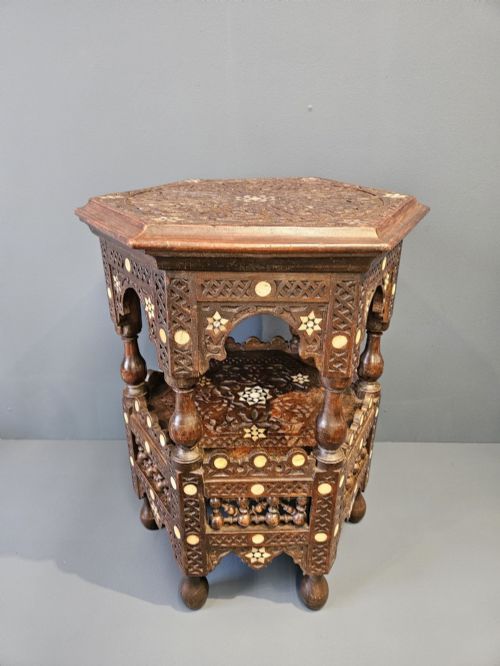


Dark Wood Moorish Table
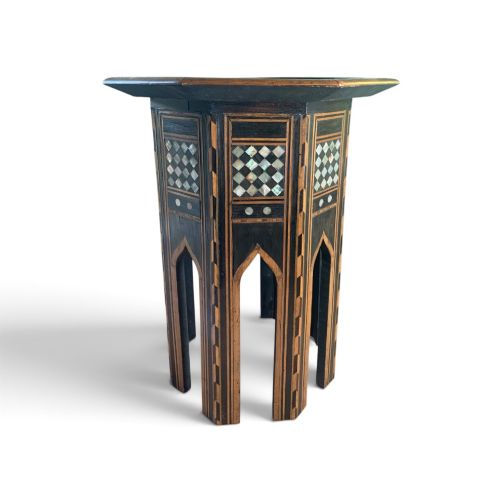
These dark wood moorish table examples bring intricate geometric inlay and rich historic character straight into a modern interior.
Dark Wood Moorish Table
A dark wood moorish table represents a distinctive intersection of Eastern craftsmanship and Western aesthetic movements from the Victorian era onwards. These pieces span side tables, occasional tables, coffee tables, and dining tables created across the late nineteenth and early twentieth centuries.
Most examples encountered here belong to the Moorish Revival and Syrian styles, frequently displaying geometric forms such as octagonal and hexagonal tops. Makers embraced intricate surface decoration, producing versatile small furniture intended to serve as striking focal points in drawing rooms and reception spaces.
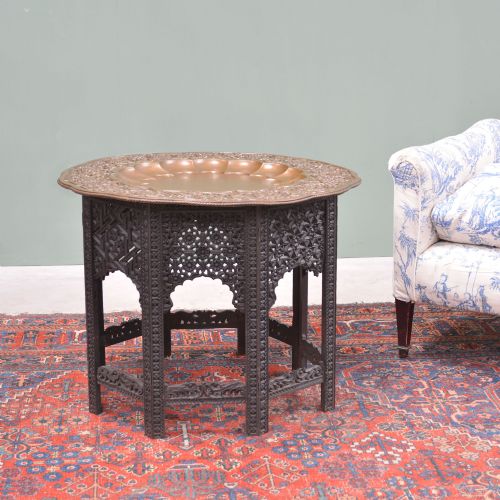
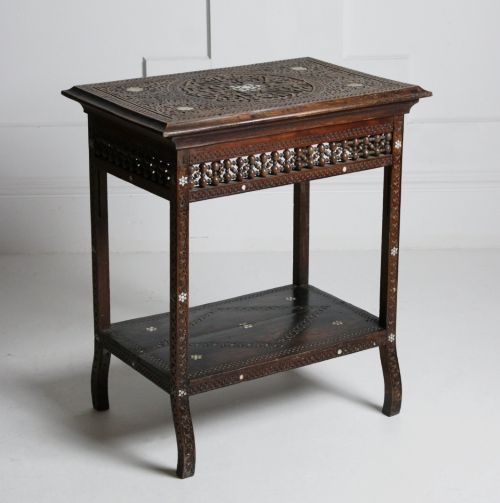
The selection encompasses related forms including Anglo-Indian tray top tables and North African mosaic pieces alongside strict Moorish designs. Buyers searching for a dark wood moorish table will discover varied silhouettes featuring two-tier structures, folding stands, and enclosed cupboards.
How they were made
Artisans constructed these tables from dense hardwoods and walnut, frequently applying ebonised finishes to achieve a deep, uniform dark surface. The primary structure often relied on precise hand carving to shape complex multi-sided frames and pierced arches.
Surface ornamentation involved meticulous inlay work utilising contrasting materials such as mother-of-pearl, bone, brass, and copper. Craftsmen set these elements flush into the timber base to create elaborate geometric mosaics and scrolling foliate patterns.
Table forms span side tables, occasional tables, dining tables, and coffee tables produced across the nineteenth and twentieth centuries.
What varies in quality
The distinction between standard production and exceptional craftsmanship rests upon the density and precision of the surface inlay. Superior examples integrate mother-of-pearl and bone without gaps, maintaining tight geometric alignment across complex multi-sided tops.
Depth and crispness of hand carving separate finer pieces from simpler commercial output. Well-executed timber work retains sharp relief in the geometric lattice panels and structural supports, whereas lesser items display softened edges and shallow incision.
Liberty and Co
The Dark Wood Moorish Table Glossary
- Moorish Revival
- An architectural and decorative style popular in the nineteenth century that reinterpreted Islamic design motifs from Spain, North Africa, and the Middle East. It heavily influenced European furniture production through pierced woodwork and intricate geometric patterns.
- Tray top table
- A movable tabletop designed to lift off a folding or rigid support stand. This portable form originated in Middle Eastern and South Asian serving traditions before being adopted by British manufacturers.
- Octagonal
- A geometric shape possessing eight sides and eight angles, frequently utilised for the tabletops in this category. This specific polygon permitted complex symmetry in inlaid surface decoration.
- Ebonised wood
- Timber treated with chemical stains or black finishes to imitate costly ebony wood. This dark ground provided high visual contrast for mother-of-pearl and bone inlay.
- Anglo-Indian
- A descriptive term for furniture made in India under British colonial rule, combining traditional local carving techniques with European furniture forms. These pieces often feature dense overall ornamentation.
Dark Wood Moorish Table: Frequently Asked Questions
What periods do these tables date from?
These items predominantly originate from the late nineteenth century and the early decades of the twentieth century. The selection spans Victorian examples alongside pieces produced around nineteen hundred and the nineteen twenties.
Craftsmen during this era responded to a strong European appetite for exotic furniture styles. Consequently, production dates cluster heavily around the height of the Moorish Revival movement.
How were these tables used originally?
Original domestic use centred on reception rooms, drawing rooms, and studies where they functioned as occasional surfaces for lamps, ornaments, or tea service. Many portable variants featured removable trays designed for serving beverages.
More elaborate multi-tiered or cabinet versions served as display pieces for precious objects. Their decorative presence mattered just as much as their practical utility in Victorian interiors.
How do I care for inlaid surfaces?
Maintain the timber and inlay by dusting gently with a dry, soft cloth. Avoid using liquid polishes or harsh chemical cleaners that might loosen mother-of-pearl or bone inserts from the wood matrix.
Keep these tables away from direct heat sources and strong sunlight to prevent the timber from shrinking. Stable indoor humidity protects both the structural joints and the delicate adhesive holding the mosaic work.
How do I distinguish regional styles?
Syrian and Moorish pieces often rely heavily on dense geometric mother-of-pearl and bone inlay across octagonal frames. Anglo-Indian variations frequently showcase deeply carved overall woodwork combined with brass or copper top elements.
Examining the specific combination of materials and structural joinery reveals the likely geographic origin. Retailer attribution, such as connections to Liberty and Co, also helps identify specific design provenances.