



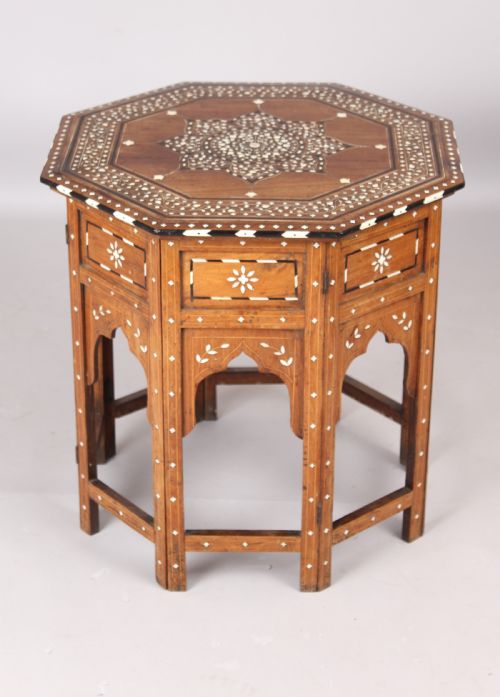


Anglo Moorish Plant Stand
These pieces sold as an anglo moorish plant stand bring intricate geometric pattern and exotic wood into a room with genuine architectural presence.
Anglo Moorish Plant Stand
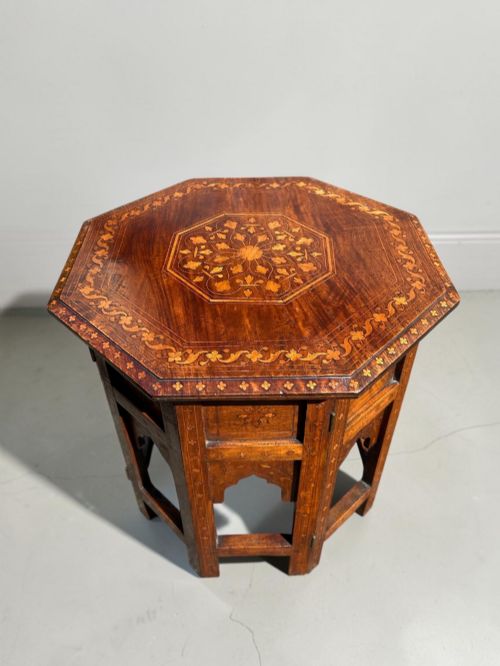
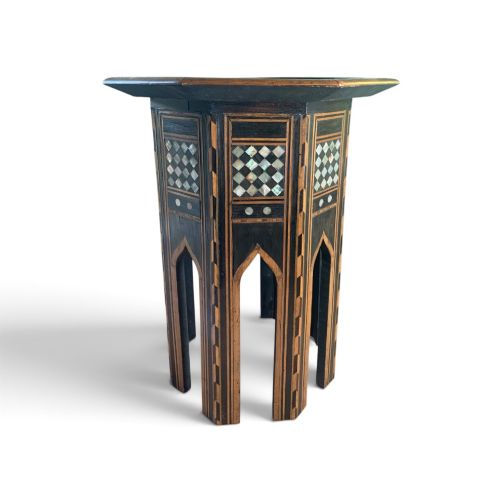
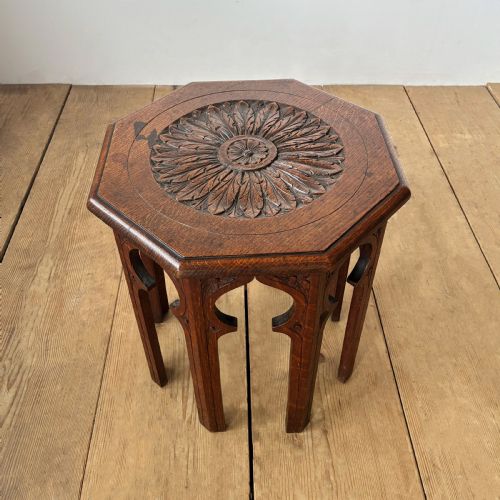
When you search for an anglo moorish plant stand, you are looking at tables and stands spanning the nineteenth century and the early twentieth century. Most examples you will encounter take an octagonal form, often grouped under side tables or occasional tables.
The style crosses paths with Moorish Revival, Anglo-Indian, and the Aesthetic Movement. Makers such as Liberty & Co. produced pieces that fused British taste with North African, Syrian, and Islamic design traditions.
Origins stretch from Morocco and Hoshiarpur to broader Syrian workshops. They function equally well as plant stands or low lamp tables, bringing distinct architectural silhouettes to an interior.
How they were made
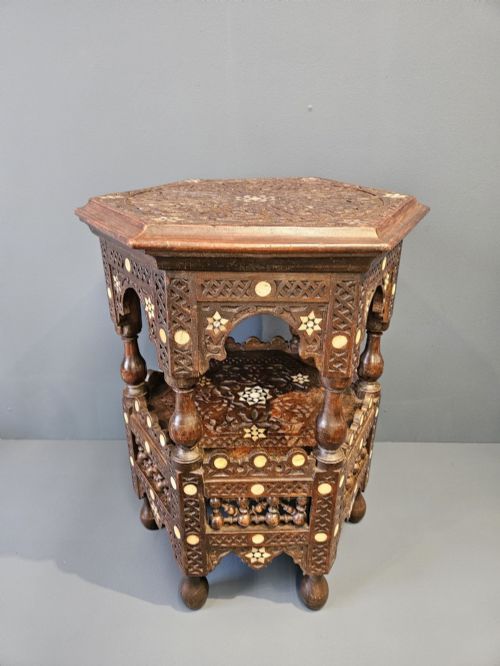
Hardwood forms serve as the foundation, frequently utilising walnut, oak, sandalwood, or ebonised wood. Carving transforms these surfaces into dense geometric lattices and intricate panels.
Decoration relies heavily on contrasting materials set directly into the wood. Artisans used bone inlay, mother-of-pearl, and occasionally copper tops to create shimmering surface patterns.
Some tables arrive with copper tops ready to catch stray watering drops.
What varies in quality
The density and depth of the carved work separate finer examples from simpler production. Crisp execution in the geometric fretwork indicates superior workshop skill.
The completeness and complexity of the inlay define the upper tier. Whole sections of intact mother-of-pearl or bone, rather than simple painted lines, elevate a piece.
Liberty & Co.
The Anglo Moorish Plant Stand Glossary
- Moorish Revival
- An architectural and decorative style popular in the nineteenth century that drew on Islamic design elements from Spain, North Africa, and the Middle East. It favoured horseshoe arches, intricate carving, and geometric motifs.
- Hoshiarpur
- A city in Punjab known for its distinct woodwork tradition involving intricate bone and shisham wood inlay. Pieces from here typically feature dense floral and geometric patterns.
- Ebonised wood
- Timber treated with chemical stains or dark finishes to imitate costly ebony. It became popular during the nineteenth century for furniture requiring a stark, dark contrast.
- Inlay
- A technique where pieces of a contrasting material such as bone or mother-of-pearl are set into depressed areas of a wooden base to form a flush decorative surface.
- Aesthetic Movement
- A nineteenth-century British design movement that emphasised art for art's sake, often incorporating Japanese and Middle Eastern motifs into furniture and domestic items.
Anglo Moorish Plant Stand: Frequently Asked Questions
What is an anglo moorish plant stand?
These are nineteenth and early twentieth-century small tables, frequently octagonal, combining British retail styles with Islamic and North African design elements.
They were produced to satisfy a Victorian appetite for exotic furnishings and serve well today for holding plants or lamps.
How do I identify a Liberty piece?
Look for specific construction traits and stylistic links to the Aesthetic Movement that match documented retail records from the firm.
Many bear the characteristic dark ebonised finishes and precise geometric carving associated with their imported stock.
Are these stands purely decorative?
While highly ornamental with their bone and mother-of-pearl inlay, they were built as sturdy occasional furniture for domestic use.
Their solid hardwood frames easily support lamps, ceramic pots, and heavy decorative objects.
How do I care for inlaid wood?
Keep the wood away from direct heat sources and extreme humidity changes to prevent the delicate bone or pearl from lifting.
Dust gently with a dry cloth and avoid harsh modern polishes that can seep into the carved recesses.