


Ottoman Occasional Table
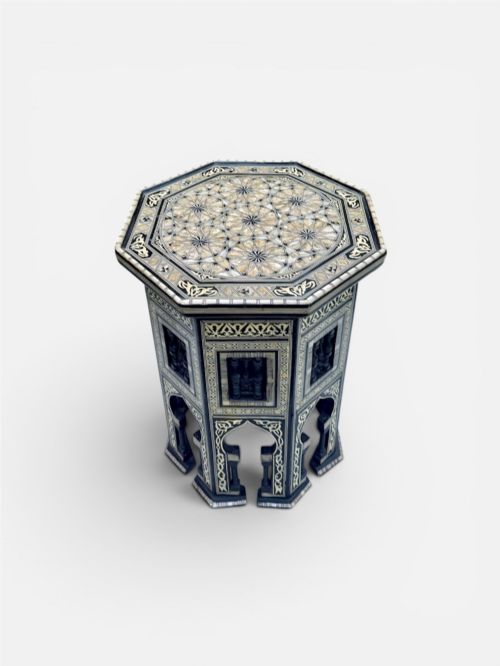
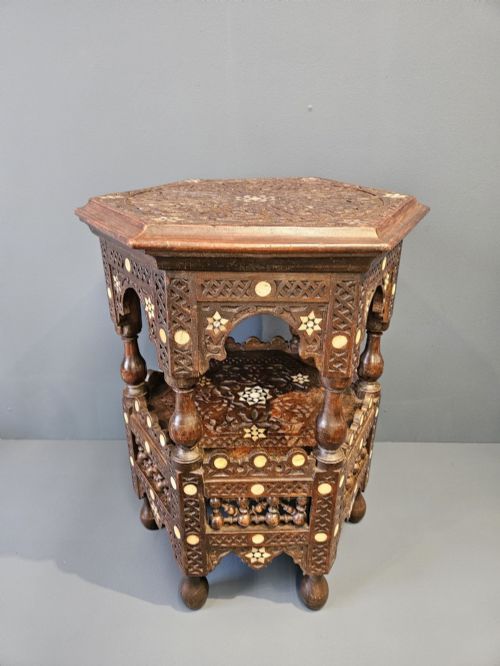
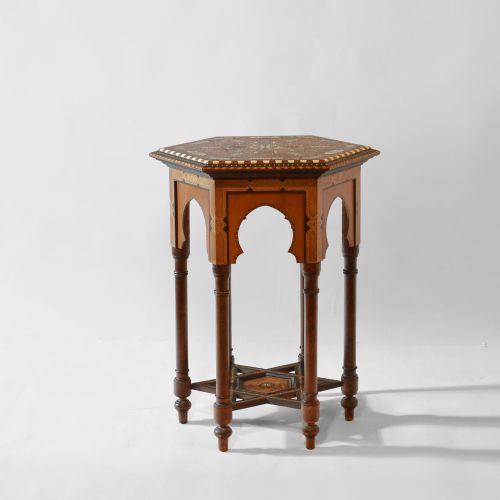
These ottoman occasional table pieces bring intricate geometric geometry and rich inlaid surfaces into a room.
Ottoman Occasional Table
An ottoman occasional table represents a distinct tradition of Near Eastern woodworking, brought into British and European interiors through various revival movements. When you search for an ottoman occasional table, you encounter compact side tables designed for versatile placement rather than grand dining.
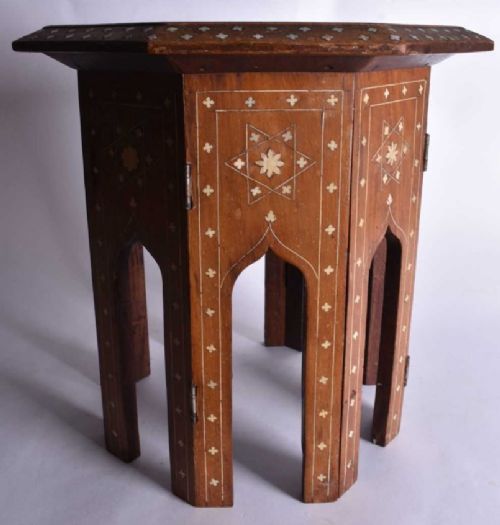
The pieces on this page span the nineteenth century and the early twentieth century, encompassing Victorian interpretations and later imports. The forms remain predominantly geometric, featuring octagonal and hexagonal tops designed to function as lamp tables, coffee tables, or simple side stands.
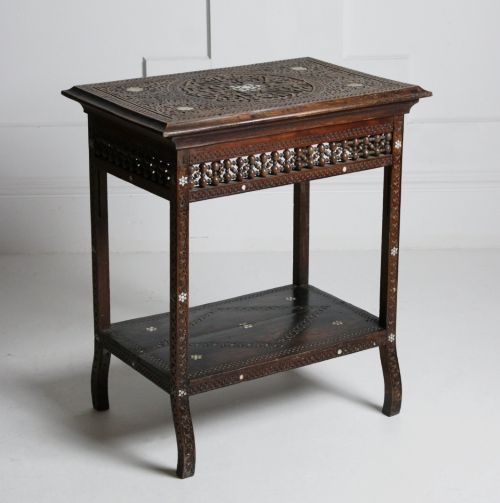
Origins range across Syrian, Moorish, and broader Islamic traditions, often identified through regional decorative vocabulary. You meet folding damascus tables alongside rigid two-tier side tables and examples fitted with small cupboards.
Materials and construction
Makers built these structures from dense hardwoods and ebonised wood, providing a stable dark foundation for intricate decorative schemes. The woodwork relies on traditional joinery techniques, frequently incorporating folding frames that allow the octagonal or hexagonal tops to collapse.
Surface ornament defines the construction, utilising extensive inlay work executed in mother-of-pearl, nacre shell, and bone. Artisans set these contrasting white and iridescent elements into precise geometric recesses carved directly into the timber base.
Listings feature walnut, hardwood, and ebonised wood combined with mother-of-pearl, bone, and nacre inlay.
Assessing quality and execution
Quality rests upon the density and precision of the inlay work across the octagonal or hexagonal surface. Finer examples display tightly fitted geometric tessellation with minimal filler, whereas simpler pieces show wider spacing between individual pieces of mother-of-pearl and bone.
The depth and sharpness of the hand-carved woodwork further distinguish the range. Superior execution maintains crisp edges along the intricate Moorish and Syrian motifs, while lesser versions exhibit softer relief and less disciplined carving.
Liberty & Co
The Ottoman Occasional Table Glossary
- Octagonal
- Having eight sides and eight angles. This geometry frequently forms the primary top shape for Syrian and Moorish occasional tables.
- Hexagonal
- Having six sides and six angles. Many compact side tables and coffee tables adopt this six-sided format.
- Moorish Revival
- An architectural and decorative style popular in the nineteenth century. It draws inspiration from the art and architecture of the Western Islamic world.
- Mother-of-Pearl
- An iridescent internal layer of shells found in certain molluscs. Artisans use thin sections of this material to create luminous geometric inlays.
- Ebonised
- Wood finished to resemble ebony through dark staining or painting. This treatment heightens the contrast against pale bone and nacre inlays.
Ottoman Occasional Table: Frequently Asked Questions
What is an ottoman occasional table used for?
These pieces function primarily as compact side stands, coffee tables, or lamp tables within domestic interiors. Their manageable proportions allow them to sit easily beside seating areas.
Historically, they served similar duties in receiving rooms, providing a stable surface for lighting or small decorative objects while introducing rich surface pattern to the space.
How do I date an ottoman occasional table?
Dating relies on examining the timber construction, the style of the carved motifs, and the nature of the inlay work. Pieces span the nineteenth century through the early twentieth century, reflecting shifting European tastes for Islamic revival designs.
Earlier examples often display deeper hand-carved relief and denser regional patterning, whereas pieces from the nineteen-twenties sometimes show standardised production methods.
Are these tables sturdy enough for daily use?
Most examples are constructed from solid hardwoods designed to withstand normal domestic use as side surfaces. Folding versions require careful handling when moving to ensure the hinges and interlocking panels remain secure.
Placing heavy items on older inlaid surfaces requires some care to protect the delicate mother-of-pearl and bone elements from undue strain.
How do I care for mother-of-pearl inlay?
Inlaid surfaces benefit from gentle dusting with a soft, dry cloth to prevent dirt from settling into the recesses around the bone and shell. Avoid using harsh chemical polishes or excessive moisture, which can loosen the delicate tessellation.
Keeping the wood conditioned with appropriate natural waxes helps maintain the timber base without harming the embedded decorative elements.