


Islamic Side Table
These Islamic side table examples bring intricate woodwork and metalwork into domestic rooms, offering a functional surface shaped by revivalist design.
Islamic Side Table
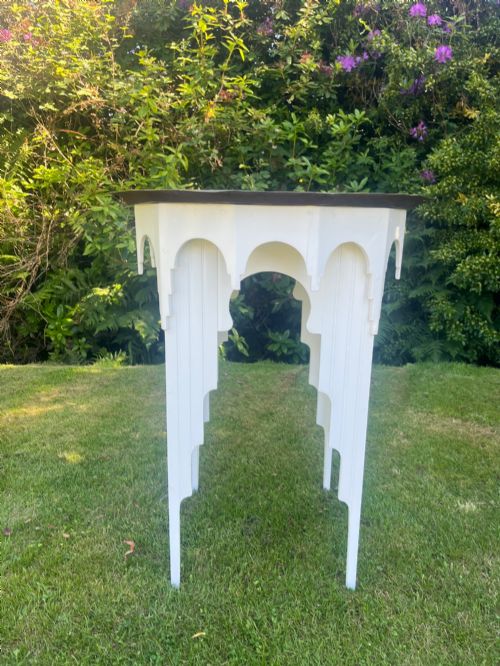
An islamic side table typically takes the form of an octagonal or hexagonal occasional piece, often described through Moorish, Ottoman, or Syrian revival styles. These objects serve as compact surface tables, lamp stands, or low kursi forms originating from the nineteenth and early twentieth centuries.
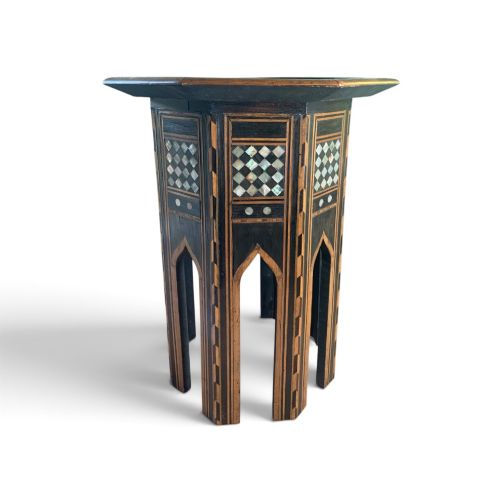
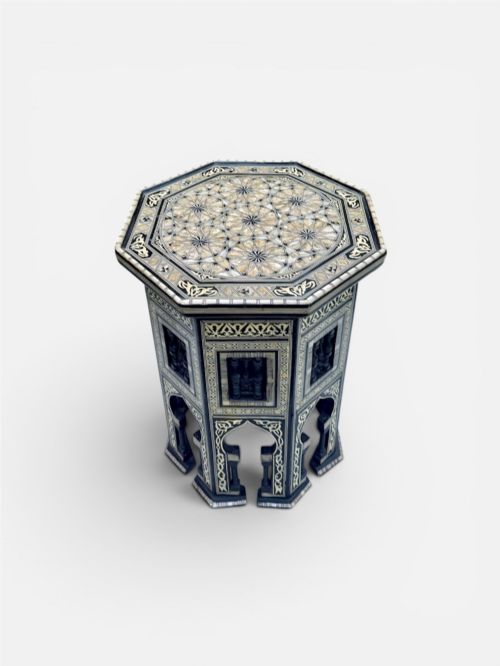
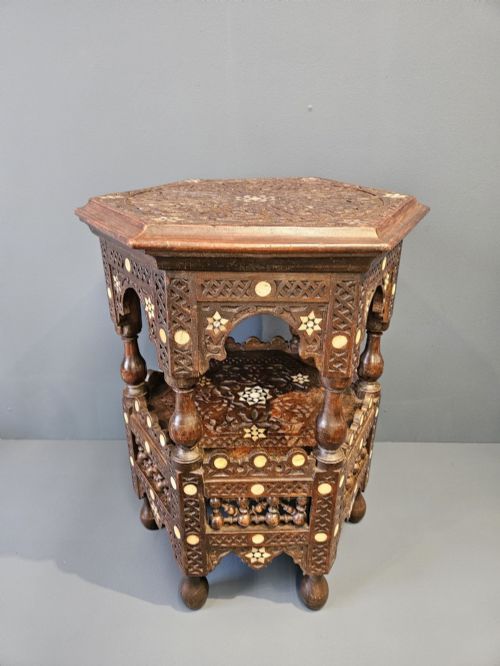
The version most commonly met on this page is the inlaid hexagonal or octagonal side table, heavily decorated with geometric motifs and mother-of-pearl. Such pieces reflect European interest in orientalist furnishings during the Victorian and Edwardian eras, bridging traditional Middle Eastern forms with Western domestic interiors.
How they were made
Construction relies upon dense hardwoods such as walnut, shaped into folding frames or rigid panelled bases that support multi-sided tops. These wooden structures provide a dark ground for detailed surface ornamentation.
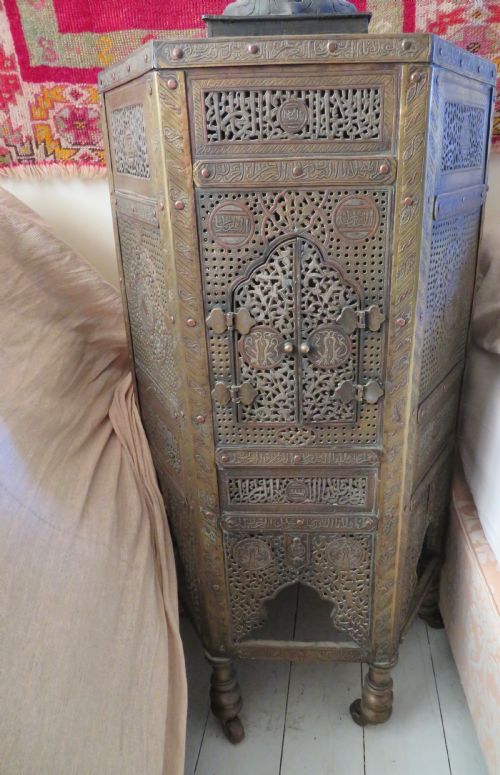
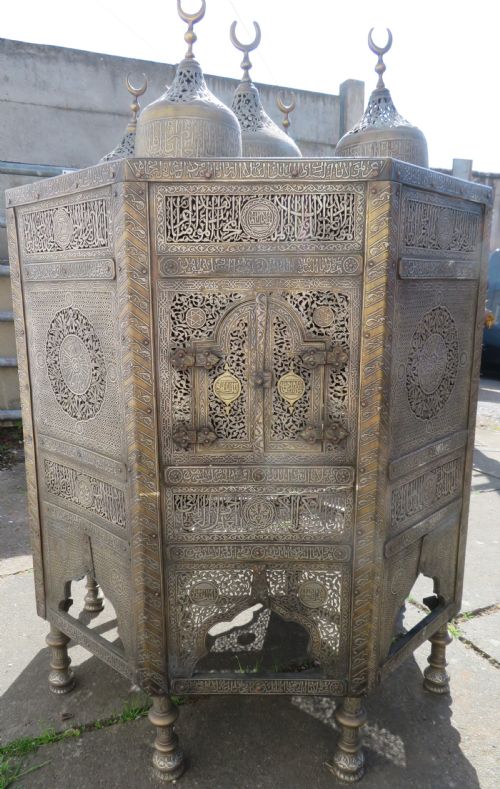
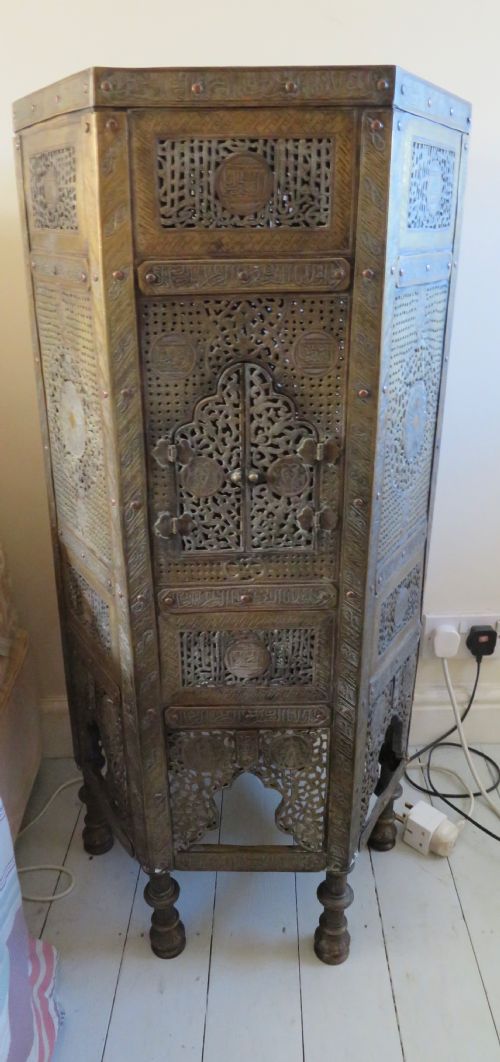
Inlay work defines the aesthetic, combining gleaming elements of mother-of-pearl, bone, and white metal pressed into carved recesses. Alternatively, brass and copper surfaces appear inlaid with silver and gold, particularly within Cairoware production methods.
Some tables double as work boxes, hiding your secret sewing supplies beneath intricate Moorish geometric lids.
What varies in quality
The refinement of the surface decoration separates simpler items from superior examples. Dense, precisely fitted geometric mosaic patterns involving intricate pieces of mother-of-pearl demonstrate greater artisan skill than sparse or crudely stamped designs.
Depth and complexity of the carved openwork structure also distinguish finer objects. Pierced wooden lattice panels or heavy metalwork with multi-metal inlay require advanced technical mastery compared to plain panel construction.
Liberty and Co
The Islamic Side Table Glossary
- Kursi
- A low stool or table, frequently used as a Quran stand or occasional surface in Middle Eastern traditions. These pieces often feature hexagonal geometry and openwork metal construction.
- Cairoware
- Metalwork produced in Cairo during the late nineteenth and early twentieth centuries, characterised by brass or copper vessels and tables heavily inlaid with silver and gold. It gained immense popularity among European collectors.
- Moorish Revival
- An architectural and decorative style popular in the nineteenth century that reinterpreted Islamic design motifs from Spain and North Africa. It manifests in European furniture through horseshoe arches and dense geometric marquetry.
- Mamluk Revival
- A design movement inspired by the art of the Mamluk Sultanate, focusing heavily on elaborate brass work and intricate surface engraving. Pieces in this style often display heraldic emblems and Calligraphic bands.
- Octagonal
- Having eight sides and eight angles. This geometric plan frequently dictates the shape of the table tops found in Middle Eastern furniture.
Islamic Side Table: Frequently Asked Questions
What is a kursi table?
A kursi is a traditional low table or stand, often hexagonal, which functions as a Quran stand or general occasional surface.
In marketplace terms, these items are built from brass, copper, or inlaid wood, serving as striking focal points in a room.
How do I clean mother of pearl inlay?
Mother-of-pearl and bone inlay requires gentle dusting with a dry microfibre cloth to protect the delicate wooden matrix holding the pieces in place.
Avoid liquid cleaners or polishes, as moisture can seep beneath the tesserae and loosen the traditional adhesives used during construction.
Are these tables genuinely antique?
The pieces listed originate primarily from the nineteenth and early twentieth centuries, spanning periods from the Victorian era up to the 1930s.
They reflect the height of European orientalist taste and revivalist manufacturing movements in regions like Syria, Egypt, and North Africa.
How do I style an islamic side table?
These tables work effectively as standalone accent pieces beside seating, or as lamp stands where their reflective inlay catches the light.
Their rich geometric patterns complement both neutral contemporary spaces and eclectic historical interiors without needing heavy styling.