



Islamic Coffee Table
An islamic coffee table brings intricate geometry and warm metalwork into a modern interior, offering a distinct focal point rooted in centuries of craftsmanship.
Islamic Coffee Table
When you search for an islamic coffee table, you are looking at low tables and occasional surfaces drawn from Moorish Revival, Mamluk Revival, Ottoman, and Persian stylistic traditions. These pieces often originate as side tables, hexagonal lamp tables, or folding tray stands adapted from earlier domestic forms.
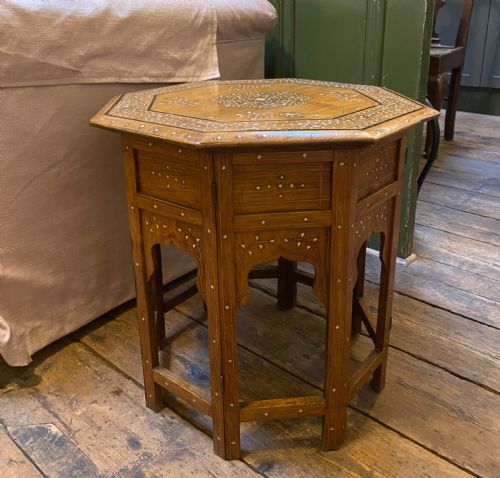
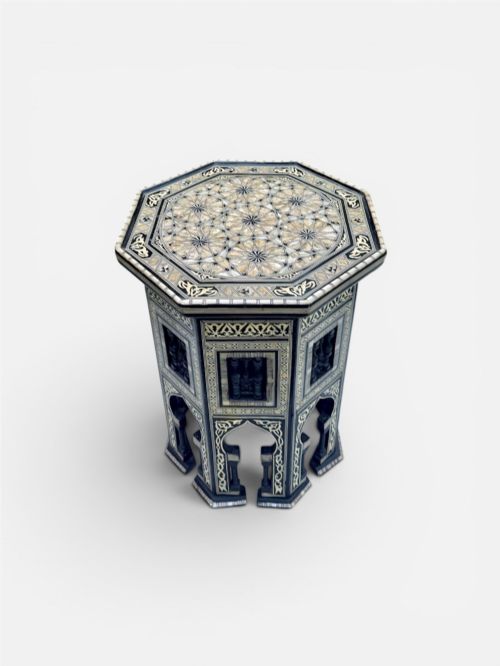
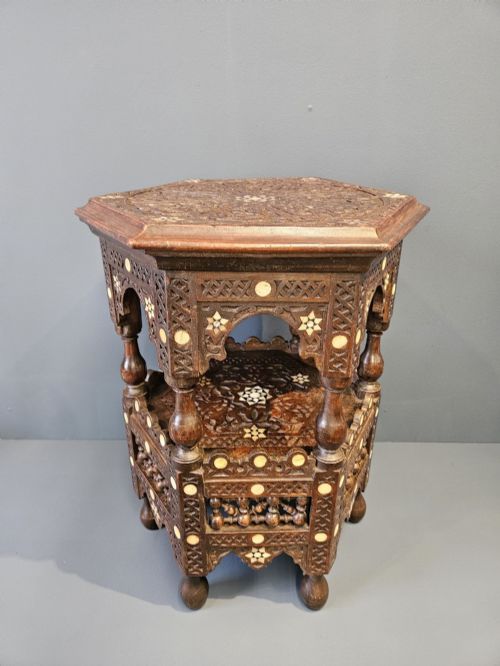
The version you are most likely to meet on this page is an octagonal or hexagonal table dating from the late nineteenth century to the early twentieth century. These low tables frequently combine regional woodworking traditions with European retailer influences, such as Liberty style productions.
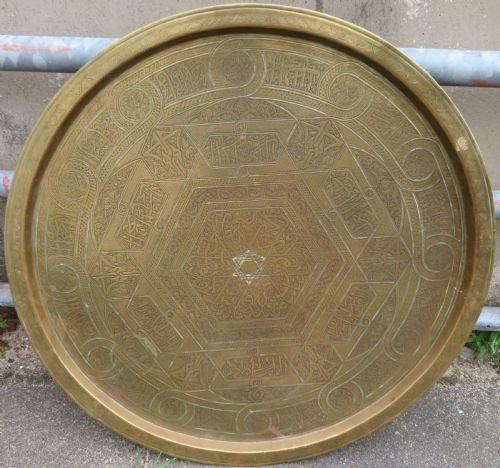
Surfaces range from heavily inlaid geometric frames to freestanding engraved brass trays resting on folding wooden bases. Understanding these varied forms helps identify whether a piece served originally as a low dining surface, a brazier stand, or a decorative centre table.
Materials and Construction
Makers constructed the structural frames from dense hardwoods, walnut, and ebonised wood, frequently shaping them into collapsible hexagonal or octagonal bases. These frames provide sturdy support while allowing the tables to be easily stored or moved.
Intricate surface decoration relies on meticulous inlay work utilising mother-of-pearl, bone, and lighter woods arranged in repeating geometric star patterns. Metalwork elements feature heavy brass tops decorated with chased or engraved Arabic calligraphy, floral motifs, and geometric strapwork.
Islamic Coffee Table Retail Price Guide 2026
Typical asking prices for islamic coffee table among the pieces listed under this phrase on Sellingantiques today, from the lower quarter to the upper quarter. They describe what is for sale here now, not the wider market.
Several tables feature collapsible folding bases designed to pack flat, proving that flat-pack convenience predates modern furniture stores by centuries.
Assessing Quality and Execution
The division between ordinary and exceptional examples rests upon the density and precision of the inlay work. Finer tables display tightly fitted mother-of-pearl and bone tesserae with minimal filler, whereas simpler pieces rely on painted lines or sparse inlay.
Metal components also dictate the standard of the piece, with superior brass trays exhibiting deep, crisp engraving rather than shallow, machine-stamped impressions. The structural integrity of the folding wooden base and the completeness of the delicate edge moulding further separate standard production from master craftsmanship.
Liberty & Co
The Islamic Coffee Table Glossary
- Moorish Revival
- A nineteenth-century architectural and decorative style that reinterpreted traditional Islamic design elements from Spain and North Africa. It heavily influenced European interior furnishings of the Victorian era.
- Mamluk Revival
- A design movement inspired by the art and metalwork of the Mamluk Sultanate, characterised by intricate brass inlay and dense geometric ornamentation. Pieces in this style often feature elaborate script panels.
- Cairoware
- A term used to describe nineteenth-century metalwork, particularly brass trays and vessels, produced in Cairo for the European export market. These items are typically embellished with silver and copper inlay.
- Tessera
- An individual small block of stone, tile, bone, or mother-of-pearl used in the creation of mosaic inlay patterns. Artisans shape each piece by hand to fit snugly within carved wooden channels.
- Octagonal
- Having eight sides and eight angles. This geometry frequently dictates the footprint of traditional Middle Eastern occasional and centre tables.
Islamic Coffee Table: Frequently Asked Questions
What is an islamic coffee table?
An islamic coffee table is typically a low occasional table, hexagonal or octagonal in shape, featuring traditional Middle Eastern decorative techniques such as mother-of-pearl inlay or engraved brass tops. Many examples on the market began as nineteenth-century folding tables or tray stands adapted for modern domestic use.
These pieces combine functional surface area with rich geometric patterns, making them versatile additions to contemporary living spaces. Their construction reflects a fusion of regional craftsmanship and European aesthetic tastes from the Victorian and Edwardian periods.
How were these tables used?
Historically, many of these low tables and tray stands served as surfaces for serving tea, displaying objects, or supporting portable braziers within traditional domestic settings. The folding wooden bases allowed the structures to be easily stowed away when not in use.
Today, their low profile makes them ideal for modern seating arrangements, functioning naturally as coffee tables or accent pieces in a sitting room. Their robust wooden frames and durable metal tops ensure they remain practical for everyday placement.
How do I date an antique table?
Dating relies heavily on examining the timber species, the ageing of the inlay materials, and the style of the metalwork engraving. Late nineteenth-century pieces often display hand-cut bone and mother-of-pearl with distinct patination, while early twentieth-century examples may show influences from specific retailers.
Evaluating the construction methods of the folding base and the type of fixings used also helps narrow down the period of manufacture. Comparing stylistic motifs against documented Moorish and Ottoman design traditions provides further chronological context.
How do I care for inlaid wood?
Preserving inlaid wood requires maintaining stable indoor humidity levels to prevent the timber from expanding or contracting, which can cause delicate mother-of-pearl or bone tesserae to loosen. Avoid placing these tables in direct sunlight or near heat sources.
Dust the surface gently with a soft, dry cloth and avoid applying harsh liquid polishes that might seep into the wooden channels. Periodic treatment with a suitable microcrystalline wax helps protect the wood and enhances the natural lustre of the inlay.