

Bone Inlaid Furniture
Bone inlaid furniture brings together intricate geometric patterns and dense botanical carving across tables, chairs, and cabinets from the nineteenth and early twentieth centuries.
Bone Inlaid Furniture
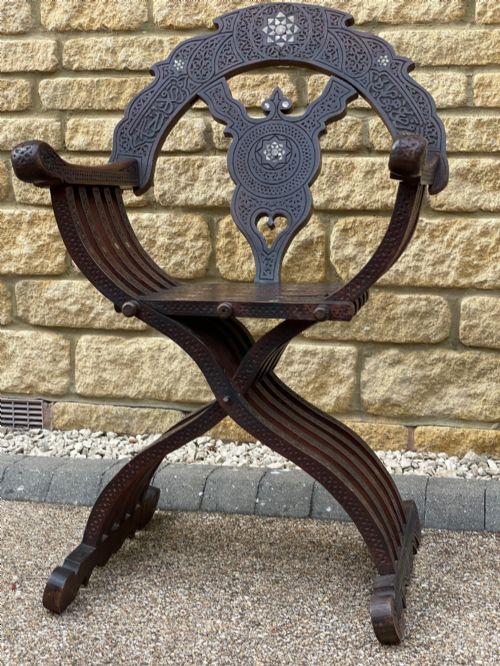
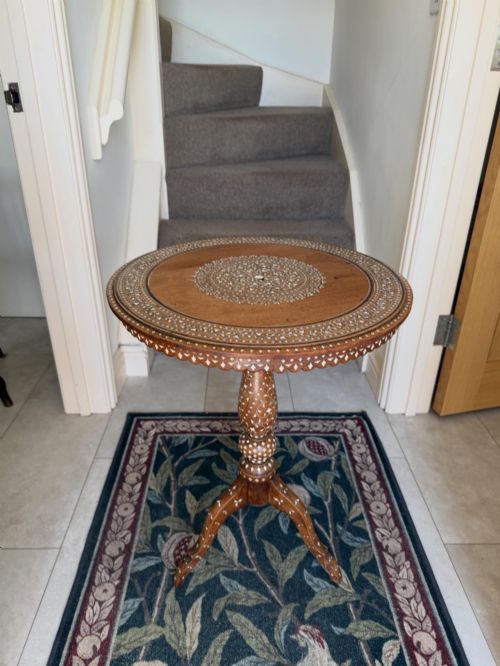
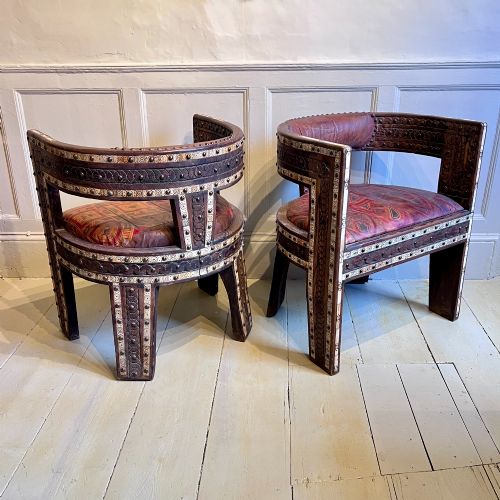
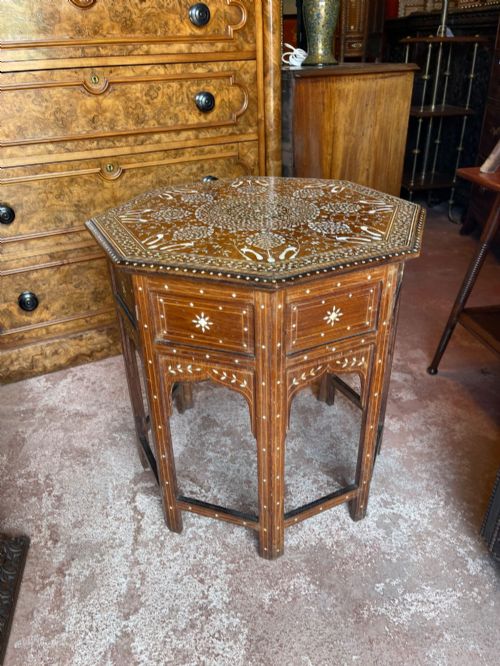
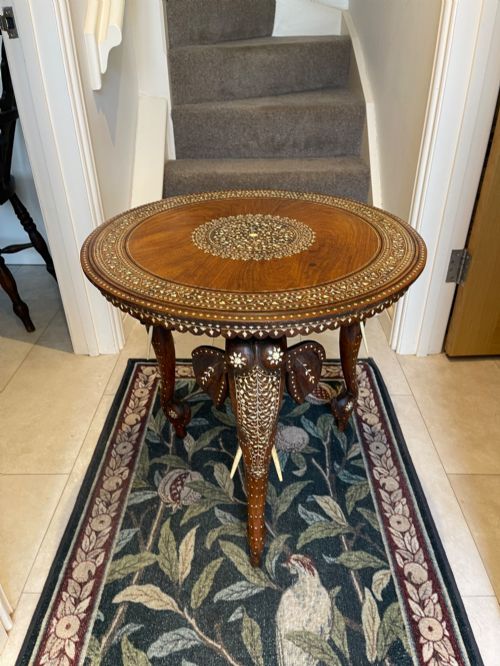
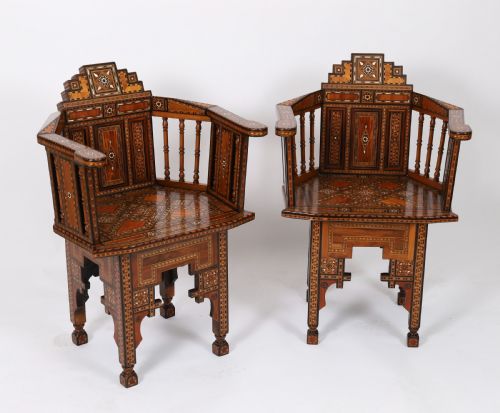
Bone inlaid furniture encompasses functional domestic items such as side tables, occasional tables, armchairs, and cabinets produced predominantly during the nineteenth and early twentieth centuries. These pieces reflect diverse regional traditions, including Anglo-Indian production from Hoshiarpur, Moorish Revival pieces, and Syrian or Ottoman workshop items.
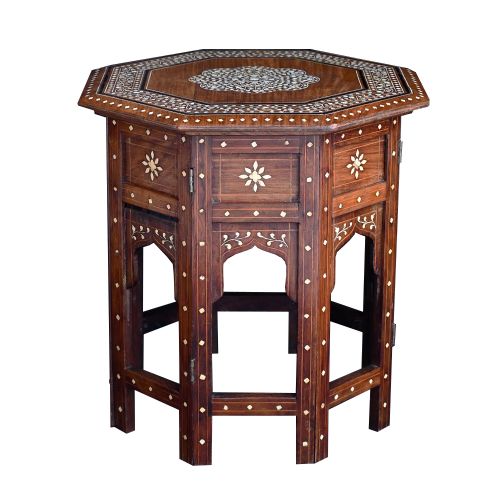
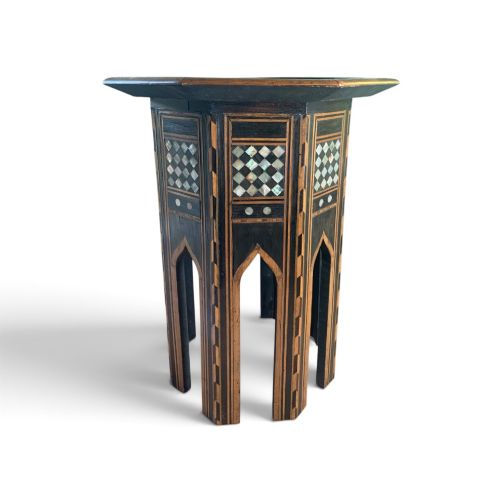
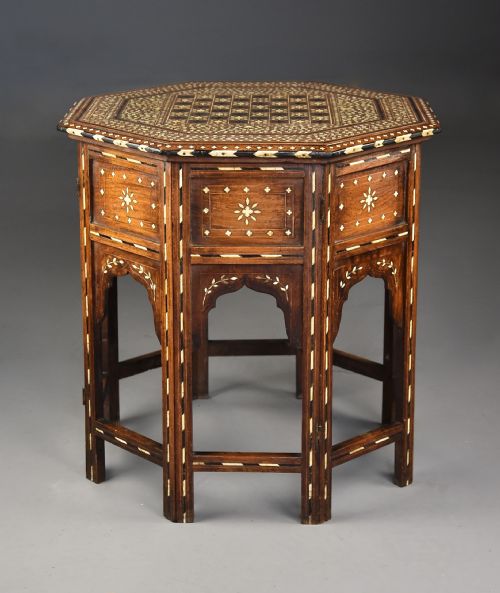
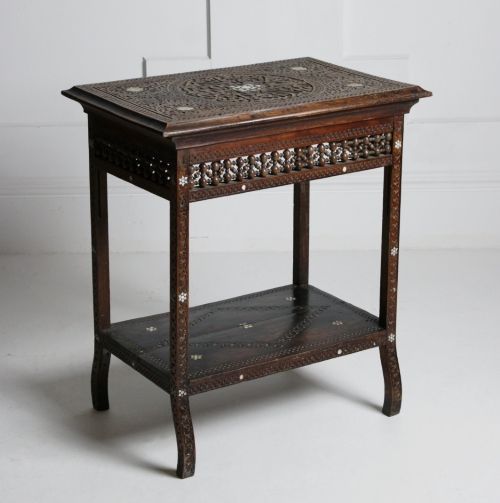
The most common forms encountered on this page are octagonal and hexagonal occasional tables, alongside seating and storage pieces incorporating intricate surface decoration. Hardwoods like teak, walnut, and ebonised timber serve as the structural base for detailed decorative schemes executed in bone and mother-of-pearl.
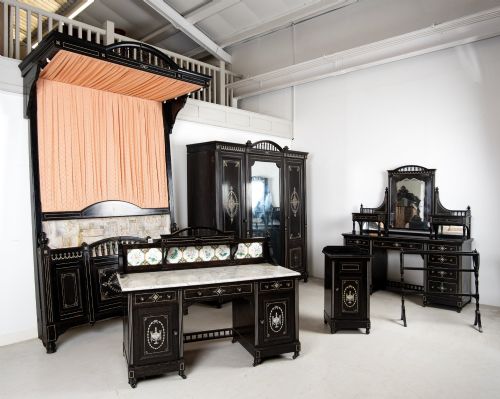
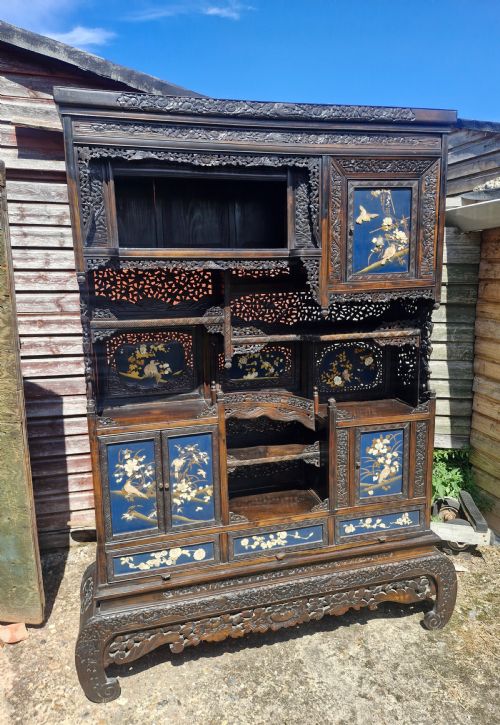
Originating from distinct international workshops and retail houses such as Liberty & Co., these items combine structural woodwork with elaborate surface ornamentation. Buyers encounter everything from small pedestal tables to large cabinets on stand, spanning multiple decades of revivalist and colonial design.
Materials and construction
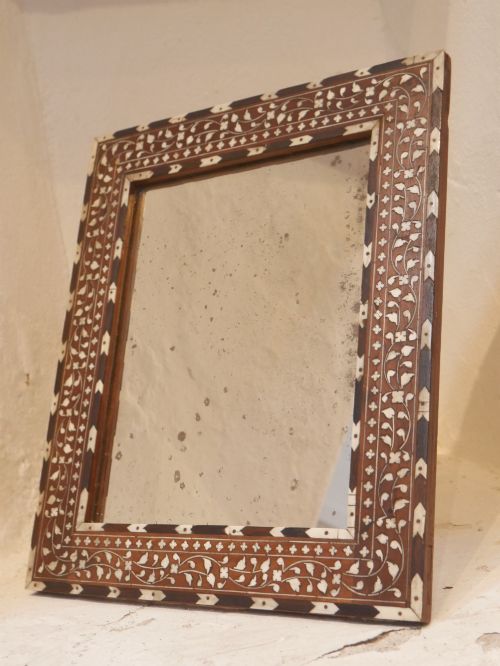
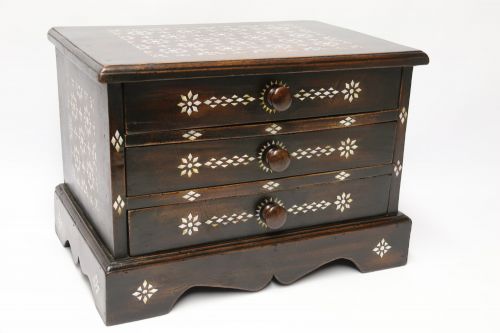
Makers constructed these pieces using dense hardwoods such as teak, walnut, rosewood, and ebonised timber, which provided a stable dark ground for light-coloured decoration. Artisans shaped bone and mother-of-pearl into tiny geometric tesserae and floral motifs, embedding them meticulously into hand-carved channels within the wooden surface.
The assembly relies upon traditional joinery combined with surface carving, where intricate foliage and lattice patterns surround the inlaid sections. Secondary materials like brass wire, leather, and tortoiseshell occasionally supplement the bone and mother-of-pearl ornamentation to enhance contrast and texture.
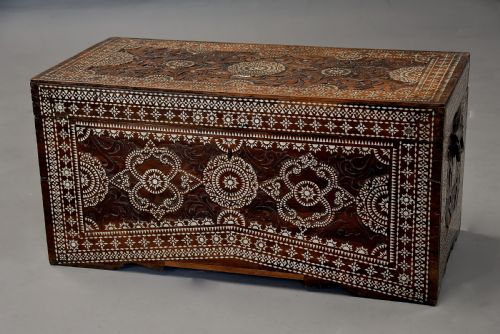
The inventory includes specialised forms such as pedestal tables, collector's chests, cabinets on stand, and folding chairs spanning Anglo-Indian and Syrian traditions.
Assessing quality
Quality in bone inlaid furniture depends primarily on the density and precision of the surface decoration, alongside the integrity of the underlying woodwork. Pieces featuring dense, finely cut geometric bone tesserae alongside mother-of-pearl demand significantly greater artisan skill than those with sparse or repeating stamped motifs.
The structural condition of the timber foundation and the completeness of the delicate inlay work dictate the standard of survival. Superior examples maintain tight joints and securely seated bone elements within carved recesses, showing minimal loss or replacement across intricate panels.
Liberty And Co·Adriano Brambilla
The Bone Inlaid Furniture Glossary
- Hoshiarpur
- A region in Punjab, India, renowned for producing intricately carved wooden furniture inlaid with bone and shesham or teak. Pieces from this centre typically exhibit dense floral and foliate carving.
- Octagonal
- Having eight sides. This polygon shape is particularly common for the tops and bases of occasional and lamp tables originating from Anglo-Indian and Moorish workshops.
- Mother-of-pearl
- The iridescent inner layer of certain mollusc shells. Artisans cut this material into thin plates to combine with bone inlay for added shimmer and contrast.
- Moorish Revival
- An architectural and decorative style popular in the nineteenth century. It incorporates Islamic design elements, horseshoe arches, and geometric inlay.
- Parquetry
- Geometric mosaic woodwork formed by fitting small veneer pieces together. This technique often frames or complements bone and mother-of-pearl panels on cabinets and tables.
Bone Inlaid Furniture: Frequently Asked Questions
What is bone inlaid furniture?
Bone inlaid furniture comprises wooden tables, chairs, cabinets, and chests decorated with hand-cut sections of animal bone and mother-of-pearl. These items date largely from the nineteenth and early twentieth centuries.
Production centres spanned regions including India, Syria, Egypt, and Portugal, resulting in diverse styles from Anglo-Indian Hoshiarpur work to Moorish Revival designs.
How do I clean bone inlaid furniture?
Clean bone inlaid furniture gently using a dry, soft cloth to remove dust from deep carvings and crevices. Avoid applying liquid cleaners, harsh chemicals, or excess moisture directly to the surface.
Water and commercial polishes can loosen the delicate glue securing the bone tesserae and damage the surrounding hardwood or ebony ground.
How do I identify Moorish Revival pieces?
Moorish Revival pieces feature distinct architectural motifs, star patterns, and dense geometric lattice work inspired by Islamic art. They often incorporate arched details and dark timber surfaces.
Many of these items date from the late nineteenth century, reflecting European enthusiasm for Middle Eastern and North African design aesthetics.