


Inlaid Wooden Nightstands
Inlaid wooden nightstands bring warmth and refined detail to a bedroom, offering practical surface space alongside decorative woodwork.
Inlaid Wooden Nightstands
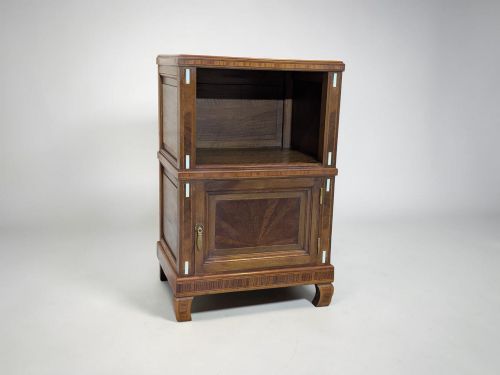
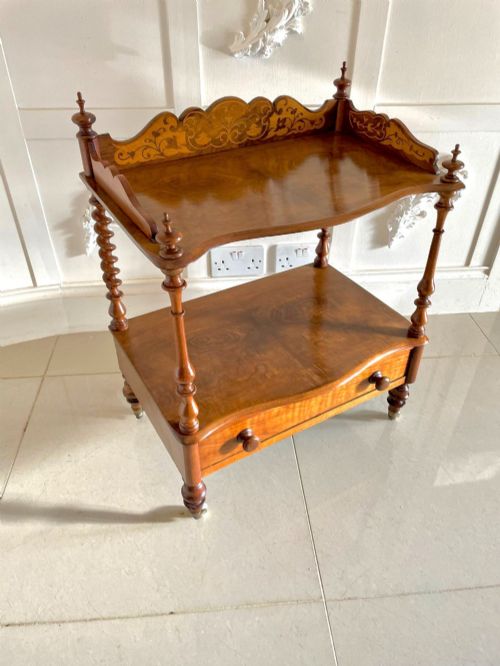
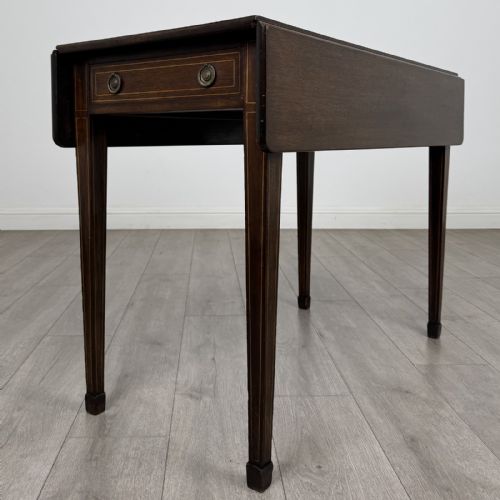
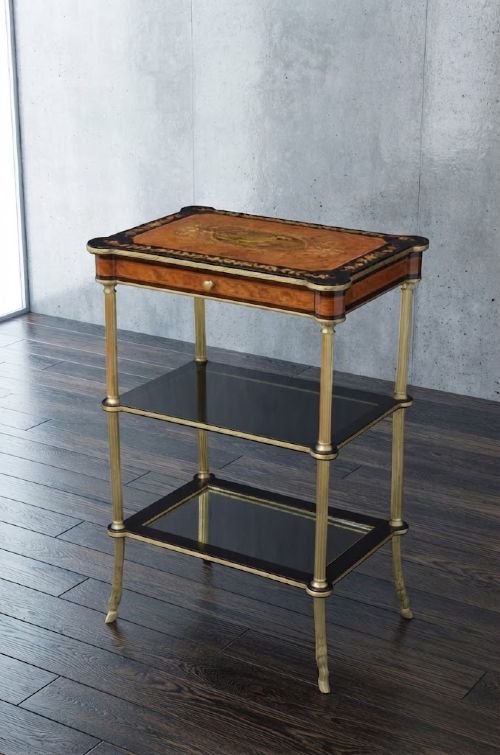
When buyers search for inlaid wooden nightstands, they encounter a variety of compact bedside furniture spanning multiple eras and design influences. These pieces provide functional storage next to a bed while showcasing decorative surface details.
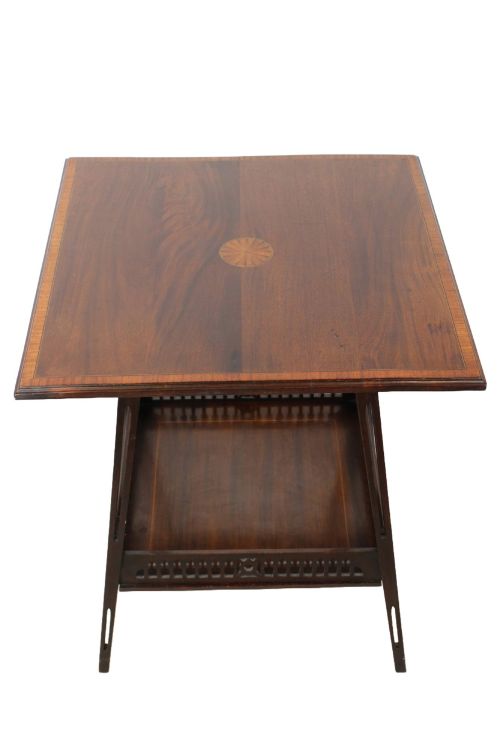
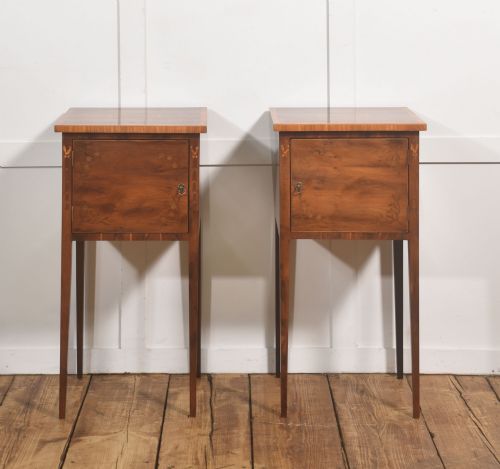
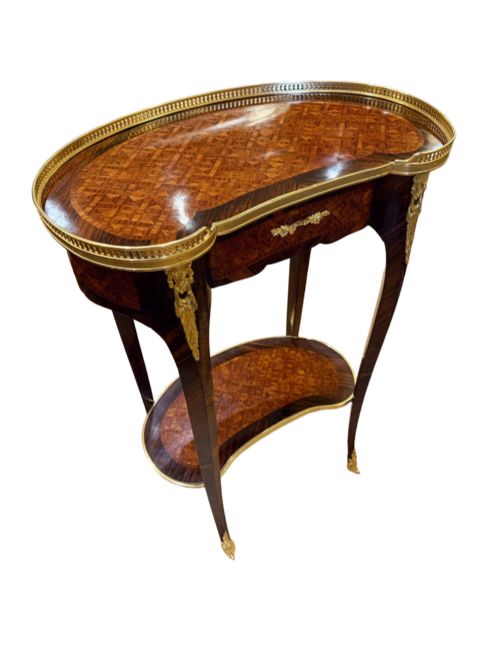
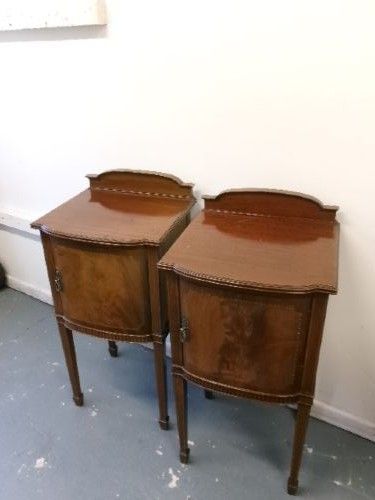
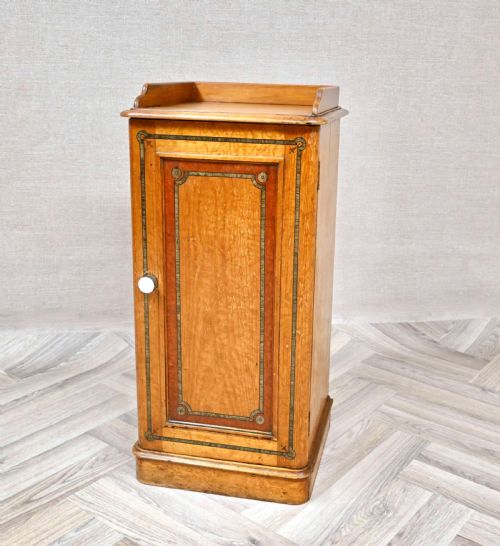
The selections on this page lean heavily towards Edwardian mahogany examples and French designs from the early twentieth century. Cabinets, side tables, and small chests of drawers frequently appear, often built to sit neatly beside a bed.
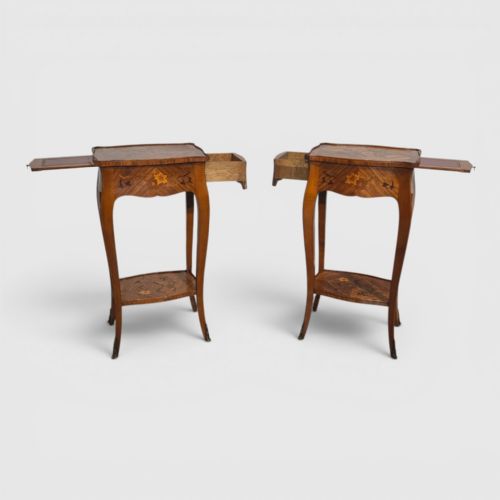
Origins range from Georgian and Victorian workshops to continental makers working in Louis XV and Art Deco styles. Woods such as mahogany, walnut, and kingwood form the primary bodies, often accented with contrasting timbers.
Materials and construction
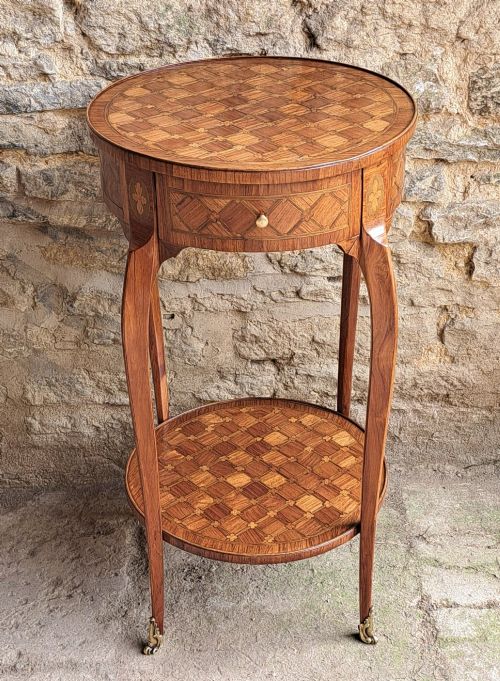
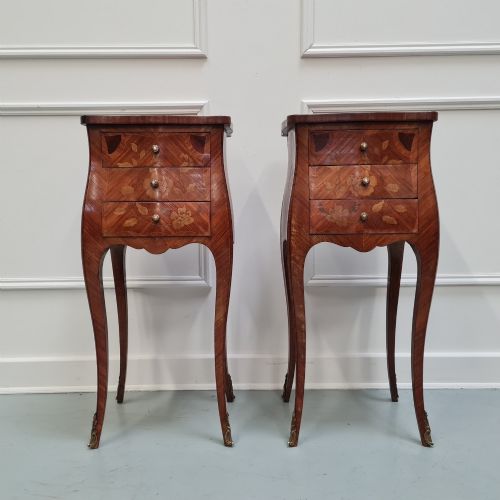
Cabinetmakers utilised dense timbers like mahogany, walnut, and rosewood for the structural carcasses of these small tables and cupboards. Exotic woods such as kingwood and satinwood provided lighter contrasting veneers for geometric and floral patterns.
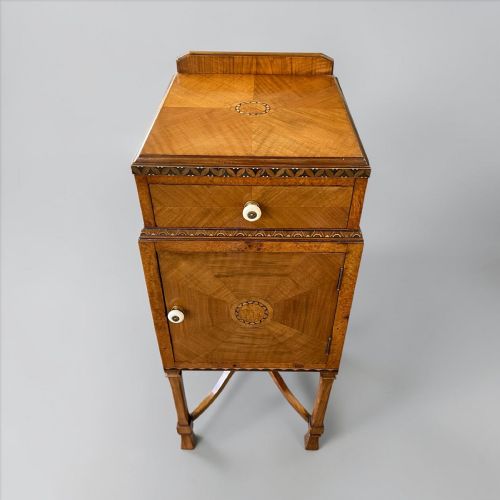
Inlay techniques involved carefully cutting contrasting pieces of wood, bone, mother-of-pearl, or brass into recessed channels on the surface. These decorative schemes often included satinwood inlay and parquetry to create visual depth on tops and doors.
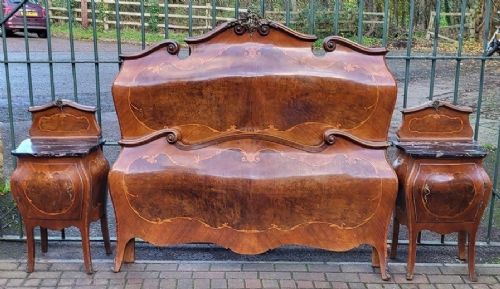
Many continental pieces incorporated fitted marble tops above wooden storage compartments to provide a durable and luxurious surface. Brass fittings, gallery rails, and ebonised details frequently completed the construction.
Inlaid Wooden Nightstands Retail Price Guide 2026
Typical asking prices for inlaid wooden nightstands among the pieces listed under this phrase on Sellingantiques today, from the lower quarter to the upper quarter. They describe what is for sale here now, not the wider market.
Listings feature bedside cabinets, lamp tables, and chests of drawers spanning from the Georgian period through the Edwardian era and into the nineteen-thirties.
Distinctions in quality
The standard of execution in the woodwork marks the division between ordinary furniture and finer cabinetmaking. Crisp, tight joints in the inlay work without excessive filler indicate skilled hand craftsmanship.
Choice of materials dictates the standing of a piece, with figured veneers, solid brass hardware, and genuine marble slabs elevating the construction. Simpler pine carcasses with painted details occupy a different tier from finely polished mahogany and kingwood cabinets.
Proportion and structural integrity define the remaining differences, as well-balanced proportions and smooth-running drawers demonstrate superior original design and careful ongoing maintenance.
Trevor Page and Co·Maple and Co·Collinson and Lock·Gillows
The Inlaid Wooden Nightstands Glossary
- Inlay
- A technique where pieces of contrasting material are inserted into a recessed wooden surface to form a decorative pattern. This method creates a smooth, flush finish across the tabletop or cabinet door.
- Marquetry
- An elaborate form of inlay that assembles pictorial or decorative veneers across an entire surface. It frequently employs various tinted woods to depict floral or geometric scenes.
- Parquetry
- A geometric mosaic of wood pieces used for decorative floors and tabletops. Squares, triangles, and diamonds combine to form repeating patterns.
- Satinwood
- A durable, yellow-toned timber imported from the tropics, prized for its natural sheen and contrast against darker woods. It is commonly utilised for stringing and banded borders.
- Kingwood
- A rich, dark violet-brown timber with lighter golden streaks used extensively in French cabinetmaking. It forms striking veneered surfaces on twentieth-century bedside tables.
Inlaid Wooden Nightstands: Frequently Asked Questions
What defines an Edwardian nightstand?
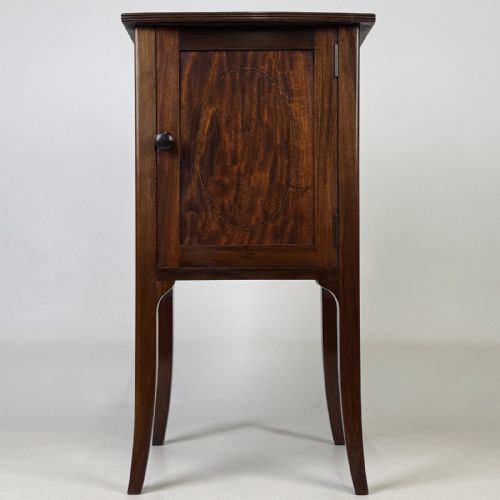
Edwardian bedside cabinets usually feature lighter timbers like mahogany, often decorated with subtle satinwood inlay and tapered legs. These pieces reflect a shift away from heavier Victorian designs toward simpler, refined forms.
They function well in modern bedrooms by providing enclosed storage within a compact footprint that suits standard bed heights.
How do French bedside tables differ?
French examples from the early twentieth century frequently incorporate kingwood veneers, elaborate marquetry, and shaped marble tops. Styles range from curvaceous Louis XV revivals to streamlined Art Deco forms.
Living with these pieces involves appreciating their decorative presence and utilising the stone surfaces for everyday items.
Were these always made as pairs?
Bedside tables and cabinets appear both individually and in matched pairs depending on the original commission. Single pieces often originated as small lamp tables or side cabinets rather than dedicated bedroom furniture.
Matching pairs are particularly sought after for placing on either side of a larger bed frame.
How is marble handled on these tables?
Marble slabs were fitted into the tops of many twentieth-century and Victorian bedside cabinets to provide a heat-resistant and washable surface. These stone inserts sit within wooden frames, sometimes accompanied by raised brass galleries.
Care simply requires wiping the stone clean and avoiding harsh chemical cleaners that might dull the polish.