






Grand Tour Specimen Table
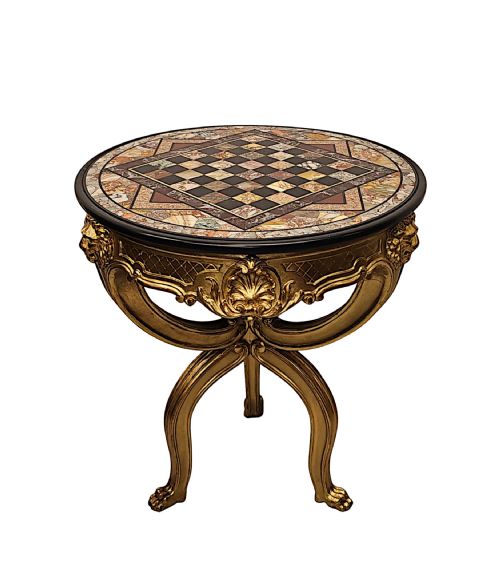
A grand tour specimen table brings the classical architecture and ruined temples of Italy directly into a Victorian drawing room through meticulously pieced hardstones.
Grand Tour Specimen Table
A grand tour specimen table combines a sturdy timber base with a lavish stone top composed of numerous geometric or pictorial fragments. These surfaces serve as centre tables, occasional tables, and low coffee tables within sophisticated interiors.
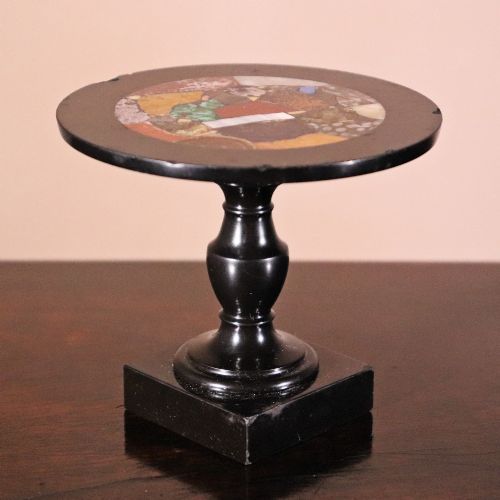
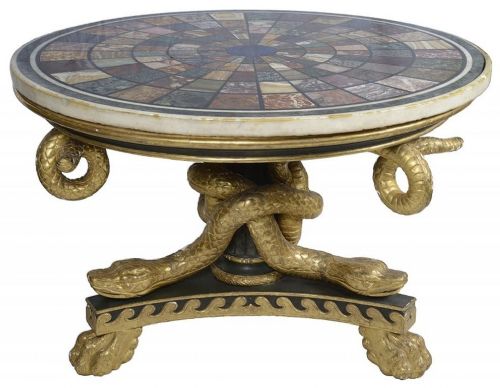
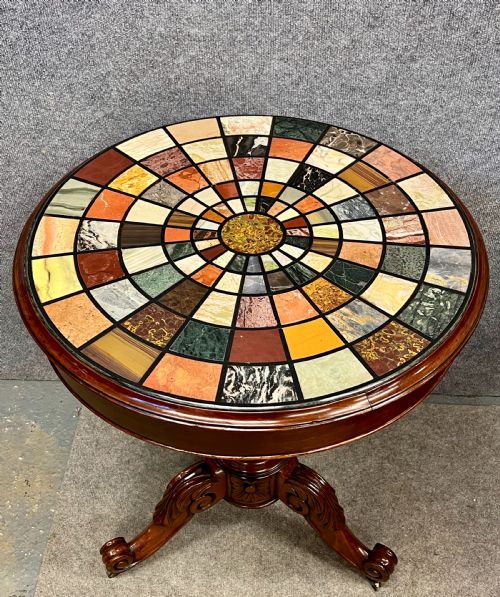
The most common examples encountered on this page date from the nineteenth century, reflecting the peak of British and European travel through Italy. Makers utilised varied forms ranging from miniature collector pieces to large circular centre tables supported by giltwood or mahogany.
Origins stretch from eighteenth-century Italian workshops to Victorian English interpretations of classical taste. Buyers will find both architectural marble compositions and intricate pietra dura roundels depicting birds or floral motifs.
Materials and construction
Craftsmen shaped dense marbles, dark slate, and Ashford black marble into precise geometric tiles or figurative scenes. These hardstones were painstakingly cut and fitted together to form completely smooth, polished tabletops.
Structural bases employ rich timbers such as mahogany, satin birch, and ebonised wood, often enhanced with giltwood accents and brass details. The juxtaposition of heavy stone tops with carved wooden supports requires robust joinery to bear the considerable weight.
Grand Tour Specimen Table Retail Price Guide 2026
Typical asking prices for grand tour specimen table among the pieces listed under this phrase on Sellingantiques today, from the lower quarter to the upper quarter. They describe what is for sale here now, not the wider market.
Some nineteenth-century travellers carried home tiny miniature specimen tables when luggage space in the carriage ran dangerously low.
Recognising quality
The harmony between the stone top and its support structure defines the tier of the piece. Purpose-built Regency and Victorian bases show superior carving and finishing compared to later adaptations or marriages of unrelated tops and bases.
The Grand Tour Specimen Table Glossary
- Specimen Marble
- A tabletop composed of various coloured and textured marble fragments collected from classical sites. Each piece represents a different geological source.
- Pietra Dura
- An artistic technique using cut and fitted, highly polished coloured stones to create images. It translates from the Italian for hard stone.
- Micro-mosaic
- A method of creating minute decorative images using tiny coloured glass tesserae fused together. These often appear as central roundels on tabletop surfaces.
- Ashford Black Marble
- A dark limestone from Derbyshire used as a contrasting background for inlaid mineral specimens. It takes a deep, glossy polish.
- Grand Tour
- The traditional trip of Europe undertaken by upper-class European young men of the eighteenth and nineteenth century. Souvenirs included these architectural stone tables.
Grand Tour Specimen Table: Frequently Asked Questions
What is a grand tour specimen table?
These pieces are decorative tables featuring mosaic tops made from various classical marbles and hardstones. Wealthy travellers purchased them in Italy as souvenirs of their educational journeys.
Over time, these surfaces found permanent homes in British country houses and town residences. They served to display an owner's classical learning and refined taste.
How were these tables used originally?
Nineteenth-century households placed these tables in drawing rooms and reception spaces as centre tables. They invited close inspection of the mineral specimens and geometric layouts.
Guests would gather around to admire the geological variety and micro-mosaic artistry. Today, they function wonderfully as coffee tables or lamp tables.
How do I care for marble and stone tops?
Natural stone surfaces require gentle cleaning with soft cloths and neutral, non-acidic soap solutions. Harsh chemical cleaners will etch the polished finish and damage the delicate stone inlay.
Using coasters and placemats protects the antique surface from moisture and heat rings. Professional wax can maintain the sheen on the wooden bases without harming the stone.
How can I tell nineteenth century pieces apart?
Nineteenth-century examples often display brighter colour palettes and specific Victorian or Regency furniture silhouettes. Earlier eighteenth-century Italian pieces lean towards austere neoclassical architectural forms and heavier marble borders.
Examining the timber construction beneath the top helps reveal the period of the base. Many tables combine older Italian tops with slightly later British or continental stands.