



Circular Marble Accent Table
A circular marble accent table brings a polished stone surface to a room, offering a sturdy yet refined stage for lamps or small objects.
Circular Marble Accent Table
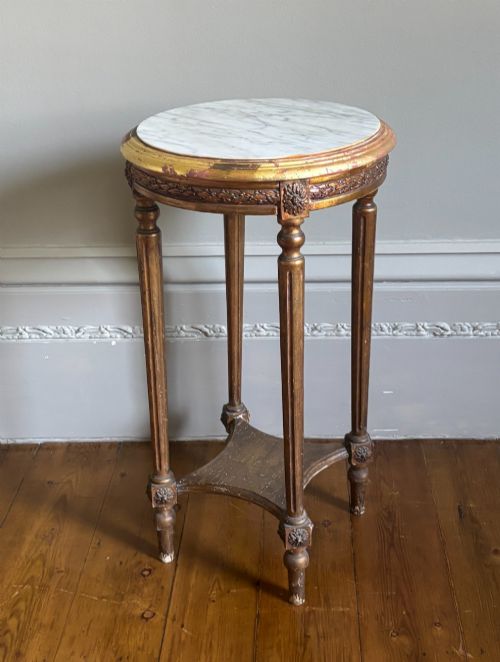
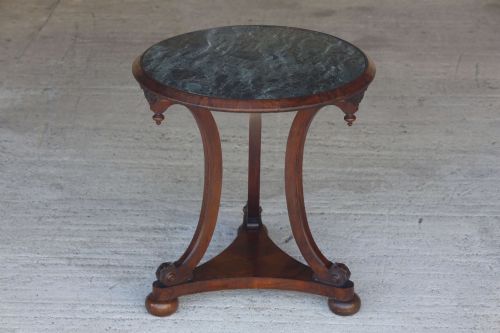
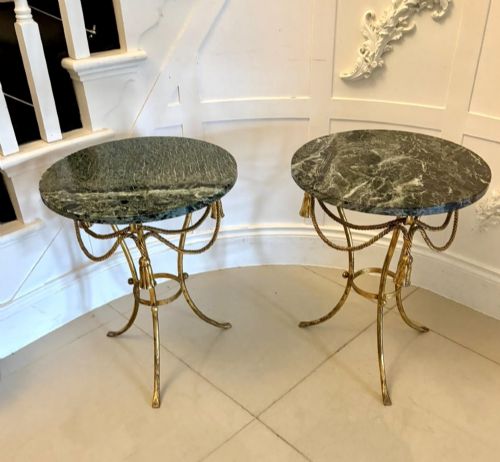
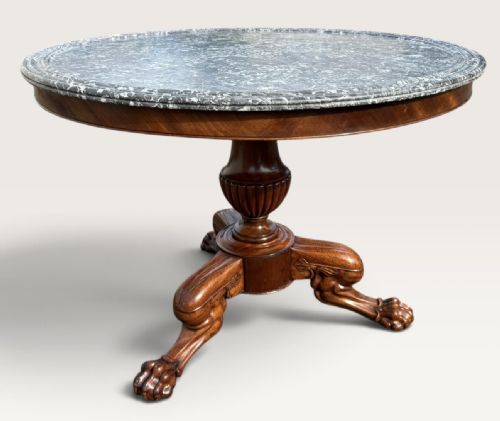
A circular marble accent table is represented here by nineteenth-century occasional tables, bouillotte tables, and guéridons spanning Victorian, Regency, French Empire, and Louis XVI styles. These pieces function as side tables, centre tables, and lamp tables, originating from English, French, Italian, and Chinese workshops.
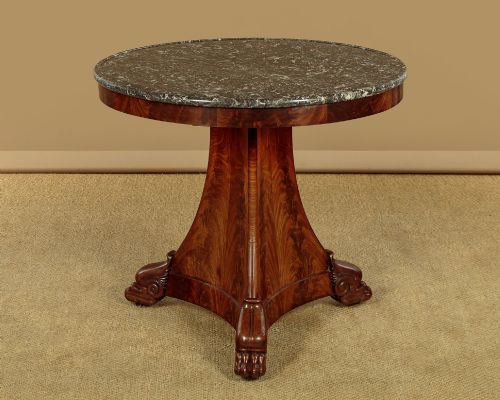
Buyers most frequently encounter French examples from the nineteenth century, often constructed as mahogany or painted guéridons topped with white or black marble. Specimens from the 1850s to the 1920s dominate the selection, showing distinct regional interpretations of classical forms.
Materials and construction methods
The construction relies on solid timbers such as mahogany, walnut, rosewood, and satinwood, alongside painted or gilded wood frames. Marble tops - ranging from plain white and black to intricate specimen marble - sit within or upon these wooden structures.
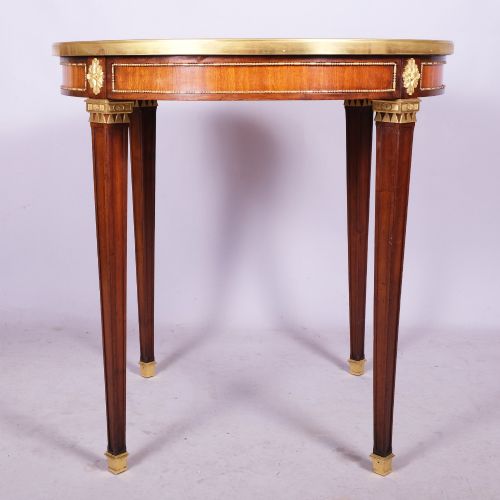
Metal components such as brass, ormolu, and gilt bronze provide mounts, gallery rails, and decorative accents. Carved hardwood and giltwood elements further define the joinery and ornamentation of these circular tables.
Circular Marble Accent Table Retail Price Guide 2026
Typical asking prices for circular marble accent table among the pieces listed under this phrase on Sellingantiques today, from the lower quarter to the upper quarter. They describe what is for sale here now, not the wider market.
Rams' heads peer out from nineteenth-century empire frames, watching faithfully over whatever stray teacup or candlestick lands upon their marble.
Distinctions in craftsmanship
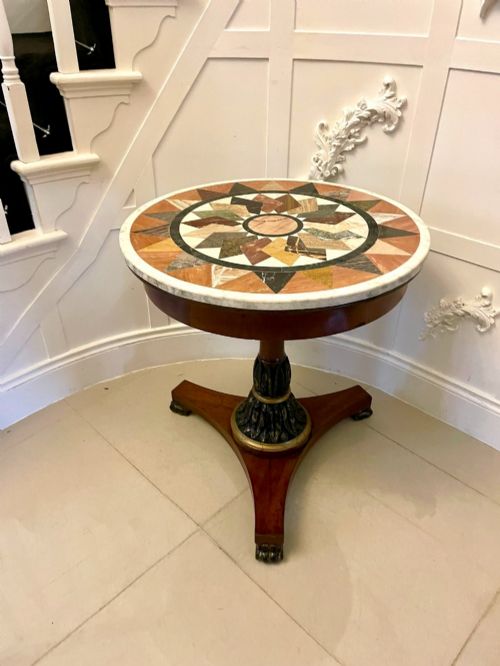
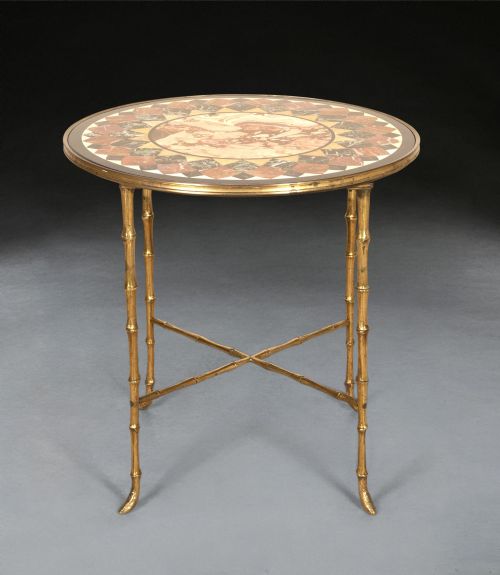
Quality reveals itself in the precision of the stone cutting and the complexity of the marble inlay, particularly in multi-coloured specimen tops. Fine execution is visible in the crispness of ormolu mounts, bronze fittings, and hand-carved wood details.
The choice of timber and the sophistication of the framing, from simple mahogany tripods to elaborate parcel-gilt and painted French empire structures, separate standard production from exceptional pieces.
James Shoolbred·Weisweiler
The Circular Marble Accent Table Glossary
- Guéridon
- A small French round table, typically supported by a central pillar or a tripod base. These tables appeared frequently in French interiors from the eighteenth century onwards.
- Bouillotte table
- A small neoclassical circular card or occasional table featuring a raised brass gallery around the marble top. They often include small pull-out candle slides beneath the rim.
- Specimen marble
- A decorative surface composed of numerous small pieces of different coloured marbles arranged in geometric or pictorial patterns. This technique demands meticulous stone-cutting skill.
- Ormolu
- Gilt bronze ornamentation applied to furniture, popular in French neoclassical and empire designs. The technique involves creating a mercury gilding finish over a bronze base.
- Gallery
- A low raised rim, usually made of pierced brass or metal, fitted around the edge of a table top to prevent items from sliding off. This feature is common on bouillotte tables.
Circular Marble Accent Table: Frequently Asked Questions
How do I identify a guéridon?
A guéridon is a French round table supported by a central column or three legs. They frequently feature marble tops and date widely across the nineteenth century.
Styles range from plain mahogany tripod frames to ornate empire designs decorated with gilt bronze mounts.
Where should I place an accent table?
These tables fit easily beside armchairs, sofas, or in hallways as lamp and side tables. Their compact circular footprint allows them to occupy small corners without crowding a room.
The stone top also provides a practical, heat-resistant surface for drinks and lighting.
What is specimen marble?
Specimen marble refers to a top composed of many different varieties of coloured stone fitted together. Artisans arrange these fragments to create geometric patterns or harmonious colour variations.
Tables featuring this work represent a high degree of specialist stonemasonry.