


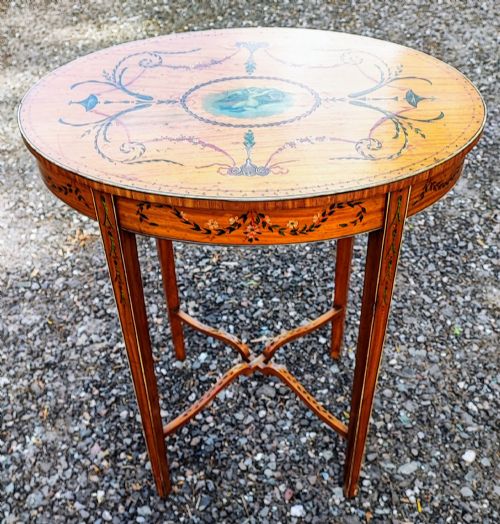

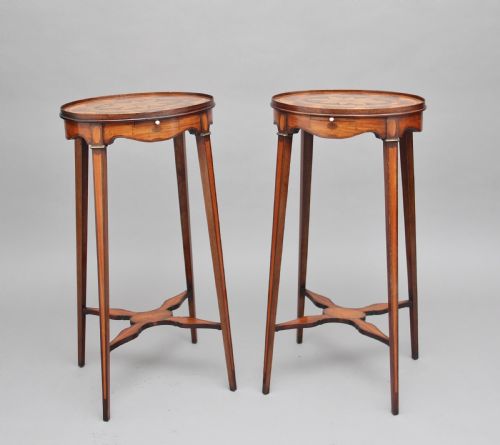


Georgian Revival Occasional Table
These georgian revival occasional table pieces revive eighteenth-century elegance for practical modern rooms.
Georgian Revival Occasional Table
A georgian revival occasional table translates eighteenth-century cabinet-making forms into pieces produced primarily between the late nineteenth century and the interwar period. The selection includes side tables, centre tables, coffee tables, nests of tables, urn stands, wine tables, drop leaf tables, and writing tables.
Makers working during the Edwardian era and the early twentieth century drew heavily upon Sheraton, Chippendale, Hepplewhite, and Regency vocabulary. Mahogany remains the dominant timber, frequently accompanied by satinwood, walnut, burr walnut veneer, oak, and occasional marble tops.
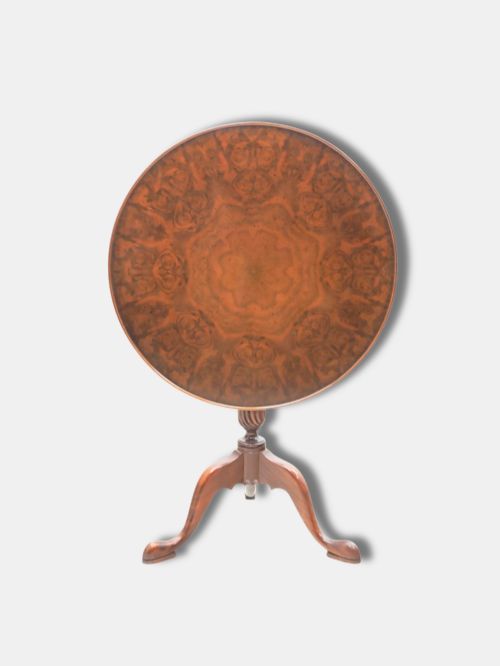
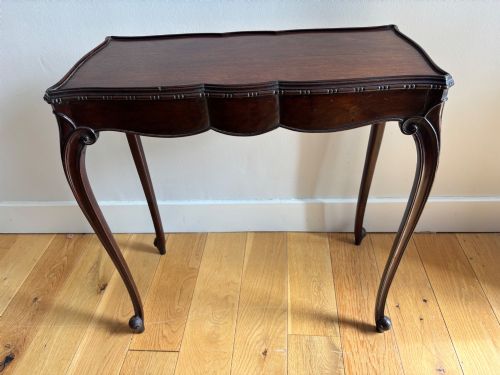
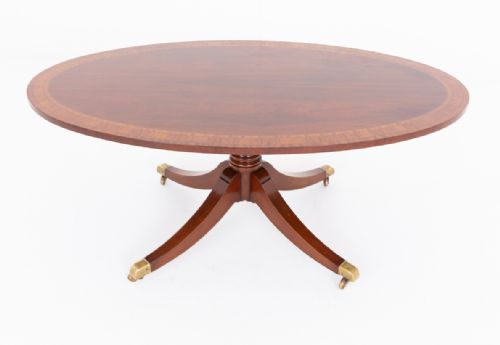
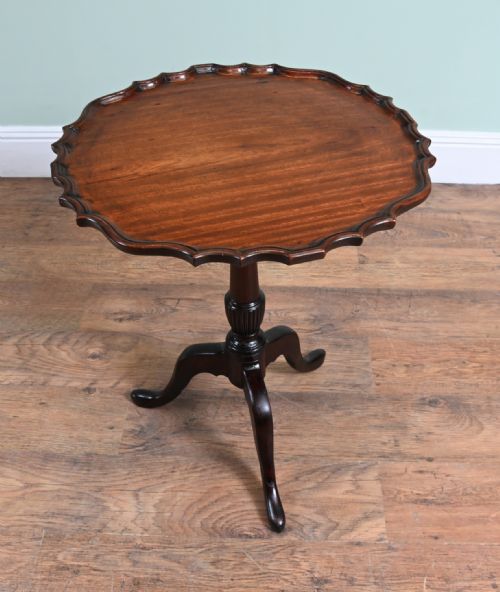
The objects serve varied functions, from compact lamp tables and silver tables to larger serpentine centre tables and tripod wine tables with tip-top actions. Surviving examples demonstrate how later makers reinterpreted earlier proportions for domestic interiors.
How they were made
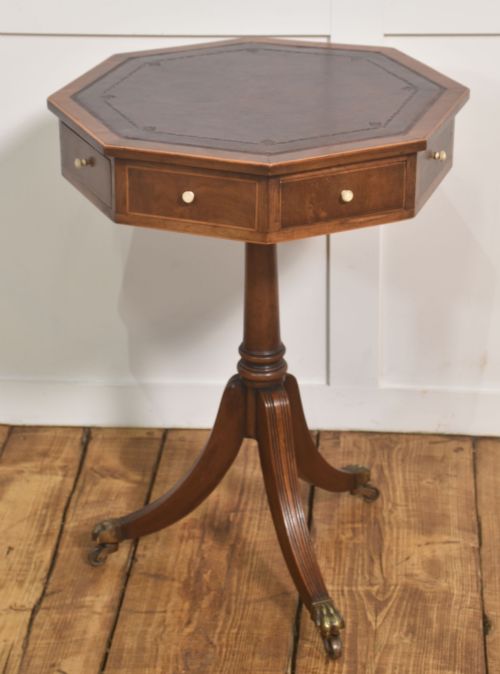
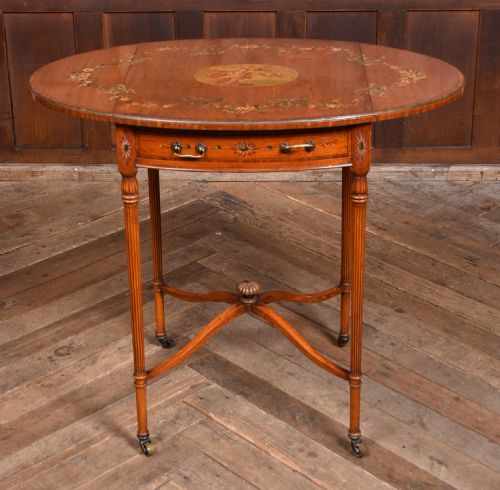
Cabinet-makers relied on solid mahogany, oak, and walnut, often applying finely figured burr walnut or satinwood veneers to table tops. Marquetry, boxwood stringing, and shell inlays embellish many surfaces, particularly on Sheraton revival pieces.
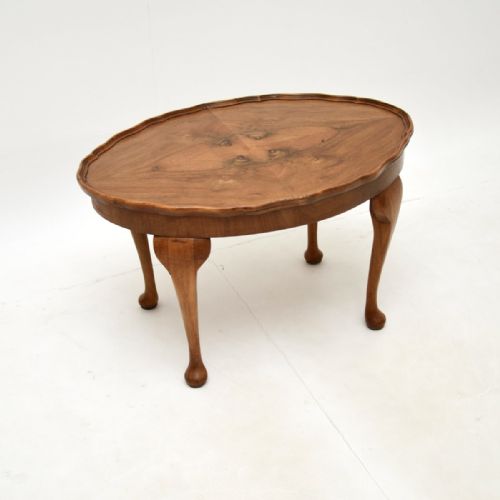
Secondary construction details include hand-cut dovetails within drawer frames and turned, carved, or reeded legs terminating in spade feet, brass castors, or tripod bases. Pie crust edges and shaped drop leaves involve precise manual shaping of timber rather than mechanical uniformity.
Listings span periods from Victorian and 18th century remnants through Edwardian production to the 1930s, showcasing mahogany, satinwood, and walnut.
What varies in quality
Quality rests upon the selection of timber and the crispness of carved details such as acanthus leaves, claw-and-ball feet, or reeding. Better examples display carefully matched veneers and subtle stringing that enhance the silhouette without overwhelming the structure.
The integrity of joints, the weight and movement of drop leaves, and the retention of original brass hardware or leather inserts distinguish superior workshop production from more basic commercial output.
The Georgian Revival Occasional Table Glossary
- Pie crust table
- A small occasional table featuring a raised, carved, and scalloped edge resembling pastry work. This decorative moulding is typically carved from the solid timber of the top.
- Silver table
- An occasional table with a raised gallery around the top edge, originally designed for serving tea or displaying silver. These often stand on slender cabriole legs.
- Drop leaf table
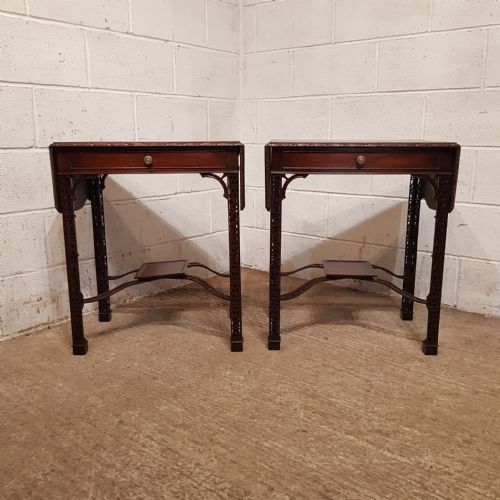
- A table with hinged flaps on one or both sides that fold down to save space or lift up to extend the surface. Supporting gates or swing legs hold the leaves in place.
- Quartetto tables
- A nest of four graduating tables that fit one beneath another. They gained popularity during the Edwardian period for entertaining.
- Stringing
- A narrow inlay of contrasting wood, such as boxwood, set into the surface of a panel or leg. It creates a fine linear border that defines the outline of the piece.
Georgian Revival Occasional Table: Frequently Asked Questions
What is a georgian revival occasional table?
A georgian revival occasional table is a small movable table produced mainly during the late nineteenth and early twentieth centuries in the style of eighteenth-century designs. These pieces borrow forms from Sheraton, Chippendale, and Hepplewhite.
Craftsmen adapted these historical models to suit domestic needs of the Edwardian era and later periods. They function flexibly as lamp stands, tea tables, or decorative accents.
How do I date a revival table?
Dating relies upon examining construction methods, secondary timbers, and the specific revival style employed. Pieces from the late nineteenth and early twentieth centuries often show machine assistance alongside hand-finishing.
硬件 and finish characteristics help distinguish Edwardian and interwar production from authentic eighteenth-century originals. Revival pieces reflect the aesthetic preferences of their own era while imitating earlier forms.
Where should I place an occasional table?
These tables suit sitting rooms, hallways, and studies where surface space is needed beside seating. Compact forms like wine tables or lamp tables fit neatly into corners.
Larger centre tables anchor open spaces, while nests of tables provide pull-out surfaces for guests. Their modest scale allows them to integrate easily into diverse room layouts.
What is a silver table?
A silver table is an occasional table featuring an elevated pierced or solid gallery around the edge of the top. This rim prevented display items from sliding off.
Victorian and Edwardian makers revived these forms with carved mahogany or inlaid satinwood. They serve today as decorative display surfaces or lamp stands.