




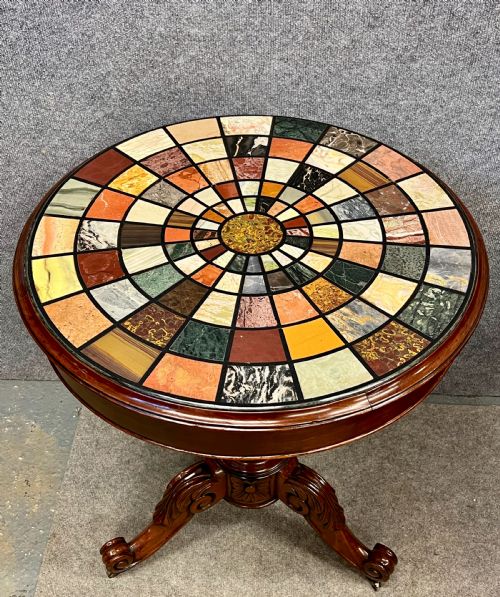


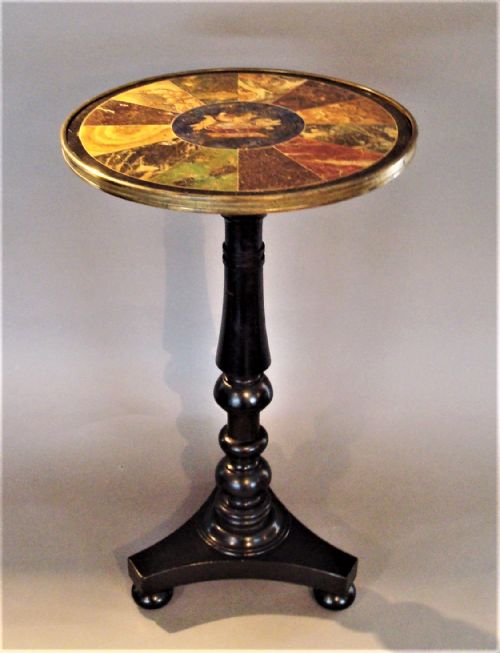
Regency Specimen Marble Table
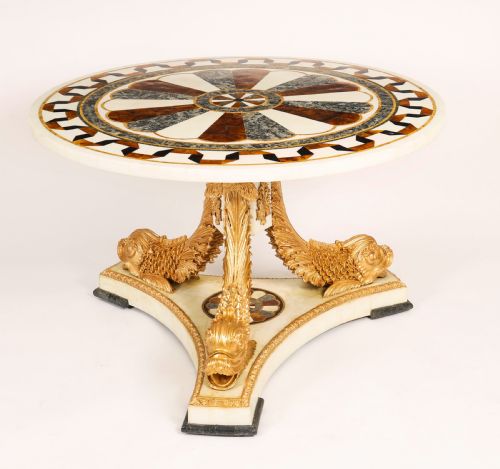
A regency specimen marble table brings together remarkable geological variety and precision stone-cutting into a singular surface.
Regency Specimen Marble Table
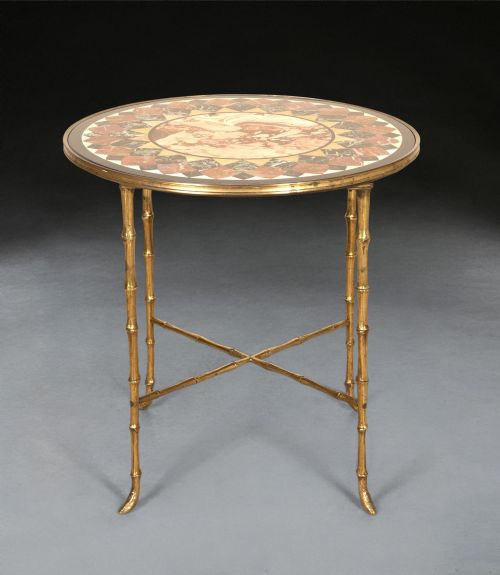
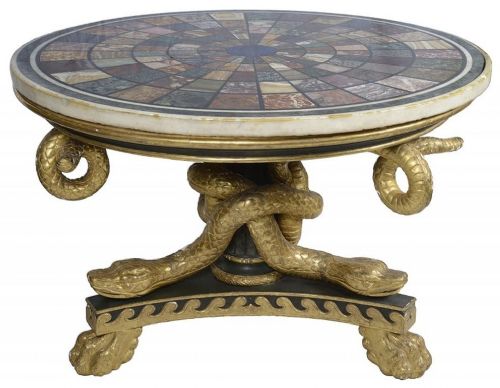
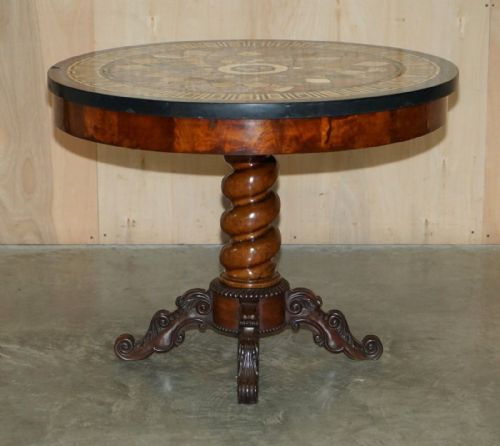
A regency specimen marble table is primarily a centre table or occasional table featuring a decorative stone top composed of numerous geometric or pictorial fragments. These pieces frequently date from the nineteenth century, including the Regency and William IV periods, alongside later Victorian revivals. Buyers encounter forms ranging from chess tables to grand centre pieces designed for principal rooms.
The architectural bases supporting these marble tops reflect the stylistic shifts of the period, spanning neoclassical designs with brass or giltwood details to substantial rosewood, mahogany, and ebonised frames. Many examples originate from the Grand Tour or Italian workshops, incorporating pietra dura inlay alongside British cabinet-making traditions.
How they were made
The construction relies on precision stonemasonry, where varied mineral specimens are cut, shaped, and fitted tightly together to form a flat mosaic surface. Pietra dura techniques introduce pictorial elements such as birds using carefully selected coloured stones.
Supporting these heavy marble tops are solid timber frames fashioned from rosewood, mahogany, and satin birch, often enriched with brass mounts, ebonisation, or giltwood carvings.
Listings feature nineteenth-century dates, including the Regency and William IV periods, alongside later Victorian revivals.
What varies in quality
The joinery and timber selection of the base distinguish workshop standards. A robust mahogany or rosewood frame with crisp carving and original brass mounts elevates the entire object.
The Regency Specimen Marble Table Glossary
- Specimen marble
- A decorative arrangement of many different types of marble and mineral stones assembled into a single decorative tabletop. This technique showcases the collector's interest in geology and classical antiquity.
- Pietra dura
- An Italian mosaic method utilising cut and fitted polished coloured stones to create pictorial designs. Artisans use this technique to depict birds, flowers, and architectural scenes.
- Micro-mosaic
- A decorative art form comprising microscopic pieces of coloured glass or stone fused together to form detailed imagery. These panels are typically set directly into the centre of a marble table top.
- Centre table
- A freestanding piece of furniture designed to be viewed from all sides rather than placed against a wall. These tables traditionally occupied the middle of principal reception rooms.
- Giltwood
- Timber that has been coated with a thin layer of gold leaf or gold paint. This finish frequently highlights the carved details of neoclassical and revival furniture bases.
Regency Specimen Marble Table: Frequently Asked Questions
What is the difference between a centre table and a side table?
A centre table is finished on all sides because it stands freely in the middle of a room, allowing people to walk around it. These pieces often feature circular or multi-lobed marble tops designed to be admired from every angle.
By contrast, a side table is constructed to stand directly against a wall, meaning the rear edge may lack the decorative finish or detailing found on the front.
How can I tell the period of the base?
The timber species and construction methods offer clear indications of the era, with Regency and William IV pieces typically employing solid rosewood or mahogany. Stylistic cues such as neoclassical brass mounts, ebonised details, and specific turning styles help narrow down the date of manufacture.
Matching the timber base to the marble top requires careful examination, as many nineteenth-century tops were reunited with different bases later in their history.
Can I use a chess table for games?
While these tables featuring inlaid chess boards were historically used for playing games, the delicate nature of specimen marble requires caution. Heavy use or abrasive pieces can scratch the polished stone surface and damage the surrounding mosaic.
Using modern felt-backed playing pieces and placing protective barriers on the surface helps prevent accidental wear while still allowing functional use.