
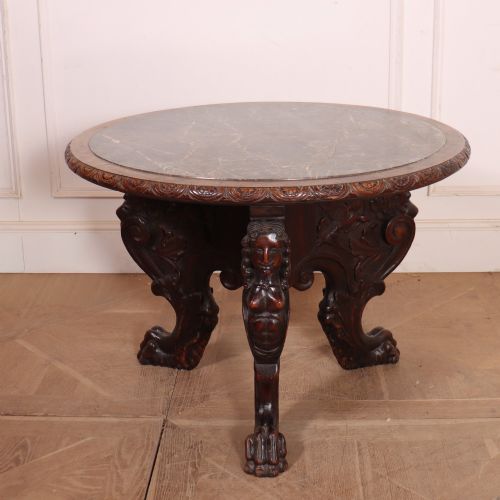
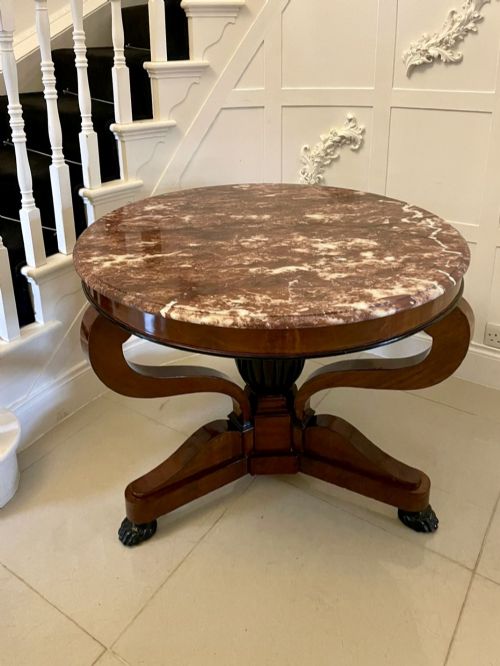

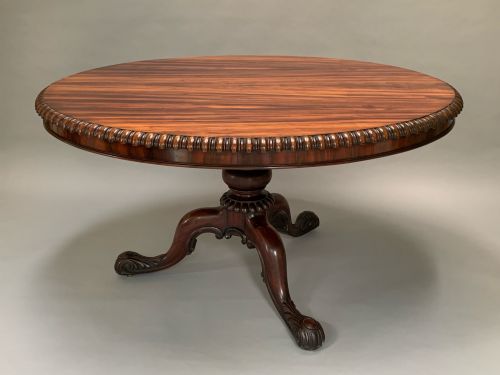
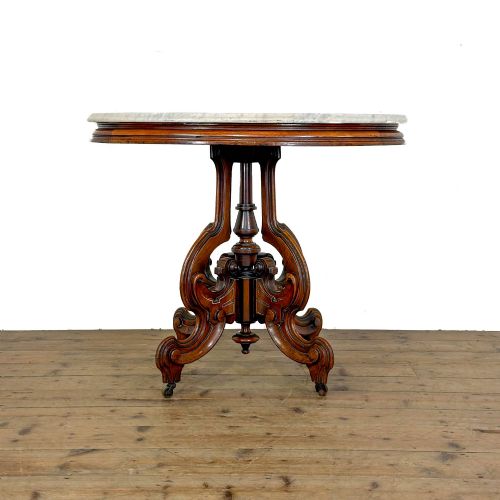
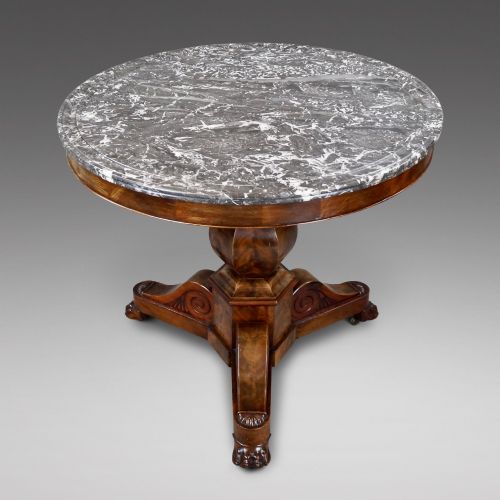
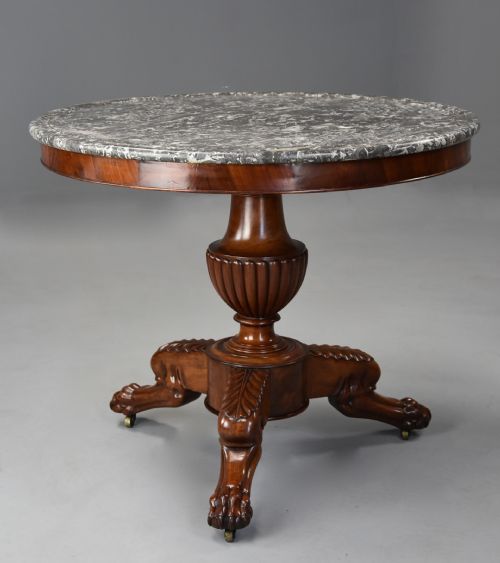
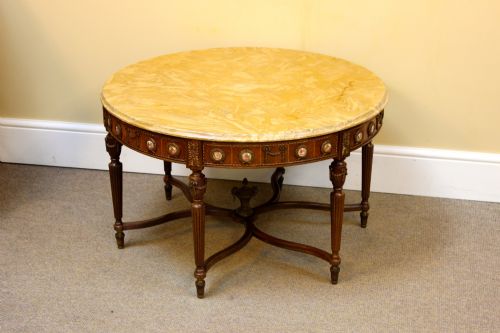
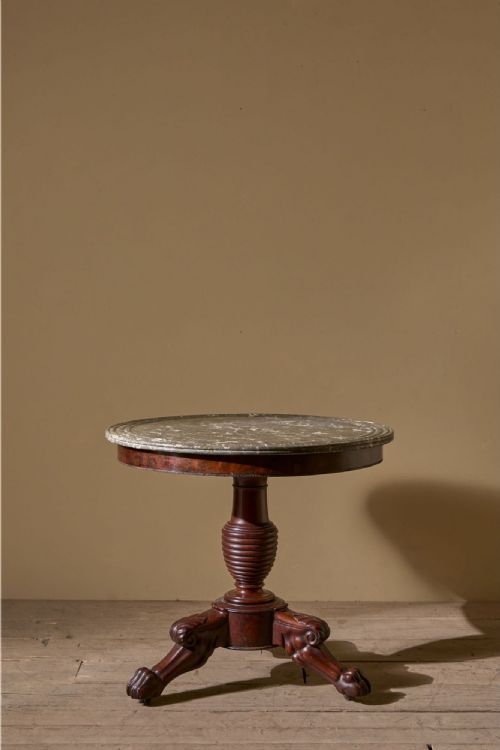

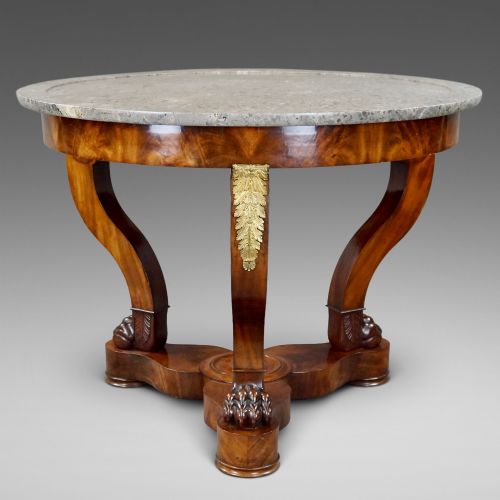
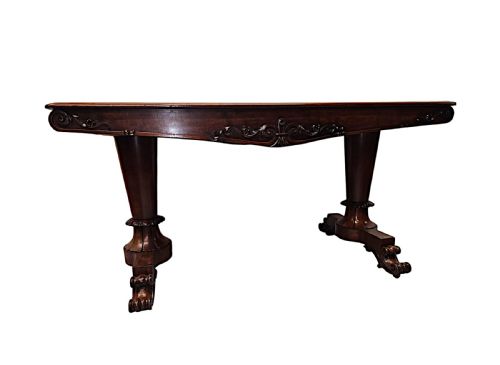
Carved Mahogany Centre Table
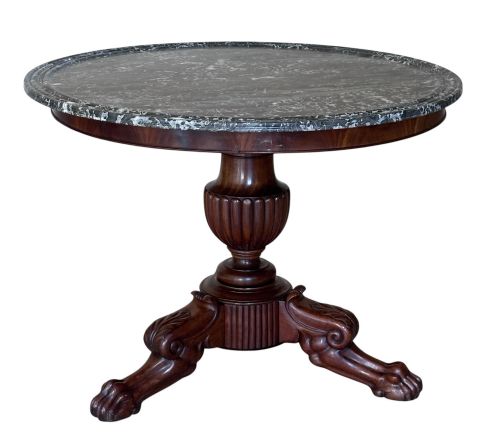
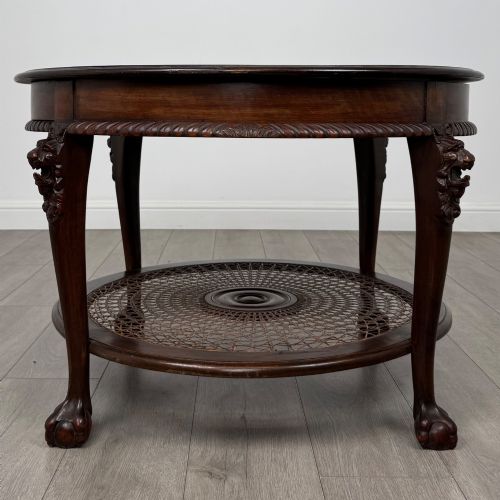
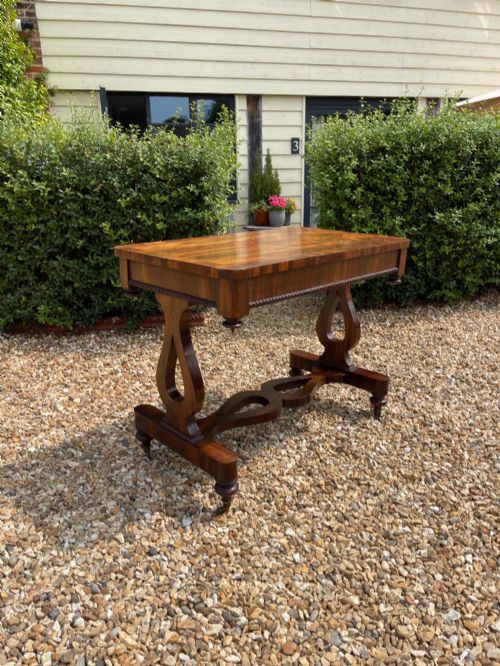
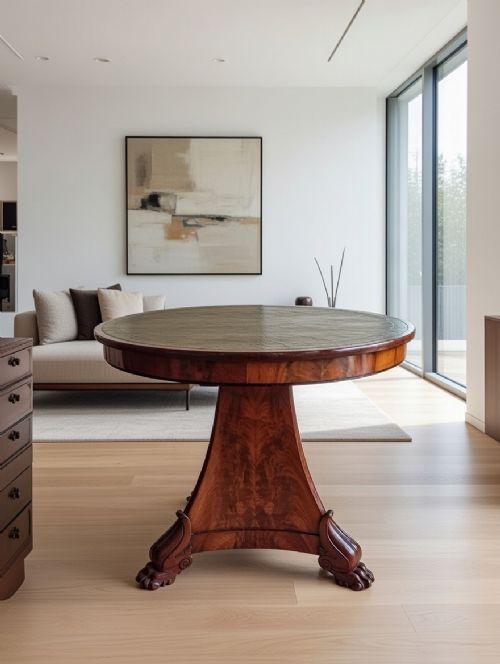
A carved mahogany centre table anchors a room with rich timber and confident carving, standing ready to display books or flowers from every angle.
What these tables are
A carved mahogany centre table is a freestanding piece designed to be viewed from all sides rather than pushed against a wall. The selection spans the nineteenth century, encompassing Victorian, William IV, French Empire, and Edwardian iterations.
Most examples you encounter take the form of round, oval, drum, or pedestal tables, often featuring shaped or tilt tops supported by carved legs and stretcher bases. Irish library tables and French gueridons also appear amongst the variations.
These pieces served various domestic purposes in large reception rooms, libraries, and parlours, functioning as display surfaces or central meeting points for conversation and study.
Materials and construction
Timbers are predominantly mahogany, sometimes complemented by albuera wood or walnut, paired with structural supports and decorative mounts. Tops occasionally incorporate inset leather or slab marble, including specimen marble and slate.
Cabinetmakers utilised sturdy pedestal bases, brass details, and hand-carved motifs such as swans to elevate the structural joinery. Turning, tilt mechanisms, and drop sides added practical utility to the dense timber frames.
Retail Price Guide 2026
Typical UK retail prices for carved mahogany centre table, calculated from the Sellingantiques database of over a million retail prices indexed since 2003. This retail price guide relies exclusively on Sellingantiques data; no external sources or auction records are used, so the figures do not describe the wider market.
Several French Empire tables incorporate carved swan details, bringing a touch of avian majesty directly to the parlour floor.
The Carved Mahogany Centre Table Glossary
- Centre table
- A freestanding table finished on all sides intended to stand in the middle of a room. These pieces provide surface space accessible from every direction.
- Drum table
- A circular library table with a deep frieze containing drawers, usually resting on a central pillar and tripod base. The top is frequently lined with leather.
- Guéridon
- A small French occasional table supported by a central column or figures. They often feature decorative mounts and circular marble tops.
- Tilt top
- A table top hinged to tip vertically when not in use, allowing the piece to be stored against a wall. This mechanism requires precise joinery to remain stable.
- Specimen marble
- A tabletop composed of numerous small pieces of different coloured marbles arranged in geometric or pictorial patterns. It represents high craftsmanship during the Grand Tour period.
Frequently Asked Questions
What is a centre table used for?
These tables sat in the middle of principal rooms to hold lamps, decorative objects, or books. Their freestanding design allowed people to walk entirely around them.
In libraries and studies, they provided a central surface for reading and writing without relying on wall placement.
How do I date a mahogany table?
Dating relies on combining the timber characteristics, style markers, and structural joinery visible in the piece. Victorian and William IV examples display distinct carving depths and leg configurations.
Earlier pieces often feature heavier timber frames and specific regional cabinetmaking traits.
Where should I place a centre table?
A centre table belongs in an open space where its carved legs and finished top can be admired from all angles. Drawing rooms and large hallways suit them best.
Keep them away from direct heat sources to protect the mahogany surface and any leather or marble inserts.
What is a tilt top table?
A tilt top table has a hinged mechanism beneath the surface that allows the top to flip flat against the central pillar. This saved floor space when the room was cleared.
Quality mechanisms lock securely into the horizontal position during everyday use.