





Geometric Marble Inlaid Table
A geometric marble inlaid table brings classical grandeur indoors, offering a hard stone surface built to command attention in any reception room.
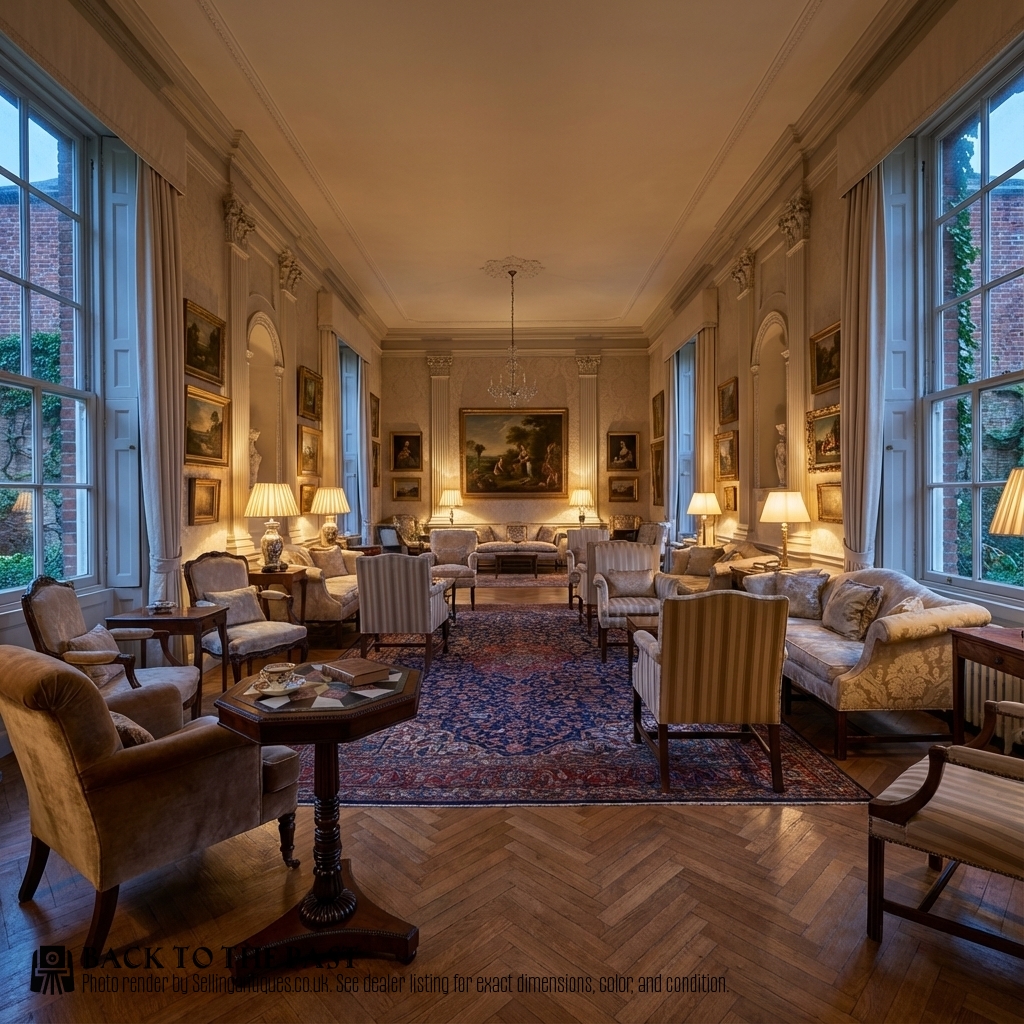
Geometric Marble Inlaid Table
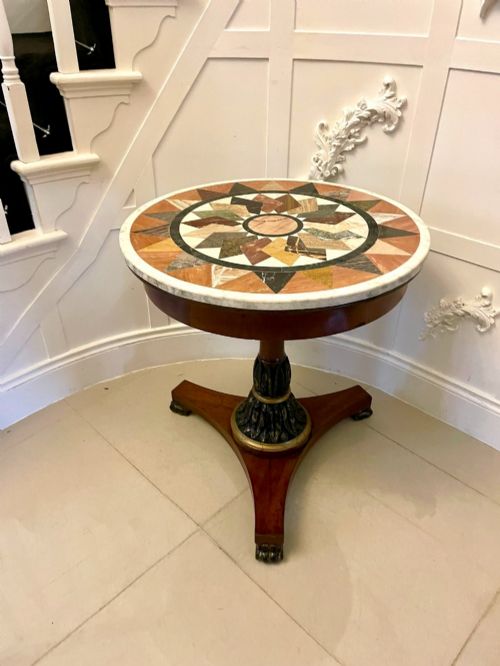
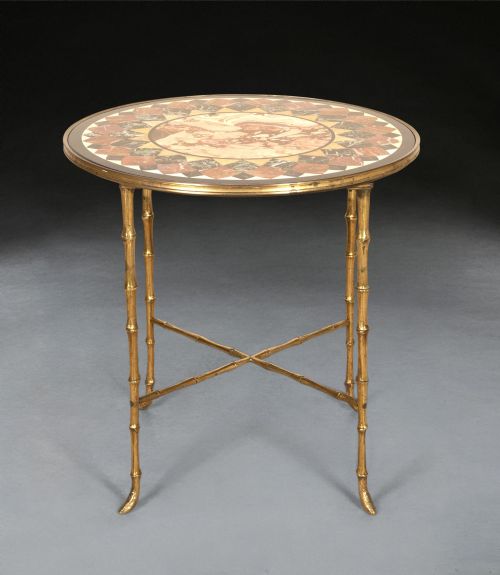
A geometric marble inlaid table combines precise stone-cutting with domestic utility, taking the form of occasional, side, centre, console, and coffee tables. These pieces emerge from the 19th century, Edwardian era, and specific decades such as 1850, 1860, 1870, 1900, alongside Regency and William IV periods, reflecting sustained European and British interest in hardstone craftsmanship.
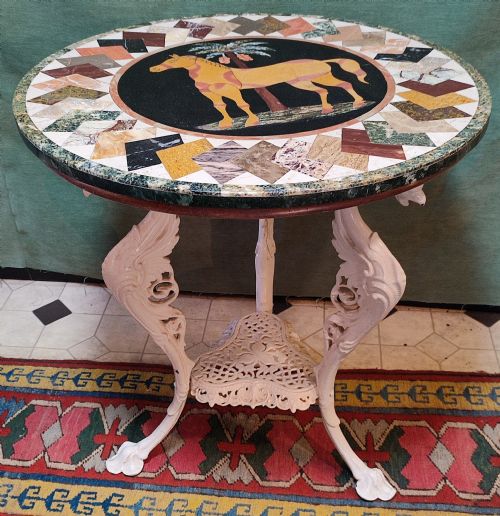
Buyers meet variations ranging from circular lamp tables to console formats and low coffee variants. The structural supports match these stone tops in ambition, drawing on materials from mahogany and rosewood to cast iron and parcel gilt wood.
Origins span British workshops and Italian production centres associated with Grand Tour souvenirs and Neoclassical taste. The unifying thread remains the precision-laid geometric marble surface supported by wood, metal, or gesso frames.
How they were made
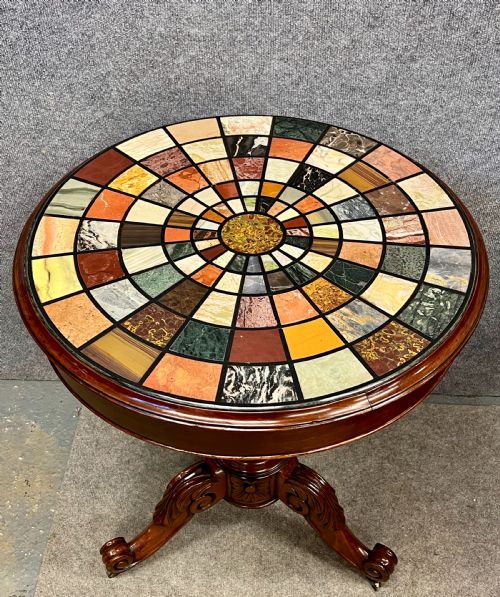
Makers construct the top using specimen marbles, slicing various coloured stones and fitting them tightly together in geometric patterns. This mosaic technique requires exact sawing and polishing to ensure the surface sits perfectly flat.
The underlying frames utilise cabinet timbers such as mahogany, rosewood, and satin birch, shaped into occasional or centre tables. Alternatively, structural support comes from cast iron or parcel gilt gesso, balancing the heavy stone tops.
Geometric Marble Inlaid Table Retail Price Guide 2026
Typical asking prices for geometric marble inlaid table among the pieces listed under this phrase on Sellingantiques today, from the lower quarter to the upper quarter. They describe what is for sale here now, not the wider market.
Listings feature 19th century, Edwardian, and Regency periods alongside specific years like 1850, 1860, 1870, and 1900.
What varies in quality
Quality rests in the tightness of the stone joints and the variety of the specimen marbles employed across the geometric design. Tighter fits and richer mineral selections separate ambitious workshop output from simpler utilitarian items.
The ambition of the base timber or metalwork dictates the overall tier of the piece, where solid mahogany or finely carved parcel gilt supports elevate a table above standard cast iron frames.
The Geometric Marble Inlaid Table Glossary
- Specimen Marble
- A decorative surface composed of numerous small pieces of different coloured marbles arranged in geometric or pictorial patterns. This lapidary technique became particularly popular during the 19th century.
- Grand Tour
- A cultural journey undertaken by wealthy Europeans through France and Italy to study classical art and architecture. Tables bought on these travels frequently featured inlaid marble tops.
- Neoclassical
- A style spanning the 18th and 19th centuries that drew inspiration from the classical art and culture of ancient Greece and Rome. It prioritised symmetry, straight lines, and geometric discipline.
- Parcel Gilt
- A decorative treatment where selected portions of a wooden or gesso surface are highlighted with gold leaf. It adds contrast to darker woods like mahogany and rosewood.
- Occasional Table
- A small, movable table designed for specific, intermittent use within a principal room. These often showcase elaborate tops supported by slender legs or pedestals.
Geometric Marble Inlaid Table: Frequently Asked Questions
What is a geometric marble inlaid table?
These are decorative domestic tables featuring tops composed of small pieces of coloured marble arranged in precise geometric patterns. They function as centrepieces, occasional tables, or console surfaces.
Originating largely in the 19th century and Edwardian periods, they reflect Neoclassical tastes and Grand Tour influences, combining heavy stone tops with wood or metal supports.
How do I date these tables?
Dating relies on the construction methods of the base frame, the timber species used, and stylistic cues from periods like Regency, Victorian, or Edwardian. Structural woodwork and leg design shift across these decades.
The marble top itself often reflects Italian or British workshop practices from the 1850s to 1900, aligning with the materials popular in specific decades.
Where were these tables made?
Production took place across British cabinet-making workshops and Italian stone-working centres, particularly during the 19th century. Many pieces reflect the Italian craftsmanship associated with Grand Tour souvenirs.
British makers frequently imported or utilised these specimen marble tops, mounting them onto native timber frames such as mahogany, rosewood, or satin birch.
How do I care for marble tops?
Stone surfaces require gentle cleaning with soft cloths and neutral solutions to protect the polished finish and the mortar joints between individual marble pieces. Avoid acidic substances that etch marble.
Protect the underlying wooden or gilt frames from excessive moisture and direct sunlight to preserve the structural integrity of the table.