
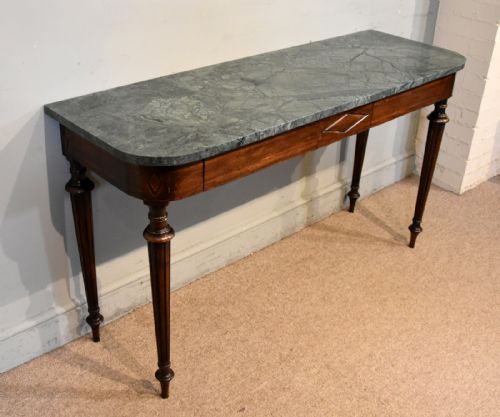
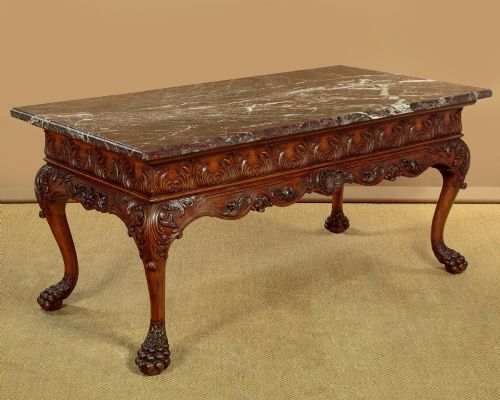


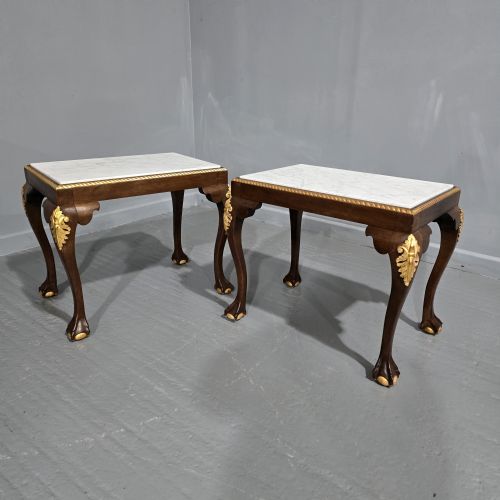
Georgian Marble Side Table
A georgian marble side table brings architectural stone and rich timber together to ground a hallway or formal room.
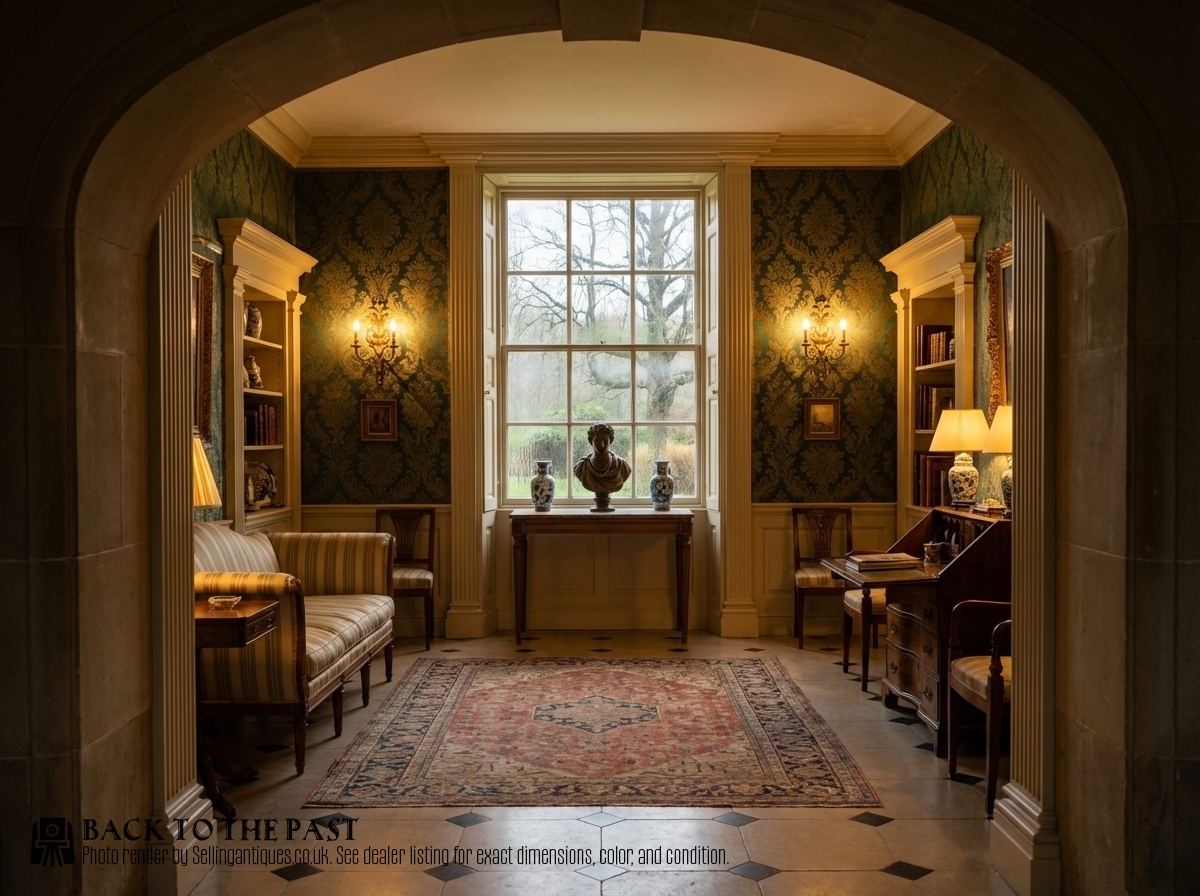
Georgian Marble Side Table
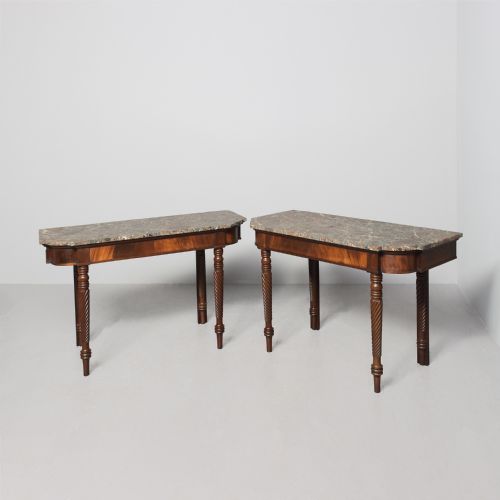
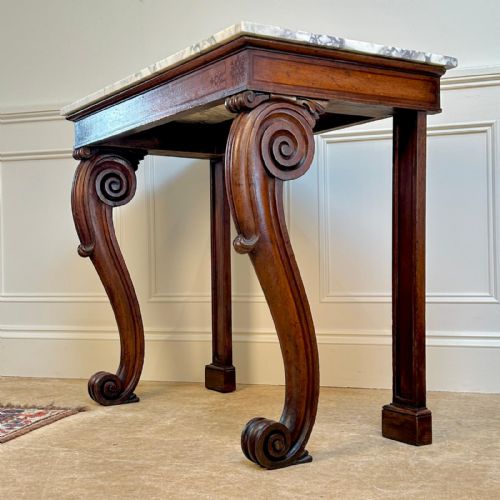
A georgian marble side table typically takes the form of a console or serving table designed to stand against a wall in a formal interior. You encounter pieces spanning the eighteenth century through the regency period, alongside later revival interpretations.
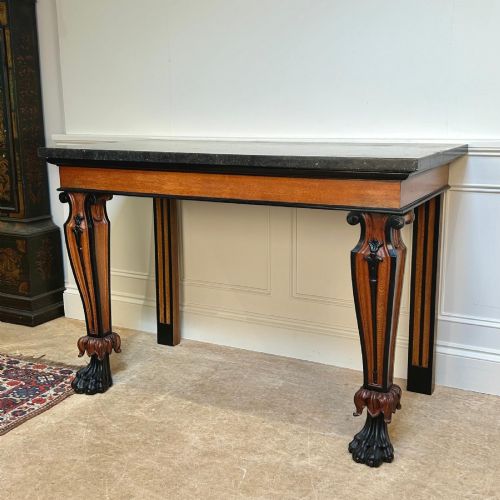
The materials combine heavy stone tops with structural timber bases, ranging from country house oak to polished mahogany and carved giltwood. These surfaces frequently take rectangular, demi-lune, or break-front shapes.
Construction and Materials
Cabinetmakers constructed the foundational frames using dense timbers such as mahogany, walnut, and oak, often applying veneers of flame mahogany or satinwood. Giltwood examples relied on carved softwoods prepared with gesso before receiving layers of gold leaf.
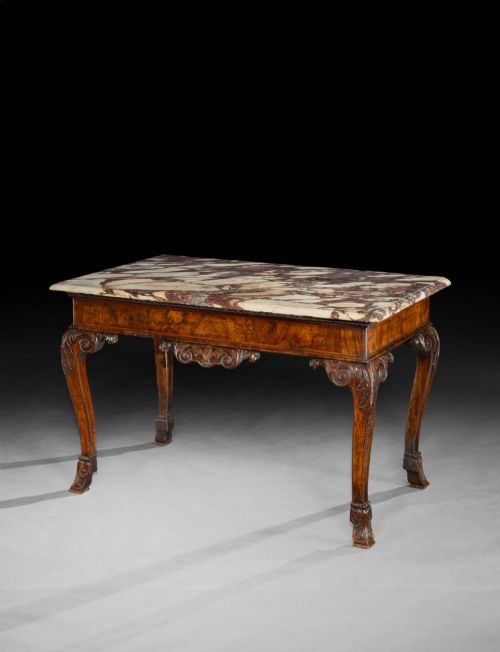
The stone surfaces utilise heavy slabs of marble, sometimes featuring multi-coloured specimen pieces or detailed pietra dura geometric arrangements. These slabs rested directly upon the wooden frames, secured by their own considerable weight or discreet fixings.
Carving was executed by hand, yielding intricate details like lion masks, paw feet, and neoclassical motifs. Joinery employed traditional techniques suited to heavy load-bearing furniture intended for grand interiors.
Several tables feature carved lion paws that look ready to scratch a butler's ankles.
Judging Quality and Execution
The distinction between ordinary and exceptional examples lies in the depth and crispness of the hand carving on the wooden base. Crisp lion masks, deep undercut foliage, and refined giltwood execution elevate a piece far above standard commercial production.
Proportion and architectural harmony separate important works from simpler provincial furniture. Pieces that balance the massive weight of a stone top with elegant leg placement demonstrate superior design intelligence.
Gillows
The Georgian Marble Side Table Glossary
- Console table
- A table designed to be fixed against a wall, frequently supported by ornamental legs or brackets rather than four freestanding posts. They often feature elaborate front carving while the back remains plain.
- Demi-lune
- A half-moon shape used for table tops and frames, popular in neoclassical and georgian designs. This form allowed furniture to sit flush against a wall while occupying minimal floor space.
- Pietra dura
- An artistic technique using cut and fitted polished coloured stones to create pictorial or geometric designs. This inlay work appears on high-status table tops.
- Giltwood
- Timber, usually softwood, that has been coated with gold leaf over a prepared gesso ground. This finish provided a brilliant reflective surface for formal reception rooms.
- Specimen marble
- A top constructed from various distinct types of antique marble assembled into a decorative pattern or mosaic. Collectors prize these surfaces for their geological variety and intricate composition.
Georgian Marble Side Table: Frequently Asked Questions
Where did these tables originally stand?
These pieces traditionally occupied prominent positions in entrance halls, formal dining rooms, and long galleries against interior walls. They served as decorative surfaces for displaying objets d'art or as functional serving tables during large gatherings.
Because of their heavy stone tops, they relied on wall support or substantial structural weight to remain entirely stable without tipping.
How do I care for a marble top?
Maintenance requires simple dusting and prompt wiping of any liquid spills to prevent staining on porous stone surfaces. Avoid harsh chemical cleaners or acidic substances that can etch the polished finish over time.
Applying a neutral stone wax periodically helps protect the surface while preserving the natural lustre of the material.
Are these tables freestanding?
Most antique console versions were designed to stand against a wall, meaning their rear legs or backs may lack the finished detail found on the front. Centre tables, by contrast, feature finished decoration on all four sides for placement in the middle of a room.
Checking the finish on the rear timber frame clarifies whether a piece was meant to sit flush against architectural wall panelling.
How can I tell a revival piece from an 18th century original?
Distinguishing periods involves examining the tool marks on the timber, the ageing of the secondary woods, and the specific carving styles popular during different reigns. Revival pieces made in the nineteenth or twentieth century often utilise machine-sawn timber elements and standardised construction methods.
Consulting the specific details of the woodwork and the geological characteristics of the marble helps establish the exact era of manufacture.