

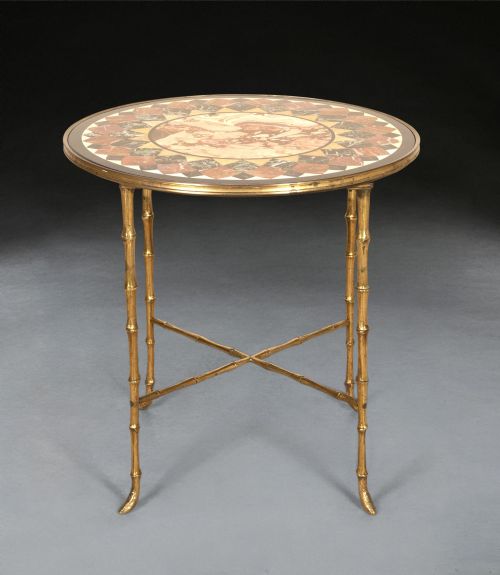


Circular Marble Occasional Table
A circular marble occasional table brings a polished stone surface and upright timber or metal framing into a room to hold a lamp or glass.
Circular Marble Occasional Table
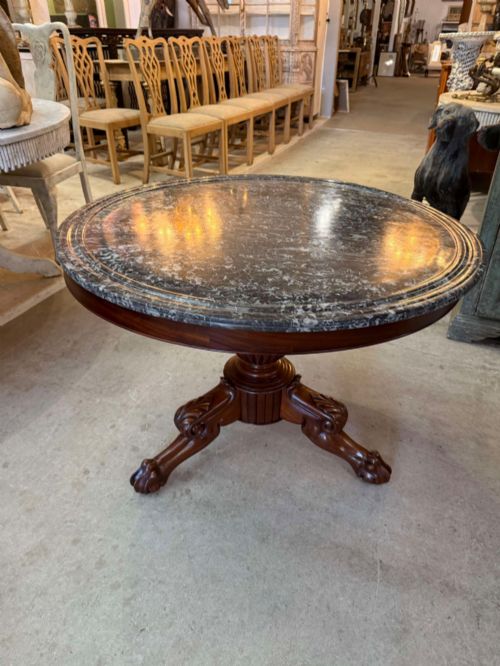
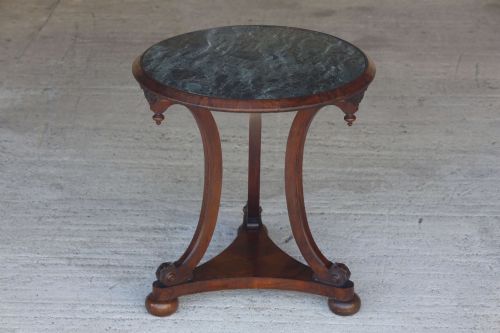
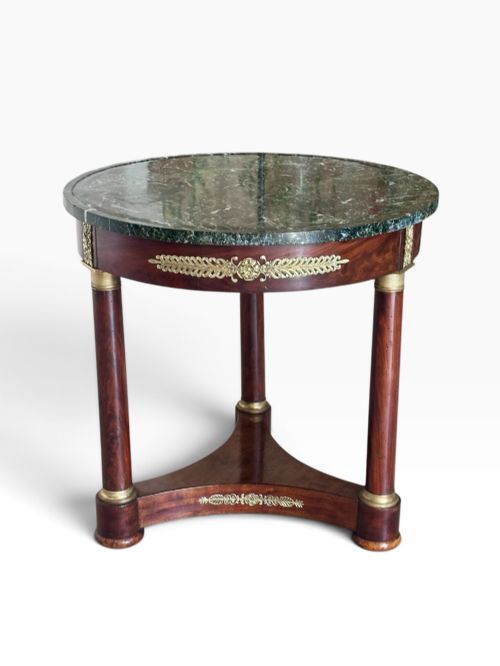
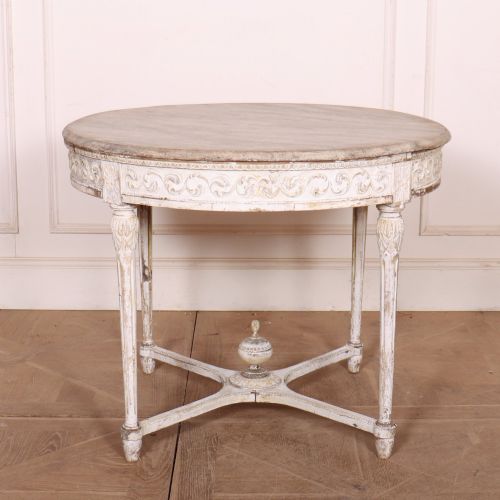
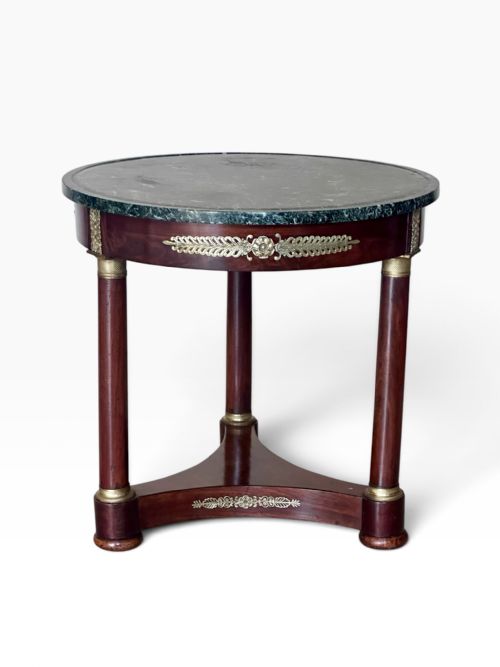
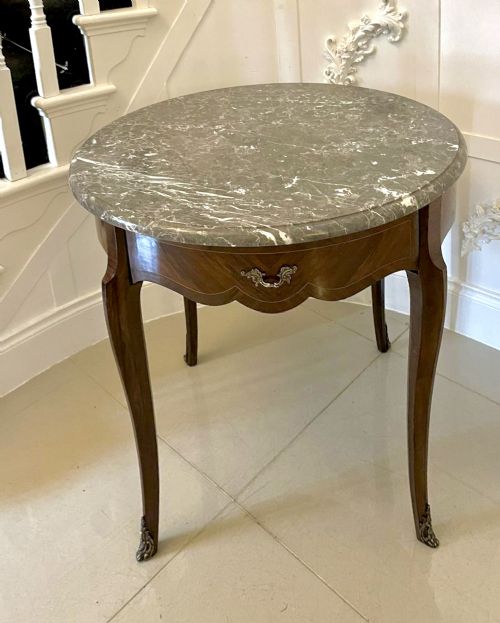
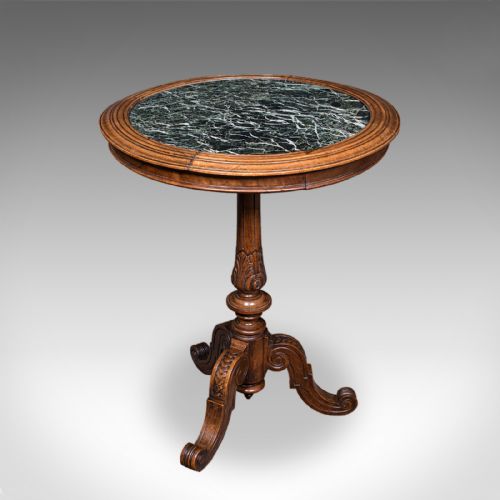
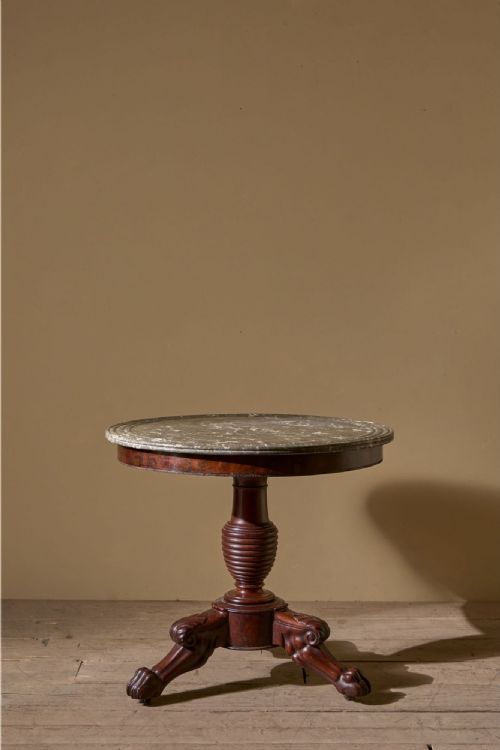
A circular marble occasional table appears in various guises across the nineteenth and early twentieth centuries, most frequently as a French gueridon or an English lamp table. These versatile pieces function as side tables, centre tables, or small bouillotte tables designed for intimate spaces.
The selection ranges from early nineteenth century Empire examples to later Victorian and Edwardian interpretations. Makers adapted the basic circular stone-topped format into diverse styles spanning French neoclassical, Regency, and Louis XVI aesthetics.
Visitors encounter a predominance of mahogany, walnut, or painted timber frames supporting veined, white, grey, or specimen marble slabs. These tables serve equally well beside a seating arrangement or positioned centrally in a room.
Materials and Construction
Cabinetmakers utilised dense timbers such as mahogany, walnut, kingwood, and satinwood to construct the structural frames and tripod or column pedestals. These woods were chosen for their structural strength and ability to be carved or veneered.
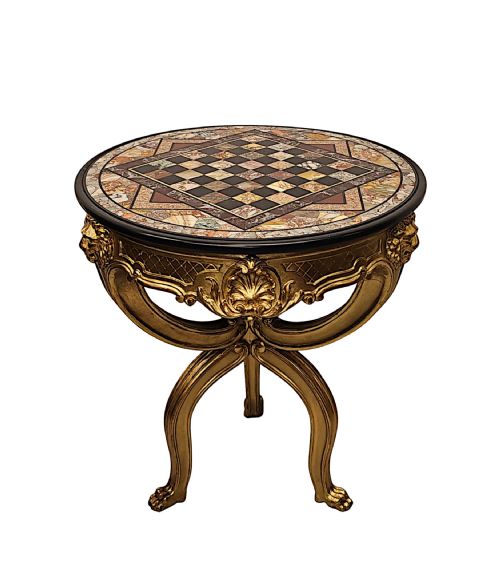
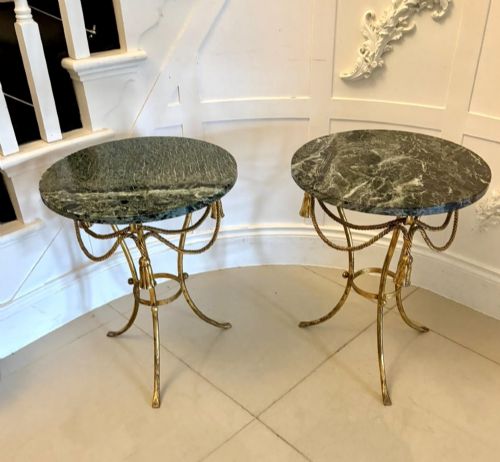
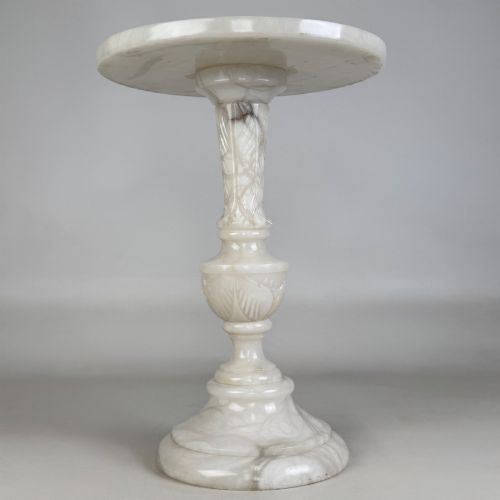
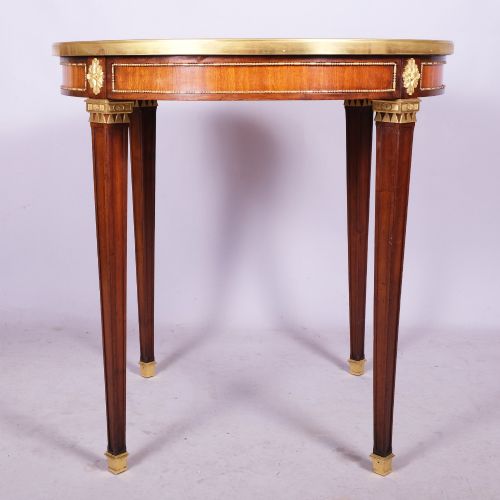
Slabs of marble, ranging from simple white and grey varieties to complex multi-coloured specimen marbles and pietra dura compositions, were cut and polished to fit recessed tops. Metal elements in brass, ormolu, and giltwood frequently accent the stone perimeter and joints.
Circular Marble Occasional Table Retail Price Guide 2026
Typical asking prices for circular marble occasional table among the pieces listed under this phrase on Sellingantiques today, from the lower quarter to the upper quarter. They describe what is for sale here now, not the wider market.
Several tables include clever twin slide-outs for resting drinks, proving that nineteenth-century hosts understood the hazards of cocktail hour.
Evaluating the Pieces
Quality rests heavily on the ambition of the materials and the crispness of the joinery and carving. Finer examples display meticulous geometric arrangement in specimen marble tops or deeply chased ormolu mounts rather than simple cast brass.
The choice of timber grain and the integrity of the structural carcass distinguish standard production from exceptional workshop output. Tables that retain their original heavy stone tops without replacement demonstrate greater historical coherence.
James Shoolbred·Weisweiler
The Circular Marble Occasional Table Glossary
- Gueridon
- A small French round table, typically supported by a central column or tripod base. This form became popular during the seventeenth century and persisted through successive revival periods.
- Bouillotte table
- A small circular occasional table featuring a raised brass gallery around the marble top to prevent items from sliding off. They are traditionally associated with the card game of the same name.
- Specimen marble
- A top composed of numerous geometric or pictorial segments of different coloured marbles assembled together. Skilled lapidaries created intricate patterns using natural stones.
- Ormolu
- Gilt bronze ornamentation applied to furniture frames and mounts. The technique involves treating bronze with an amalgam of gold.
- Pietra dura
- An artistic technique using cut and fitted polished coloured stones to create images or patterns. This laborious craft appears on select nineteenth century tabletop surfaces.
Circular Marble Occasional Table: Frequently Asked Questions
What is a gueridon table?
A gueridon is a traditional French round table supported by a central pillar or three legs. These tables evolved from candle stands into versatile occasional furniture.
They serve effectively as lamp tables or small centrepieces in drawing rooms and hallways.
How do I clean a marble top?
Marble requires gentle cleaning with a soft cloth and warm water to preserve the polished finish. Avoid acidic substances that can etch the stone surface.
Regular dusting keeps the veining clear and prevents grit from scratching the polish.
Are these tables heavy?
The presence of solid stone slabs makes the upper section considerably heavy relative to the slender wooden bases. This weight provides natural stability when the table stands freestanding.
Care must be taken when moving them to lift from the wooden frame rather than the stone top alone.
How do I date a marble table?
Dating relies on combining the timber species, framing style, and the cut of the marble. Neoclassical and Empire pieces display heavier architectural columns, while later Victorian versions often use simpler turned supports.
Comparative analysis of mounting hardware and secondary woods confirms the period of manufacture.