
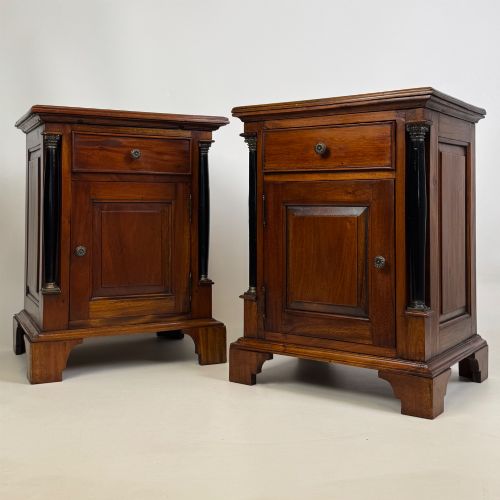
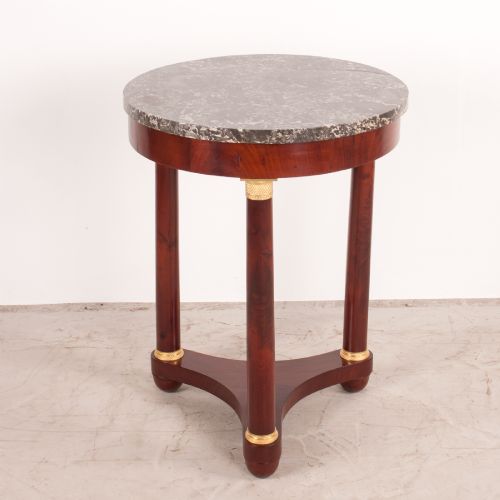
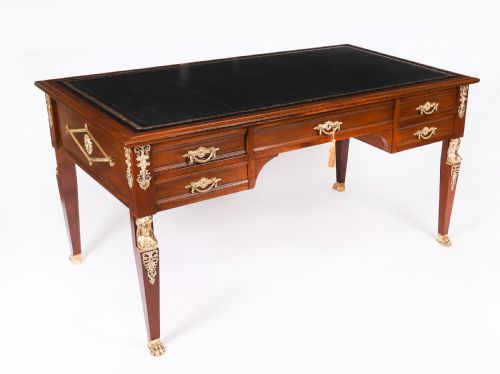
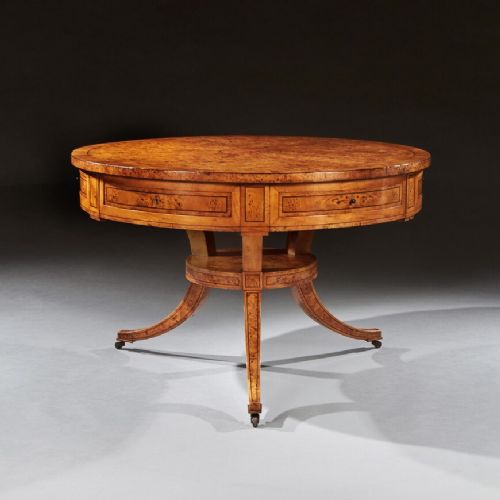


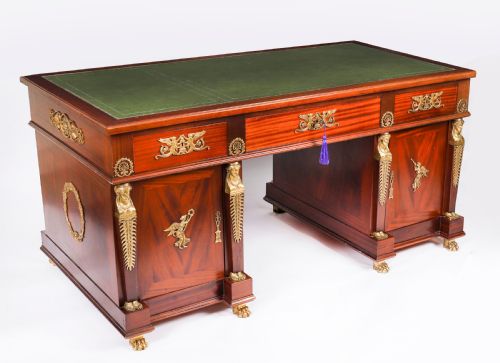


Empire Style Pedestal Table
An empire style pedestal table brings classical grandeur to a room through heavy mahogany, gleaming ormolu mounts and striking marble tops.
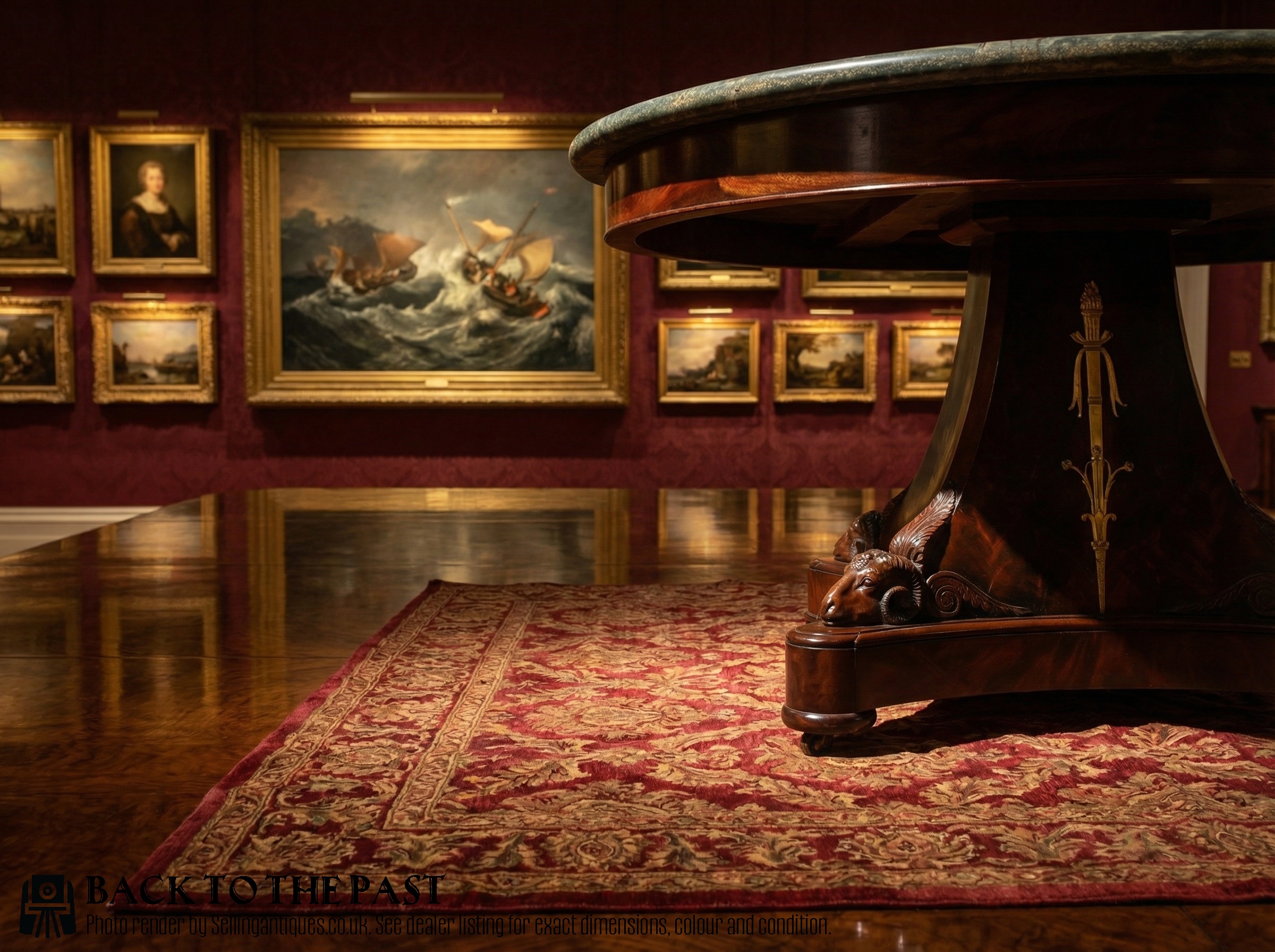
Empire Style Pedestal Table
An empire style pedestal table stands on a central column or support, taking forms such as the round gueridon, the drum table, or the occasional side table. When searching for an empire style pedestal table, buyers encounter pieces originating from the nineteenth century alongside later revivals from the early twentieth century.
The aesthetic draws heavily on French Empire, Biedermeier, and Scandinavian neoclassical designs. Centre tables and gueridons dominate the selection, frequently paired with matching lamps or desks sharing the same vocabulary.
Proportions remain solid and architectural, often resting upon triangular or circular plinth bases. These tables serve practical functions in hallways and drawing rooms while anchoring the decorative scheme of the space.
Distinguishing quality
The refinement of the cast bronze or ormolu mounts separates standard production from exceptional examples, as sharper chiselling and heavier gilding denote superior workshops. The choice of timber grain, particularly in figured mahogany or burr birch veneers, dictates visual depth.
Integrity of the structural central column and the stability of the heavy marble or timber top determine the practical success of the piece. Crisp carving on wooden details like swans and rams' heads reveals the hand of a more accomplished artisan.
Listings feature woods including mahogany, Karelian birch, burr root maple, and ebonised wood alongside marble and ormolu.
The Empire Style Pedestal Table Glossary
- Gueridon
- A small circular table on a central pillar, originating in France during the seventeenth century. These pieces function primarily as centre tables or occasional stands.
- Ormolu
- Gilded bronze applied as decorative mounts to furniture and lighting. The technique involves creating a mercury and gold amalgam fired onto the bronze base.
- Biedermeier
- A Central European style dating from the early nineteenth century favouring clean lines and blonde woods over excessive ornamentation. It emphasises domestic comfort and utility.
- Drum table
- A circular library table with a deep top containing drawers, supported on a central pedestal. The enclosed frieze gives the silhouette the appearance of a drum.
- Bureau plat
- A flat-topped freestanding desk with drawers fitted into the frieze. These tables often feature leather writing surfaces and elaborate bronze mounts.
Empire Style Pedestal Table: Frequently Asked Questions
Where should I place an empire style pedestal table?
These tables work effectively as centrepieces in hallways or principal reception rooms where guests can walk entirely around them. Their sturdy proportions also suit use as lamp tables beside heavier seating arrangements.
Because many examples feature polished marble tops or delicate ormolu mounts, positioning them away from direct heat sources helps preserve the timber and finish.
How do I care for the marble top?
Routine maintenance requires only a soft, damp cloth to remove dust and surface debris. Avoiding acidic liquids prevents etching on polished stone surfaces.
Applying a specialist stone wax periodically helps protect the marble from staining and maintains its natural lustre over years of daily use.
What is the difference between an original and a revival piece?
Nineteenth-century originals carry the patination and structural construction methods typical of the primary neoclassical period. Revival pieces, often appearing from the early twentieth century, replicate these classical proportions using similar materials.
Examining the internal secondary timbers and the wear patterns on the base generally helps distinguish between the original period and later interpretations.
Can these tables support heavy lamps and objects?
The heavy central column and solid plinth base provide substantial weight distribution designed to bear heavy objects. Marble-topped gueridons offer particularly stable surfaces for large table lamps.
Ensuring the central fixing bolt remains properly tightened maintains the stability of the column and prevents wobble.