

Carved Mahogany Foyer Table
A carved mahogany foyer table brings substantial timber and architectural form directly to an entrance hall.

Carved Mahogany Foyer Table
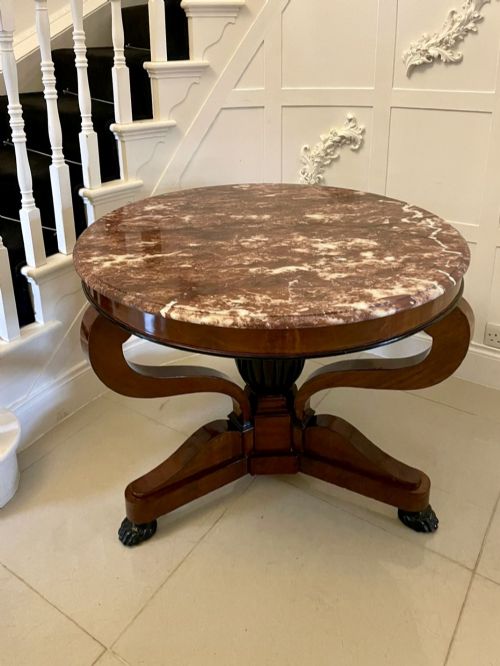
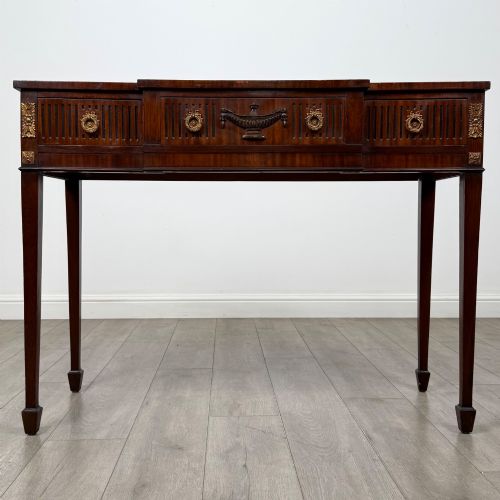
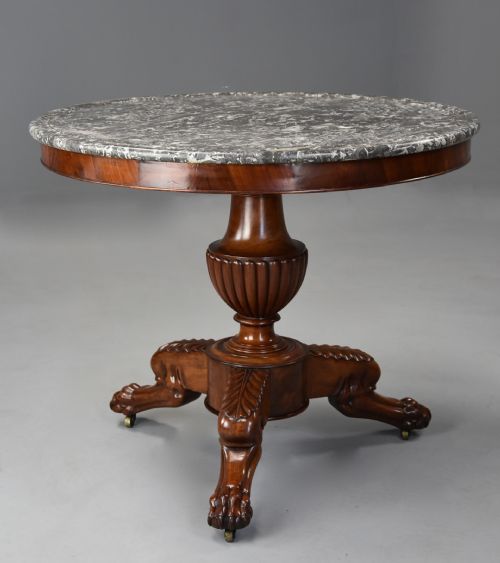
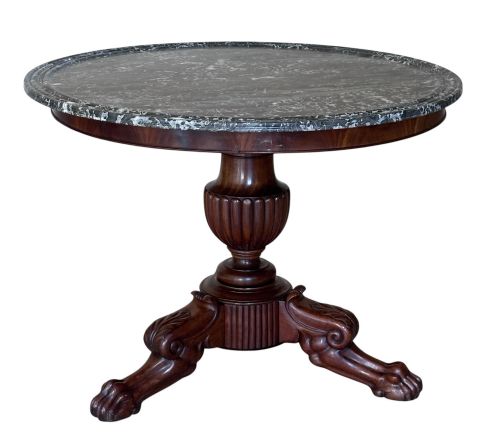
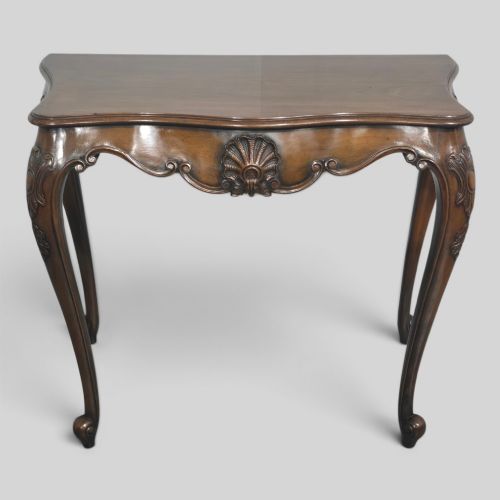
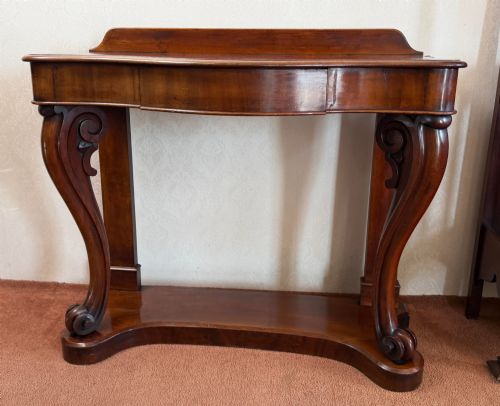
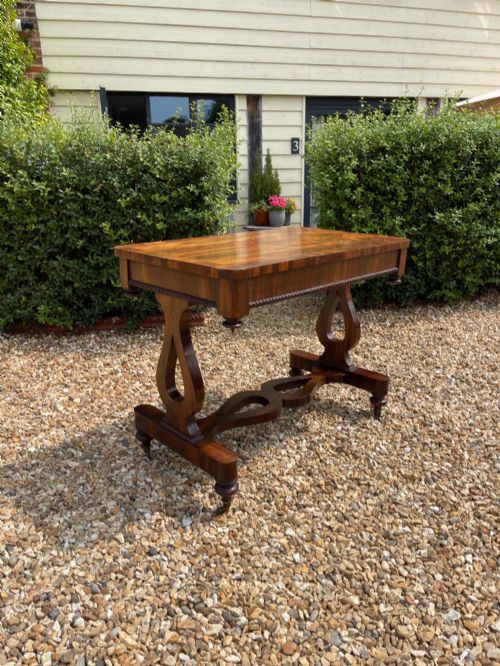
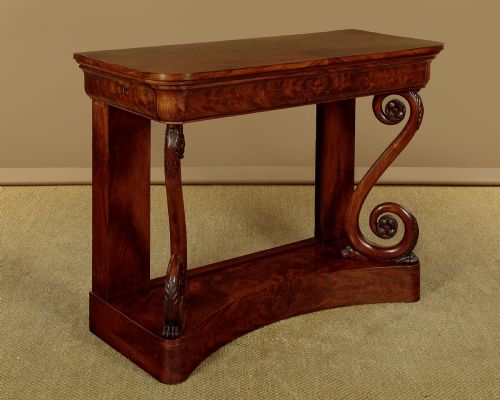
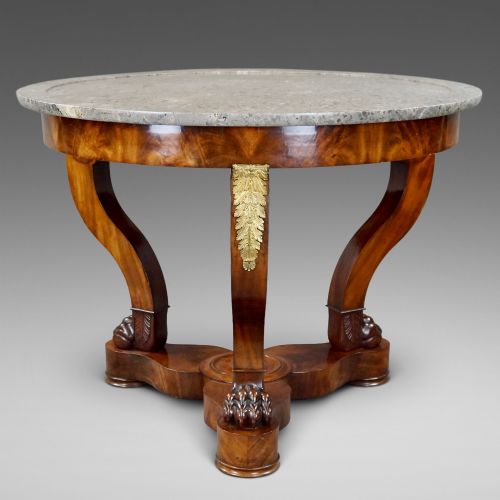
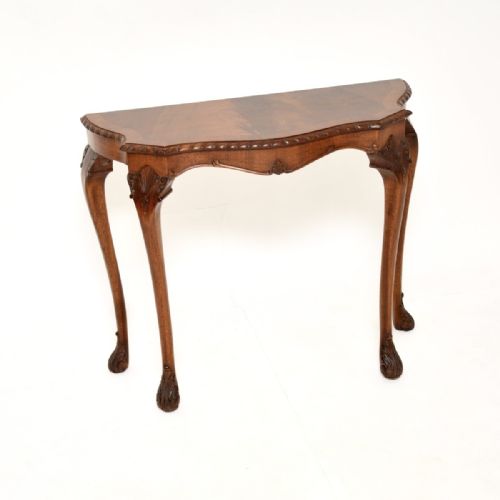
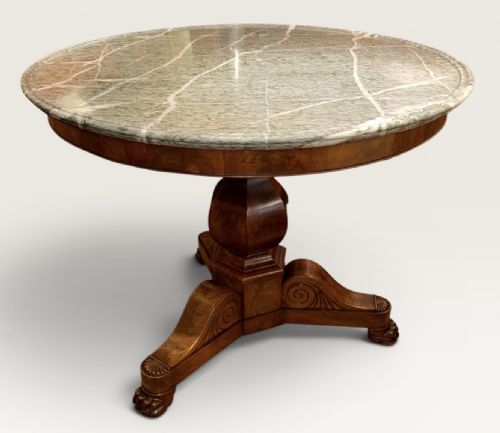
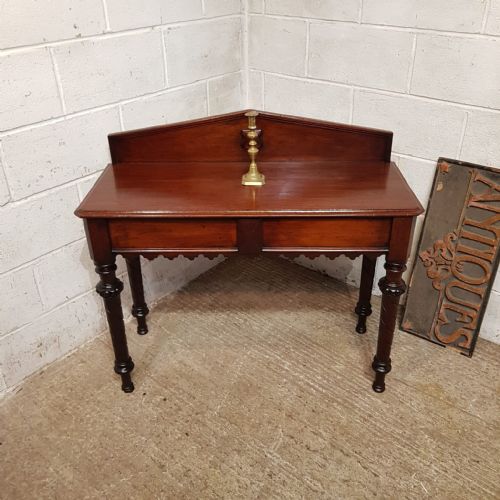
A carved mahogany foyer table is fundamentally a statement piece designed for entrance halls, corridors, and central reception rooms. These items frequently appear as console tables, side tables, or circular gueridons configured to stand against a wall or float in an open space.
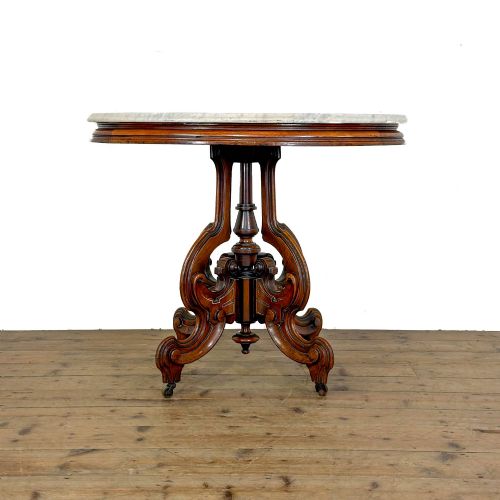
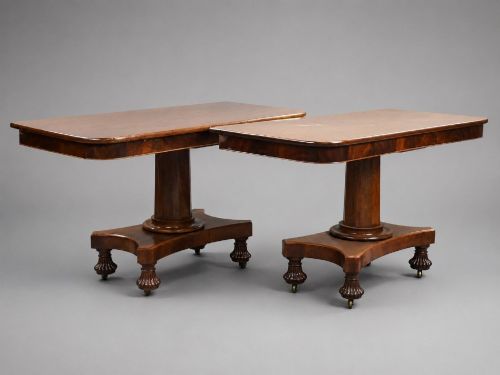
The selections span distinct periods including the Georgian, Victorian, and Edwardian eras, with many examples drawing upon French Empire, William IV, and Adam revival styles. Buyers encounter various formats, from narrow serpentine side tables to expansive centre tables topped with marble.
Origins stretch across British, French, Italian, and Scandinavian workshops, reflecting diverse regional interpretations of classical design. Whether styled as an oval centre table or a console with rams head motifs, each piece serves to anchor a room.
How they were made
Cabinetmakers built these tables using solid mahogany or applied flame mahogany veneer over supportive secondary timbers to achieve rich grain patterns and deep colour. Master artisans carved structural details directly into the dense wood, producing crisp acanthus leaves, reeded edges, and figural ornaments.
Many centre tables and gueridons integrate heavy inset marble slabs, requiring robust framing to support the stone tops safely. Workshops also incorporated brass mounts, leather inserts, and ebonised highlights to complement the primary mahogany construction.
Carved Mahogany Foyer Table Retail Price Guide 2026
Typical asking prices for carved mahogany foyer table among the pieces listed under this phrase on Sellingantiques today, from the lower quarter to the upper quarter. They describe what is for sale here now, not the wider market.
Listings feature extensive nineteenth-century examples alongside Georgian, Victorian, and Edwardian periods, utilising materials such as mahogany, marble, brass, and flame mahogany veneer.
What varies in quality
Quality rests heavily on the crispness and depth of the hand carving, distinguishing mechanical repetition from confident, fluid chisel work. The selection of timber also dictates superiority, where well-figured flame mahogany veneer or solid stock displays rich chatoyancy and depth.
Structural integrity and the retention of original components, such as veined marble tops and brass mounts, separate standard production from exceptional examples. Furthermore, balanced proportions and sophisticated regional styling elevate certain console and centre tables above simpler utilitarian forms.
Shapland and Petter·Hicks of Dublin
The Carved Mahogany Foyer Table Glossary
- Gueridon
- A small round table, typically supported by a central pillar or tripod base, originating in France. These versatile pieces frequently function as centre tables in grand entrance halls.
- Console table
- A table designed to be fixed against a wall, often supported by ornate brackets or front legs rather than standing independently. They provide a narrow surface ideal for hallways and foyers.
- Flame mahogany
- A distinct wood veneer figure resembling flickering flames, created by cutting across the branch forks of the mahogany tree. Cabinetmakers prized this grain for its dramatic visual movement.
- Serpentine shape
- A furniture contour featuring a curving front line that bends outward in the centre and inward at the sides. This fluid outline adds dynamic movement to side and console tables.
- Ormolu
- Gilded bronze mounts applied to furniture, popular in French Empire and Neoclassical designs. This decorative metalwork provides a sharp metallic contrast to dark mahogany surfaces.
Carved Mahogany Foyer Table: Frequently Asked Questions
Where do you place a carved mahogany foyer table?
These tables find their traditional home in entrance halls, grand hallways, and reception spaces where they create an immediate architectural impression. Console and side variants sit flush against a wall, while circular gueridons often anchor the middle of larger spaces.
Placing one in an entryway offers a practical surface for dropping keys or displaying decorative items beneath a mirror. Their finished backs and freestanding capabilities also allow them to define zones within open-plan rooms.
How do I identify a French gueridon?
A French gueridon typically presents as a round table supported by a central column or three or four elegant legs, frequently featuring an inset marble top. These pieces often date from the nineteenth century and reflect French Empire or Louis Philippe design sensibilities.
They are built to stand freely in the centre of a room rather than against a wall. The presence of bronze mounts or carved animal motifs further signals their continental origins.
What is the difference between a console table and a side table?
A console table is traditionally designed to stand against a wall, sometimes relying on wall brackets or front legs for support. They generally feature narrow depths suited for confined hallways and corridors.
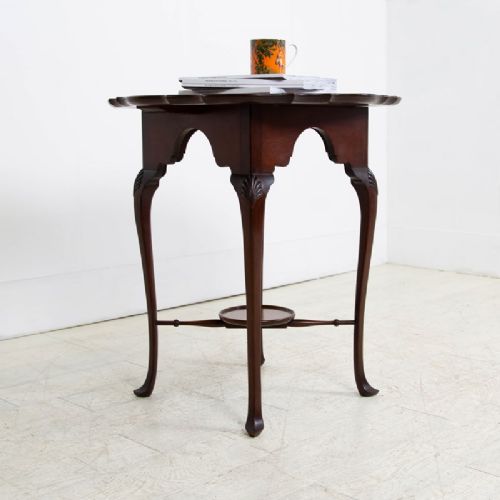
A side table is a more independent freestanding piece with four full legs, built to sit against any wall or float within a room. While both serve similar surface functions, their structural framing reflects these distinct placement traditions.
How should I care for a mahogany table top?
Maintain the timber by dusting regularly with a soft, dry cloth and avoiding silicone-based polishes that build up over time. Applying occasional natural beeswax helps nourish the wood and preserves the depth of the mahogany grain.
Protect marble inserts from acidic spills like citrus or wine, which can etch the polished stone surface. Keeping the table away from direct heat sources and strong sunlight prevents the mahogany from drying out or fading.