
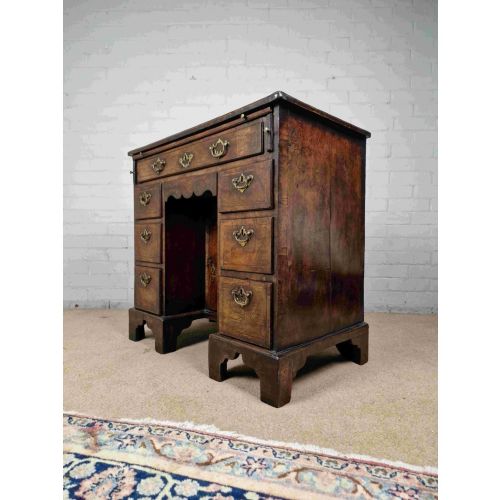
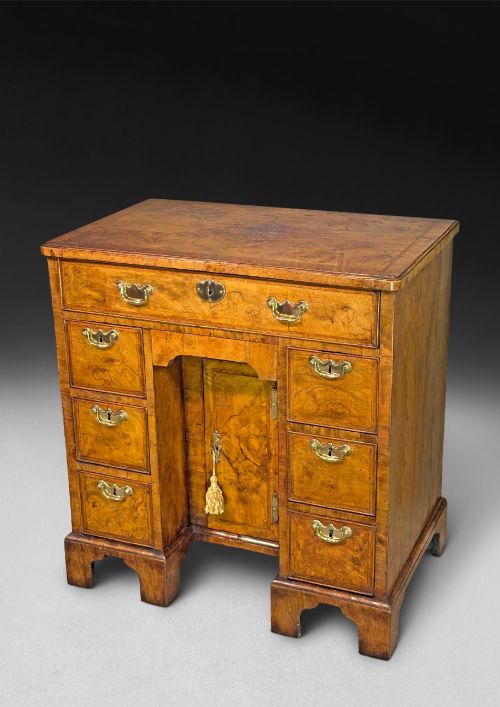
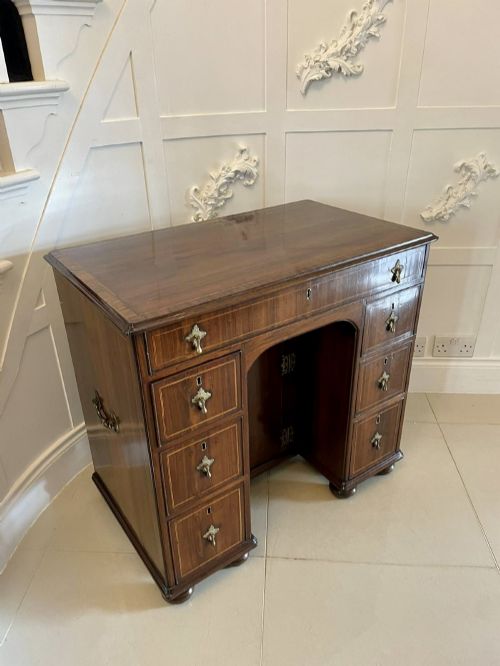
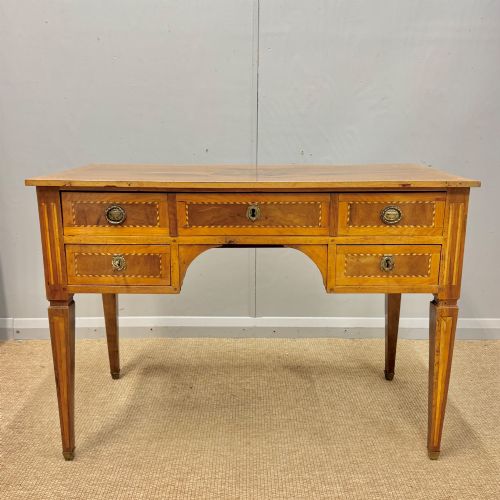

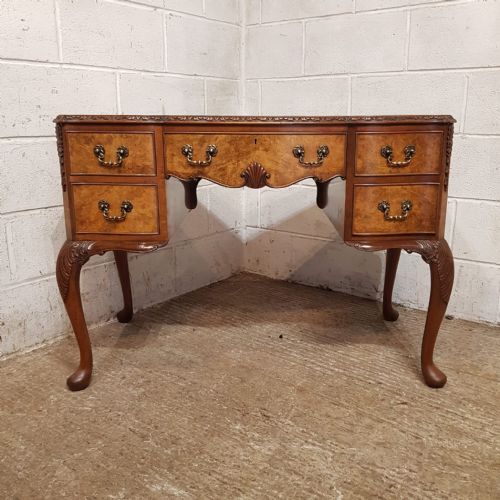
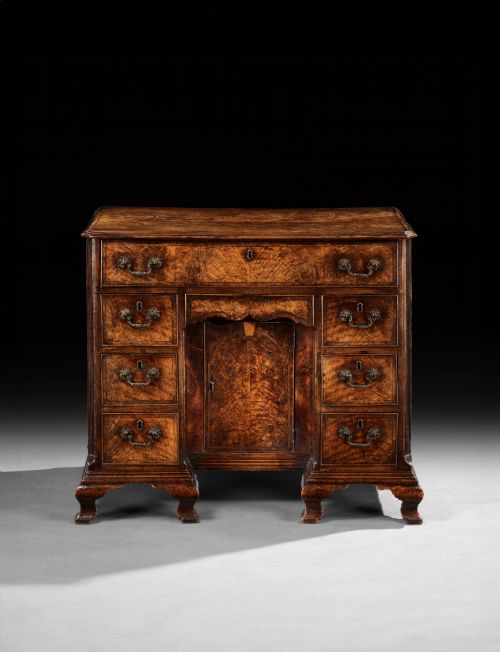
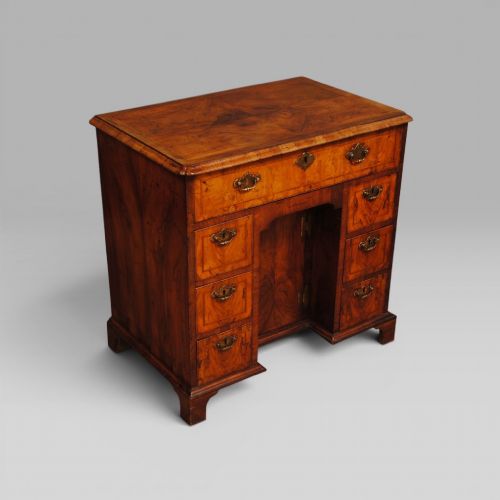
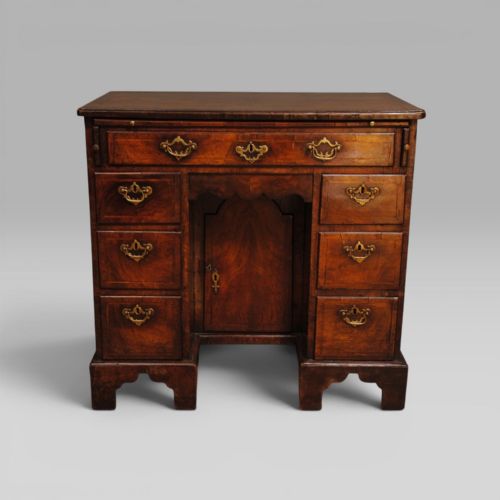


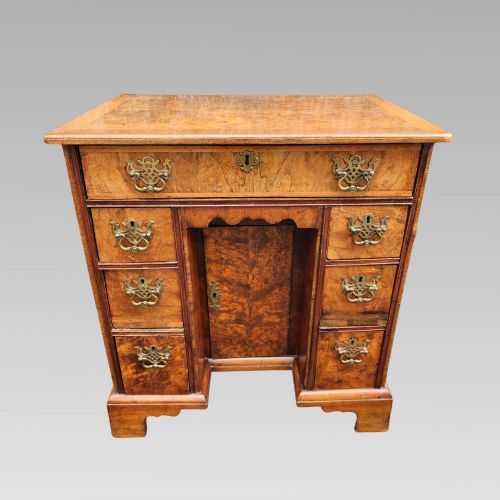
Georgian Walnut Kneehole Desk
A georgian walnut kneehole desk offers compact utility and rich timber figures, uniting functional writing space with domestic elegance.
Georgian Walnut Kneehole Desk
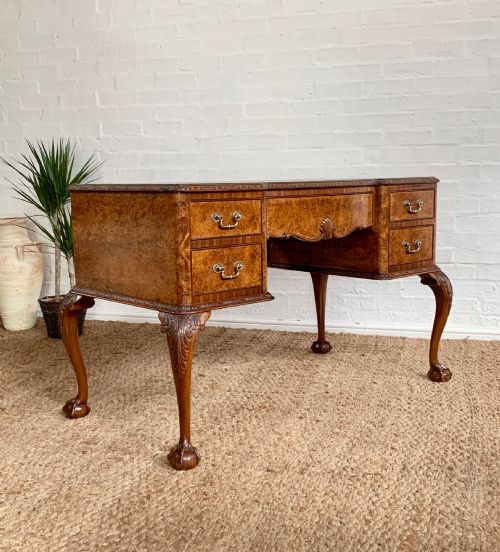
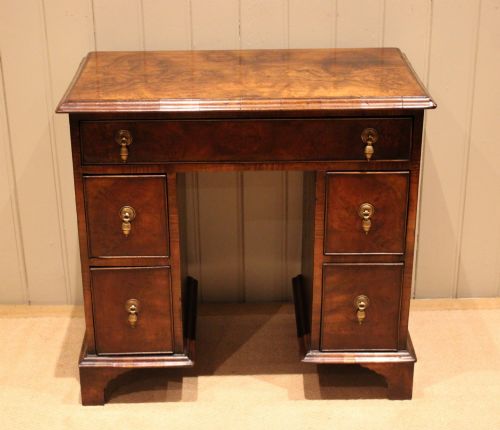
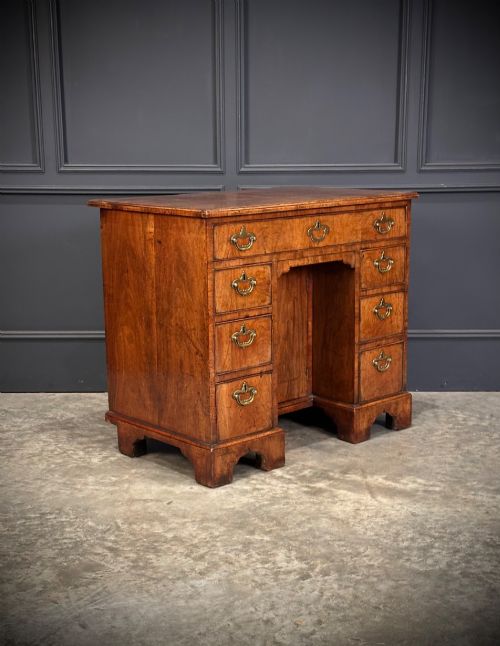
A georgian walnut kneehole desk is a compact pedestal writing table typically featuring a central recessed cupboard flanked by banks of small drawers. The evidence shows these pieces surface frequently from the 18th century alongside later revival interpretations dated to the early 20th century.
Buyers encounter genuine period examples bearing the hallmarks of Queen Anne, George I and George II reigns, as well as later 19th and 20th-century homage pieces. These forms often double as dressing tables or lowboys depending on the internal configuration and period.
The dominant timbers recorded are walnut and burr walnut, sometimes accented with fruitwood or oak linings, providing a distinct domestic scale suitable for intimate chambers or studies.
Materials and Construction
Cabinetmakers utilised figured walnut and burr walnut veneers laid over secondary timbers such as oak and pine, securing stability and decorative grain patterns. These wooden structures are frequently embellished with brass handles and escutcheons.
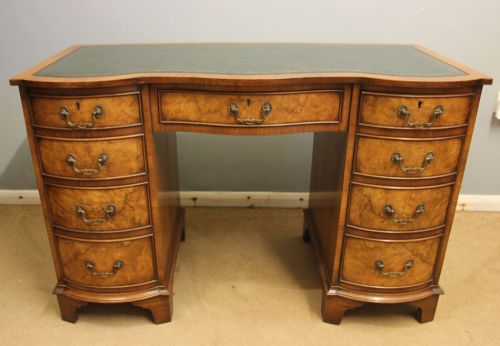
Surfaces often incorporate green tooled leather writing inserts, whilst internal drawer construction relies on traditional dovetailed joints executed in softwood or fruitwood.
Some desks hide secret compartments behind the central kneehole cupboard door, perfect for stashing illicit love letters or quill sharpeners.
Judging Quality
Quality rests on the preservation of the timber figures and the crispness of the secondary veneers across the top and drawer fronts. Pieces displaying highly figured burr walnut or fiddleback patterns command attention for their visual depth.
Construction integrity and period brassware further distinguish superior examples, separating original 18th-century pieces from later revival items through the subtlety of edge mouldings and the natural patination of the wood.
maples of london
The Georgian Walnut Kneehole Desk Glossary
- Kneehole desk
- A pedestal desk featuring a central recessed space for the legs, usually flanked by small drawers and a central cupboard. This arrangement distinguishes it from larger partner or partners desks.
- Burr walnut
- A highly decorative timber grain obtained from the wart-like growths on walnut trees, prized for its swirling patterns. It is frequently sliced into thin veneers for drawer fronts and tops.
- Fiddleback
- A striped figure found in certain walnut timbers, bearing a resemblance to the grain traditionally chosen for the backs of violins. This figuring creates an optical shimmer under changing light.
- Lowboy
- A small side table with drawers, standing on relatively tall legs, which shares construction methods and proportions with early kneehole desks. They often served dual purposes as dressing tables.
Georgian Walnut Kneehole Desk: Frequently Asked Questions
What is a kneehole desk?
A kneehole desk is a small pedestal writing table designed with a recessed central cupboard beneath the main writing surface, flanked by vertical stacks of small drawers.
This compact configuration allowed it to function simultaneously as a writing desk and a dressing table in 18th-century chambers.
How do I spot a Georgian original?
Examine the secondary timbers inside the drawer boxes, such as oak or pine, alongside the hand-cut dovetails and the natural patination of the walnut veneer.
Period pieces from the 18th century display construction methods and wear patterns distinct from 20th-century revival interpretations.
Were these desks used for writing?
Original examples served multiple domestic functions including correspondence, accounts, and personal grooming when paired with a mirror.
Many surviving pieces feature fitted top drawers containing compartments for inkwells, sanders, and writing papers.
What is burr walnut?
Burr walnut is a specialised veneer harvested from abnormal tree growths, resulting in dense, swirling patterns of grain.
Cabinetmakers applied these dramatic veneers to the primary display surfaces of high-status furniture to catch the eye.