


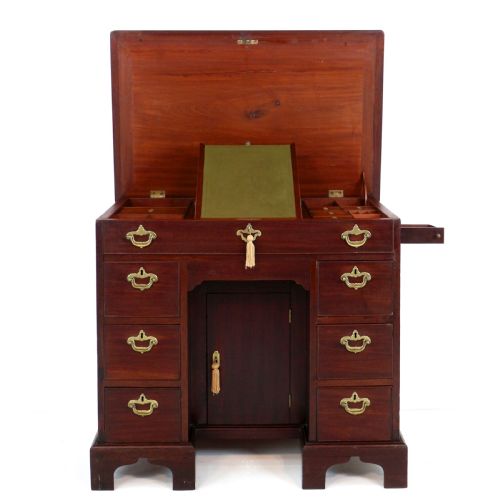


George II Kneehole Desk
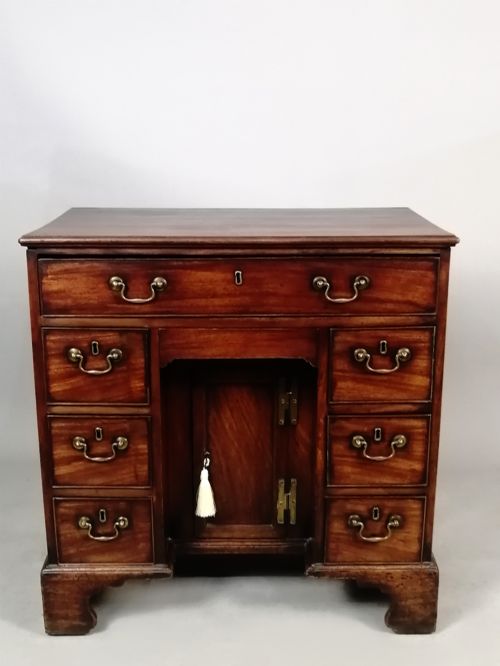
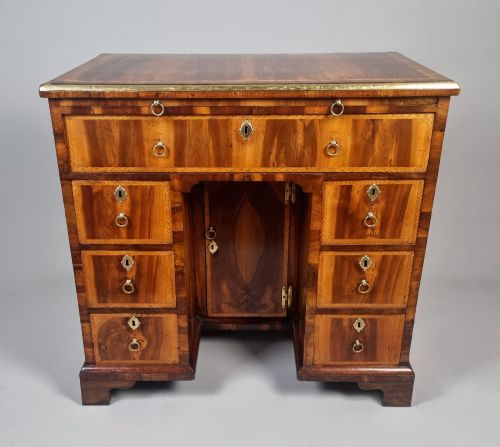
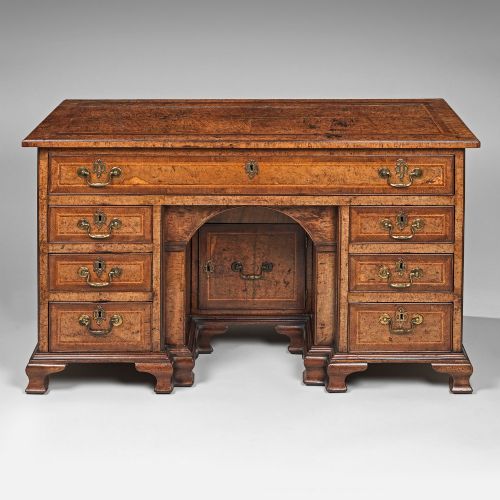
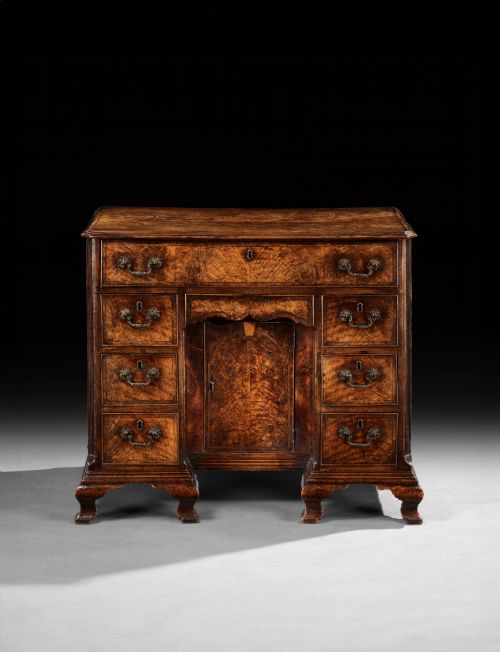
A george ii kneehole desk is a compact, beautifully proportioned writing piece from the eighteenth century that brings elegance and practicality to any room.
George II Kneehole Desk
The form functions equally well as a writing table or a dressing chest, reflecting the versatility expected in period homes. Walnut, mahogany, and yew wood dominate the historic examples, while later interpretations frequently utilise walnut and mahogany veneers.
Materials and Construction
Cabinet makers of the period utilised richly grained timbers such as walnut, mahogany, burr elm, and yew wood, often enhanced by featherbanding and crossbanding to accentuate the drawer fronts. Brass handles and escutcheons punctuate the facades, completing the structural composition of each desk.
Internal carcases typically employ oak for durability, housing dovetailed drawers that demonstrate traditional joinery techniques. Timber selection dictates the visual weight of the furniture, ranging from dark figured mahogany to lighter honey-toned yew and burr walnut.
Several examples feature diminutive proportions designed for smaller eighteenth-century rooms.
Assessing Quality and Character
The degree of figuring in the wood veneer establishes the visual richness of the surface, distinguishing standard examples from exceptional pieces. Finely matched veneers across drawer fronts show the cabinet maker's intent to create a cohesive pattern.
The survival of original brass hardware and the crispness of featherbanding contribute significantly to the integrity of the desk. Proportion also plays a vital role, with diminutive or low-profile variants holding particular appeal for their scale.
The George II Kneehole Desk Glossary
- Kneehole desk
- A small writing desk featuring a central recessed space beneath the top drawer, flanked by two pedestals of smaller drawers.
- Featherbanding
- A decorative inlay technique using narrow strips of veneer arranged in a herringbone pattern around the perimeter of drawer fronts.
- Lowboy
- A small side table with drawers, sharing construction methods and proportions with the lower section of larger case furniture.
- Crossbanding
- A strip of veneer applied perpendicularly to the grain of the primary surface to create a contrasting border.
- Fiddleback walnut
- Walnut timber displaying a rippled, undulating grain pattern reminiscent of the back of a violin.
George II Kneehole Desk: Frequently Asked Questions
What is a kneehole desk?
A kneehole desk is a freestanding writing table designed with a central recess for the user's legs, enclosed by small drawers on either side.
Cabinet makers of the eighteenth century developed this compact form to maximise storage while maintaining a modest footprint suitable for private closets and bedchambers.
How do I date a desk?
Dating relies on examining the timber species, construction methods, hardware, and secondary woods used inside the drawer carcases.
Eighteenth-century examples often feature solid oak drawer linings and hand-cut dovetails, whereas later nineteenth-century revivals display different tool marks and standardised components.
Were these used for writing?
These pieces served multiple domestic functions, operating as writing desks, dressing tables, and compact storage cabinets for personal correspondence.
The central cupboard door often concealed a sliding panel or a private recess for documents and valuables.
How do I care for walnut?
Walnut furniture requires protection from direct sunlight and dramatic shifts in relative humidity to prevent the timber and veneer from drying out.
Regular dusting with a dry cloth and occasional application of appropriate wax keeps the polished surface nourished and preserves the grain.