


Burr Elm Desk
A burr elm desk brings swirling grain and warmth to a study, offering centuries of craftsmanship in timber.
Burr Elm Desk
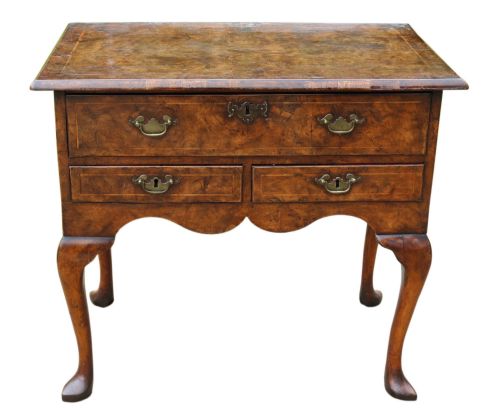
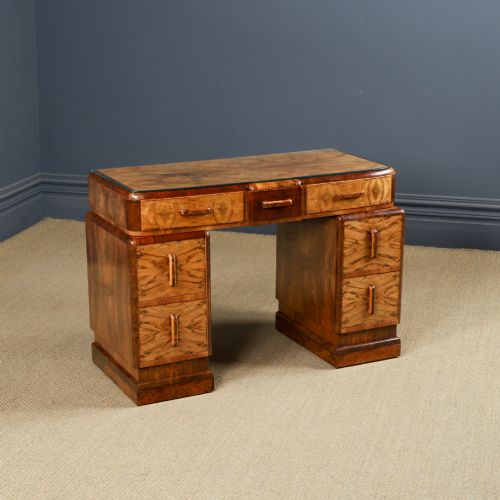
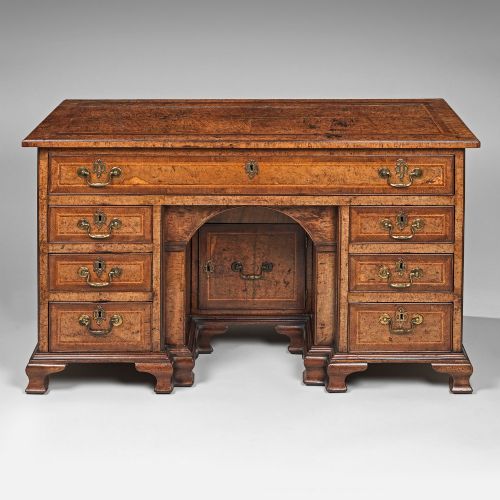
A burr elm desk draws the eye with its intricate, knotted grain patterns, turning a practical writing surface into a centrepiece of the room. When you examine a burr elm desk on this page, you encounter forms ranging from George II lowboys and kneehole desks to Regency Davenports, cylinder desks, and Art Deco pedestals.
The material appears alongside walnut, oak, and occasional brass mounts or glass elements. Pieces stretch across the seventeenth, eighteenth, and nineteenth centuries, alongside twentieth-century revivals and Art Deco interpretations.
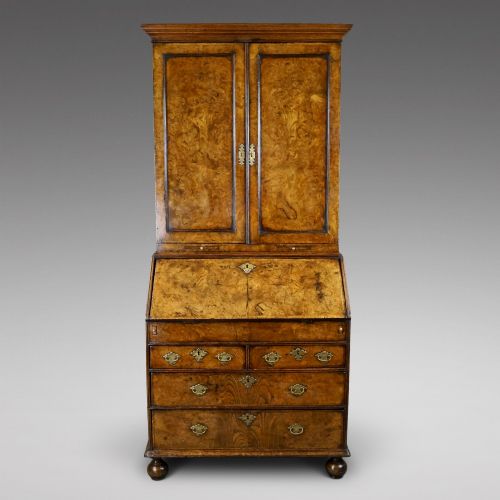
Bureau bookcases and compact writing boxes also emerge within these listings, showing how cabinetmakers deployed the timber across various scales of writing furniture.
What separates the best pieces
Quality rests upon the selection and placement of the burr veneer, where symmetrical figuring and unbroken surfaces create a harmonious facade. The depth of the patina and the crispness of the original mouldings and brass hardware further distinguish superior examples from standard ones.
Structural integrity, the survival of fitted interior compartments, and the restraint shown in any past restoration dictate the standing of an individual piece.
Listings feature burr elm alongside walnut, oak, glass, and brass, spanning the seventeenth century through to Art Deco periods.
The Burr Elm Desk Glossary
- Burr elm
- The knotty growth of an elm tree sliced to reveal swirling, highly decorative grain patterns. Cabinetmakers prize this timber for its rich visual texture on drawer fronts and writing surfaces.
- Lowboy
- A small, low table with one or more rows of drawers, commonly used as a writing or dressing table in the eighteenth century. These pieces often feature cabriole legs.
- Davenport
- A compact writing desk featuring a sloping lid and a bank of drawers opening to one side. Originating in the Regency period, it provides a small footprint with built-in storage.
- Kneehole desk
- A desk form featuring a central recess for the sitter's legs, flanked by pedestals of small drawers. George II examples in burr elm represent some of the most sought-after iterations.
- Bureau bookcase
- A tall case furniture piece combining a sloping desk front with upper shelving enclosed by doors. These grand items frequently showcase dramatic matching veneers.
Burr Elm Desk: Frequently Asked Questions
What is a burr elm desk?
A burr elm desk is a writing table or cabinet constructed using timber taken from the knotted growths of the elm tree. This wood displays a dense, swirling grain pattern that creates a striking decorative surface.
Craftsmen across the seventeenth, eighteenth, and nineteenth centuries utilised this figured wood for fine bureau bookcases, kneehole desks, and compact writing boxes.
How do I date a burr elm desk?
Dating relies on observing the structural form, hardware, and secondary timbers used in the construction of the desk. Pieces span distinct eras, from early walnut and burr elm bureau styles to Regency Davenports and later Art Deco pedestals.
Examining the drawer construction, dovetails, and handle types helps place an item within a specific century or revival period.
Where were these desks placed?
These desks served as private writing surfaces in studies, libraries, and withdrawing rooms of large houses. Compact forms like Davenports and lap desks allowed owners to write correspondence in various rooms.
Larger kneehole desks and bureau bookcases stood against walls as permanent fixtures for estate management and letter writing.
How do I care for burr elm?
Burr elm benefits from stable indoor humidity and protection from direct sunlight, which can fade the warm tones of the timber. Regular dusting with a dry, soft cloth preserves the polished surface.
Occasional application of appropriate wax polish maintains the moisture and natural sheen of the antique wood without building up heavy residues.