






Georgian Davenport Desk
A georgian davenport desk is a compact writing cabinet with drawers and a sliding top, combining practical workspace with elegant proportions.
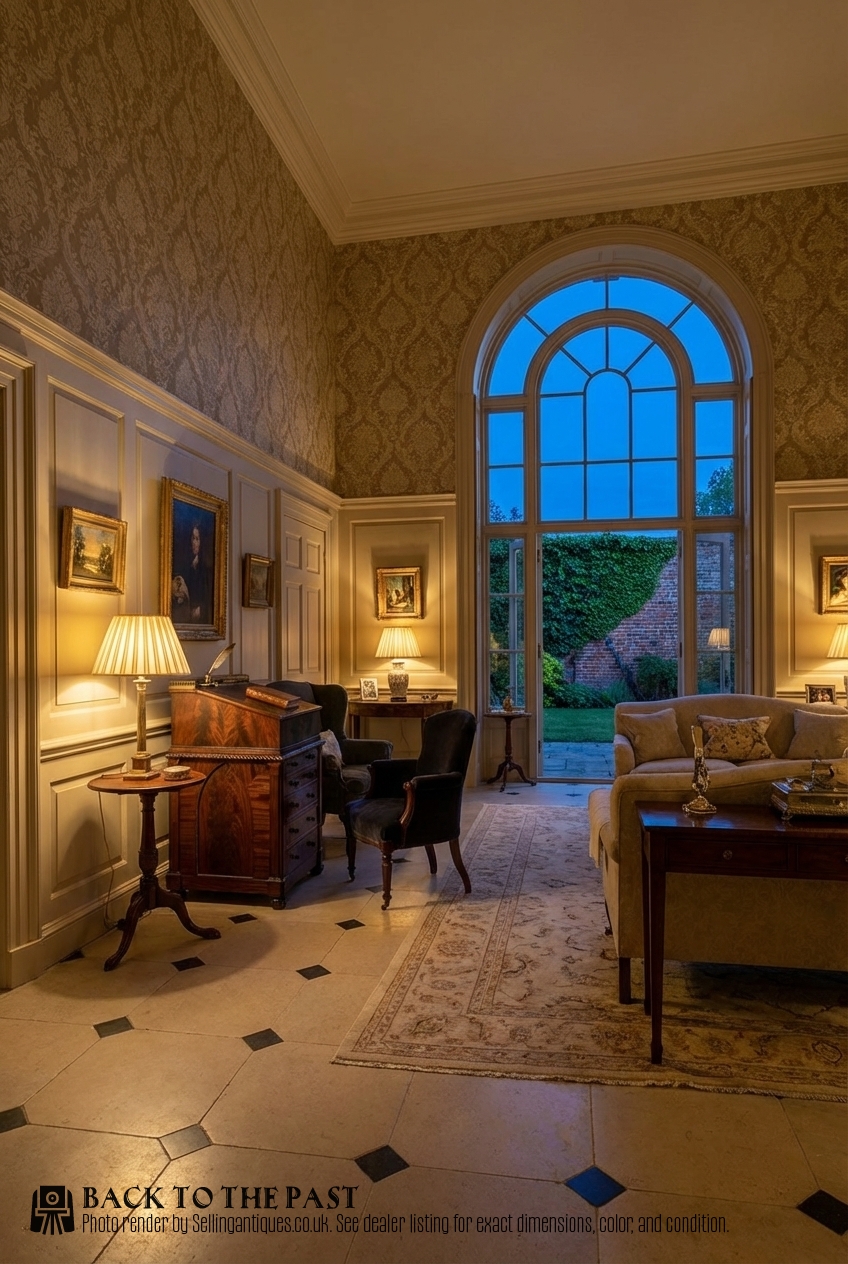
Georgian Davenport Desk
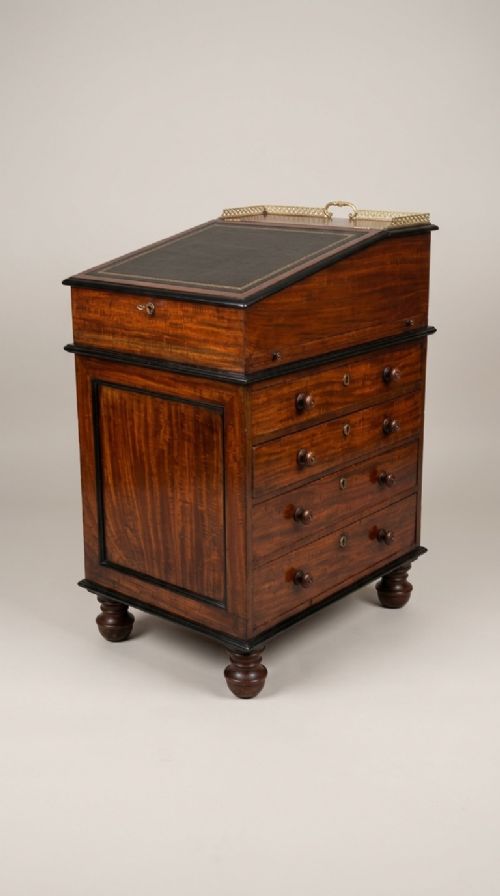
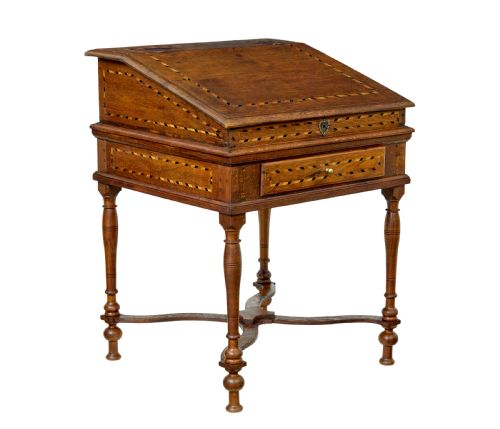
A georgian davenport desk is a compact writing cabinet designed for small spaces, appearing across the late eighteenth and early nineteenth centuries. These pieces typically feature a sloped, hinged writing surface above a pedestal of side drawers, offering a neat solution for correspondence.
The versions most commonly met on this page date from the Georgian and Regency periods, alongside pieces attributed to the wider nineteenth century. Forms range from simple mahogany pedestals to more elaborate examples with sliding tops and specialised interior fittings.
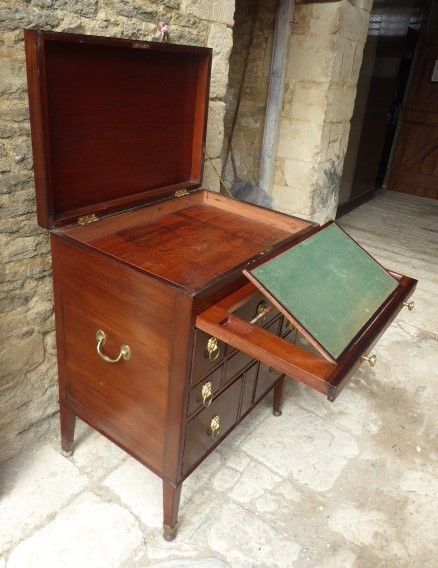
Makers utilised various configurations, including side drawers accessed while seated and pull-out slides for holding inkwells or papers. The compact footprint remains the defining characteristic that separates these cabinets from larger bureau desks.
Materials and Construction
Cabinet makers constructed these desks using dense timbers such as mahogany, pollard oak, burr elm, and satinwood. These woods were often selected for their rich grain patterns, providing a decorative finish across the writing slopes and drawer fronts.
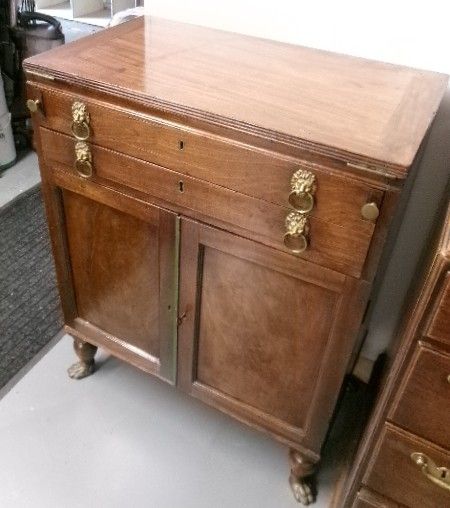
Metal components like brass hardware, including paw feet and castors, added both mobility and structural accent to the pedestals. Writing surfaces frequently incorporated inset leather panels tooled with gilt borders to provide a smooth writing plane.
Georgian Davenport Desk Retail Price Guide 2026
Typical asking prices for georgian davenport desk among the pieces listed under this phrase on Sellingantiques today, from the lower quarter to the upper quarter. They describe what is for sale here now, not the wider market.
Some models hide secret compartments and stationery drawers that slide out sideways, rewarding those who investigate every wooden nook.
Distinguishing Quality
Quality in these desks rests upon the choice of timber and the sophistication of the mechanism, such as a sliding top or a turn mechanism. Desks utilising figured woods like pollard oak or burr elm often demonstrate superior cabinet work compared to plain mahogany equivalents.
The refinement of internal fittings, including secret drawers and custom stationery compartments, distinguishes high-end pieces. Well-executed details like brass paw feet and precise joinery indicate a workshop of higher standing.
Gillow
The Georgian Davenport Desk Glossary
- Davenport desk
- A compact pedestal desk featuring a sloping writing surface and side drawers. The form emerged in the late eighteenth century and remained popular through the Regency period.
- Pollard oak
- Oak timber taken from trees that were pollarded, resulting in a dense, knotted grain pattern with rich figuring. It was favored by cabinet makers for decorative surfaces.
- Satinwood
- A durable, yellow-toned timber imported from tropical regions, used extensively during the late eighteenth and Regency periods for veneering and stringing.
- Burr elm
- Wood harvested from growth excrescences on elm trees, prized for its swirling, highly decorative grain. It appears on select cabinet fronts of the Georgian era.
Georgian Davenport Desk: Frequently Asked Questions
What is a Davenport desk?
A Davenport desk is a small writing cabinet featuring a sloped top above a pedestal of drawers. It was designed to occupy minimal floor space while providing storage for writing materials.
The form typically includes a hinged writing slope, often lined with leather, and drawers positioned on one side of the pedestal rather than beneath the knees.
How were they used?
These desks served as personal writing furniture for letters, accounts, and diary entries in drawing rooms or private studies. Their compact size allowed them to be placed near windows or fireplaces where larger furniture would not fit.
The upper section often held inkwells and pens, while the side drawers stored paper and correspondence.
How do I date a Davenport?
Dating relies on stylistic markers such as the presence of brass paw feet, Regency satinwood veneers, or late Georgian proportions. Earlier examples tend to feature straight lines and solid mahogany or figured woods.
Later nineteenth-century pieces often incorporate more varied timber combinations and mechanical sliding top arrangements that evolved from the original eighteenth-century designs.
Are they difficult to live with?
These desks suit modern interiors well due to their small footprint and built-in storage capacity. They function effectively as laptop stations or writing tables in smaller rooms.
The sliding top and side drawers provide practical organisation without dominating the surrounding floor space.