


Sliding Top Davenport
A sliding top davenport offers a compact workspace with concealed stationery compartments, combining clever mechanical ingenuity with undeniable period elegance.
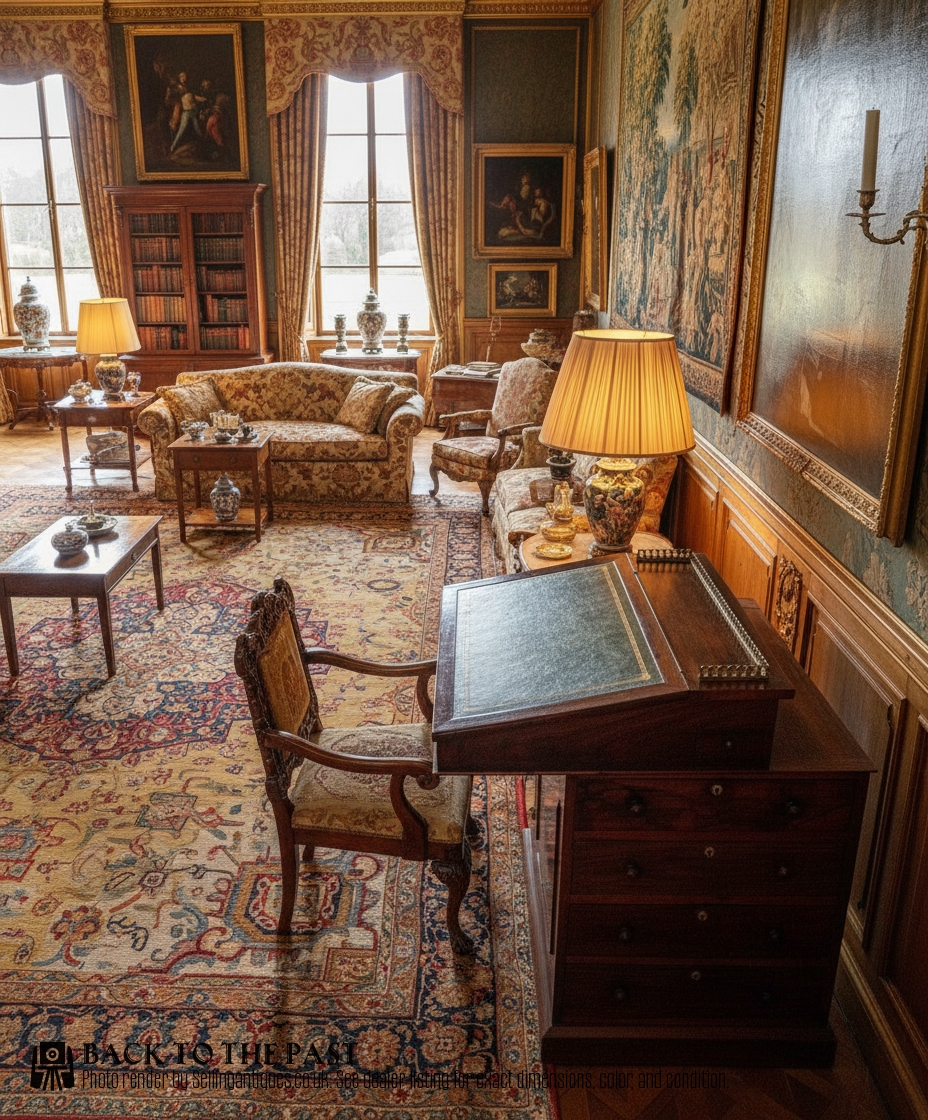
Sliding Top Davenport
When you search for a sliding top davenport, you encounter a specialised form of antique desk designed for efficient writing and storage in smaller reception rooms. These pieces combine a sloped, hinged writing lid with a set of drawers accessed from the side.
The sliding top mechanism allows the writing surface to move forward, providing comfortable legroom while seated without disturbing the upper stationery box. The versions most commonly seen on this page date from the Georgian, Regency, William IV, and Victorian periods.
Makers fashioned these desks primarily as intelligent space-saving furniture for refined interiors. They offer a neat combination of a cabinet and a writing slope that remains remarkably practical for contemporary studies.
How they were made
The writing surfaces incorporate tooled leather inserts set into hinged lids that lift to reveal pen trays and ink drawers. Clever internal compartments and side-mounted drawer arrangements required precise joinery to ensure the sliding mechanism operated smoothly.
Sliding Top Davenport Retail Price Guide 2026
Typical asking prices for sliding top davenport among the pieces listed under this phrase on Sellingantiques today, from the lower quarter to the upper quarter. They describe what is for sale here now, not the wider market.
Listings span the Georgian, Regency, William IV, and Victorian periods, showcasing desks in rosewood, mahogany, pollard oak, and walnut.
What varies in quality
The distinction between standard examples and the finest pieces rests upon the choice of timber figure, such as richly figured rosewood or burr oak, and the precision of the sliding mechanism. Superior workshops employed meticulous dovetailing on the four deep drawers and integrated robust turned handles on bun feet.
Maker attribution elevates certain pieces significantly, particularly documented items from established workshops like Gillows. The crispness of the brass details, the depth of the mahogany or pollard oak grain, and the integrity of the integrated writing box define the upper tier of the range.
Gillow·Gillows
The Sliding Top Davenport Glossary
- Davenport
- A small compact desk featuring a sloping writing surface above a pedestal of drawers. The form gained popularity during the late eighteenth century for parlour and boudoir use.
- Sliding top
- A mechanical feature allowing the desk upper section to move forward on tracks. This adjustment creates knee space for the writer.
- Pollard oak
- Timber taken from oak trees that have been pollarded, resulting in a dense, highly figured grain pattern. Cabinetmakers prized this wood for decorative furniture fronts.
- Tooled leather
- Leather inset into a writing surface decorated with gilt or blind tooling around the perimeter. It provides a durable and smooth plane for handwriting.
- Pedestal
- The box-like body of drawers supporting the desk top on one side. In davenports, these drawers typically pull out to the side rather than the front.
Sliding Top Davenport: Frequently Asked Questions
What is a sliding top davenport?
A sliding top davenport is a compact antique writing desk where the upper desk section moves forward on a track to provide legroom.
Beneath the hinged writing lid sits a fitted interior with spaces for ink and pens, while the pedestal holds several deep drawers.
How do you use the sliding mechanism?
The upper portion of the desk slides smoothly forward over the seat to create a comfortable distance for writing.
This clever mechanical action allows the desk to remain small and neat when closed while offering proper seating ergonomics when open.
Which woods are most common?
Mahogany and rosewood appear most frequently in these desks, reflecting the fashionable cabinet timbers of the Georgian and Victorian eras.
More decorative examples incorporate pollard oak, burr oak, or walnut to showcase striking natural wood grain figures.
How do I date a davenport?
Stylistic details such as turned bun feet, brass castors, and the grain of the timber help determine the period of manufacture.
Regency and William IV pieces often display rich rosewood and classical proportions, while later Victorian examples frequently utilise walnut or mahogany.