


William IV Davenport
These william iv davenport desks combine compact utility with rich cabinet-making, offering a prized writing companion for the home.
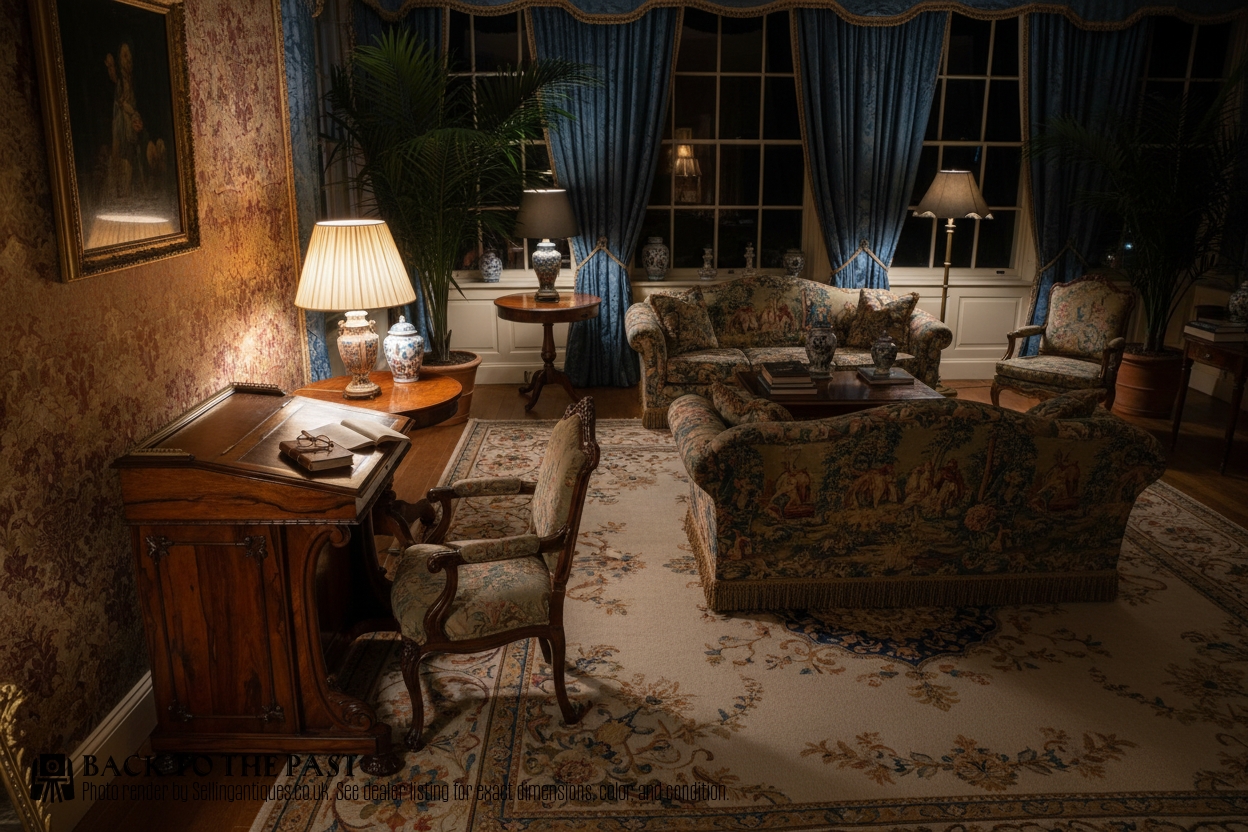
The William IV Davenport
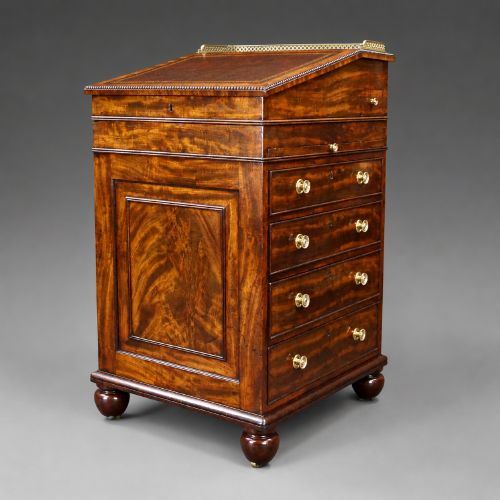
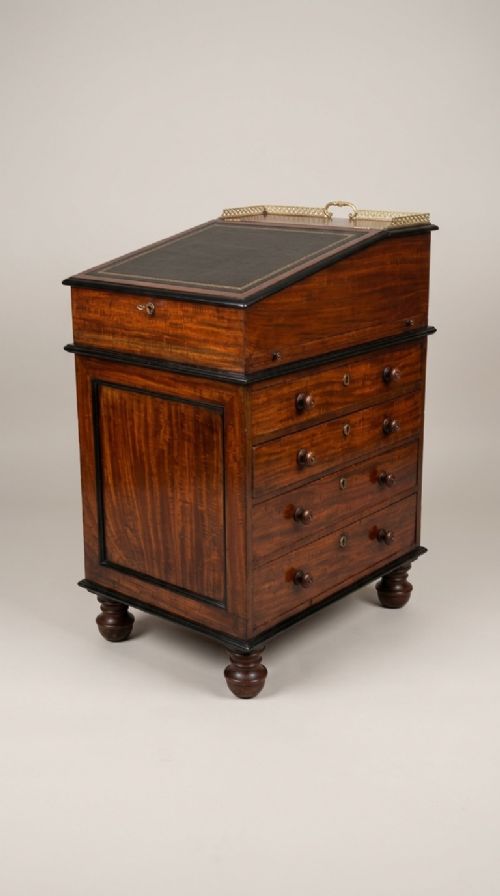
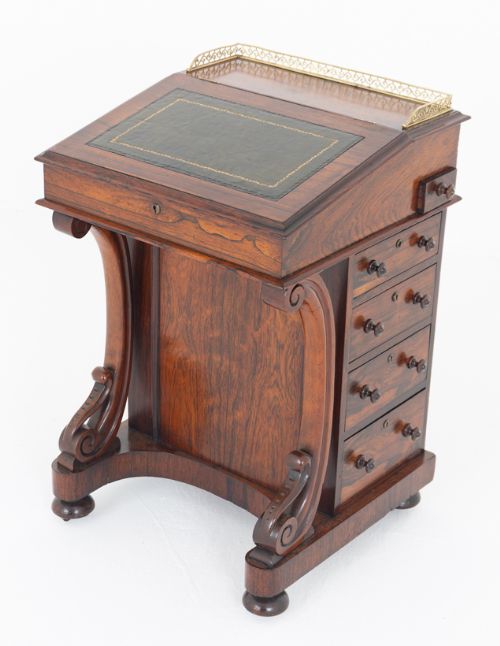
A william iv davenport is a compact writing desk featuring a sloping lid and pedestal drawers, designed for smaller reception rooms or private studies.
The versions met on this page belong predominantly to the nineteenth century, spanning the regency and victorian periods with distinctive architectural proportions.
Makers utilised rich timbers such as mahogany, rosewood, and flame mahogany to build these functional writing boxes.
Construction and Materials
Cabinet-makers built the carcasses from dense hardwoods like mahogany and rosewood, frequently selecting flame mahogany veneers for striking grain patterns on the sloping lids.
Writing surfaces were traditionally lined with leather, while internal compartments and stationery drawers were fitted beneath the sliding or hinged writing slopes.
Brass fittings and castors provided mobility and decorative contrast to the dark polished timbers.
Retail Price Guide 2026
Typical UK retail prices for william iv davenport, calculated from the Sellingantiques database of over a million retail prices indexed since 2003. This retail price guide relies exclusively on Sellingantiques data; no external sources or auction records are used, so the figures do not describe the wider market.
Assessing Quality
The distinction between standard and superior pieces rests on the selection of timber and the sophistication of the desk mechanism, such as a sliding top.
Master workshops distinguished their work through precise joinery in the pedestal drawers and the integration of ebonised wood details or fine brass galleries.
Gillows·W&C Wilkinson·Burrey & White
The William IV Davenport Glossary
- Davenport desk
- A small writing desk with a sloping top hinged over a pedestal of drawers, originating in the late eighteenth century. It remains a popular antique form for compact spaces.
- Flame mahogany
- Mahogany veneer cut from the fork of the tree where the branches meet, creating a flamy, figured pattern. It was favoured for decorative desk lids.
- Ebonised wood
- Timber treated to resemble ebony, providing dark contrasting trim or details. It is frequently seen alongside lighter or figured woods.
- Regency style
- A British design phase spanning the early nineteenth century, characterised by classical restraint and architectural lines. It heavily influences william iv furniture.
Frequently Asked Questions
What is a davenport desk used for?
These desks served as compact writing stations for correspondence and record-keeping in private sitting rooms.
The sloping lid provided a slanted surface for writing, while the side drawers held stationery, inkwells, and letters.
How do I identify a William IV period piece?
William IV furniture bridges the regency and early victorian styles, displaying robust classical proportions and heavy timber usage.
Look for dense rosewood or mahogany builds, often accompanied by understated turned legs and brass castors.
Are these desks comfortable for daily writing?
They offer a compact writing space with built-in storage, though the fixed drawer pedestal underneath limits legroom compared to a full-sized partner desk.
The sloping lid sits at an angle intended for standing or sitting on a matching chair.
Which woods were most commonly used?
Rosewood and mahogany are the primary timbers found in these nineteenth-century writing desks.
Makers also employed flame mahogany veneers on the writing slopes to create dramatic visual grain patterns.