

Sloped Top Desk
A sloped top desk provides a dedicated writing surface angled for comfort, combining practical storage with fine cabinetwork.
Sloped Top Desk
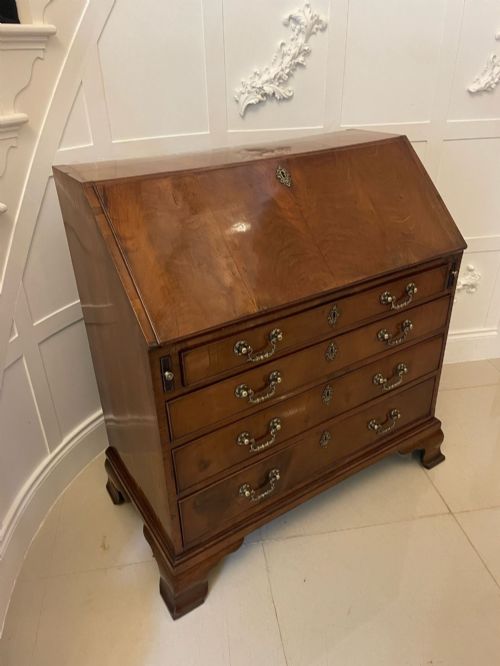
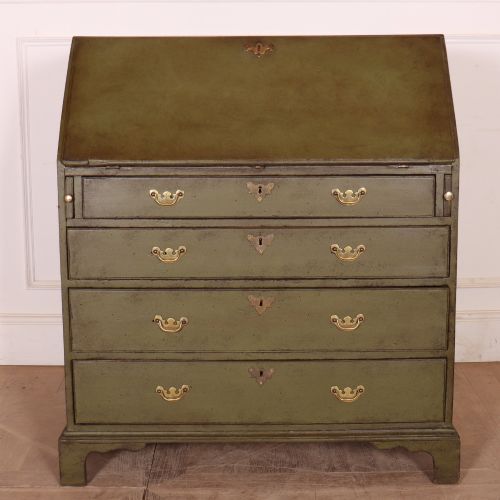
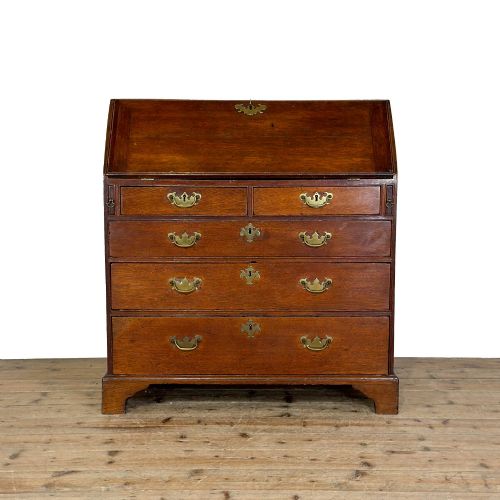
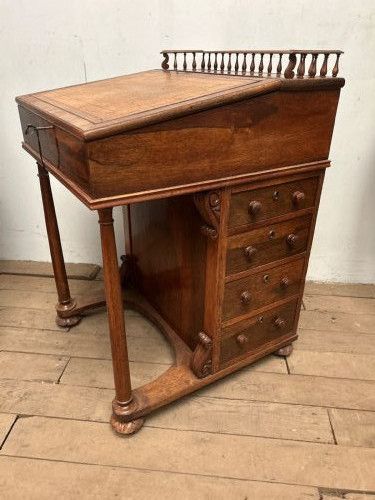
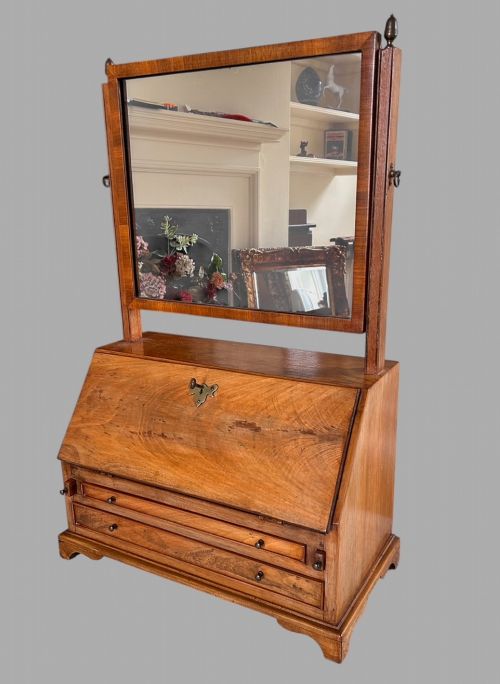
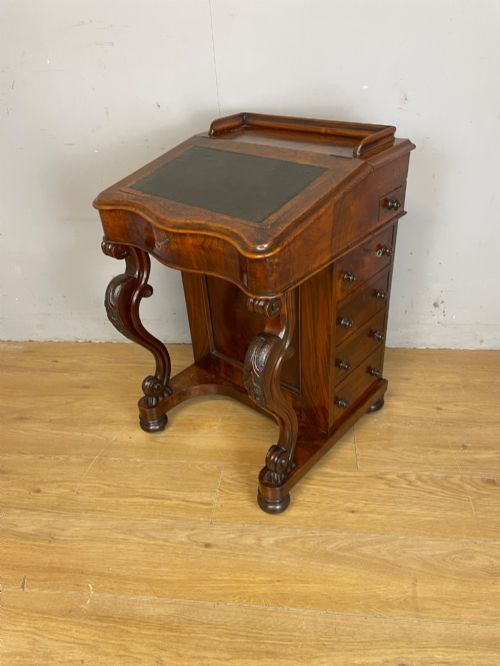
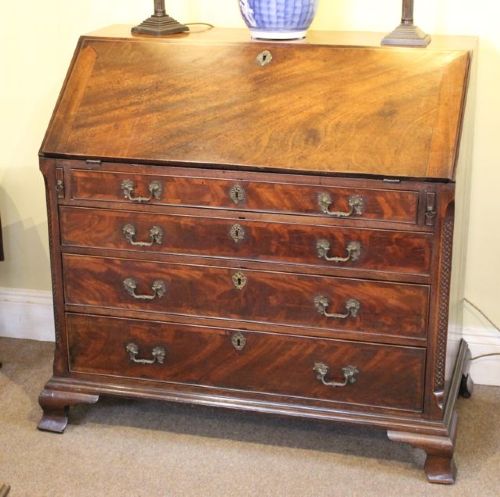
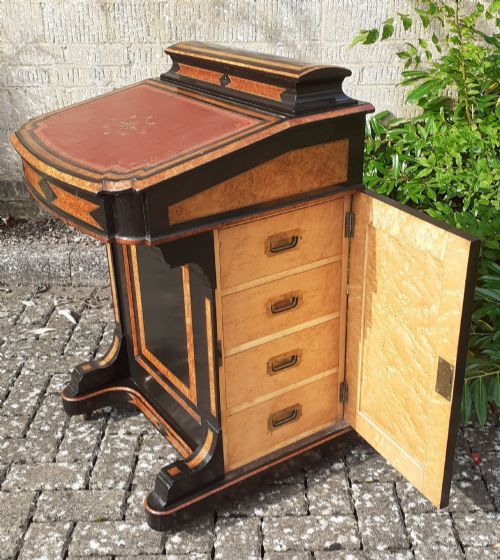
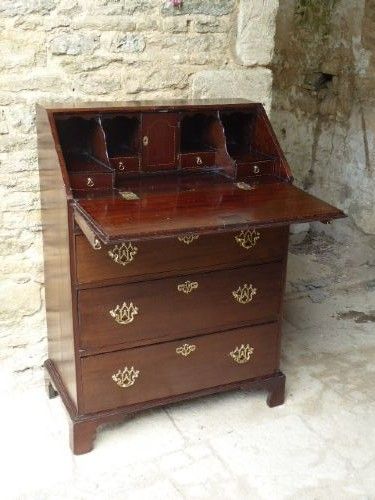
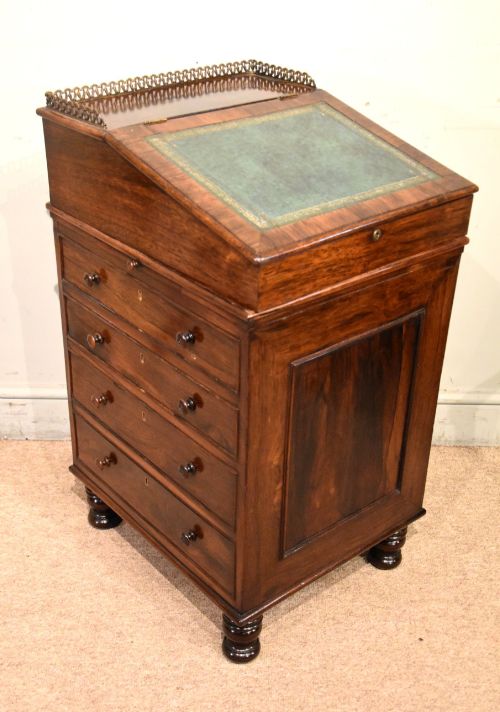
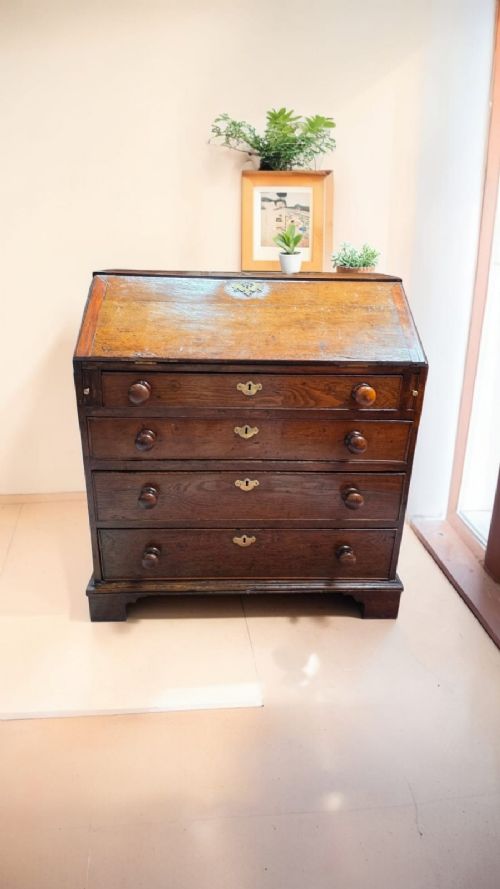
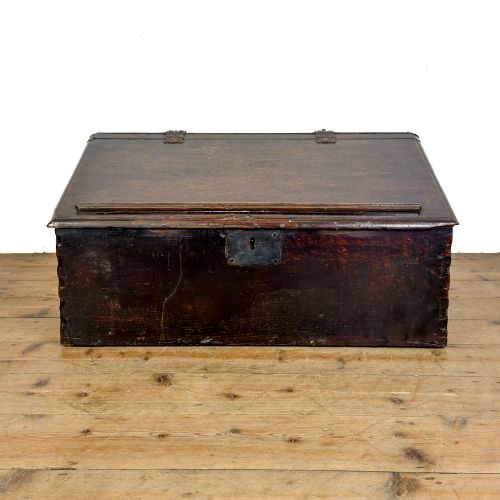
A sloped top desk encompasses various writing furniture forms, most notably traditional bureaux, compact Davenport desks, and slanted bible boxes originating from the seventeenth to the early twentieth century. Buyers encounter robust oak examples from the eighteenth century alongside refined Victorian and Regency pieces in mahogany, walnut, and rosewood.
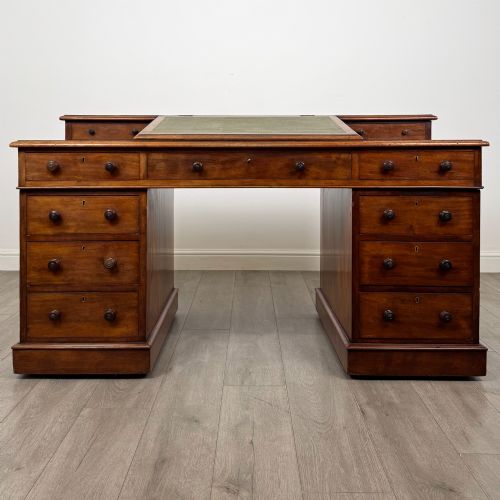
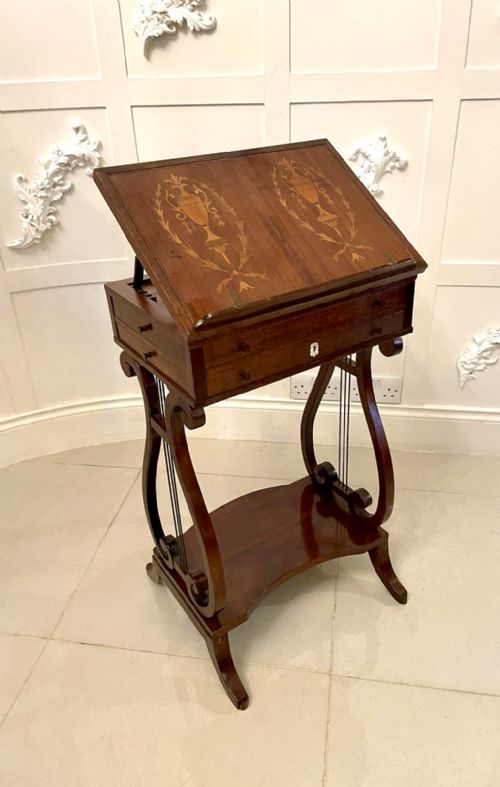
The selection ranges from large architectural and clerks' desks to smaller table-top bureaux and writing slopes designed for portability or intimate domestic spaces. These pieces reflect shifting domestic habits, moving from utilitarian workspace storage to decorative parlour furnishings.
Materials and construction
Cabinetmakers utilised dense hardwoods such as mahogany, oak, and walnut, often applying burr veneers, satinwood stringing, or exotic timbers like amboyna and rosewood to exterior surfaces. Structural integrity relied on traditional joinery, dovetailed drawer construction, and fitted interiors containing small compartments and secret drawers.
Writing surfaces frequently incorporated inset leather panels, sometimes tooled with gold leaf, while hardware utilised brass for hinges, handles, and galleries. Secondary timbers such as pine or oak appear inside drawer linings, reflecting regional workshop practices of the period.
Sloped Top Desk Retail Price Guide 2026
Typical asking prices for sloped top desk among the pieces listed under this phrase on Sellingantiques today, from the lower quarter to the upper quarter. They describe what is for sale here now, not the wider market.
Listings feature sloped top desk forms spanning the seventeenth century through the Edwardian period, constructed in mahogany, oak, walnut, and rosewood.
Judging execution and finish
Quality rests in the selection of timber figures, where matched veneers and thoughtful grain alignment elevate the visual weight of a bureau or Davenport. Superior examples demonstrate crisp dovetailing, well-fitted internal stationery compartments, and original brasswork that matches the age of the carcass.
Proportion and stability separate standard utility pieces from exceptional cabinetwork. Refined proportion in the slope angle and solid secondary framing indicate the hand of skilled makers rather than mass production.
Gillows of Lancaster·Gillow and Co
The Sloped Top Desk Glossary
- Bureau
- A writing cabinet featuring a hinged sloping flap that opens to reveal a fitted interior above a set of drawers. They emerged in various timbers during the seventeenth and eighteenth centuries.
- Davenport
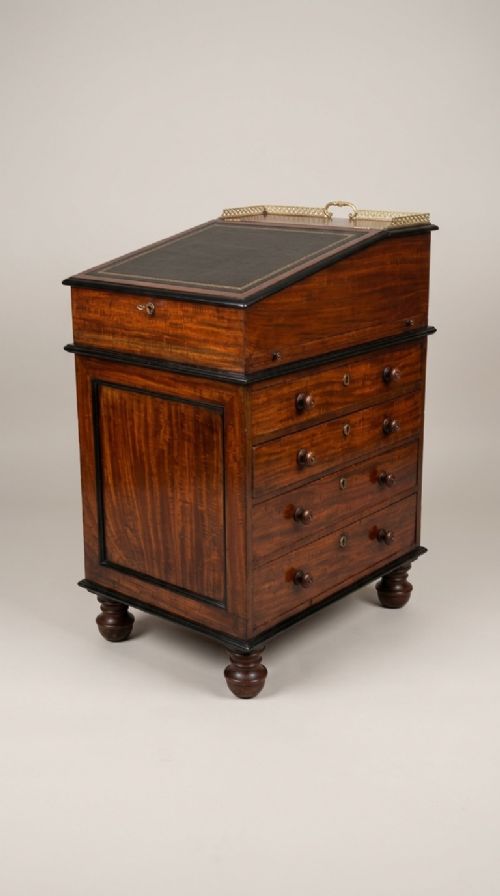
- A compact pedestal desk with a sloping writing surface, usually incorporating side drawers and a small superstructure. These became popular during the Regency and Victorian eras.
- Bible box
- A small wooden box with a slanted lid, originally built to hold religious texts before evolving into portable writing receptacles. Early examples often exhibit hand-carved oak panels.
- Writing slope
- A portable box with an angled lid that folds flat to create a writing surface and internal storage for paper and ink. They appear in diverse exotic and native timbers.
- Stringing
- Thin inlaid lines of contrasting timber used to outline drawer fronts and panels on refined furniture. This decorative technique highlights the geometry of the piece.
Sloped Top Desk: Frequently Asked Questions
What is a Davenport desk?
A Davenport is a compact form of sloped top desk featuring a slanted writing surface that often lifts or slides, resting on a pedestal base with drawers. They were designed for small spaces and private correspondence in nineteenth-century homes.
Most examples include internal stationery compartments and a side-opening drawer arrangement, combining vertical storage with a comfortable writing angle.
How do I use a bureau daily?
The sloping lid folds down to create a firm writing ledge, while the internal pigeonholes and small drawers organise modern stationery or correspondence. The enclosed surface keeps work out of sight when closed.
Leather writing surfaces benefit from occasional gentle conditioning, and the fall-front hinges require care when lowering the heavy wooden flap.
How do I tell Victorian from Georgian pieces?
Georgian desks typically exhibit simpler, heavier architectural proportions in solid oak or figured mahogany with hand-cut dovetails. Victorian pieces often incorporate more complex mechanisms, exotic veneers like burr walnut, and lighter secondary timbers.
Stylistic markers such as inlay types, brass hardware design, and interior layouts help distinguish the earlier eighteenth-century forms from nineteenth-century revivals.
Are writing slopes portable?
Writing slopes are rectangular wooden boxes designed to be carried easily and placed upon standard dining or work tables. They feature a hinged lid that opens upward at an angle for writing.
Inside, they provide fitted storage for inkwells, pens, and paper, functioning as portable administrative stations for travellers and homeowners alike.