
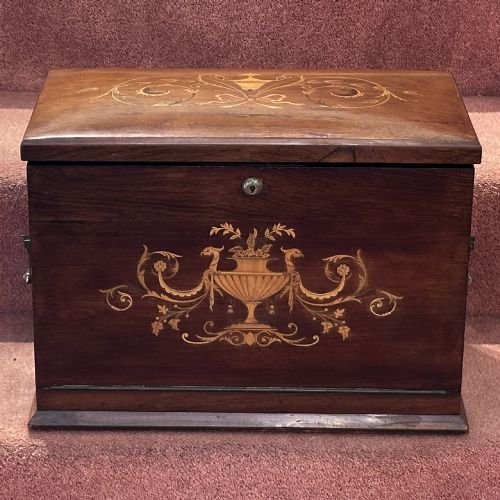


Rosewood Stationery Cabinet
These rosewood stationery cabinet pieces are handsome desk accessories that organise correspondence with undeniable nineteenth-century style.
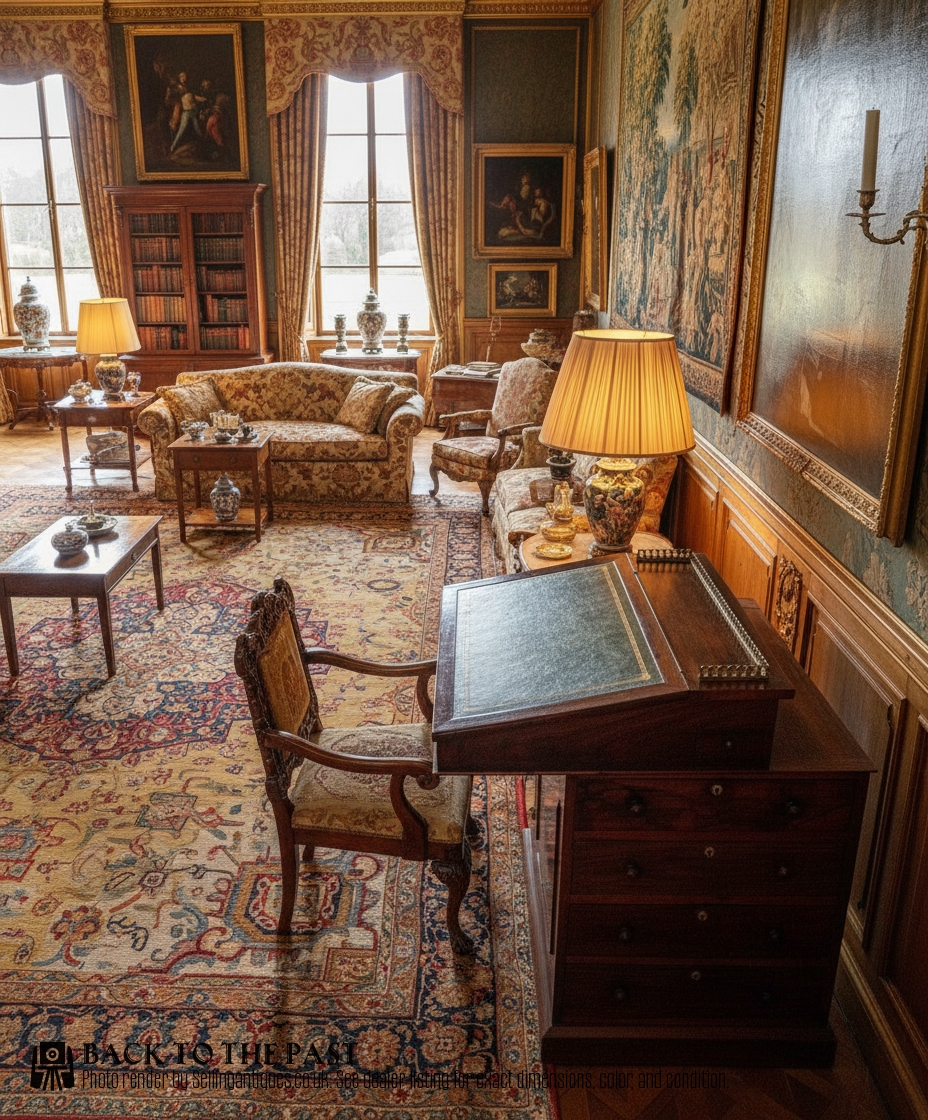
Rosewood Stationery Cabinet
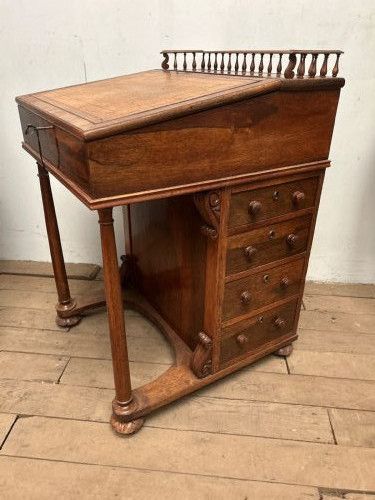
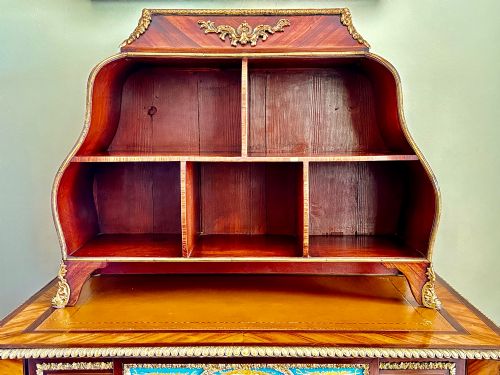
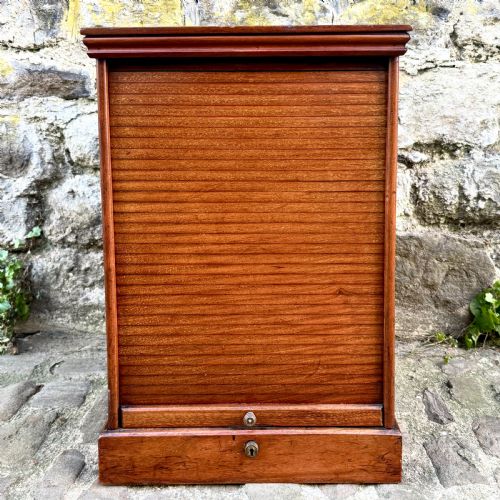
A rosewood stationery cabinet brings rich timber grain and polished organisation to a desk, holding letters, paper and envelopes in secure compartments. When you search for rosewood stationery cabinet, you encounter refined writing boxes, desktop cartonnier units and fitted Davenport desks from the nineteenth century.
The selection ranges from compact Victorian stationery boxes with inlaid satinwood details to grander Regency examples and Edwardian pieces. These items served a vital daily function in the homes and offices of writers, correspondents and professionals before the digital age.
Victorian and Regency periods dominate the forms found here, often combining slant-front writing slopes with internal pigeonholes and vertical mail sections. The integration of stationery storage into larger writing desks demonstrates the clever carpentry typical of nineteenth-century makers.
How they were made
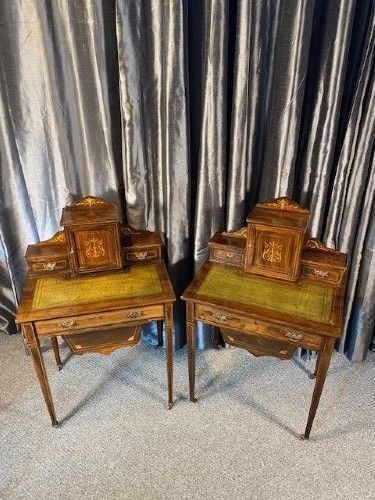
Makers utilised dense rosewood as the primary timber, frequently embellished with contrasting satinwood inlay, boxwood stringing and maple interiors. The natural warmth of the dark wood provided a sophisticated canvas for detailed cabinet work.
Brass fittings, ormolu mounts and leather writing surfaces appear across the pieces to add durability and decorative contrast to the timber. Skilled craftspeople constructed these boxes to withstand daily opening and closing, utilising tight joints and robust internal mechanisms like pop-up letter compartments.
Some nineteenth-century writing boxes feature answered and unanswered letter slots to keep busy correspondents from missing a single reply.
What varies in quality
The distinction between standard examples and superior pieces rests on the precision of the inlay work and the complexity of internal mechanisms. Finer cabinets display meticulous satinwood banding, crisp boxwood lines and smoothly operating pop-up letter sections.
Material selection also dictates overall grade, with heavily figured rosewood grain and high-grade ormolu or brass mounts marking out the superior productions. The inclusion of an original maker's label, such as F Waller, elevates the historical interest of a piece.
F Waller
The Rosewood Stationery Cabinet Glossary
- Cartonnier
- A desktop cabinet fitted with tiers of compartments for holding papers, documents and stationery. These structures often feature architectural pediments and decorative mounts.
- Davenport desk
- A compact nineteenth-century writing desk featuring a sloped, hinged writing surface above a pedestal of drawers. Many incorporate hidden stationery compartments and side wells.
- Ormolu
- Gilded bronze ornamentation applied to furniture and desktop accessories during the nineteenth century. It adds metallic lustre and decorative relief to dark rosewood surfaces.
- Satinwood inlay
- Contrasting light-coloured timber veneer set into the surface of a darker wood to create geometric borders or floral patterns. This technique highlights the skill of the cabinet maker.
- Writing box
- A portable box with a hinged lid that opens to form a sloped writing surface, fitted internally with inkwells, pen trays and stationery slots.
Rosewood Stationery Cabinet: Frequently Asked Questions
How were stationery cabinets used?
Owners used these cabinets to sort incoming and outgoing mail, store blank letter sheets and keep writing implements close at hand. Vertical slots held letters awaiting attention while flat trays stored envelopes.
In an era before email, maintaining an orderly desk was essential for household management and business correspondence. These cabinets kept private letters secure and organised.
How do I date a rosewood cabinet?
Dating relies on observing construction methods, hardware styles and decorative motifs associated with periods like the Regency and Victorian eras. Earlier pieces often display cleaner architectural lines while later Victorian examples incorporate richer inlay.
Maker's labels or stamps found inside drawers can also help narrow down the manufacturing decade. The presence of specific woods like satinwood inlay often points towards the later nineteenth century.
Where should I place one?
These cabinets suit a traditional desk surface, a bookshelf or a console table where their timber grain can be appreciated. They provide practical storage for modern stationery or receipts while adding historic character to a room.
Keep them away from direct sunlight and strong heat sources to protect the polished rosewood finish and prevent the timber from drying out.