
Desk with Drawers
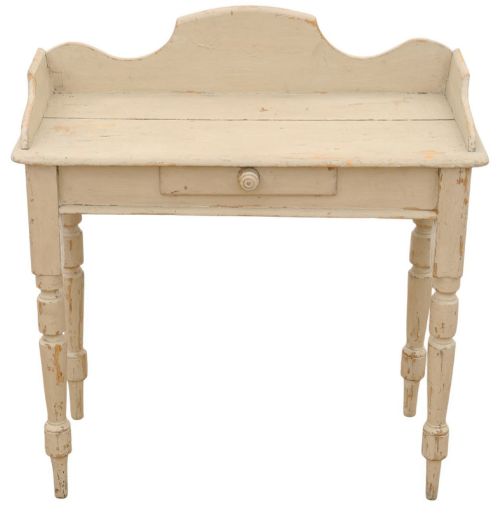
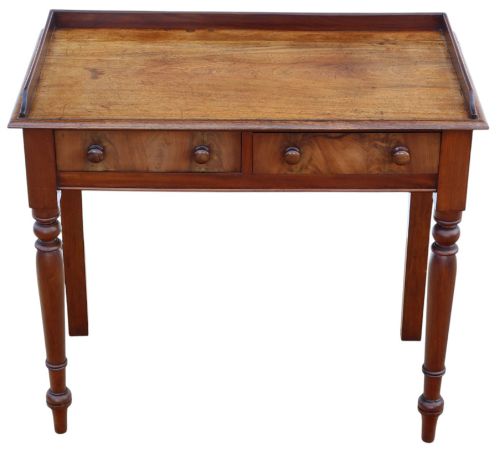
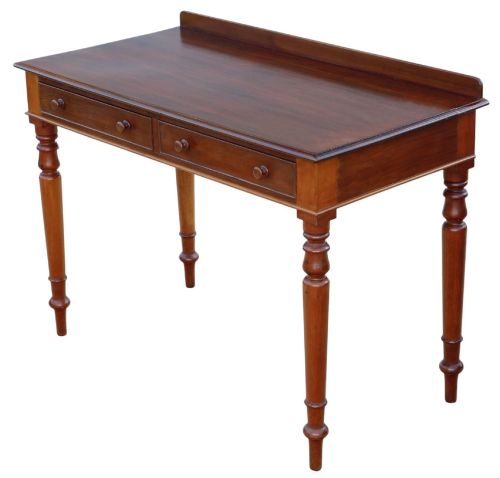
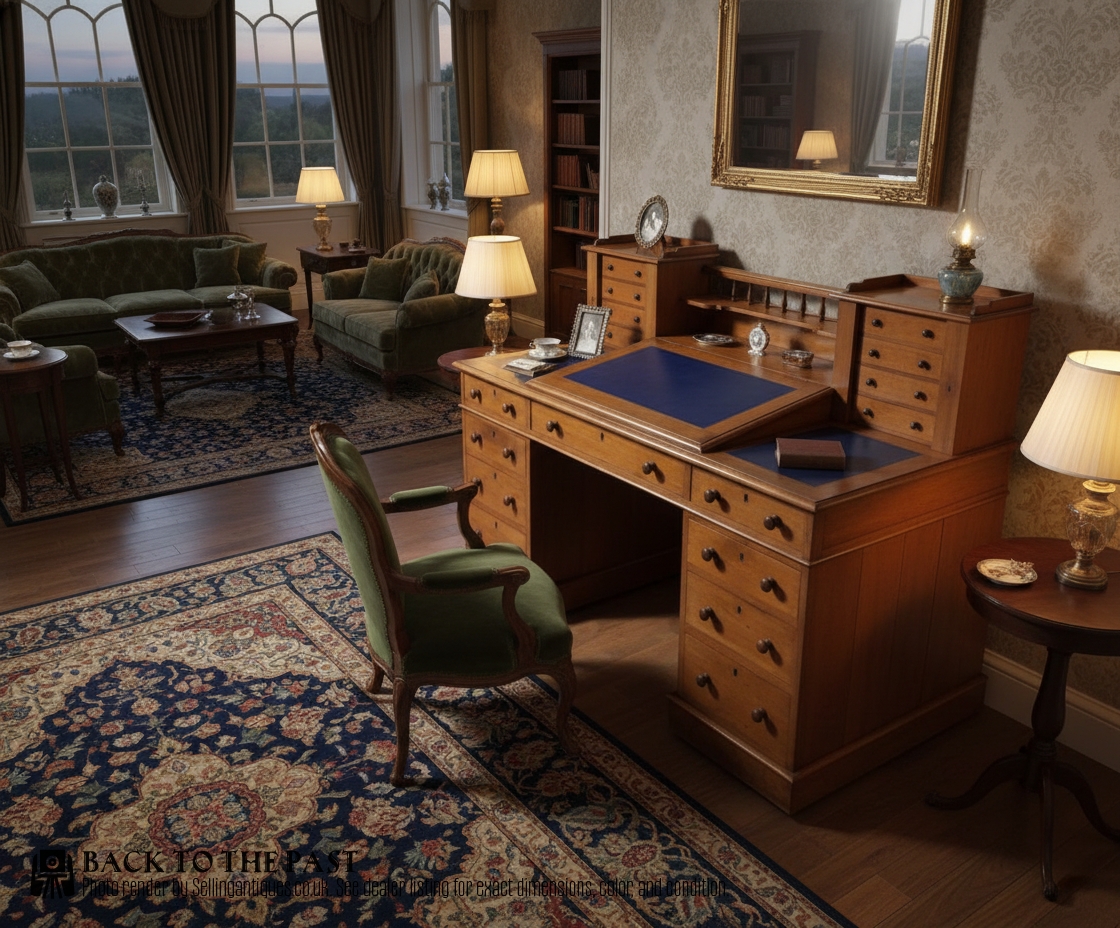
A desk with drawers provides a practical workspace combined with concealed or partitioned storage, ranging from compact lap boxes to large partners pieces.
What They Are
A desk with drawers unites a writing surface with integrated storage compartments, catering to domestic correspondence, professional study, and administrative organisation across multiple centuries of craftsmanship. Buyers encounter various forms on this page, including pedestals, writing tables, bureaux, and portable slopes.
The evidence demonstrates a strong presence of nineteenth-century and eighteenth-century examples alongside Victorian, Regency, Edwardian, and Georgian pieces. Forms span simple single-drawer writing tables up to large multi-drawer partners desks and pedestal units equipped with numerous functional compartments.
How They Were Made
Cabinetmakers utilised robust timber varieties such as mahogany, oak, walnut, satinwood, ash, pine, rosewood, and coromandel, often enhancing surfaces with leather writing inserts, brass hardware, and intricate inlay or crossbanding.
Construction techniques involve structural pedestals, turning, reeving, carved detailing, and specialised mechanisms including drop fronts, sliding tops, and secret locking drawers.
Retail Price Guide 2026
Typical UK retail prices for desk with drawers, calculated from the Sellingantiques database of over a million retail prices indexed since 2003. This retail price guide relies exclusively on Sellingantiques data; no external sources or auction records are used, so the figures do not describe the wider market.
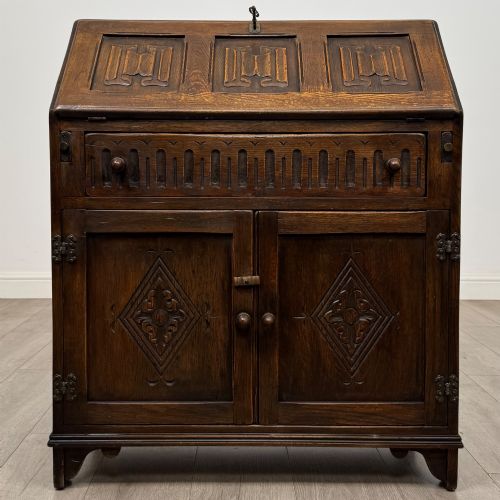
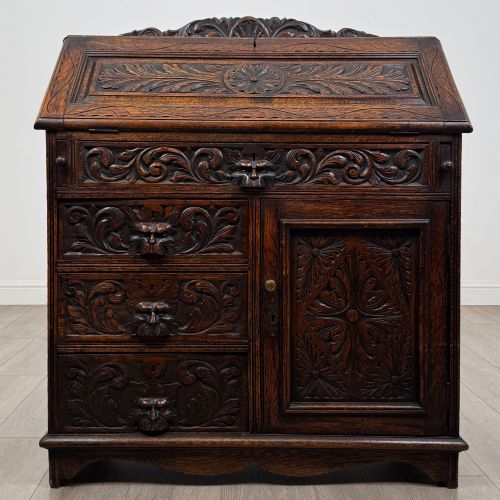
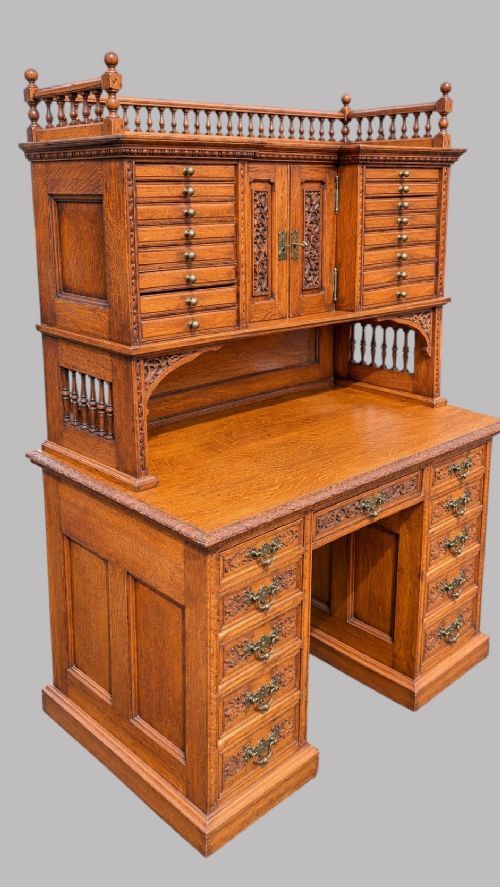
Green men stare from carved oak library desks, keeping watch over centuries of ink stains and secret compartments.
What Varies in Quality
The tier of a piece depends upon timber selection, such as figured mahogany or exotic coromandel, paired with refined secondary woods and precise cabinetry joints.
Execution of decorative elements, from brass handles and ormolu mounts to hand-tooled leather surfaces and internal stationery fittings, dictates the standing of the work.
The Desk with Drawers Glossary
- Pedestal desk
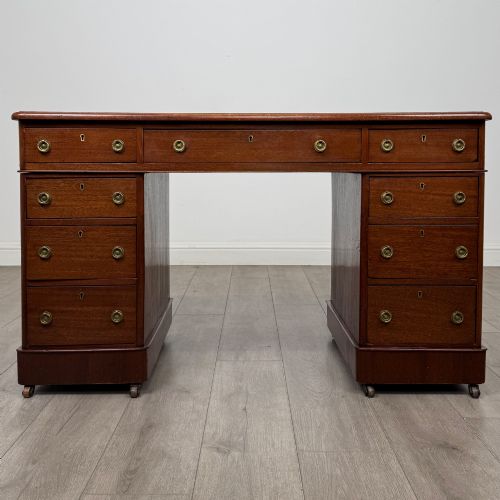
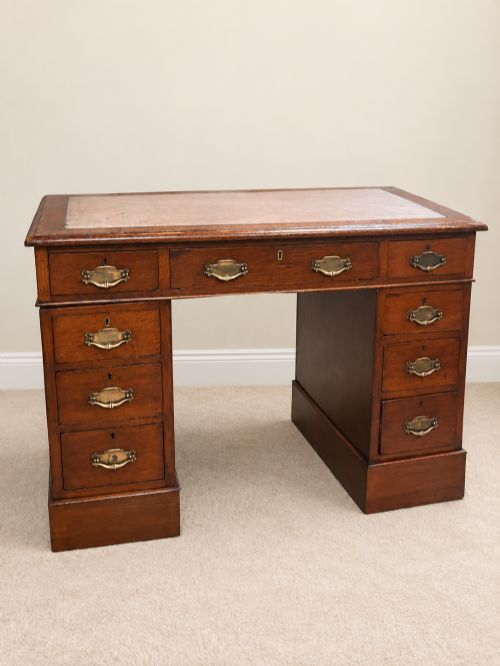
- A freestanding writing unit featuring two banks of drawers supporting the main work surface. This layout provides extensive storage underneath while keeping the centre open for seating.
- Partners desk
- A double-sided workstation designed for two people to use simultaneously, featuring drawers and cupboards accessible from both faces. These large pieces typically occupy the middle of a room.
- Writing table
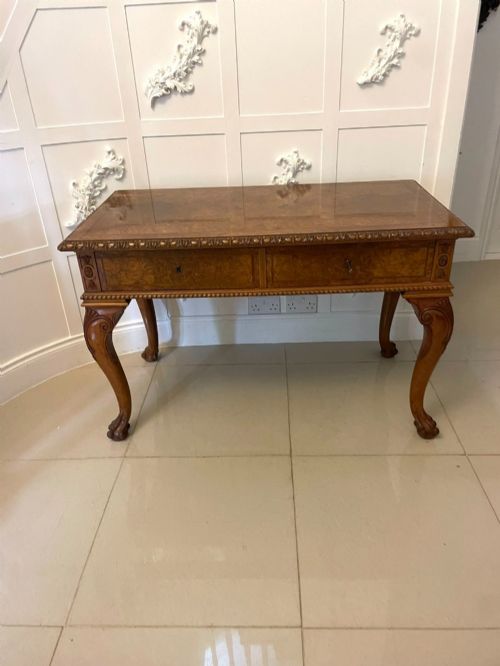
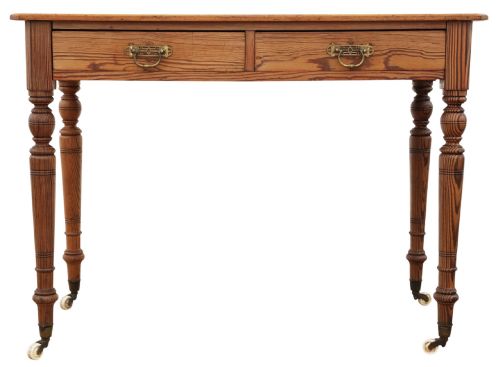
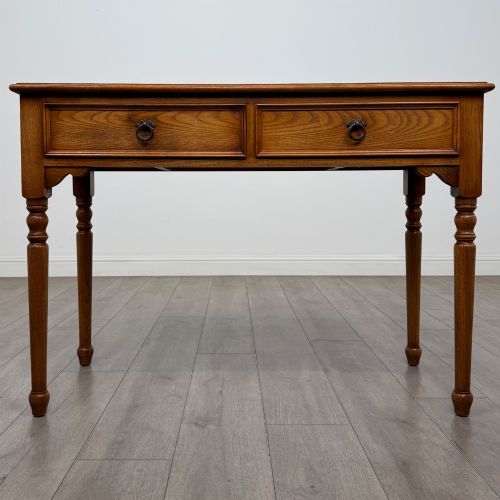
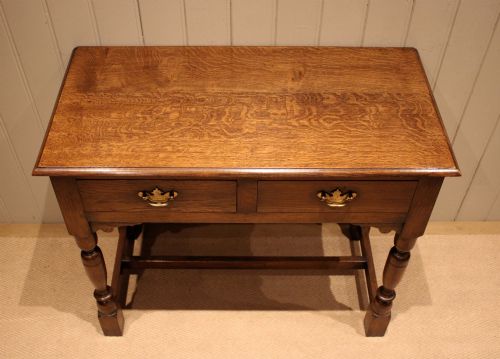
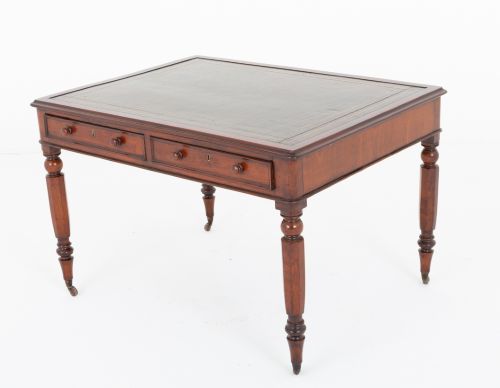
- A lighter table form with integrated drawers, functioning primarily for correspondence rather than heavy archival storage. They often stand on slender turned or reeded legs.
- Bureau
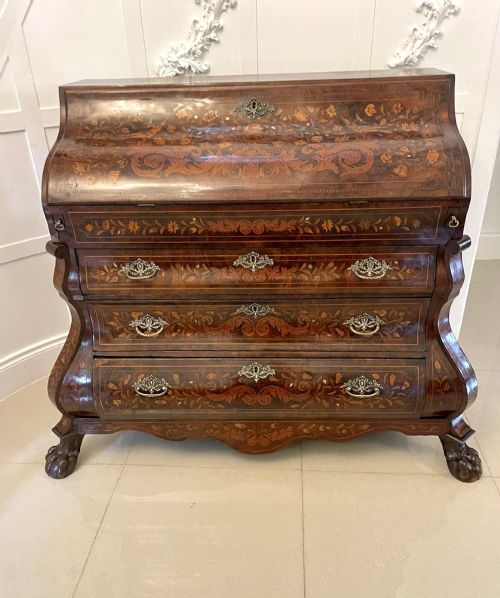
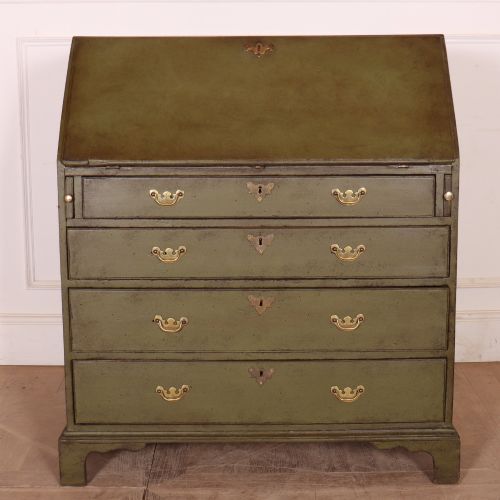
- A desk style featuring a hinged fall-front that opens to reveal an internal arrangement of small drawers and pigeonholes. When closed, it conceals all working materials.
- Davenport desk
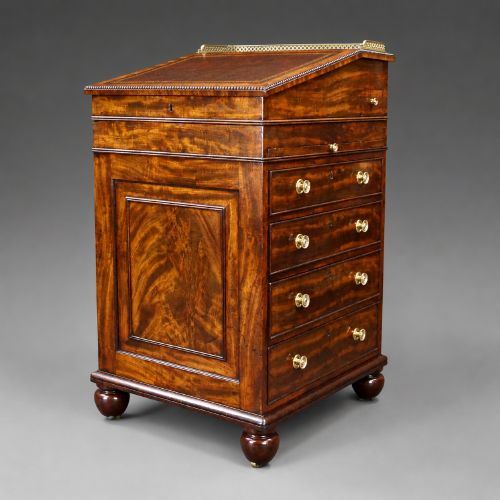
- A compact writing box fitted with a sloping, often leather-lined lid and side drawers. They frequently incorporate hidden compartments or pen trays.
- Lap desk
- A portable writing box equipped with secret drawers and folding surfaces for travel use. Examples in coromandel or mahogany demonstrate high levels of portable cabinetry skill.
Frequently Asked Questions
What is a partners desk?
A partners desk is a large freestanding writing table designed with drawers and cupboards on both sides so two individuals can work opposite each other. These pieces form substantial centrepieces in studies and libraries.
They appear in substantial timbers such as mahogany and oak, often fitted with numerous drawers to accommodate shared administrative tasks.
How do I identify a Victorian desk?
Victorian desks span the nineteenth century and typically employ dense timbers like mahogany, walnut, or oak, often featuring machine-made dovetails and castors. Stylistic cues range from heavy carved library tables to arts and crafts ash pieces.
Interior fittings and drawer configurations vary widely, reflecting the shifting domestic and office requirements of the period.
What is a lap desk?
A lap desk is a portable writing box designed for travel, featuring a sloping lid and internal secret drawers for stationery and ink. Cabinetmakers constructed them in fine woods like coromandel and mahogany.
Many incorporate brass binding and specialised locking mechanisms to protect contents during transit.
Where were writing tables used?
Writing tables served primarily for correspondence, household accounts, and light reading in domestic drawing rooms and studies. Their lighter construction distinguished them from heavy archival pedestals.
They rely on single or multiple drawers placed beneath the writing surface to hold pens, paper, and ink.