

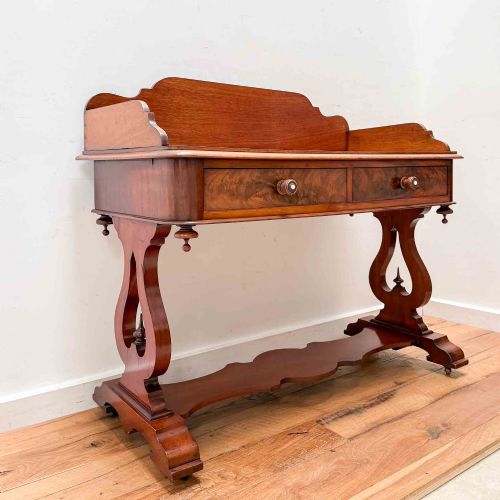


Gallery Back Desk
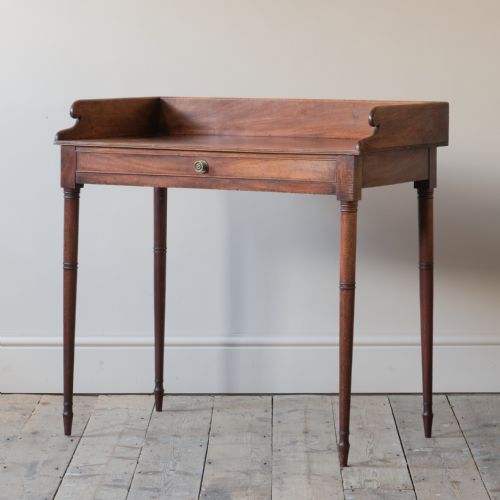
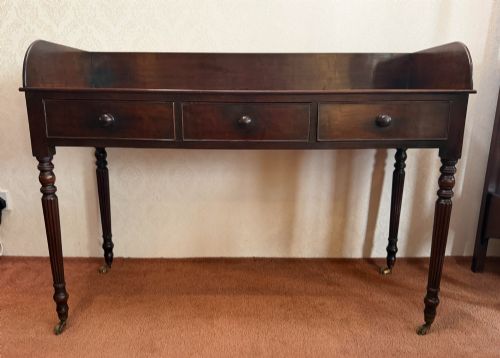
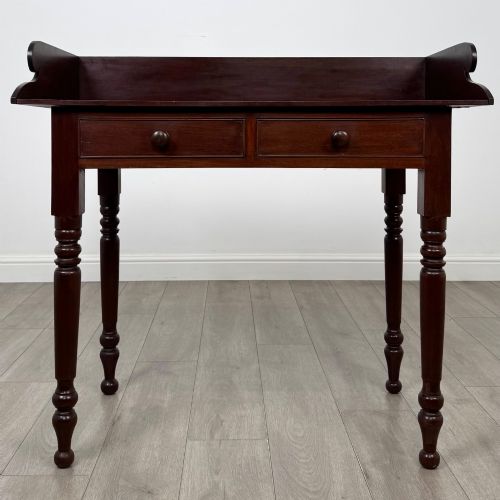
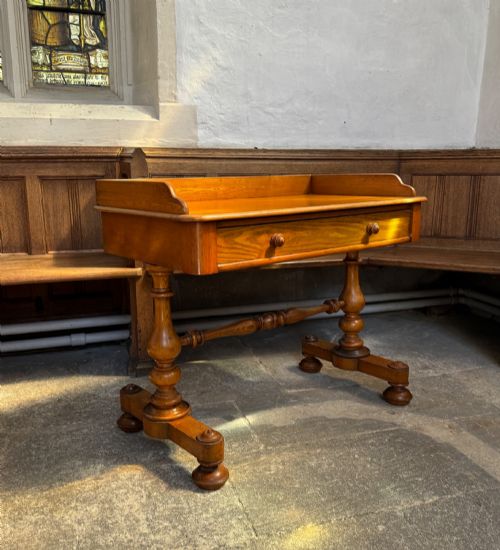
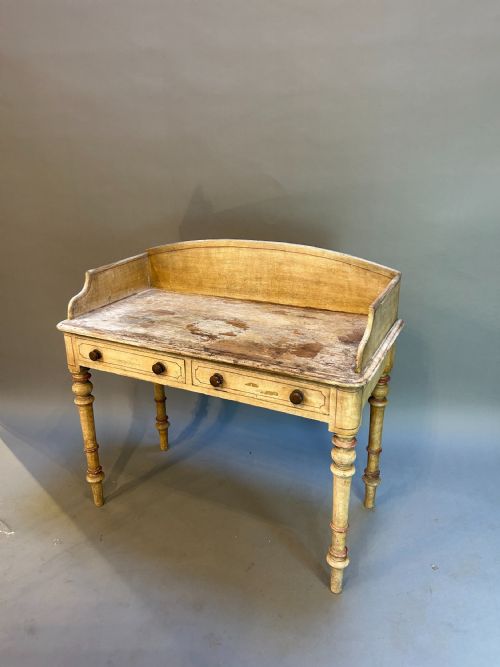
A gallery back desk brings period charm and practical order to a room, offering a raised rear ledge to keep papers and pens secure.
Gallery Back Desk
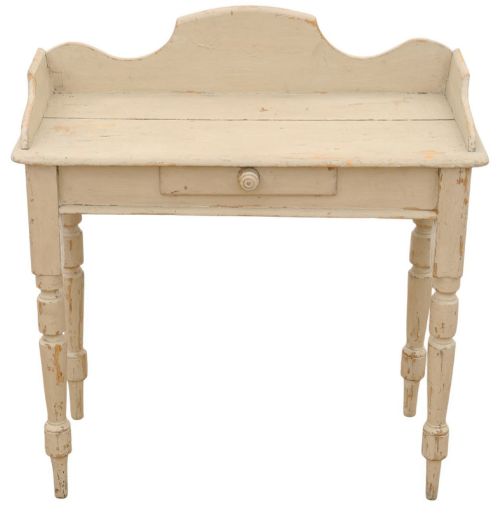
A gallery back desk combines a writing surface with a raised wooden, tile, or brass upstand at the rear. When you search for a gallery back desk, you encounter pieces that served various domestic functions, from formal writing tables to dressing tables and washstands adapted for everyday use.
The pieces listed span the Georgian, Regency, Victorian, and Edwardian periods, alongside nineteenth-century and twentieth-century examples. Formats range from compact side tables with simple three-quarter galleries to elaborate Carlton House desks and Dickens style writing desks with integrated stationery compartments.
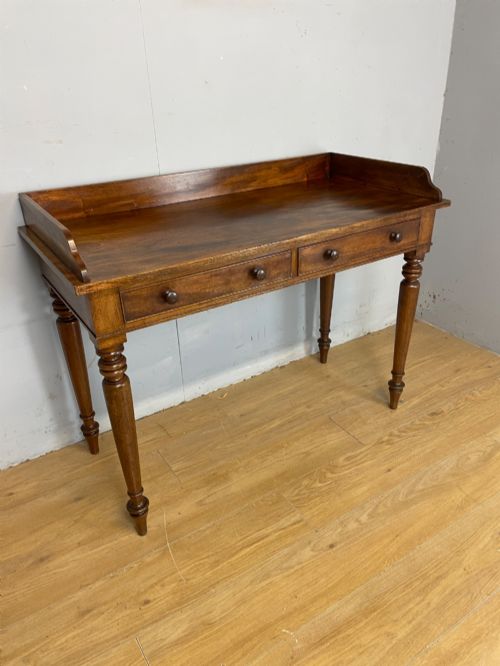
Mahogany is the predominant timber across these eras, accompanied by walnut, pine, oak, and painted wood finishes. Many incorporate leather inset tops, brass details, and multiple drawers, reflecting the functional demands of nineteenth-century writing and household organisation.
How they were made
Cabinet makers constructed these desks primarily using solid hardwoods such as mahogany and walnut, alongside utility timbers like pine and oak for secondary framing. Flame mahogany veneers frequently feature on drawer fronts and primary surfaces, showing careful grain selection.
Joinery techniques include finely dovetailed drawer construction and turned legs or tapering supports. Raised galleries are integrated directly into the upper structure or attached securely as a three-quarter surround, sometimes incorporating tiled sections or brass galleries to hold stationery.
Listings feature pieces spanning the Georgian, Regency, Victorian, and Edwardian periods, constructed predominantly in mahogany, walnut, pine, and painted wood.
What varies in quality
Quality rests in the selection of timber and the crispness of the cabinet work, particularly in the figuring of mahogany veneers and the execution of inlaid details. Superior pieces display harmonious proportions and careful attention to secondary timbers used within the drawer linings.
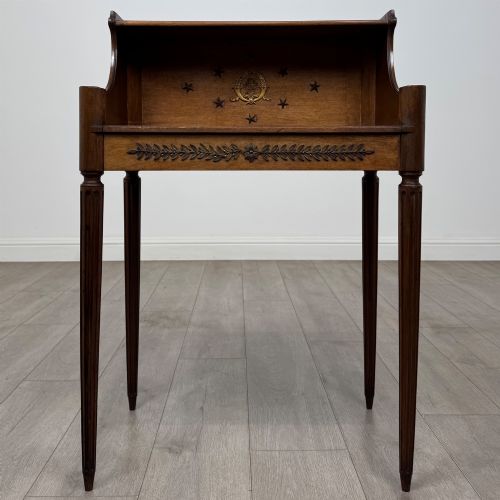
The integration of the gallery back itself marks a distinction in craftsmanship, ranging from simple applied upstands to complex tiered stationery compartments with fitted pigeonholes and drawers. Original brass hardware, leather writing inserts, and the overall depth of the surface patina further separate standard utility pieces from finer examples.
Maples·George Hepplewhite·Charles Bevan·Heal & Sons
The Gallery Back Desk Glossary
- Gallery back
- A raised railing, ledge, or tier attached to the rear and sides of a desk or table top. This feature prevents items from sliding off and often incorporates small compartments for stationery.
- Carlton House desk
- A distinctive nineteenth-century writing desk featuring a curved, low superstructure of drawers and pigeonholes wrapping around the rear and sides of the writing surface. The design is historically associated with George Hepplewhite.
- Kneehole
- A central recessed space beneath a desk or dressing table designed to accommodate the user's legs, flanked by banks of drawers. This arrangement provides stable support while maintaining accessible storage.
- Inlaid
- A decorative technique where contrasting woods, brass, or other materials are set into the primary surface of the timber to create patterns. It appears on drawer fronts and borders.
- Upstand
- A vertical barrier rising from the rear edge of a furniture top, functionally similar to a gallery. It frequently appears on washstands and dressing tables to protect walls.
Gallery Back Desk: Frequently Asked Questions
What is a gallery back desk?
A gallery back desk is a writing table featuring a raised wooden, brass, or tiled ledge along the rear edge. This elevated boundary prevents papers and stationery from falling behind the furniture.
Such desks appear across Georgian, Regency, Victorian, and Edwardian periods, serving as practical writing spaces or refined parlour furniture.
How were these desks used?
These desks served for private correspondence, record keeping, and general household administration. The raised gallery kept writing implements, letters, and small books neatly contained.
Many designs double as dressing tables or washstands, demonstrating the multifunctional nature of nineteenth-century furniture.
How do I identify the period?
Period identification relies on timber selection, structural proportions, and hardware styles. Georgian and Regency pieces often show clean classical lines in solid mahogany, while Victorian examples frequently incorporate heavy mouldings, rich patinas, or painted finishes.
Edwardian pieces tend to feature lighter walnut framing and specialised stationery fittings like the Dickens style desk.
Where should I place one?
A gallery back desk functions effectively against a wall or freestanding in a room, as the decorative rear gallery provides a finished appearance from all angles. Their compact proportions make them suitable for studies, bedrooms, and living spaces.
Pairing them with a simple period chair creates a functional workspace that complements traditional and eclectic interiors.