
Turned Leg Dressing Table
A turned leg dressing table brings warmth and functional surface space to a bedroom, combining sturdy timber construction with the soft profile of turned supports.
Turned Leg Dressing Table
When you search for a turned leg dressing table, you encounter antique pieces primarily spanning the Georgian, Victorian and Edwardian eras, alongside rustic farmhouse and country revival forms. These items often overlap in form with writing tables, washstands and side tables, reflecting periods when bedroom furniture served multiple daily purposes.
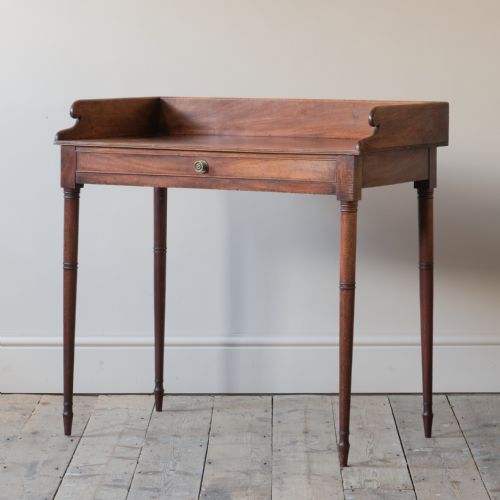
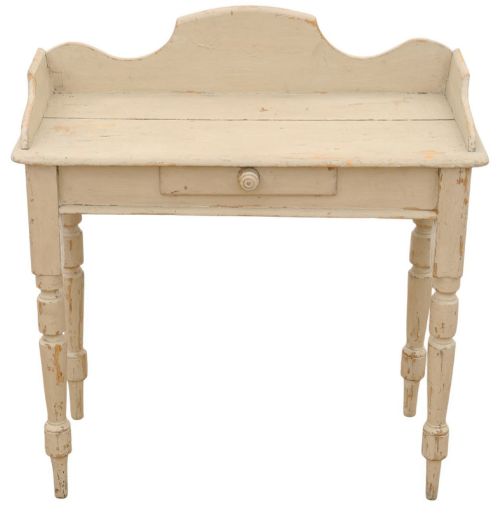
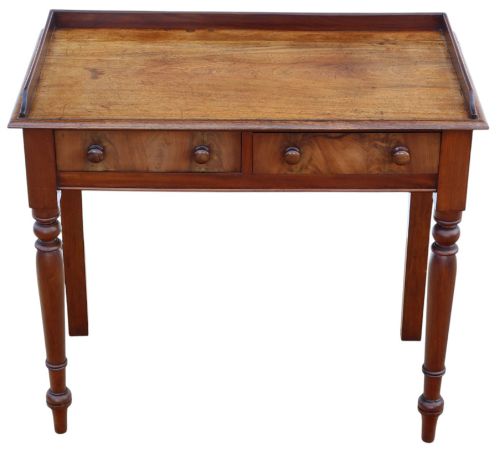
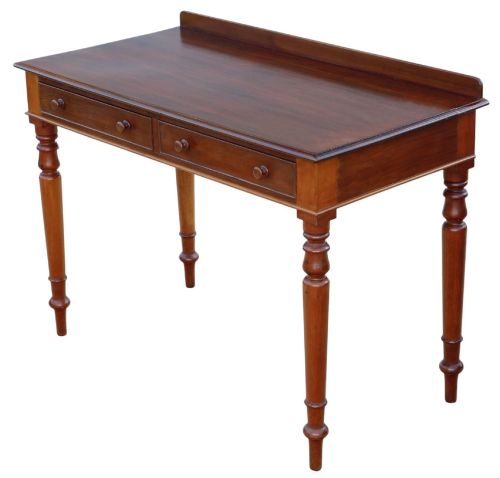
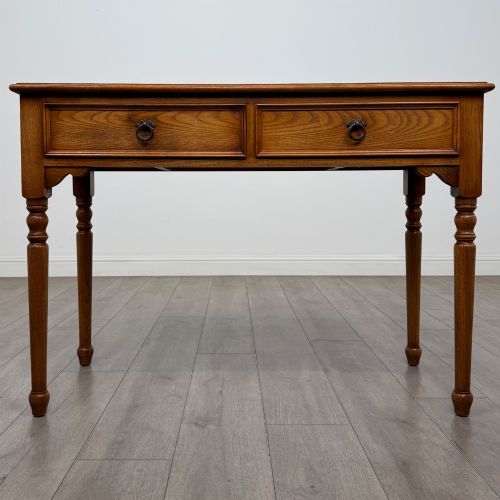
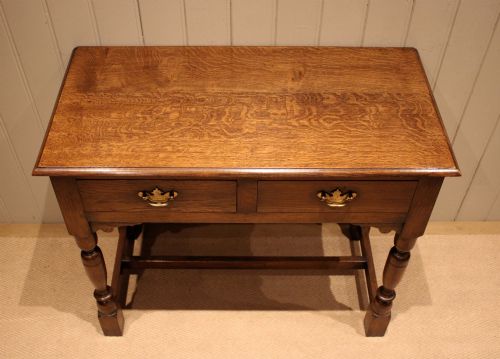
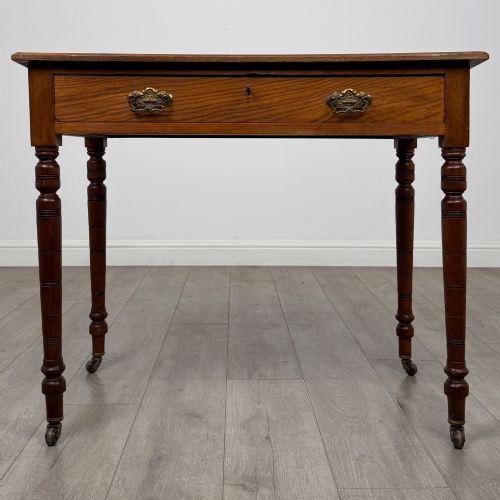
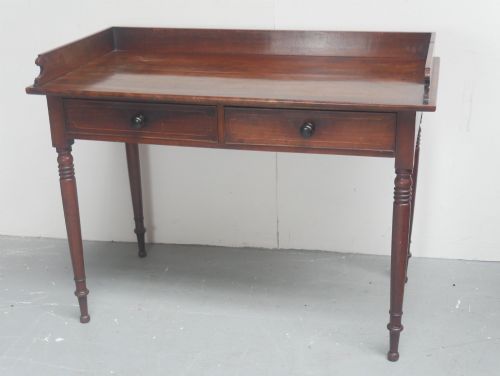
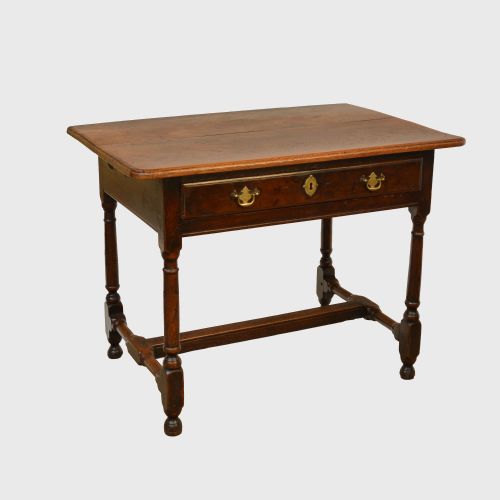
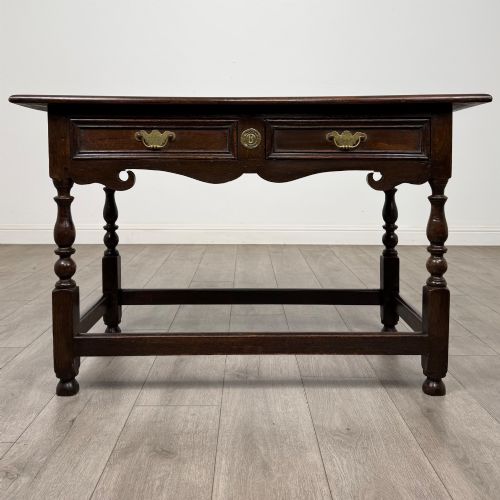
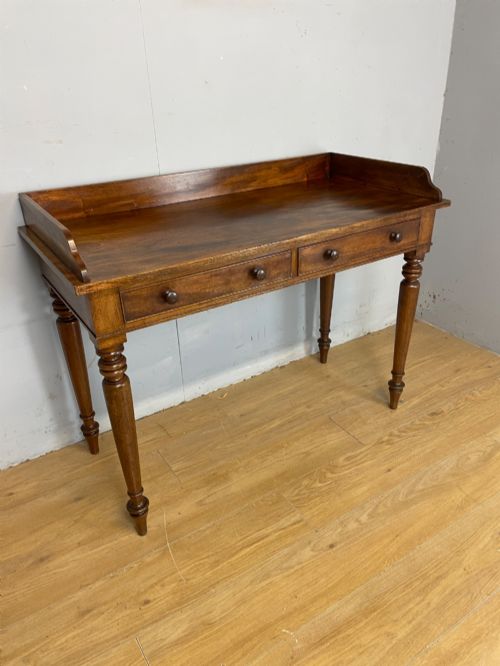
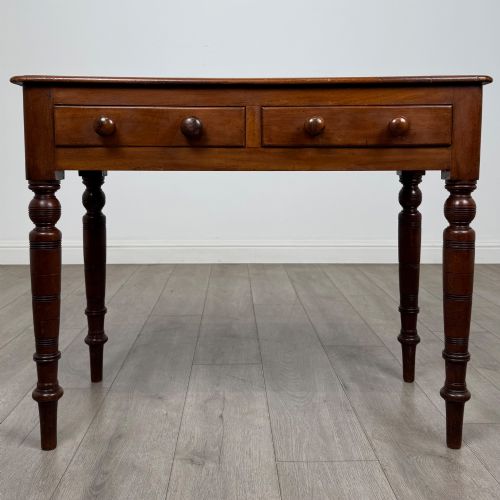
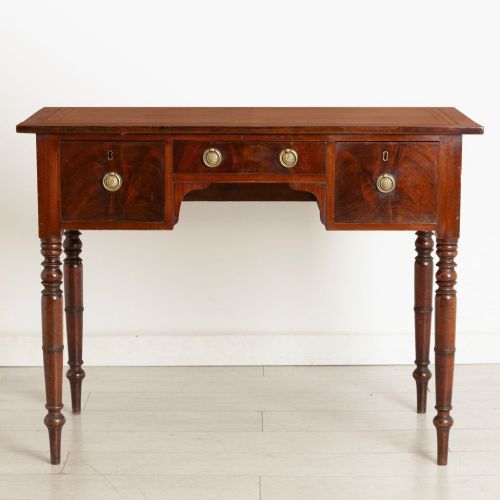
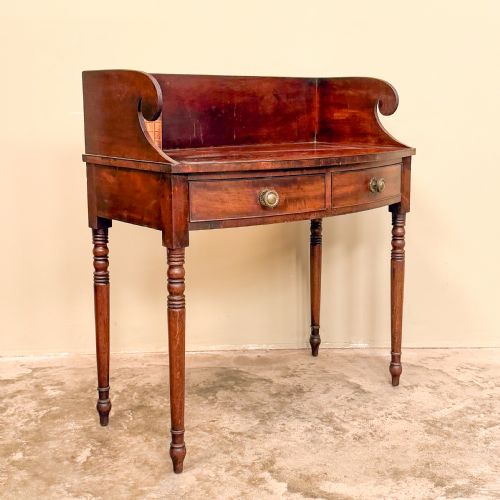
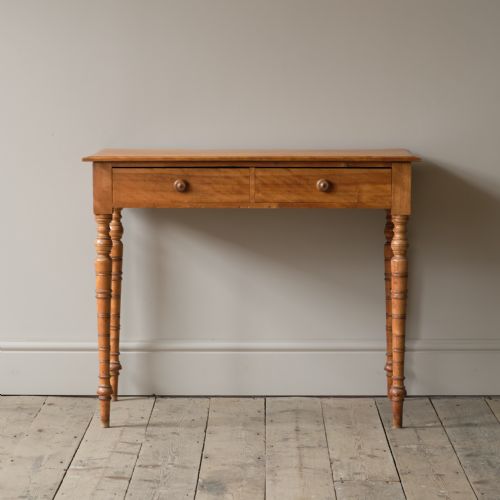
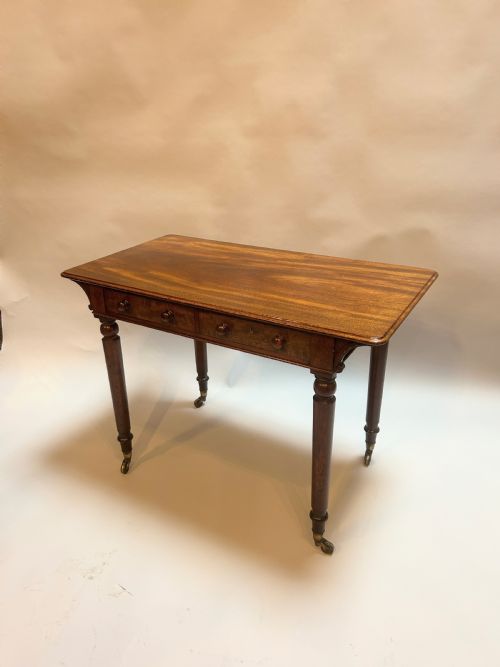
The turned leg dressing table most frequently met on this page dates from the nineteenth century in mahogany, oak or pine, carrying two drawers and characteristic rounded supports. Examples range from simple country pine pieces in original paint to refined Georgian and Victorian mahogany designs with leather top inserts or brass handles.
How they were made
Cabinet makers built these tables using solid timbers such as mahogany, oak, walnut and pine, often combining secondary woods like elm or birch for internal drawer construction. Wood turners shaped the legs on a lathe to create cylindrical, barley twist or bobbin profiles that elevated the carcase.
Surfaces received various finishes including clear polish to show the grain, dark ebonising, or layers of paint that now survive in original or stripped states. Brass fittings such as knobs and drop handles completed the hardware, secured to dovetailed drawers.
Turned Leg Dressing Table Retail Price Guide 2026
Typical asking prices for turned leg dressing table among the pieces listed under this phrase on Sellingantiques today, from the lower quarter to the upper quarter. They describe what is for sale here now, not the wider market.
Listings feature woods spanning mahogany, oak, pine, walnut, satin birch, elm, yew and rosewood across multiple centuries.
What varies in quality
The choice of timber sets the baseline for quality, distinguishing dense hardwoods like mahogany and figured walnut from utilitarian softwoods like pine, though painted finishes on pine carry their own decorative merit. Finer pieces demonstrate superior joinery in the drawer construction, such as tight dovetailing and the retention of original brass hardware or leather writing inserts.
Proportion and execution of the turned legs dictate the overall elegance of the table. Crisp lathe work and well-balanced dimensions separate standard workshop production from exceptional cabinet maker output.
Heal and Son·Gillows·J A Mein
The Turned Leg Dressing Table Glossary
- Turned leg
- A wooden support shaped on a lathe by rotating the timber against cutting tools. This technique produces symmetrical columns, spindles, or bobbin shapes.
- Dovetail
- A traditional wood joint formed by interlocking wedge-shaped fingers. It provides exceptional tensile strength for drawer construction.
- Washstand
- A piece of furniture designed for holding a basin and jug for personal washing. Many share dimensions and turned legs with dressing tables.
- Barley twist
- A type of turning that resembles a spiral rope or screw thread. It gained popularity during the seventeenth century and reappeared in later revival periods.
- Carcase
- The main body or structural shell of a piece of furniture, excluding doors, drawers and legs.
Turned Leg Dressing Table: Frequently Asked Questions
How do I date a turned leg dressing table?
Dating relies on timber choice, construction methods, and the style of the turned legs. Earlier pieces from the Georgian era often feature fine mahogany and hand-cut dovetails, while Victorian examples frequently utilise heavier proportions in mahogany, walnut, or pine.
Examining the drawer construction and secondary woods provides further clues. Machine-sawn timber and brass screws point towards later nineteenth or early twentieth-century manufacture.
Were these tables originally used for writing?
Many tables served multiple functions in the home, acting interchangeably as writing desks, side tables, and dressing tables. The presence of drawers made them suitable for storing papers, cosmetics, or washing accessories.
Buyers often adapt these pieces to modern uses based on their dimensions and knee clearance. A flat top and comfortable drawer depth allow a dressing table to function effectively as a compact desk.
What is the difference between oak and mahogany versions?
Oak examples tend to offer a rustic, grained appearance associated with country houses and earlier periods like the seventeenth and eighteenth centuries. Mahogany provides a smoother, denser surface often finished with a dark polish for formal rooms.
Both timbers provide durability, but they project distinct visual weights. Oak suits vernacular and farmhouse interiors, whereas mahogany aligns with Regency and Victorian formal aesthetics.
How do I care for an antique wood surface?
Maintaining antique wood involves dusting with a soft, dry cloth and avoiding modern silicone-based sprays. Periodic application of quality beeswax feeds the timber and protects the finish from drying out.
Keeping the table away from direct sunlight and radiators prevents the wood from warping or splitting. Gentle care preserves the original patina built up over generations of use.