
Stationery Cabinet Desk
A stationery cabinet desk brings order to letters and ledgers, combining a compact writing surface with dedicated compartments for paper and correspondence.

Identifying a stationery cabinet desk
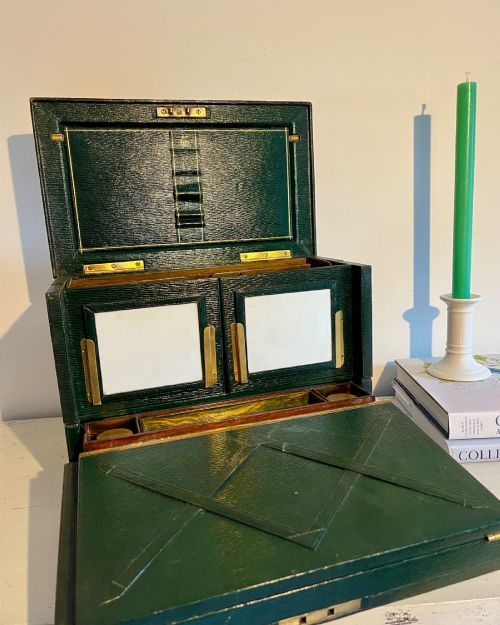
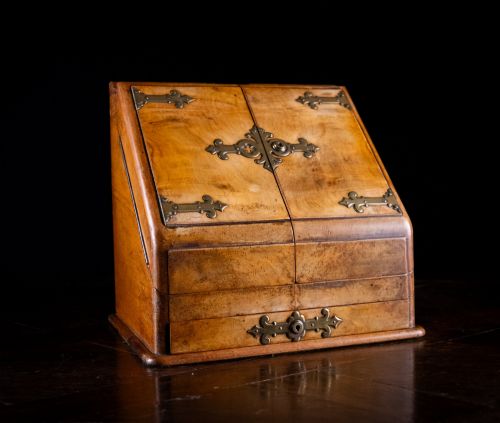
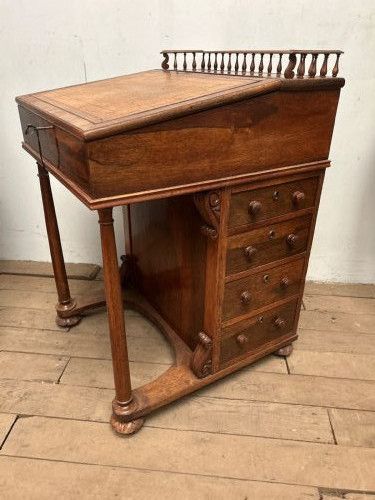
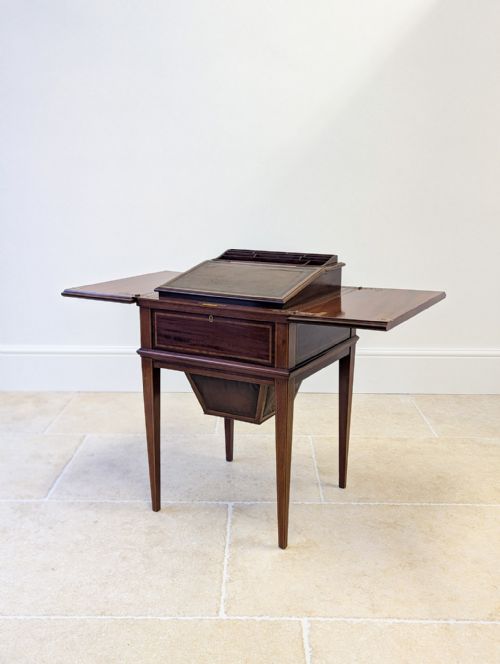
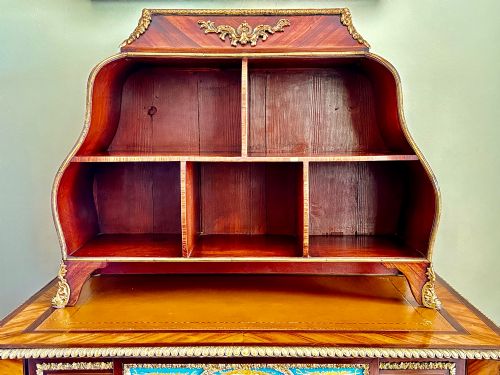
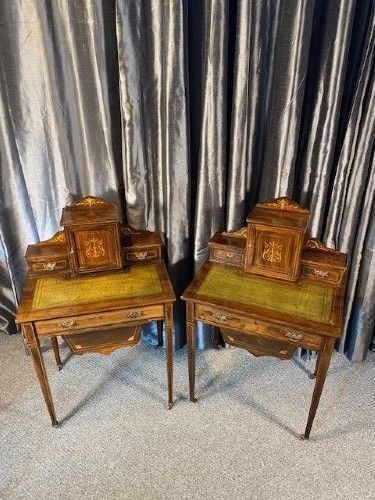
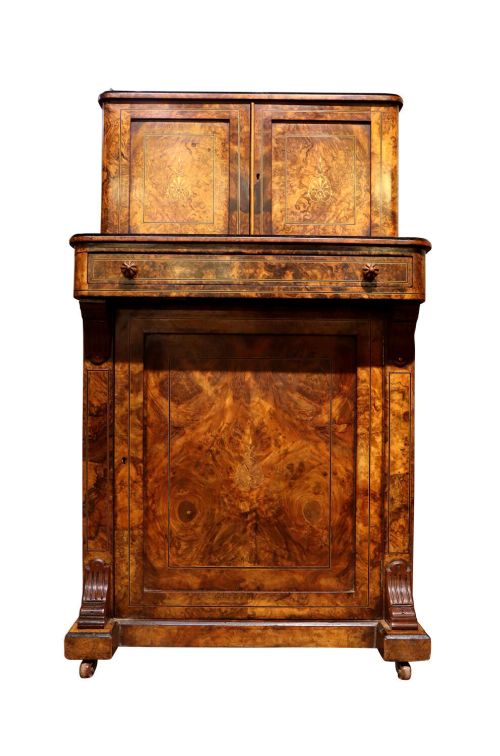
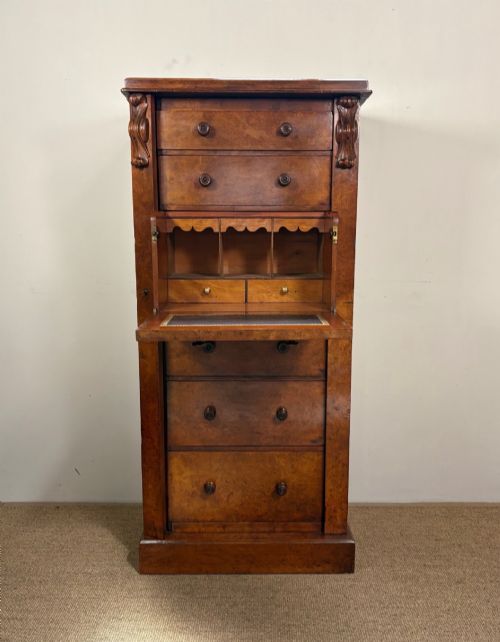
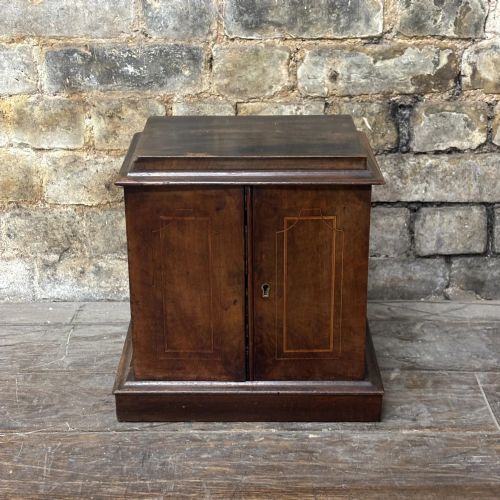
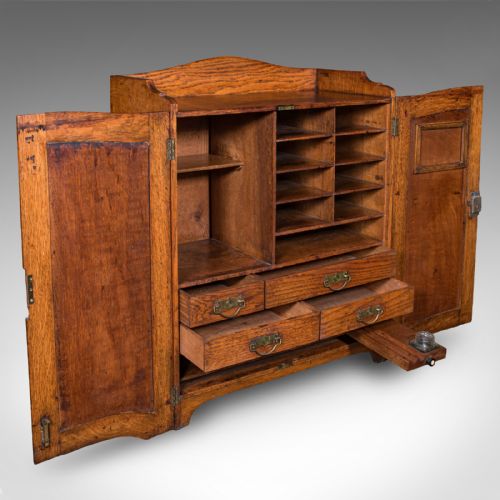
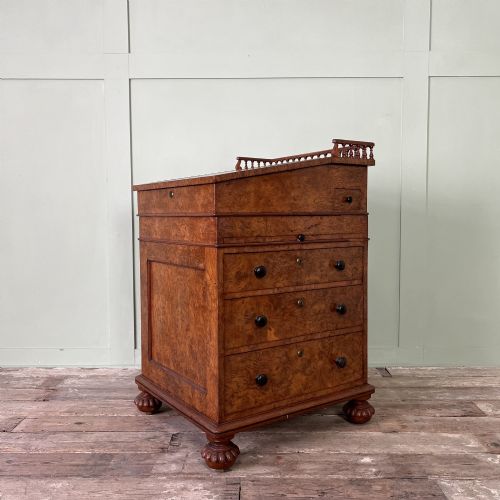
A stationery cabinet desk brings together compact writing surfaces and dedicated compartments for paper, letters and ledgers. Buyers searching for a stationery cabinet desk will encounter forms ranging from desktop organisers to large Davenport writing desks and campaign tables.
The pieces seen here span the Victorian, Edwardian and nineteen-hundred periods, alongside Anglo-Indian styles. Materials include mahogany, rosewood, burr walnut, oak, maple, teak, hardwood, brass and leather.
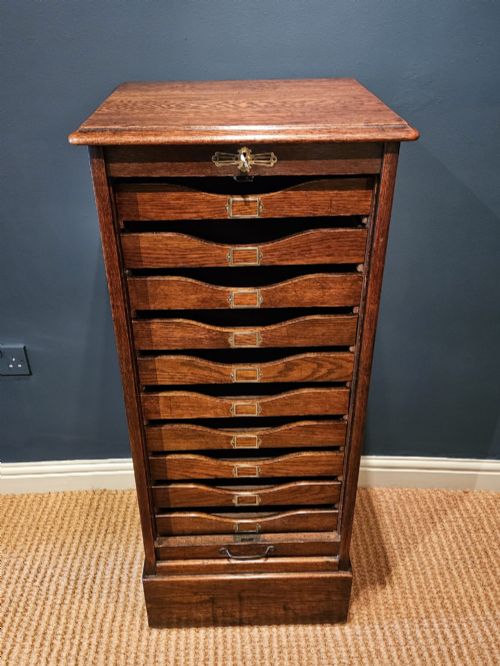
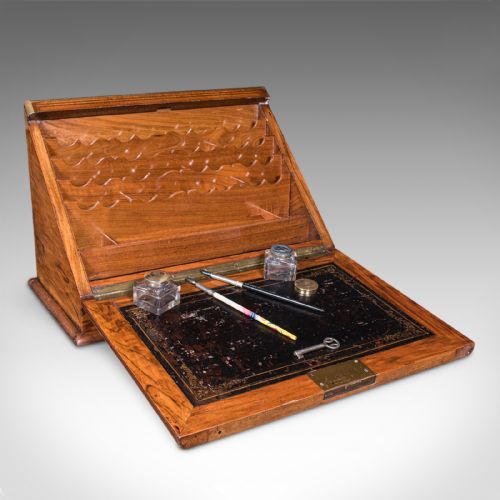
Desktop stationery cabinets designed for paperwork sit alongside full writing furniture incorporating drawers and sloping writing surfaces. Many examples feature integrated calendars or tambour fronts to conceal correspondence.
Materials and construction
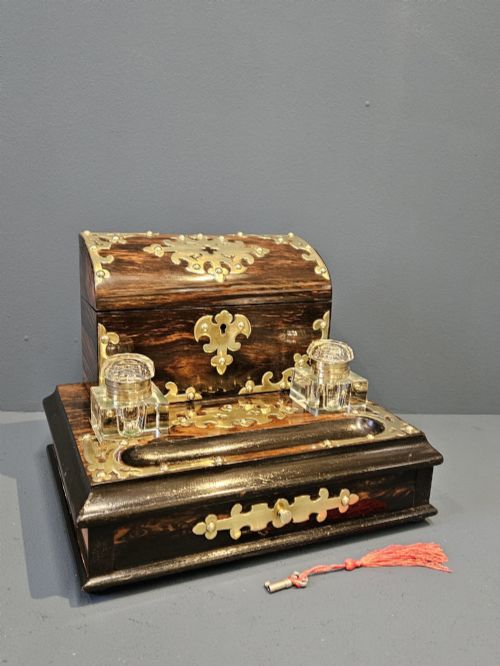
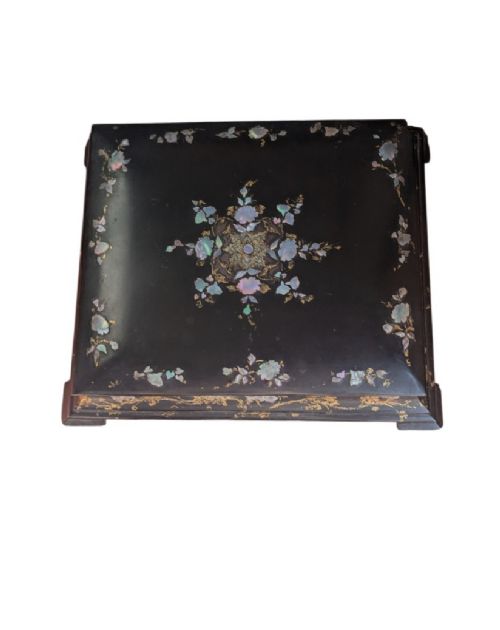
Cabinet makers utilised dense hardwoods such as mahogany, rosewood, burr walnut and oak to build these pieces. Decorative surfaces often displayed rich timber grain, complemented by brass handles, hinges and bound edges.
Leather inserts provided durable writing surfaces on desk tops and sloping lids. Carved ornamentation appeared on Anglo-Indian pieces, while tambour shutters and pop-up mechanisms demonstrated complex internal joinery.
Retail Price Guide 2026
Typical UK retail prices for stationery cabinet desk, calculated from the Sellingantiques database of over a million retail prices indexed since 2003. This retail price guide relies exclusively on Sellingantiques data; no external sources or auction records are used, so the figures do not describe the wider market.
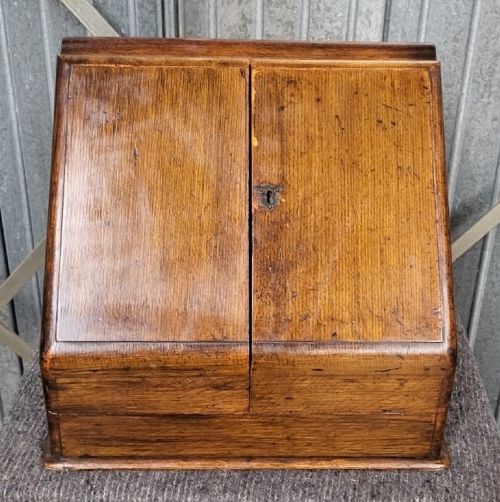
Listings feature brass-bound campaign desks, burr walnut Davenport writing tables, and oak desktop cabinets fitted with calendars.
Judging quality and character
Quality rests in the selection of timbers like burr walnut and rosewood, where figured grain patterns dictate the visual weight of the piece. Superior examples display precise dovetail joinery in the internal stationery compartments and drawer linings.
Hardware execution separates standard items from finer works, visible in heavy cast brass mounts and fully integrated locking mechanisms. The complexity of internal fittings, such as calendars, secret drawers and pop-up mechanisms, marks the ambition of the maker.
Asprey London and Co·Asprey
The Stationery Cabinet Desk Glossary
- Davenport
- A compact form of writing desk featuring a sloping lid above a pedestal of side drawers. This style gained popularity during the Victorian era for boudoir and parlour use.
- Tambour
- A flexible shutter formed of narrow strips of wood glued to canvas, allowing it to slide smoothly around a curved track to enclose stationery compartments.
- Campaign desk
- Portable writing furniture designed for travel, constructed with recessed brass carrying handles and protective corner brackets to withstand transit.
- Pop-up
- An internal mechanism that raises stationery racks or letter slots automatically when the main writing lid or top cover is lifted.
Frequently Asked Questions
What is a stationery cabinet desk?
A stationery cabinet desk is a piece of furniture designed to hold writing materials, letters and ledgers while providing a dedicated surface for composition.
These items range from portable desktop boxes with internal pigeonholes to large Davenport writing desks and campaign pieces.
How do I use one today?
These cabinets and desks serve well in modern studies or living spaces for organising mail, notebooks and modern correspondence.
The writing slopes and internal compartments accommodate laptops, stationery and paperwork while keeping surfaces clear.
What periods do these pieces date from?
The pieces seen here primarily date from the Victorian and Edwardian eras, alongside items from around nineteen hundred.
Construction styles reflect the prevailing tastes of the nineteenth and early twentieth centuries, utilising traditional timbers and brass hardware.
What timbers were used?
Makers constructed these cabinets using hardwoods such as mahogany, burr walnut, rosewood and oak. Maple, teak and general hardwoods also appear across the surviving pieces.
Decorative veneers and figured grain patterns were chosen to highlight the visual presence of the wood.