
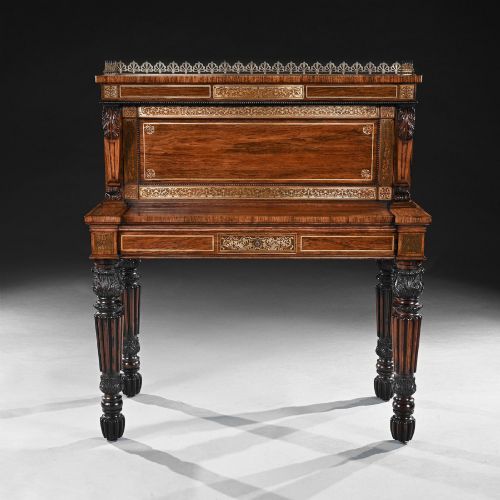
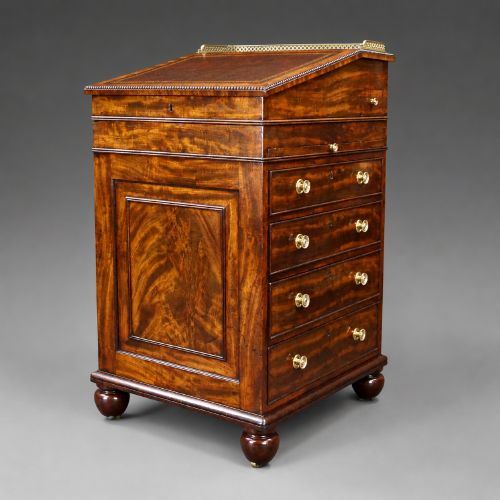
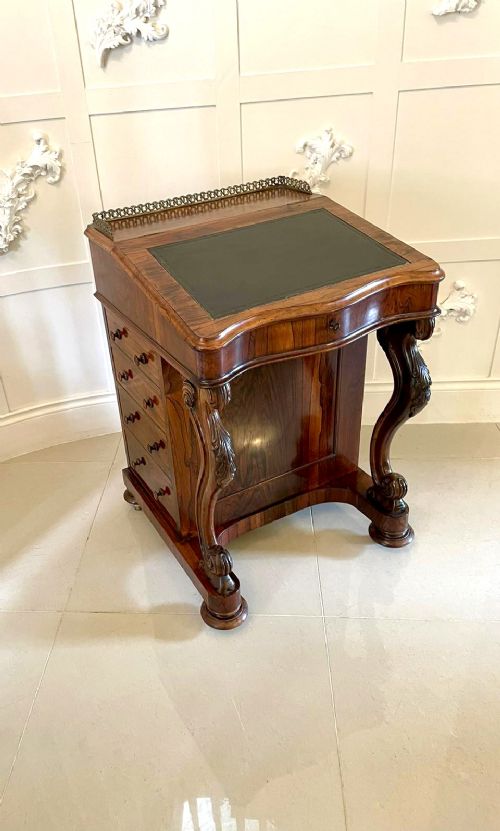
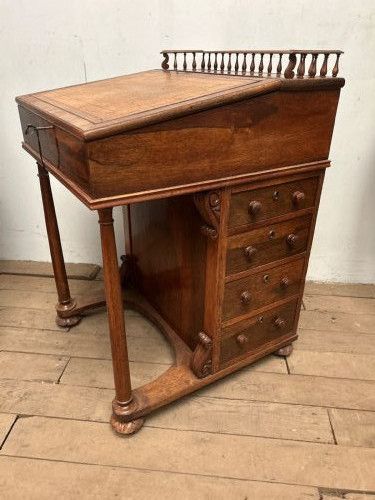
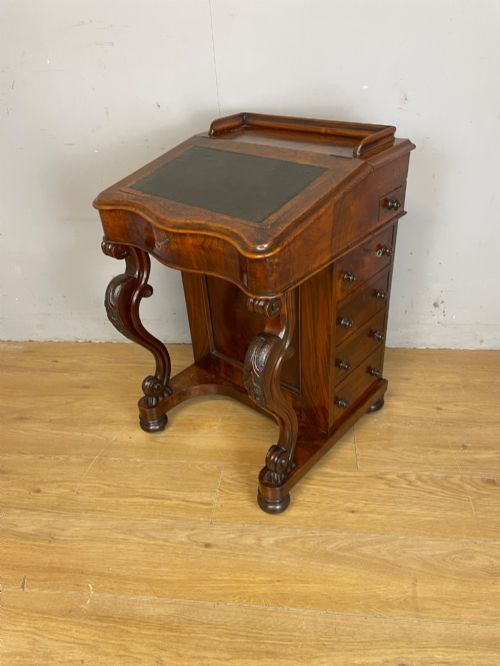
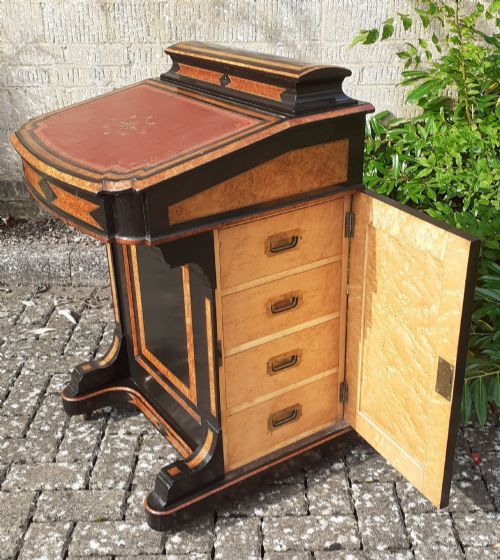
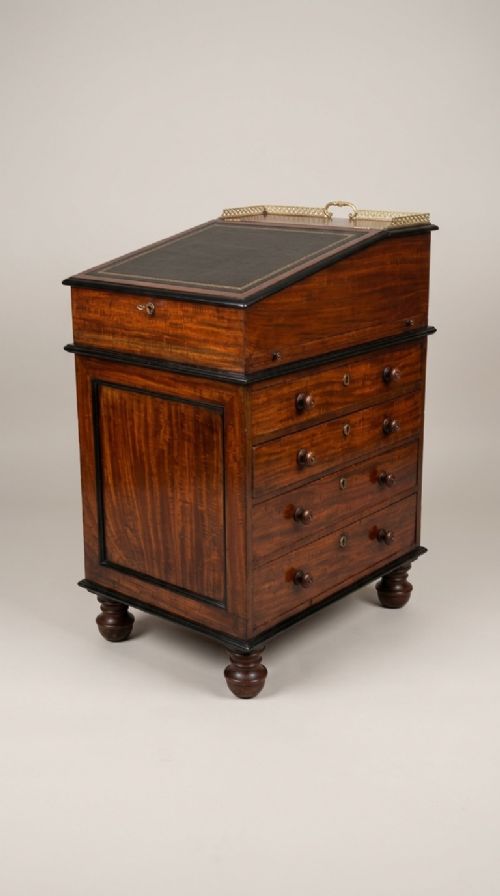
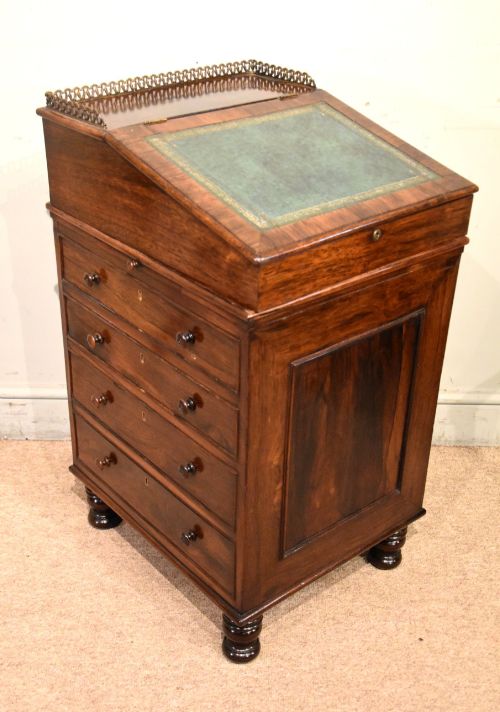


Davenport Desk
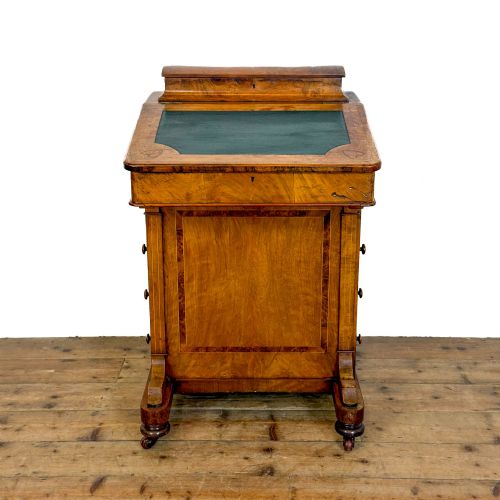
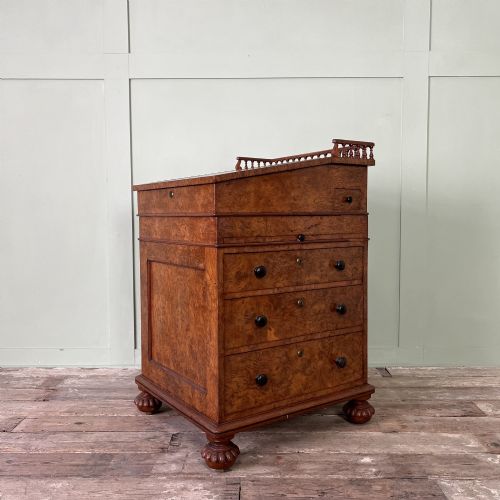
These davenport desk pieces are compact writing cabinets offering fitted drawers and sloping tops, prized for combining small footprints with ample storage.

What a davenport desk is
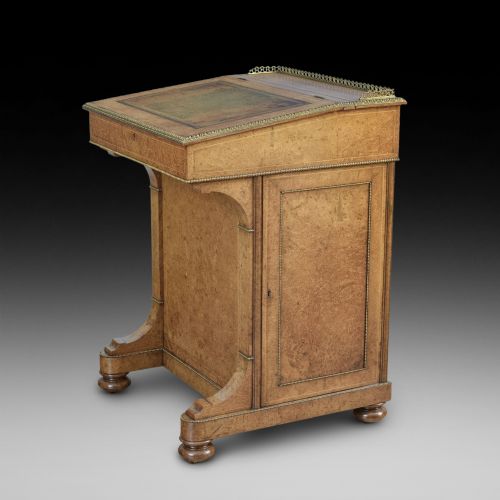
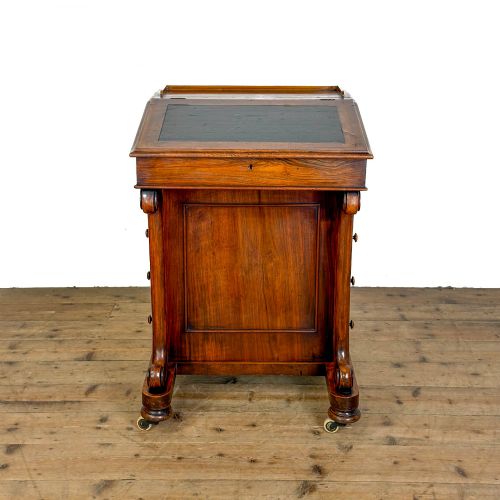
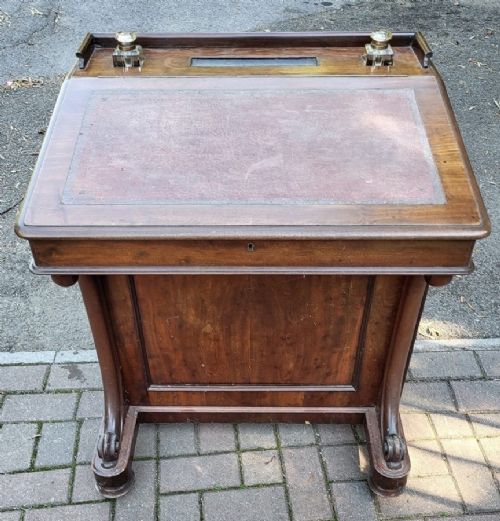
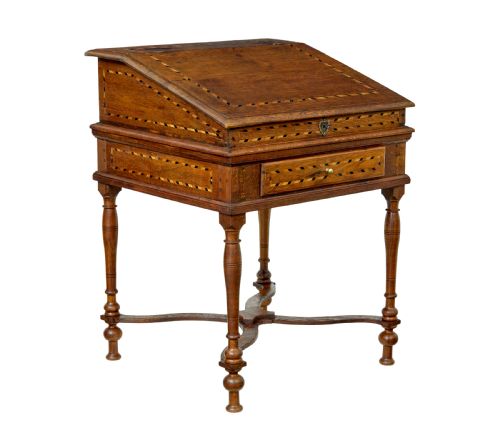
When you search for a davenport desk, you encounter compact writing cabinets designed to provide a sloping writing surface above a set of drawers. These pieces typically feature a sloped top, often lined with leather, resting on a pedestal base with drawers positioned to one side.
The versions you are most likely to meet on this page span the Regency, William IV, and Victorian periods, alongside later Edwardian examples. Materials range from mahogany and rosewood to burr walnut and oak, reflecting the stylistic shifts from the early nineteenth century onwards.
Originating as small, portable writing furniture, these desks evolved into substantial pieces of interior joinery. The form persists across multiple decades, showing variations in drawer arrangements and decorative inlay while maintaining the core compact pedestal shape.
How they were made
Cabinetmakers utilised solid timbers and decorative veneers, applying mahogany, rosewood, burr walnut, and oak over robust carcases. Surfaces frequently incorporated brass hardware, locks with keys, and sliding leather writing slopes.
Construction involved precision joinery to accommodate side drawers, stationery compartments, and occasionally pop-up superstructures or swivel mechanisms. Timber selection focused on figured grains, particularly in burr walnut and flame mahogany examples.
Retail Price Guide 2026
Typical UK retail prices for davenport desk, calculated from the Sellingantiques database of over a million retail prices indexed since 2003. This retail price guide relies exclusively on Sellingantiques data; no external sources or auction records are used, so the figures do not describe the wider market.
Listings feature mahogany, rosewood, burr walnut, and oak across Regency, William IV, Victorian, and Edwardian periods.
What varies in quality
The standard of timber selection and veneer matching defines the upper tier of these pieces, where finely figured burr walnut, flame mahogany, or rosewood show continuous grain patterns across the sloping top and drawer fronts. Lesser examples rely on plain timber or less carefully aligned veneers.
Wilkinson & Son·Gillows·Lebus
The Davenport Desk Glossary
- Pedestal desk
- A writing table or cabinet supported by one or two pedestals of drawers rather than four separate legs. This configuration allows the davenport to maintain a compact footprint while offering substantial internal storage.
- Sloping top
- An inclined writing surface, frequently lined with leather or tooled hide, designed to make handwriting comfortable. It often lifts to reveal a stationery compartment and pigeonholes within.
- Burr walnut
- Timber taken from the wart or burl of a walnut tree, yielding a swirling, highly decorative grain pattern. Cabinetmakers prized this wood for high-status Victorian and nineteenth-century writing furniture.
- Flame mahogany
- A veneer cut from the fork of a mahogany tree where the branches join the trunk, producing a distinctive flickering flame-like pattern. It appears frequently on Regency and William IV examples.
- Pedestal drawers
- A vertical stack of drawers positioned beneath the writing slope on one side of the desk. In traditional forms, drawers on the opposite side are often dummy fronts balancing the design.
Frequently Asked Questions
Where did davenport desks originate?
The form takes its name from a Captain Davenport who commissioned a compact writing desk from Gillows in the late eighteenth century. This initial design prioritised a small footprint and integrated storage for use in restricted spaces.
Over subsequent decades, cabinetmakers refined the proportions, shifting from Regency elegance to the heavier walnut and oak interpretations common in the Victorian era.
How do you use the sliding top?
The sliding leather slope pushes forward to overhang the knees when seated, providing comfortable legroom beneath the compact writing cabinet. Pushing the slope back restores the tidy, upright profile of the desk.
Internal mechanisms often link this sliding action to release the top drawer or reveal hidden compartments concealed within the superstructure.
How do I date a davenport desk?
Dating relies on timber choices, construction techniques, and stylistic markers across different periods. Regency and William IV pieces typically feature flame mahogany or rosewood with restrained brass mounts.
Victorian and later Edwardian examples frequently showcase burr walnut, elaborate inlay, pop-up superstructures, or oak roll-top mechanisms, reflecting changing domestic tastes.
Are all the side drawers functional?
Traditional designs often feature a bank of working drawers on one side and matching dummy drawer fronts on the reverse to maintain a balanced appearance. Freestanding variants sometimes incorporate functional drawers or pigeonholes accessible from multiple sides.
Inspecting the interior of the pedestal clarifies whether the drawer fronts conceal usable storage or serve as decorative panels.