



Inlaid Rosewood Bureau
An inlaid rosewood bureau brings warmth and intricate detail to a room, offering a dedicated writing space finished in rich timber and delicate veneer.

What an inlaid rosewood bureau is
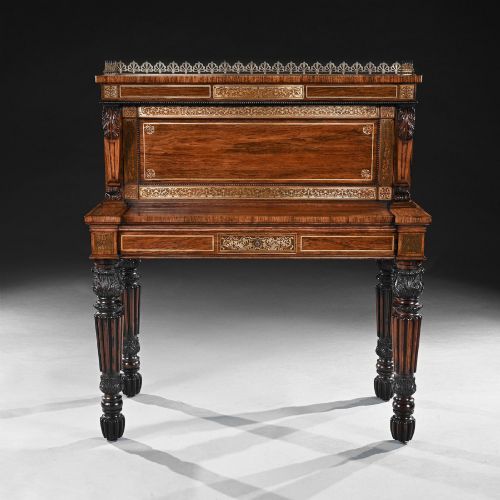
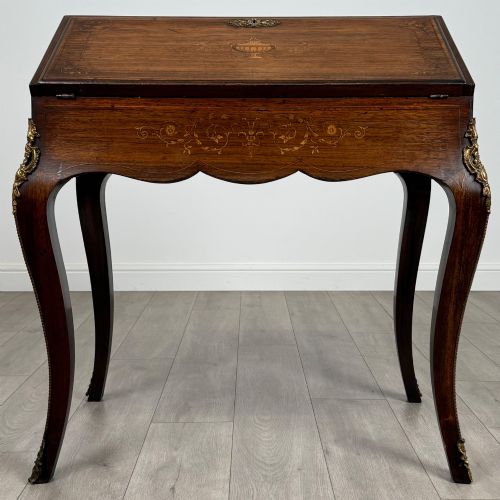
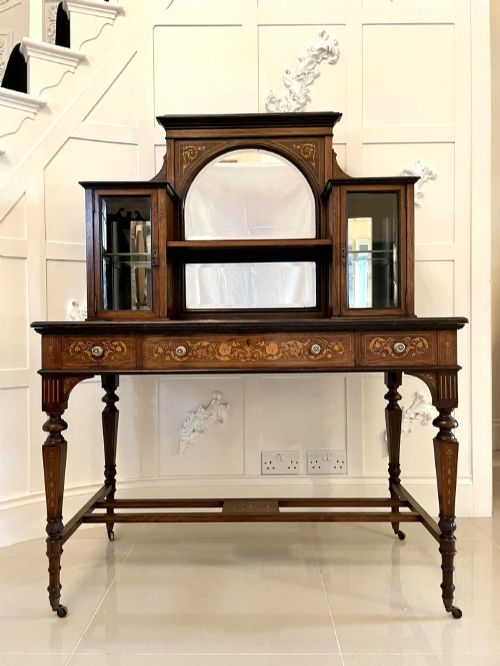
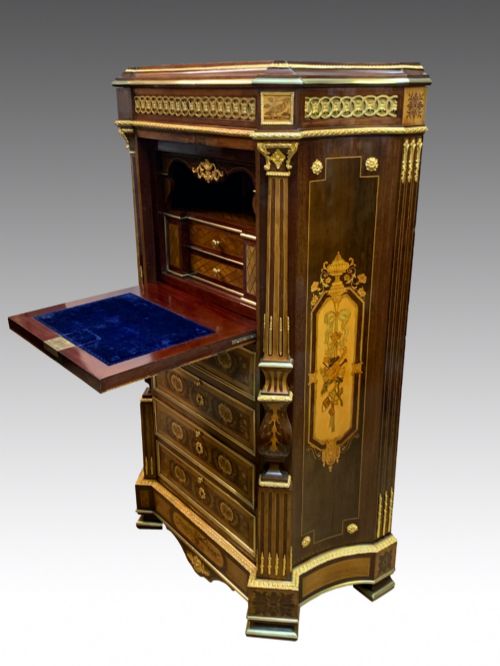
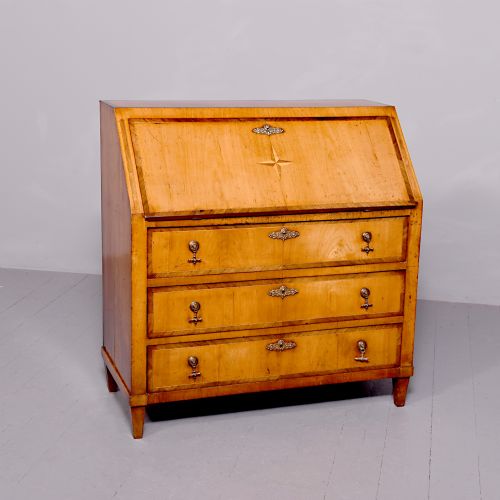
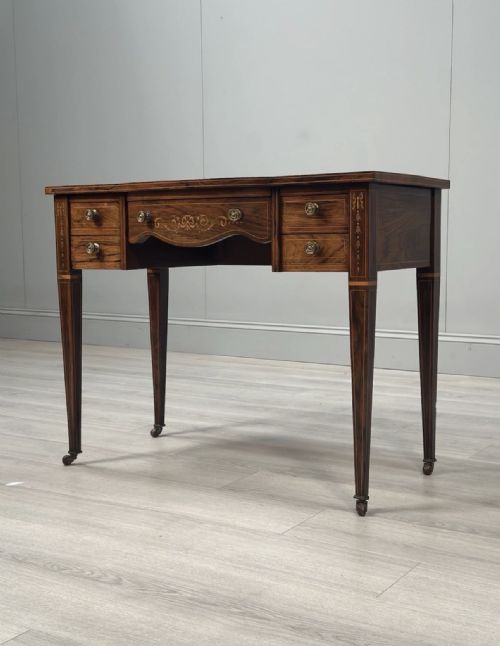
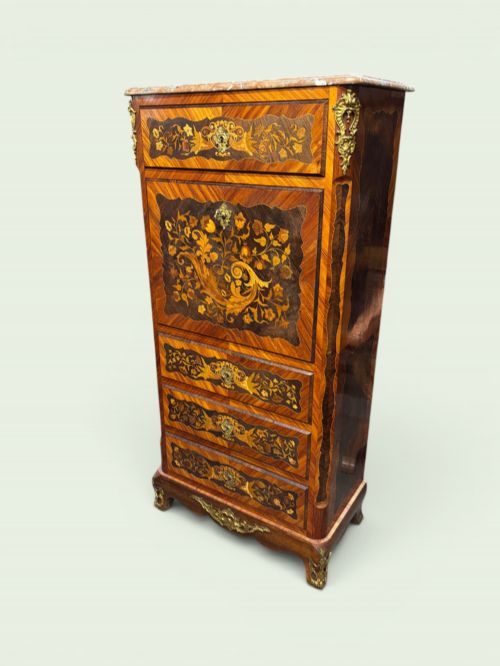
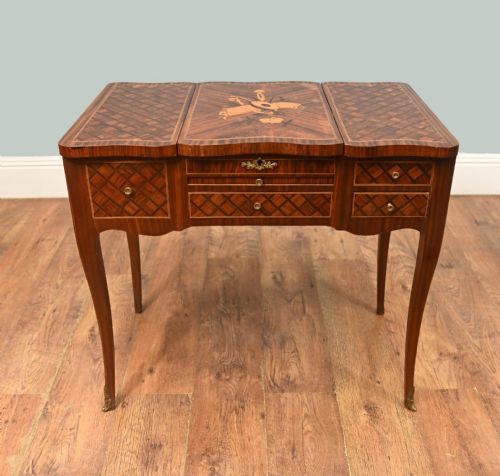
An inlaid rosewood bureau combines a practical writing surface with decorative woodwork, drawing on Victorian, Edwardian, and nineteenth-century traditions. These pieces include compact ladies' writing desks, bonheurs du jour, secretaire abattants, and bureau de dame forms designed for refined correspondence.
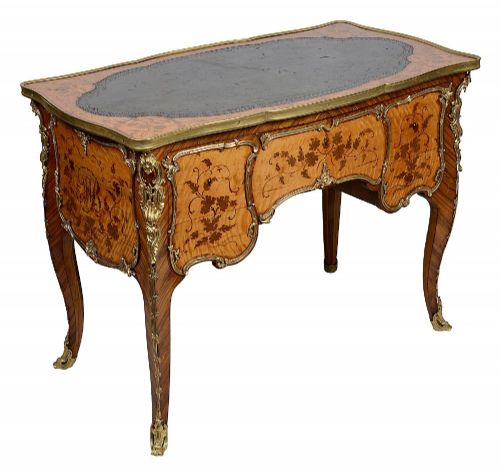
The aesthetic leans heavily towards French Rococo Revival, Louis XV Revival, and Dutch styles, incorporating elaborate marquetry. Pieces range from small cabinet forms to larger writing desks equipped with fitted interiors and storage compartments.
How they were made
Craftsmen built these pieces using rosewood solids and veneers, applying marquetry inlay to create pictorial or geometric patterns across the exterior surfaces. Many examples integrate contrasting brass, bronze, or ormolu mounts to highlight structural lines and key points of the design.
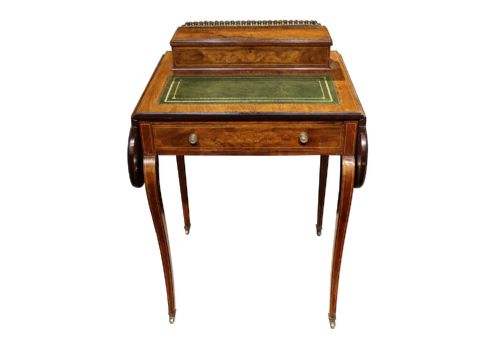
Internal components frequently feature fitted drawers and leather writing inserts, whilst specific variations utilise glass panels or cylinder desk mechanisms. Traditional joinery underpins the construction, ensuring stability beneath the decorative veneered surfaces.
Retail Price Guide 2026
Typical UK retail prices for inlaid rosewood bureau, calculated from the Sellingantiques database of over a million retail prices indexed since 2003. This retail price guide relies exclusively on Sellingantiques data; no external sources or auction records are used, so the figures do not describe the wider market.
Many a Victorian letter was penned upon these very surfaces, witness to ink-stained secret drawers and hurried notes left for morning post.
What varies in quality
The refinement of the marquetry inlay marks the primary distinction between standard examples and superior pieces. Finer items demonstrate precise cutting and varied timber tones that create depth within the floral or scrollwork motifs.
The choice of secondary woods and the execution of ormolu or brass mounts also dictate the standing of a desk. Well-preserved leather inserts and smooth functioning of drop-fronts or cylinder mechanisms reflect higher standards of original construction.
The Inlaid Rosewood Bureau Glossary
- Marquetry veneer
- The practice of applying thin decorative slices of wood to a structural carcase to form elaborate pictorial designs. This technique defines the visual character of the surfaces.
- Bureau de dame
- A small, elegant ladies' writing desk designed for domestic correspondence. These compact forms often feature curved cabriole legs and delicate decorative mounts.
- Secretaire abattant
- A tall upright cabinet featuring a drop-front writing surface that conceals internal compartments. This form showcases the vertical grain and inlay of the timber.
- Ormolu
- Gilt-bronze mounts applied to the corners, feet, and key escutcheons of furniture. These metal ornaments accent the curves of revivalist pieces.
- Bonheur du jour
- A light writing desk featuring a small set of drawers and shelves upon the top surface. It represents a refined development in nineteenth-century domestic workspace design.
Frequently Asked Questions
What is a bureau de dame?
A bureau de dame is a small ladies' writing desk intended for private correspondence within a boudoir or drawing room. These pieces typically combine a slope-front or cylinder desk with compact proportions and decorative mounts.
They emerged as fashionable furniture for women during the nineteenth century, often featuring elaborate floral marquetry and rosewood veneers.
How do I care for rosewood furniture?
Rosewood requires stable humidity levels and protection from direct sunlight to prevent the rich timber from fading or drying out. Gentle dusting with a dry, soft cloth preserves the polish without harming the delicate veneer.
Avoid placing these desks near direct heat sources, which can cause the marquetry inlay to lift or warp over time.
What distinguishes an Edwardian bureau?
Edwardian examples from around eighteen-ninety often exhibit lighter proportions and refined classical revival influences compared to heavier Victorian counterparts. They frequently incorporate detailed inlay work alongside mahogany or rosewood structures.
These later pieces maintain traditional forms whilst adapting to more modestly proportioned domestic interiors of the early twentieth century.
How are marquetry patterns created?
Marquetry involves cutting contrasting thin wood veneers into pictorial or geometric motifs and assembling them like a puzzle onto a paper backing. This assembled sheet is then glued directly onto the structural carcase of the bureau.
Craftsmen select woods of varying natural colours to achieve shading and detail within floral sprays or scrolling foliage.