



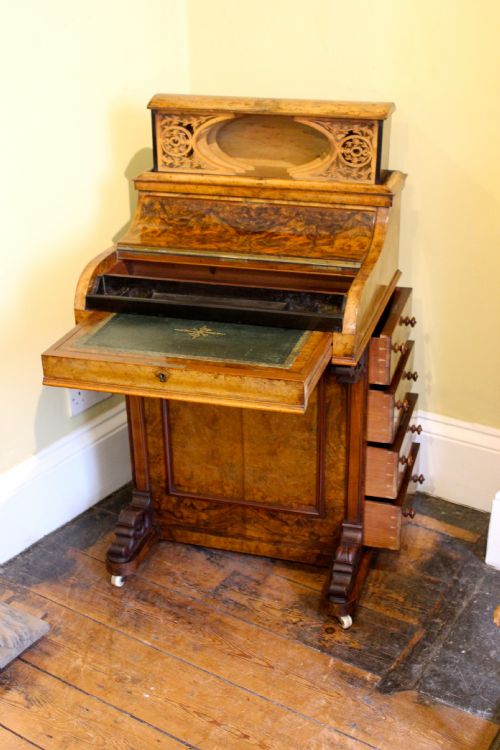


Green Leather Davenport
A green leather davenport is a compact writing desk with a sloping leather surface, offering fitted storage for correspondence.
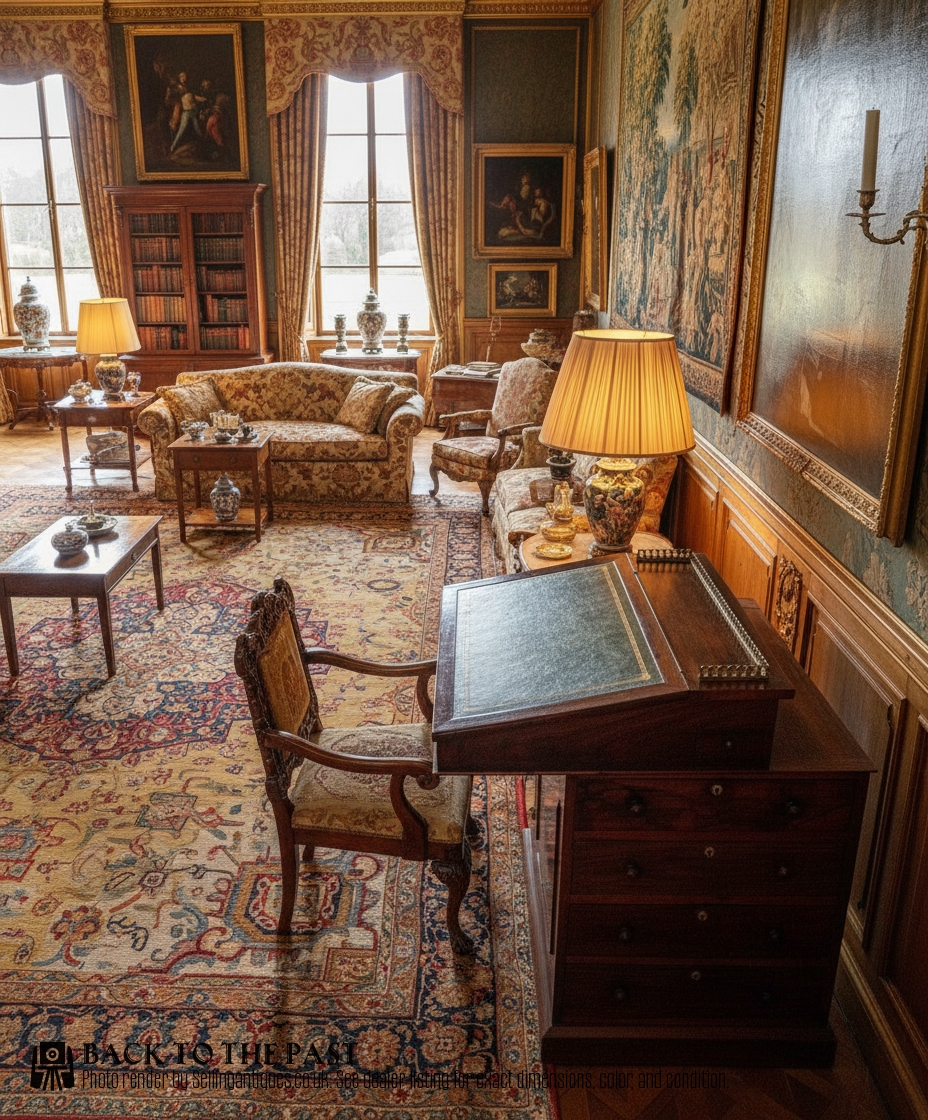
Green Leather Davenport
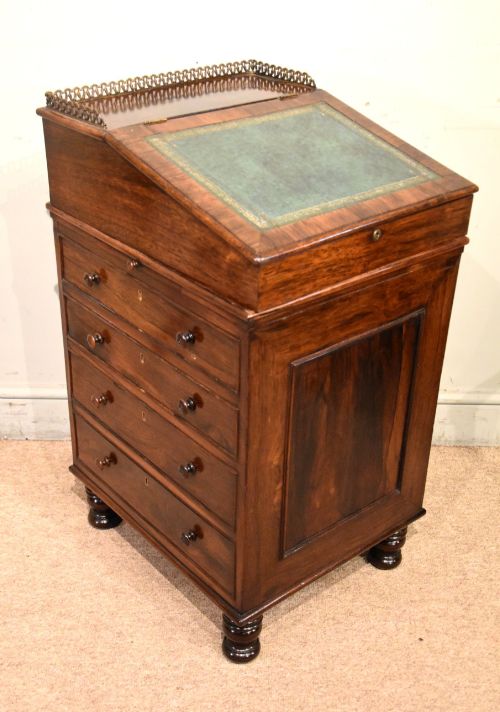
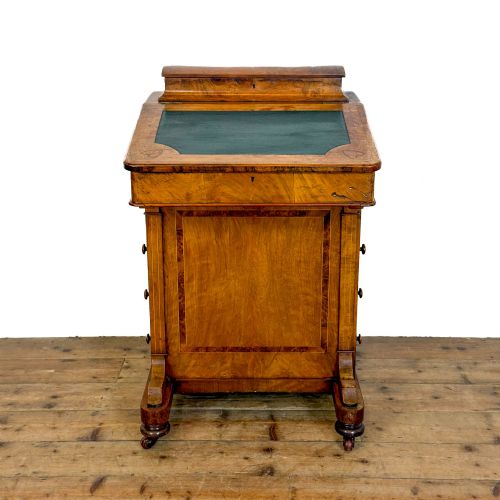
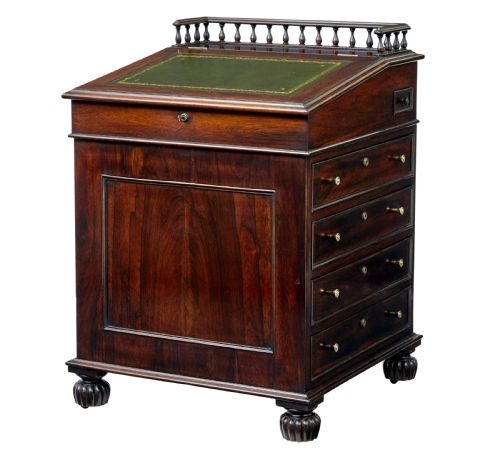
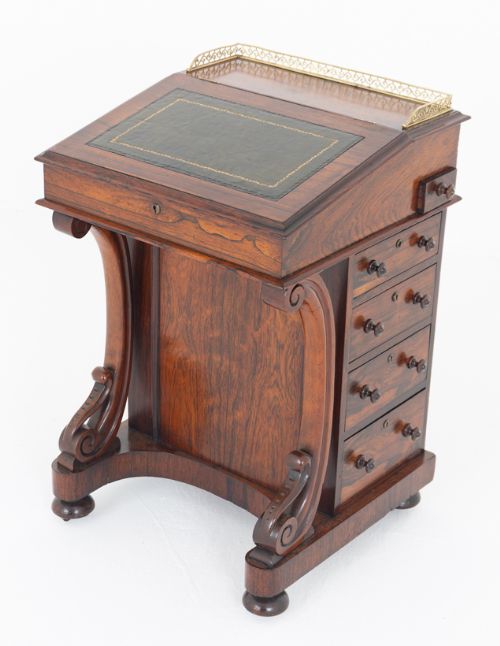
A green leather davenport is a small form of writing desk that combines a sloped writing surface with drawers set into the side. The green leather insert provides a traditional writing hide across the fall front.
Most examples found in these listings date from the Victorian and Regency periods, spanning the nineteenth century. These desks appear in woods such as mahogany, rosewood, and burr walnut, alongside occasional oak and burr elm.
Buyers frequently encounter variations including sliding tops, freestanding models, and specialised configurations like pop-up mechanisms or kidney shapes.
How they were made
Cabinet makers utilised dense hardwoods like mahogany, rosewood, and walnut for the primary structure, often applying highly figured burr veneers to the exterior surfaces. Brass fittings such as handles and casters were incorporated for utility and movement.
The writing slopes were inset with panels of green leather, frequently tooled with gold leaf borders. Interiors often featured contrasting secondary timbers such as maple, with small drawers and pigeonholes constructed with traditional joinery.
Green Leather Davenport Retail Price Guide 2026
Typical asking prices for green leather davenport among the pieces listed under this phrase on Sellingantiques today, from the lower quarter to the upper quarter. They describe what is for sale here now, not the wider market.
Listings feature nineteen-century pieces spanning the Regency, William IV, and Victorian eras, built primarily from mahogany, rosewood, and burr walnut.
What varies in quality
The choice of timber veneer dictates much of the initial visual appeal, with rich burr walnut and figured rosewood sitting at the upper end of the scale. Figured grain patterns and decorative inlay demonstrate greater workshop skill.
Mechanical complexity separates standard examples from superior ones. Sliding tops, pop-up mechanisms, and freestanding configurations with drawers opening on both sides represent higher tiers of cabinet making.
Gillows·Thomas Turner
The Green Leather Davenport Glossary
- Davenport
- A compact pedestal desk featuring a sloping top used for writing, named after the captain for whom the form was originally designed. It typically includes side drawers accessed from a seated position.
- Burr walnut
- A timber harvested from the warted growths of walnut trees, yielding highly ornamental swirling grain patterns. It was favoured by nineteenth century cabinet makers for luxury writing furniture.
- Fall front
- A hinged writing flap that slopes downwards towards the user. On davenports, this surface is usually lined with leather.
- Freestanding
- A descriptor for furniture finished on all sides so it can sit away from a wall. These models often feature dummy drawers on the reverse.
- Pedestal desk
- A heavy desk built atop one or two supporting columns of drawers. The davenport is a single pedestal variant with side storage.
Green Leather Davenport: Frequently Asked Questions
What is a davenport desk used for?
A davenport desk serves as a compact writing station intended for correspondence and the storage of writing materials. The sloping top provides a slanted surface for writing letters.
Interior compartments and side drawers hold stationery, inkwells, and small documents, making it a practical desk for smaller rooms.
How do I identify a Regency davenport?
Regency davenports date from the early nineteenth century and typically display classical proportions and exotic woods like rosewood or mahogany. Details often reflect the neoclassical tastes of the period.
They tend to predate the heavier, highly figured burr walnut examples more commonly associated with the later Victorian era.
Are davenport desks freestanding?
Many davenports are designed to sit against a wall, with plain backs and side-opening drawers on one side only. However, some higher quality versions are fully finished on all sides.
Freestanding models feature polished backs and dummy drawers on the reverse, allowing them to be placed in the centre of a room.
What woods were used for davenports?
Nineteenth century cabinet makers built davenports primarily using dense hardwoods including mahogany, rosewood, and oak. Walnut was also widely utilised, particularly in its figured burr form.
Secondary woods like maple occasionally lined the interior compartments of these desks to create contrast with the darker exterior surfaces.