


Antique Pedestal Writing Desk
An antique pedestal writing desk offers a solid timber work surface anchored by banks of drawers, built for serious study.
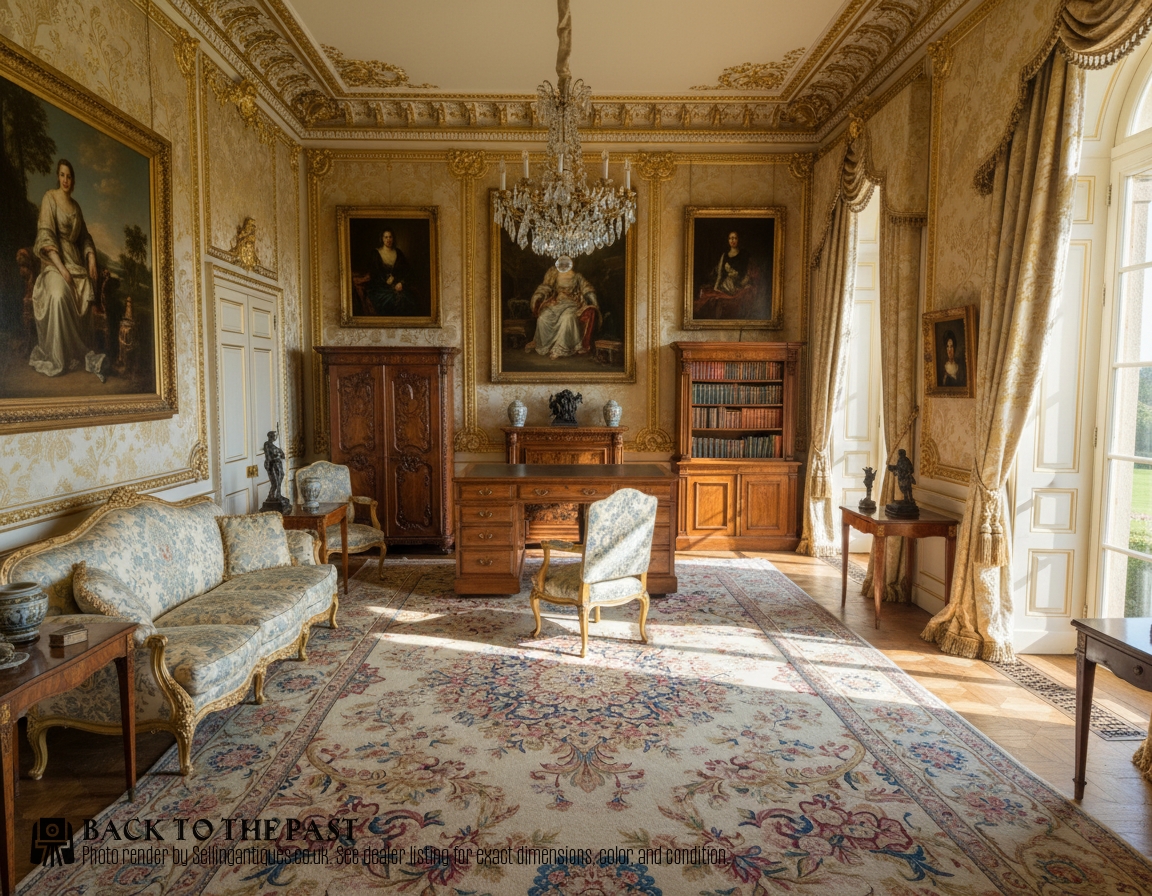
Forms and Origins
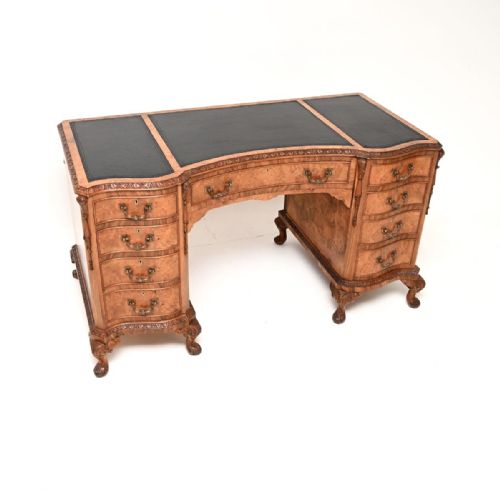
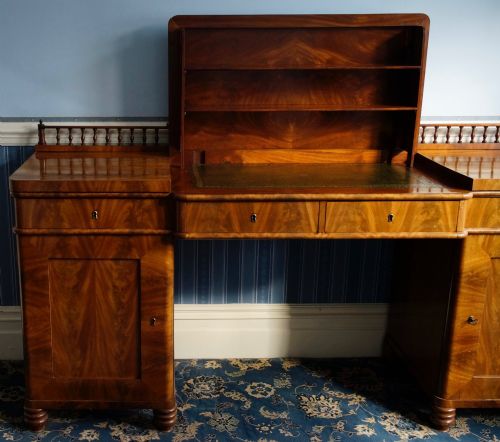
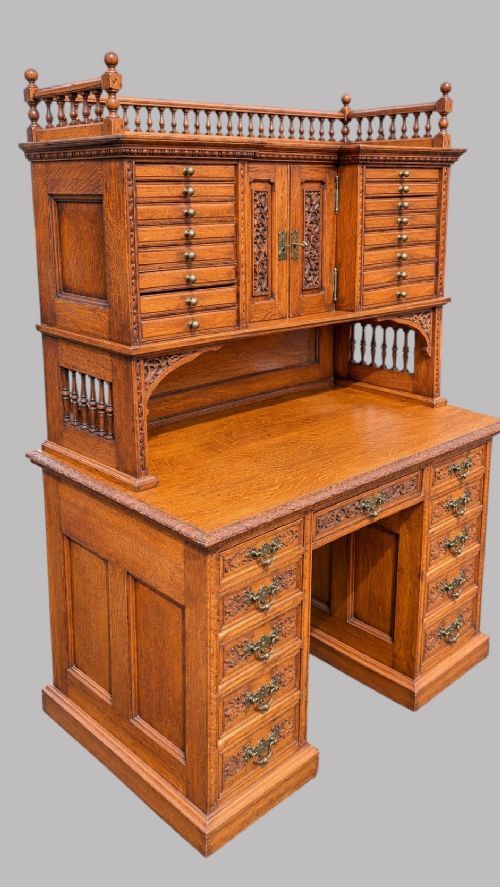
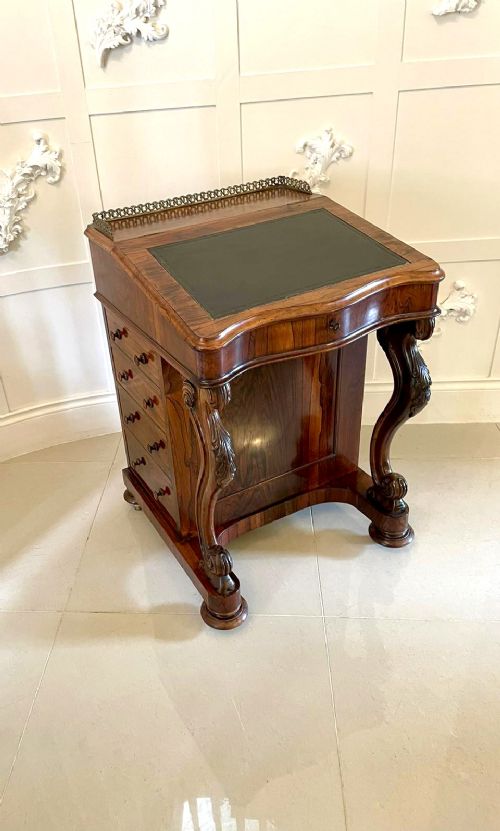
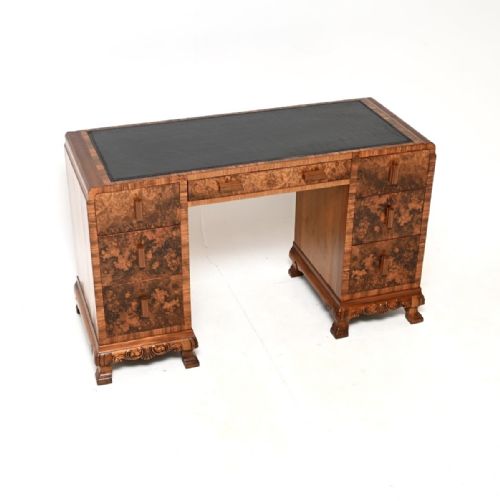
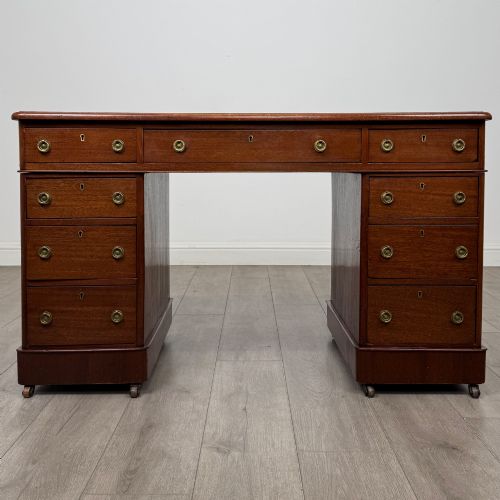
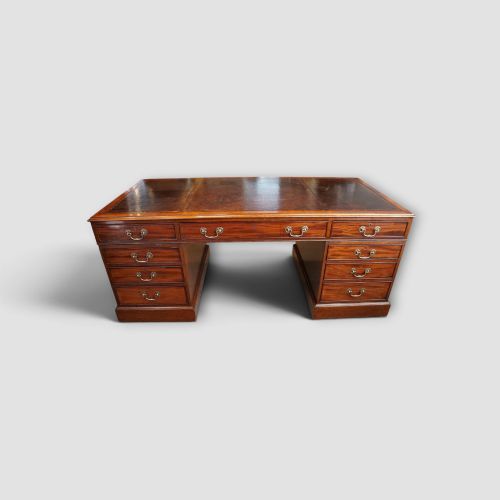
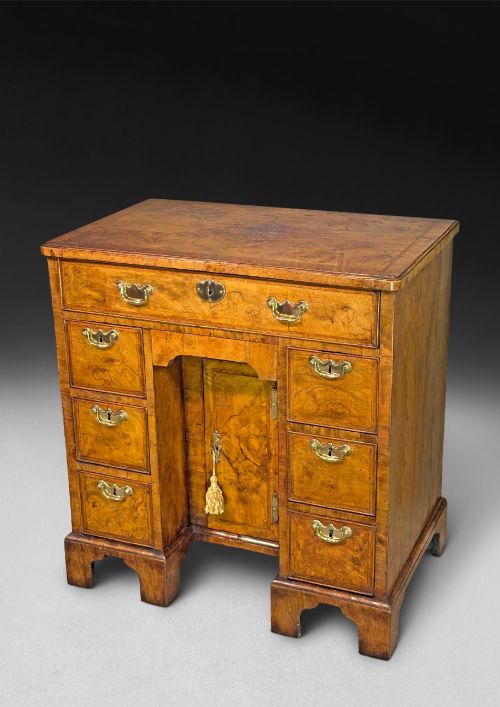
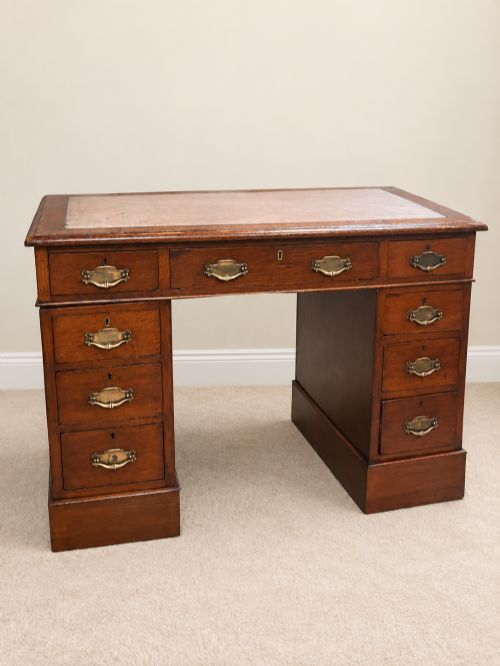
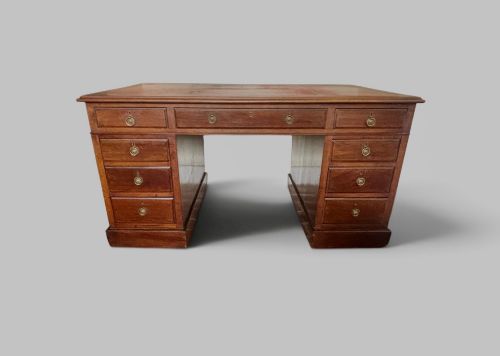
An antique pedestal writing desk comprises a writing surface supported by two pedestals or cabinets of drawers, often featuring a fitted leather insert on the top. The examples met on this page span the Georgian, Victorian, and Edwardian eras, incorporating library tables, partners' desks, and davenports.
The layout typically provides either a kneehole configuration with nine drawers or a twin pedestal format designed for archival storage. Regional British production dominates, alongside occasional American examples from the late nineteenth and early twentieth centuries.

Materials and Construction
Cabinetmakers utilised dense timbers such as mahogany, oak, walnut, rosewood, and gonçalo alves, frequently applying satinwood inlay or contrasting veneers. Writing surfaces were routinely inset with tooled leather panels bordered by gilt tooling.
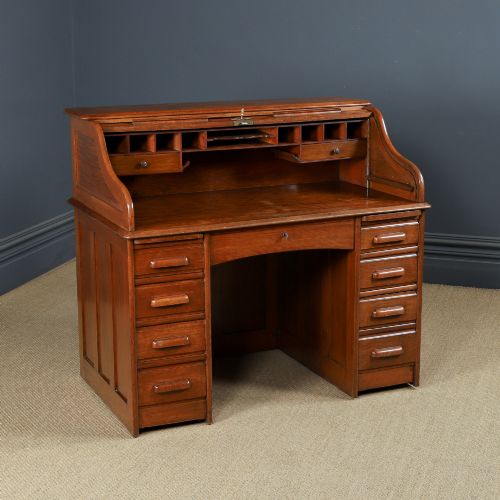
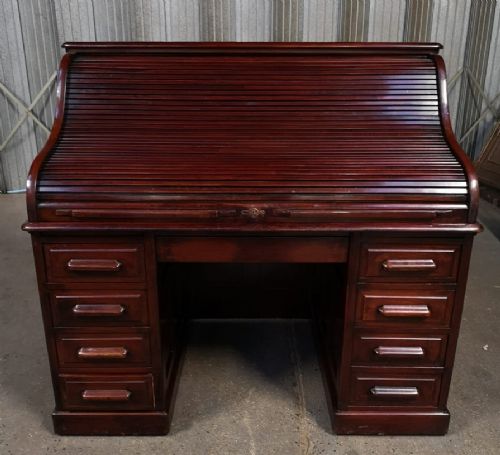
Structural elements include brass handles, locks with working keys, and panelled drawer sides joined with traditional dovetailing. Larger roll-top variants incorporate tambour shutters sliding on internal tracks.
Retail Price Guide 2026
Typical UK retail prices for pedestal writing desk, calculated from the Sellingantiques database of over a million retail prices indexed since 2003. This retail price guide relies exclusively on Sellingantiques data; no external sources or auction records are used, so the figures do not describe the wider market.
Listings feature pedestal desks in mahogany, oak, walnut, rosewood, and gonçalo alves across Georgian, Victorian, and Edwardian periods.
Craftsmanship and Proportion
The distinction between standard utility furniture and superior examples rests on timber selection, such as figured mahogany or quarter-sawn oak, and the precision of the cabinetwork. Finer pieces display meticulous grain matching across drawer fronts and refined internal secondary woods like pine or oak.
Proportion and secondary detailing separate workshops of note from regional manufacturers. Integrated architectural mouldings, superior brass hardware, and intact original leather inserts elevate the standing of a desk.
James Shoolbred·Angus of London·Mein of Kelso·Horrocks Standard Company·Lebus
The Antique Pedestal Writing Desk Glossary
- Pedestal desk
- A freestanding office or library desk featuring a central writing surface supported by two side pedestals of drawers.
- Partners desk
- A double-sided pedestal desk designed to accommodate two people working opposite one another with drawers on both faces.
- Davenport
- A compact writing desk featuring a sloping, hinged top above a set of side drawers, originating in the Regency period.
- Tambour
- A flexible shutter formed of narrow strips of wood glued to canvas, allowing roll-top desks to conceal the pigeonholes.
Frequently Asked Questions
How do I care for the leather top?
Clean the leather gently with a damp cloth and nourish it periodically with a neutral leather balm. Avoid placing hot cups or moisture directly onto the surface to preserve the gilt tooling.
Keep the timber out of direct sunlight to prevent the polish from fading or cracking over time.
Are pedestal desks suitable for daily computer work?
Many models offer sufficient surface area and knee clearance for modern laptops and paperwork. Careful measurement of the kneehole height ensures adequate legroom for everyday seating.
Internal drawer depths accommodate modern stationery while preserving the historic character of the piece.
How can I distinguish Victorian from Edwardian desks?
Victorian examples generally utilise heavier timbers, darker mahogany tones, and deeper pedestal bases with robust mouldings. Edwardian pieces often favour lighter satinwood finishes, inlay work, and slightly more restrained proportions.
Construction techniques also shift subtly, with late nineteenth-century pieces showing tighter machine-assisted dovetailing compared to earlier hand-cut joints.
Do partners desks differ from standard pedestal desks?
Partners desks feature working drawers and cupboards on both sides, allowing two individuals to sit face to face. Standard pedestal desks have drawers on one face and a finished panel on the reverse.
This double-sided design makes partners desks ideal for placement in the centre of a room rather than against a wall.