





English Davenport Desk
An English davenport desk combines a compact writing slope with pedestal storage, offering a practical workspace shaped by Victorian and Regency hands.
English Davenport Desk
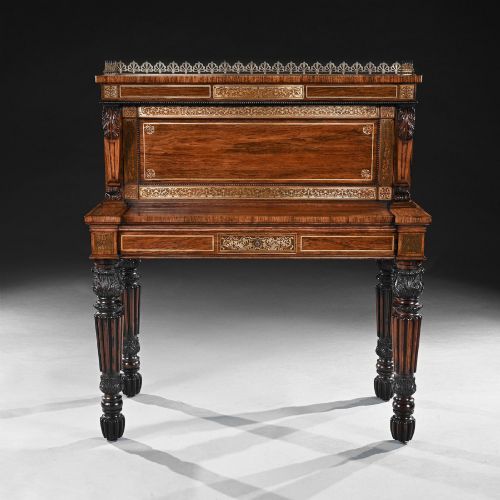
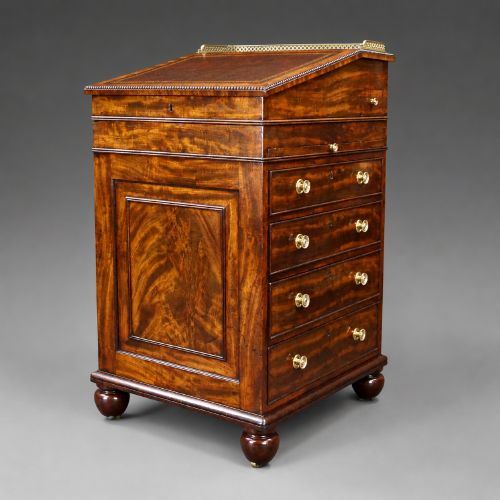
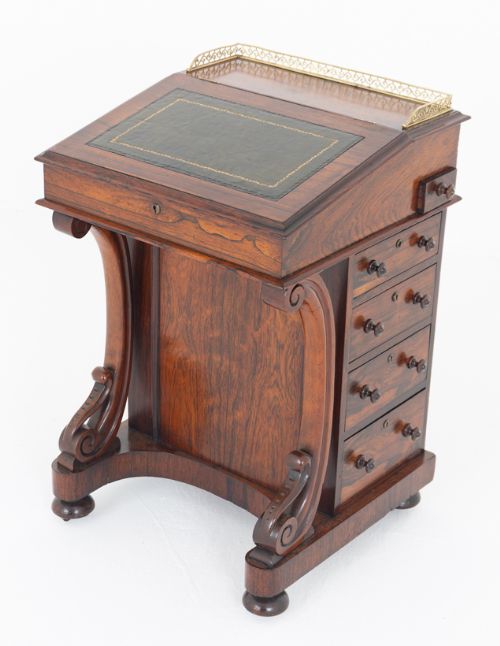
An English davenport desk stands as a compact writing cabinet built on a pedestal base, appearing frequently in Victorian and Regency iterations across the records. These pieces group drawers beneath a sloping top, providing a dedicated writing surface that occupies minimal floor space in domestic rooms.
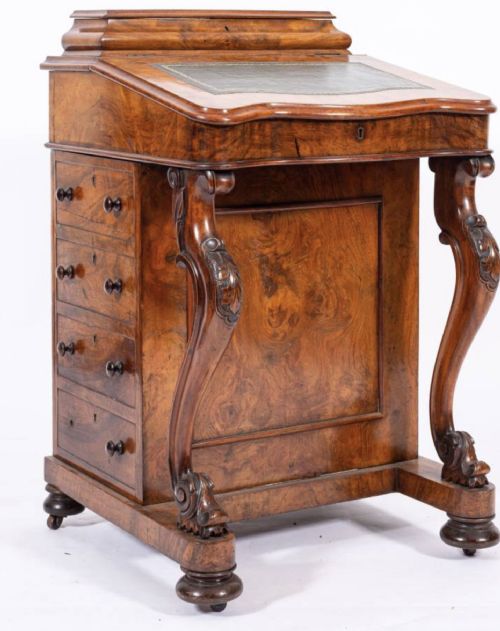
The most common versions on this page emerge from the Victorian era in burr walnut or mahogany, often retaining fitted interiors. Regency and Georgian examples also surface, bringing lighter timbers and crisper lines to the form.
Makers occasionally referenced leading cabinet makers such as Gillows in their construction, matching the functional demands of nineteenth-century study spaces with architectural dignity.
What varies in quality
The distinction between tiers rests upon the choice of timber and the precision of internal joinery, where figured veneers and matching grain patterns indicate superior workshop practice. Simple carcases contrast with examples carrying fine brass inlay or secondary satinwood interiors.
Proportion and structural integrity also separate standard pieces from workshop attributions, particularly where side-hinged stationery boxes and pivoting writing slopes operate with exact mechanical alignment.
Listings feature Victorian, Regency, and Georgian periods alongside materials including brass, leather, rosewood, mahogany, walnut, glass, burr walnut, and flame mahogany.
Gillows Oxford Street Workshop·Gillows of Lancaster
The English Davenport Desk Glossary
- Davenport desk
- A compact writing desk featuring a sloping lid that lifts or pulls out, mounted over a pedestal of drawers. The form gained popularity during the Regency period and remained a staple of Victorian study furniture.
- Burr walnut
- A highly figured timber taken from the wart-like growths on walnut trees, prized for its swirling patterns. Cabinet makers used veneers of this wood on the primary surfaces of nineteenth-century desks.
- Flame mahogany
- A veneer cut from the fork of a mahogany tree where the grain creates a distinctive flickering flame effect. This material defined high-status Regency and Georgian pieces.
- Pedestal
- The solid lower support structure of the desk containing banks of drawers, often flanked by small columns or carved details. It bears the weight of the upper writing compartment.
English Davenport Desk: Frequently Asked Questions
What is an english davenport desk?
An English davenport desk is a small writing cabinet featuring a sloped writing surface above a pedestal base fitted with drawers. These pieces appeared primarily during the Regency and Victorian periods.
The design allows a writer to sit close while keeping stationery stored securely within the upper compartment and side drawers.
How do I identify a Victorian davenport?
Victorian davenports typically utilise walnut, burr walnut, or mahogany timbers, often featuring carved cabriole legs or decorative side panels. The writing slopes frequently lift to reveal satinwood-lined pigeonholes.
Earlier Regency examples tend to employ rosewood or flame mahogany with cleaner geometric lines and brass inlay.
Where were davenports used?
These desks served primarily in private drawing rooms, boudoirs, and studies where full-sized partner desks proved too large. Their compact footprint made them suitable for writing correspondence in domestic spaces.
Owners kept personal papers, inkwells, and pens inside the integrated compartments beneath the main writing slope.
What woods appear on these desks?
Makers relied heavily on mahogany, rosewood, and walnut for the primary structure, often enhancing the exterior appearance with burr walnut or flame mahogany veneers. Secondary woods like satinwood lined the interior compartments.
Brass fittings and leather writing inserts completed the material palette used by nineteenth-century workshops.