
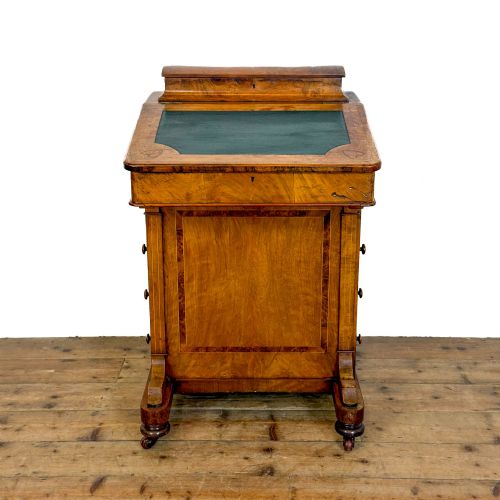

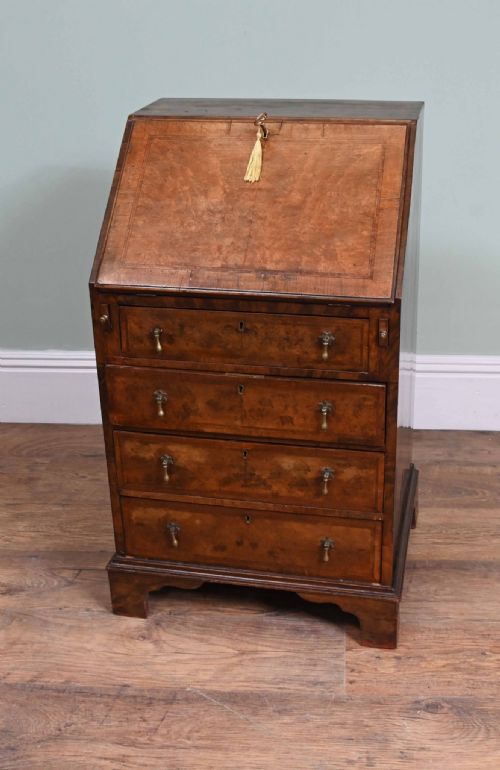


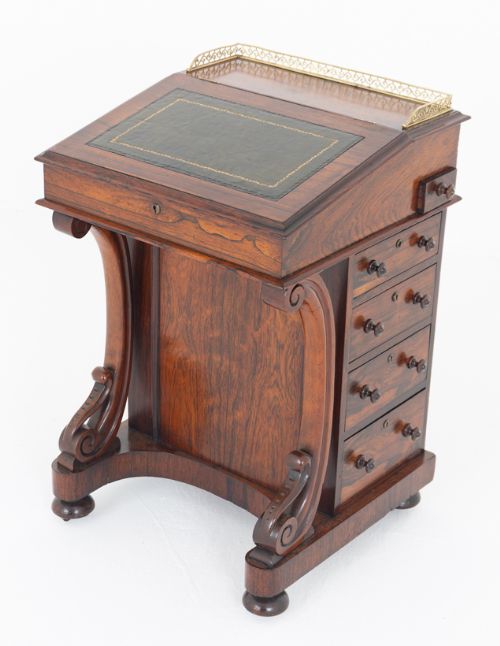


Victorian Slant Front Desk
A victorian slant front desk offers a practical writing slope with fitted interior compartments, combining nineteenth century craftsmanship with compact domestic utility.
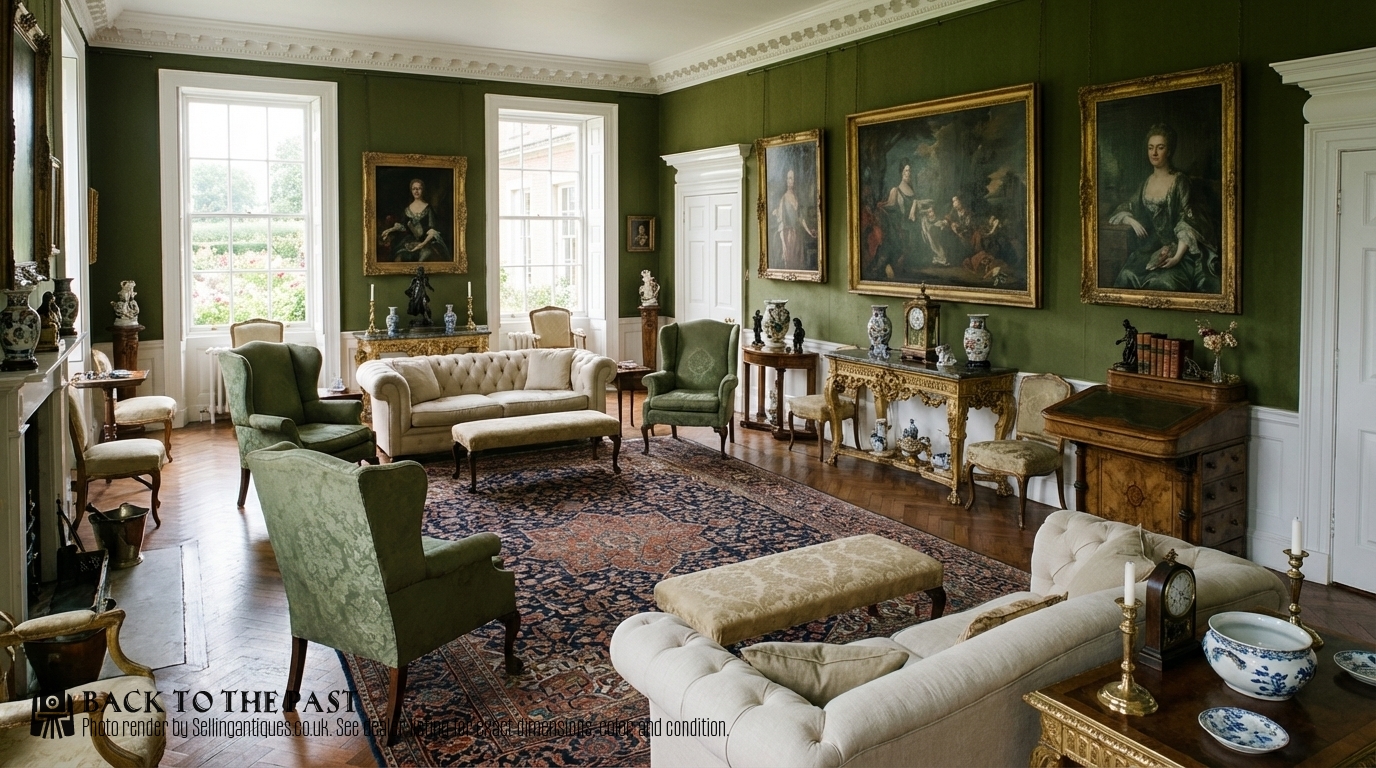
Victorian Slant Front Desk
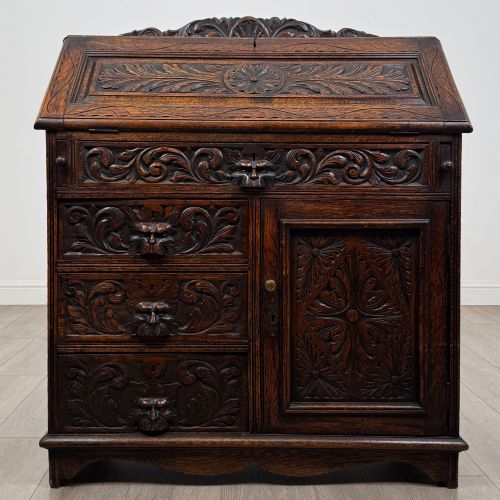
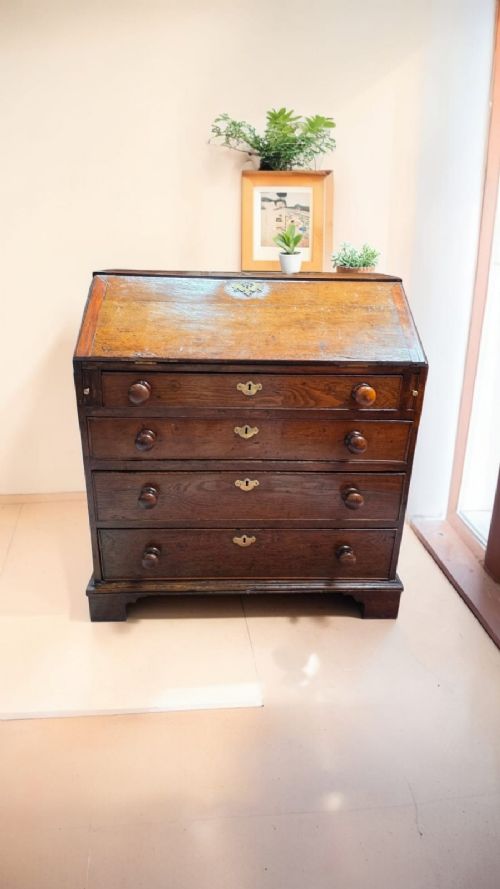
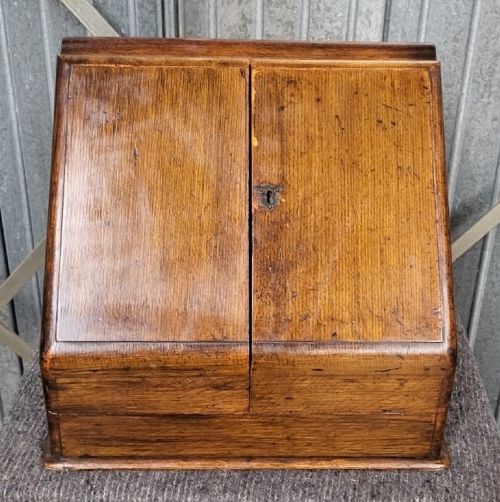
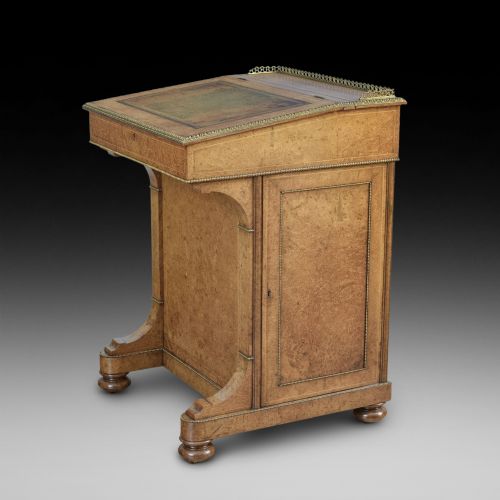
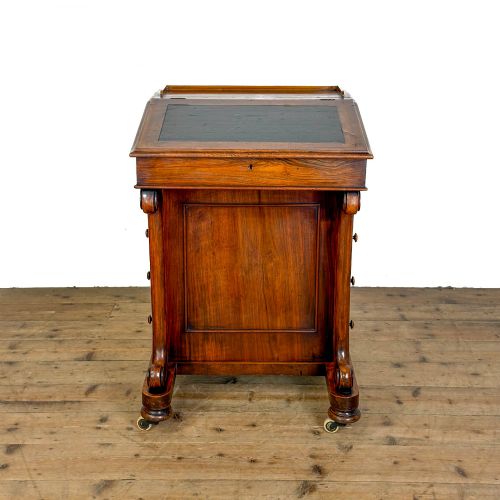
A victorian slant front desk encompasses traditional writing furniture designed with a sloping fall front, including compact Davenport models, bureau bookcases, and freestanding writing desks. These pieces originate primarily from the nineteenth century, spanning periods from early Victorian work to later Arts and Crafts examples.
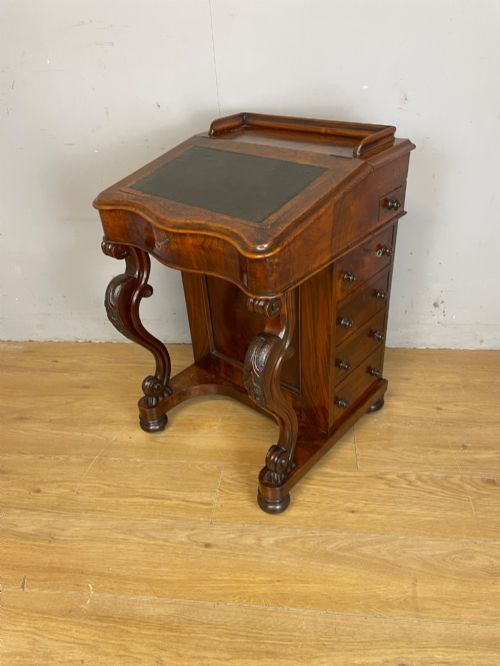
The most common formats met on this page are walnut Davenport desks and bureau forms featuring fitted pigeonholes and small drawers behind the sloping lid. Makers utilised various woods to construct these compact writing stations for nineteenth century parlours and studies.
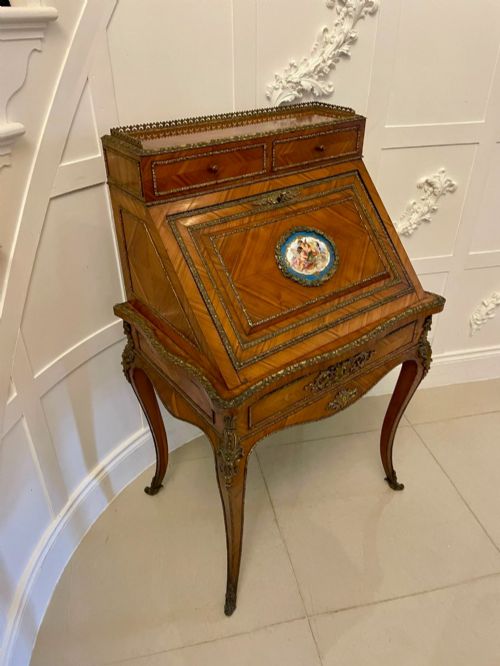
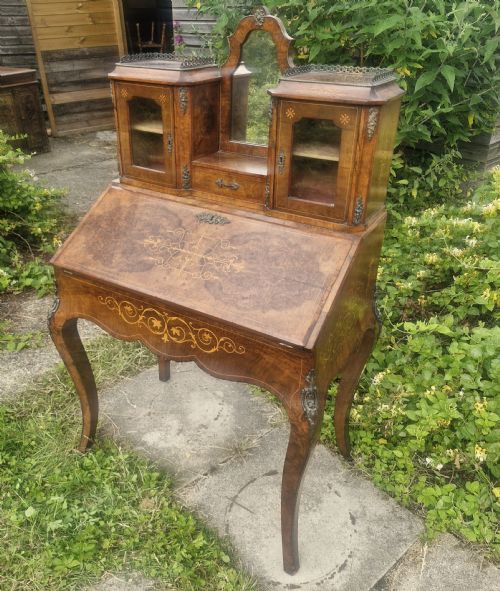
Beyond standard writing desks, the selection includes related forms such as bureau du dame, bonheur du jour writing tables, and tall bureau cabinets. These variations provide specialised surfaces for correspondence while maintaining the signature sloping or cabinet design.
How they were made
Cabinetmakers constructed these desks using solid timbers and decorative veneers over secondary woods, employing mahogany, oak, rosewood, and burr walnut. Surfaces frequently incorporate marquetry inlay, brass mounts, or leather writing inserts to elevate the visual appeal of the writing slope.
Structural integrity relied on traditional joinery methods such as dovetail drawers and secure hinge mechanisms for the sloping fall fronts. Desks finished with ormolu mounts, glass panels, or specialised brass hardware reflect the diverse stylistic influences present during the period, including French revival and Arts and Crafts movements.
Victorian Slant Front Desk Retail Price Guide 2026
Typical asking prices for victorian slant front desk among the pieces listed under this phrase on Sellingantiques today, from the lower quarter to the upper quarter. They describe what is for sale here now, not the wider market.
Some nineteenth century desks thoughtfully included adjustable dates to keep forgetful letter writers strictly on schedule.
What varies in quality
The choice of primary timber and veneer figure largely dictates the distinction between standard production and top tier pieces. Finely figured burr walnut, kingwood, or pollard oak paired with intricate marquetry and quality brass hardware elevate a desk far above plain timber examples.
Gillows·Harris Lebus·Liberty of London
The Victorian Slant Front Desk Glossary
- Davenport desk
- A compact writing desk featuring a sloping top hinged over a pedestal of drawers, originating in the nineteenth century. This form became particularly popular for ladies' correspondence and boudoir use.
- Bureau bookcase
- A dual-purpose piece combining a sloping writing desk base with an upper glazed or paneled shelving cabinet. These tall units maximise storage and display space in domestic interiors.
- Bonheur du jour
- A light lady's writing desk, often featuring small drawers, shelves, and a writing surface above legs rather than a pedestal base. These French-inspired tables appeared frequently during the Victorian era.
- Marquetry
- Decorative veneer work forming pictorial or geometric patterns using various coloured woods and other materials. Craftsmen applied these intricate designs to the fall fronts and tops of high-quality writing desks.
- Ormolu
- Gilded bronze mounts applied as decorative ornaments to furniture during revivalist periods. These metal accents highlight corners, feet, and key escutcheons on French-influenced Victorian pieces.
Victorian Slant Front Desk: Frequently Asked Questions
How were these desks used originally?
Originally, these desks served as dedicated spaces for writing letters, managing household accounts, and storing private papers safely behind lockable slopes.
Compact models were often kept in sitting rooms or bedrooms for personal correspondence, while larger bureau bookcases functioned as primary study furniture.
Where should I place one?
These desks suit studies, living rooms, and bedrooms where their compact footprints provide functional writing space without dominating the room.
Freestanding Davenport models work well angled into corners or placed away from walls, displaying finished backs and side drawer configurations.
How do I identify the wood types?
Identifying the timber involves examining the grain patterns, colour depth, and natural markings visible across the exterior surfaces and secondary interiors.
Burr walnut displays swirling knot formations, mahogany offers a rich reddish-brown tone, and oak presents prominent grain flecks characteristic of Arts and Crafts pieces.