





Antique Davenport Drawers
Antique davenport drawers combine a compact writing slope with functional cabinetry, offering a dedicated writing surface that fits neatly into a corner or modest study.
Antique Davenport Drawers
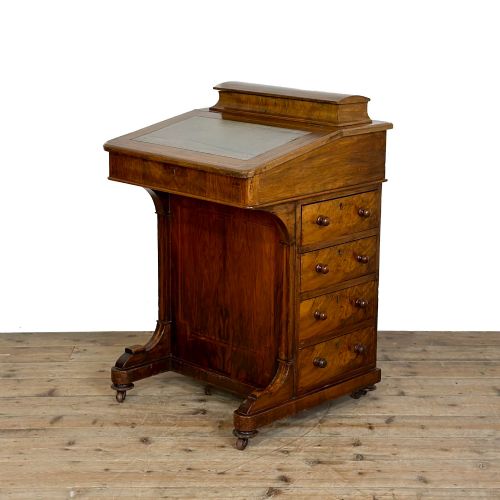
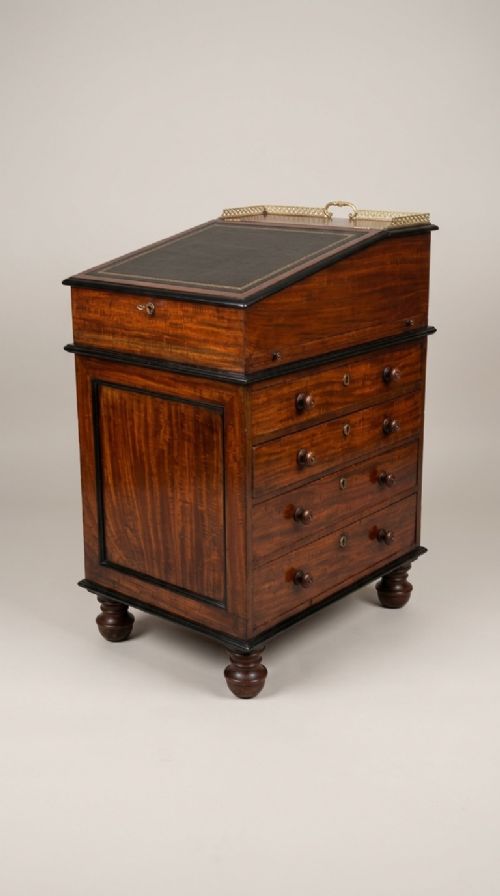
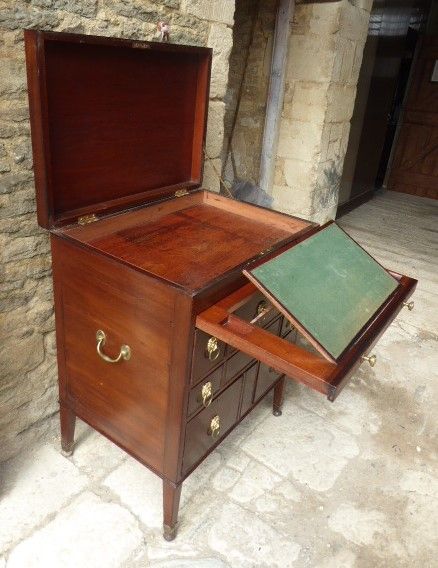
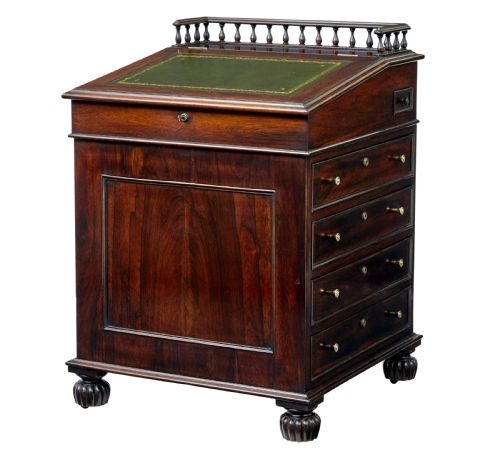
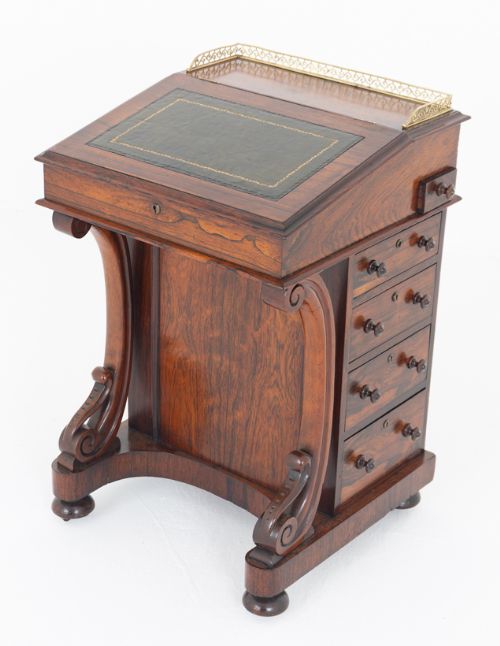
Antique davenport drawers are compact writing desks featuring an inclined writing surface, typically lifting to reveal storage, set atop a pedestal of drawers. These pieces are designed for domestic correspondence and record keeping without occupying the floor space of a full sized partner desk.
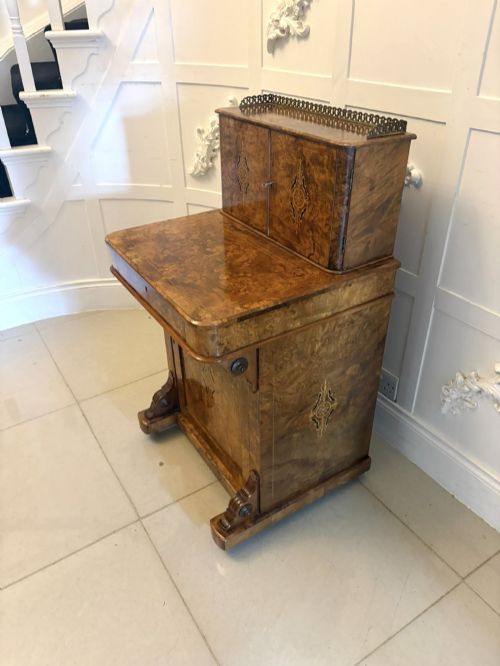
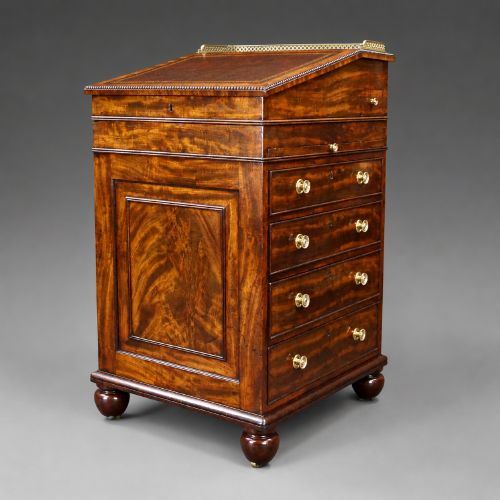
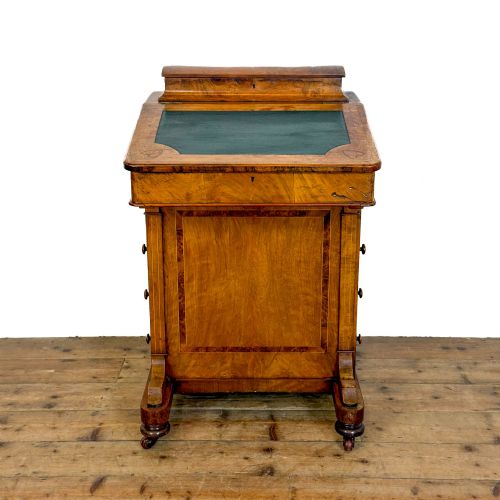
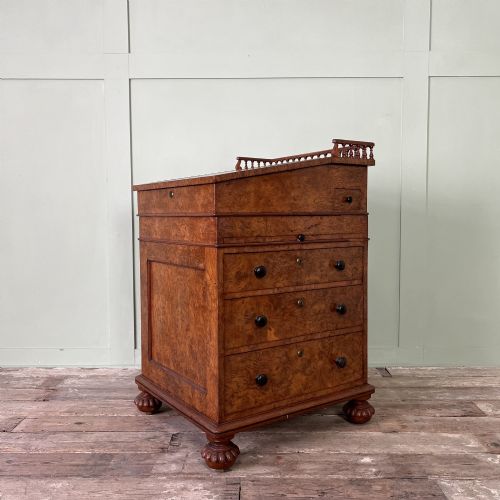
The versions most commonly met on this page date from the Victorian and Regency periods, constructed in rich timbers such as mahogany and burr walnut. These variations reflect the changing domestic interior requirements of the nineteenth century, moving from formal Regency designs to more heavily figured Victorian examples.
Materials and construction
Cabinet makers utilised dense primary hardwoods like mahogany, rosewood and walnut, frequently selecting highly figured veneers such as burr walnut and flame mahogany for the exterior surfaces. These timbers provided both structural stability and a decorative grain pattern suited to domestic reception rooms.
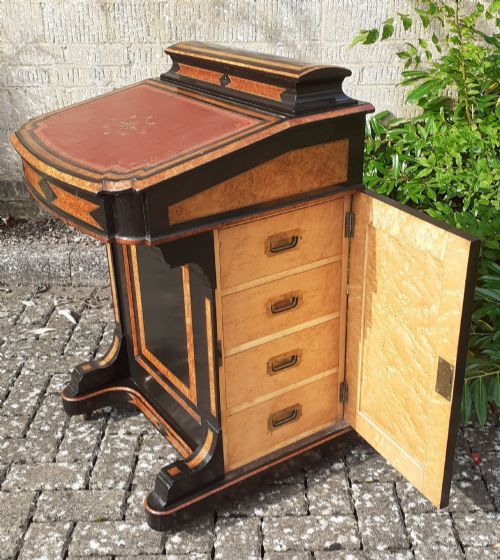
Many examples incorporate secondary woods alongside brass hardware, leather writing inserts, and occasionally exotic timbers like amboyna or ebony for contrast. Drawers and writing compartments often feature hand cut dovetails and functional locking mechanisms operated with original keys.
Some desks hide secret compartments designed for private correspondence.
Distinctions in quality
Quality in these desks rests on the selection of timber veneers and the crispness of any marquetry or inlay work. Finer pieces display bookmatched burr veneers and integrated mechanisms such as sliding tops or rotating drawer sections.
The reputation of the maker also dictates the standard of manufacture, with documented workshops demonstrating superior interior drawer construction and finely cast brass mounts. Simpler provincial pieces present straightforward timber framing without the decorative banding or secondary stationary compartments found in top tier work.
Gillows·Gillow and Co
The Antique Davenport Drawers Glossary
- Davenport
- A compact pedestal desk featuring a sloping writing surface and side drawers. It gained popularity in the Regency period and remained a staple of Victorian study furniture.
- Burr walnut
- A highly figured timber taken from the wart or burl of a walnut tree. It produces intricate, swirling grain patterns prized for cabinet fronts.
- Marquetry
- The art of applying pieces of veneer to a structure to form decorative patterns and pictures. It is frequently seen on late Victorian examples.
- Pedestal
- The upright supporting structure containing the bank of drawers beneath the writing slope. In these desks, drawers often pull out to the side rather than the front.
Antique Davenport Drawers: Frequently Asked Questions
What is a davenport desk used for?
These pieces were originally designed for correspondence, letter writing, and storing stationery within a compact footprint. The sloping top provides a comfortable surface for writing while seated.
Today they function effectively as standalone writing desks in smaller rooms, providing concealed storage for modern paperwork and laptops without dominating the floor plan.
How do I date a davenport?
Dating relies on the primary timber, hardware, and stylistic details associated with periods like the Regency, William IV, and Victorian eras. Earlier Regency models often feature simpler mahogany frames, while Victorian versions frequently employ burr walnut and elaborate marquetry.
Examining the construction methods of the internal drawers and the style of any brass handles also helps narrow down the decade of manufacture.
Where did the name come from?
The furniture form takes its name from Captain Davenport, who is traditionally believed to have commissioned the first desk of this specific compact pattern from Gillows of Lancaster.
This original design established the combination of a sloping top and side pedestal drawers that later nineteenth century cabinet makers adapted.
Are the drawers functional on both sides?
Most standard davenport desks feature a bank of drawers opening to one side, paired with dummy drawers on the reverse to maintain a symmetrical appearance in the room.
However, certain larger or more specialised examples include drawers accessible from both sides or incorporate secret compartments within the superstructure.